


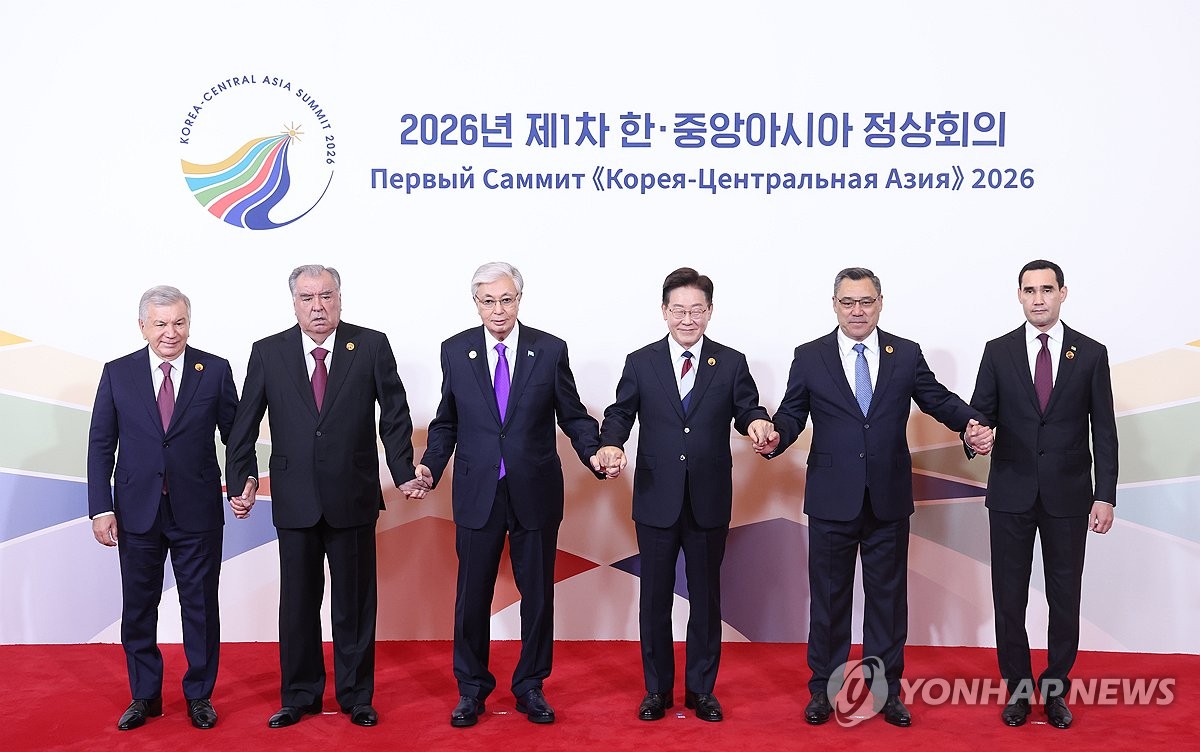
On Wednesday, 16 September, President of Turkmenistan Serdar Berdimuhamedov attended the first Central Asia–Republic of Korea Summit and the inaugural six-party Business Summit in Seoul.
During the summit, Turkmenistan presented the “Smart City Diplomacy” initiative, proposed expanding cooperation in education and digital skills for youth, stepping up joint scientific research, and enhancing cultural and sports exchanges. Special emphasis was placed on parliamentary diplomacy as a complementary mechanism for strengthening mutual trust.
The summit and the accompanying inaugural six-party Business Summit concluded with the adoption of the Seoul Declaration, joint statements, and a series of key initiatives.
Initiatives of Turkmenistan
Turkmenistan proposed broadening the cooperation agenda between the Republic of Korea and Central Asian nations to encompass smart city development, digital education, joint scientific projects, youth and cultural exchanges, as well as sports and parliamentary interaction. President Serdar Berdimuhamedov made these remarks while addressing the inaugural Central Asia–Republic of Korea Summit in Seoul on 16 September 2026.
According to the President, holding the summit at the highest level lays the groundwork for a new chapter of interaction between the Republic of Korea and the Central Asian states.
Urban development was highlighted as one of the key areas proposed by Turkmenistan. Specifically, the country recalled its previously announced “Smart City Diplomacy” initiative, which aims to combine efforts, exchange expertise and information, jointly implement scientific and technological achievements, and establish integrated, efficient models of urban planning and development.
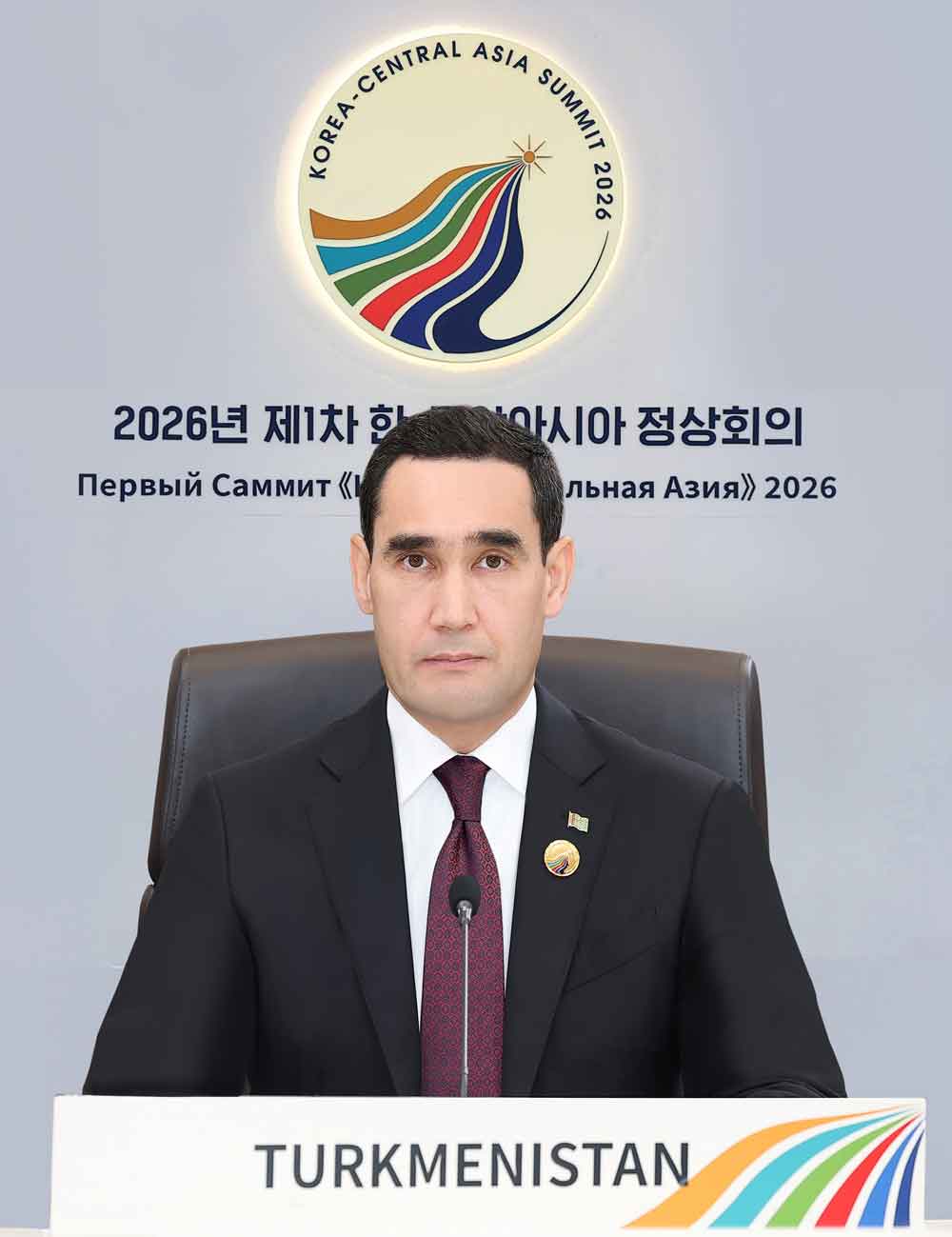
The President also outlined a broad spectrum of sectors for potential partnership between the regional countries and the Republic of Korea, including industry, agriculture, environmental protection, water resource management, healthcare, services, and tourism.
In addition, the President of Turkmenistan put forward several proposals concerning education and youth. Ashgabat suggests fostering cooperation between educational institutions in Central Asia and the Republic of Korea, including through dual-degree programs.
Turkmenistan advocated for enhancing young people’s digital competencies and organizing joint academic olympiads, competitions, and conferences.
In the scientific field, the President proposed boosting joint research and design-and-survey initiatives among young scholars, as well as establishing an Institute for Supporting the Development and Implementation of Youth Innovative Ideas.
Turkmenistan’s proposals also extend to humanitarian cooperation. In particular, the country suggested drafting a Roadmap for Intercultural Youth Exchanges between Central Asian Countries and the Republic of Korea, along with a “Young Talents” program. Potential formats for collaboration include festivals, concerts, creative competitions, and other joint events.
Sports was named as another vital area. “We also propose developing sports cooperation, including expert exchanges, promoting healthy lifestyles, and exploring the organization of International Youth Sports Games of Central Asia and the Republic of Korea,” President Berdimuhamedov said.
He also underscored the value of parliamentary diplomacy as a supplement to intergovernmental collaboration and a tool to build international trust.
Concluding his address, Serdar Berdimuhamedov emphasized that the new format should facilitate a transition from isolated areas of interaction to a long-term system of partnership.
“Turkmenistan is ready to actively contribute to building trust and fostering an equal, mutually beneficial partnership between our countries, and to be an active participant in this format,” the Head of State emphasized.
He noted that the Central Asia–Republic of Korea Cooperation Forum serves the long-term interests of the participating nations and has the potential to become a key driver in shaping sustainable international cooperation mechanisms.
Adopted Documents
The Summit and Business Summit concluded with the adoption of several documents and initiatives, including:
- The Seoul Declaration
- Joint Statement of the First Consultative Meeting of Ministers of Industry in the “Central Asia–Republic of Korea” Format
- “Central Asia–Republic of Korea” Initiative on Cooperation in Artificial Intelligence, Science, and Technologies of the Future
- Initiative of the Central Asian States and the Republic of Korea on Climate, Energy Transition, and Air Quality
- Memorandum of Understanding on Industrial and Logistics Cooperation between the Central Asian States and the Republic of Korea
- Joint Statement of the First “Central Asia–Republic of Korea” Business Summit
Official Dinner
President Lee Jae Myung and First Lady hosted an official dinner in honor of the First Korea–Central Asia Summit, welcoming the leaders of the five Central Asian nations.
In his welcoming remarks, President Lee noted that Korea and Central Asia are “longtime friends,” perfectly described by the saying “distant yet close neighbors.”
He added: “At today’s summit, we have set a ‘bountiful table of cooperation’ covering energy, trade and investment, transport and infrastructure, artificial intelligence and digital transformation, as well as climate change, peace, and security.”
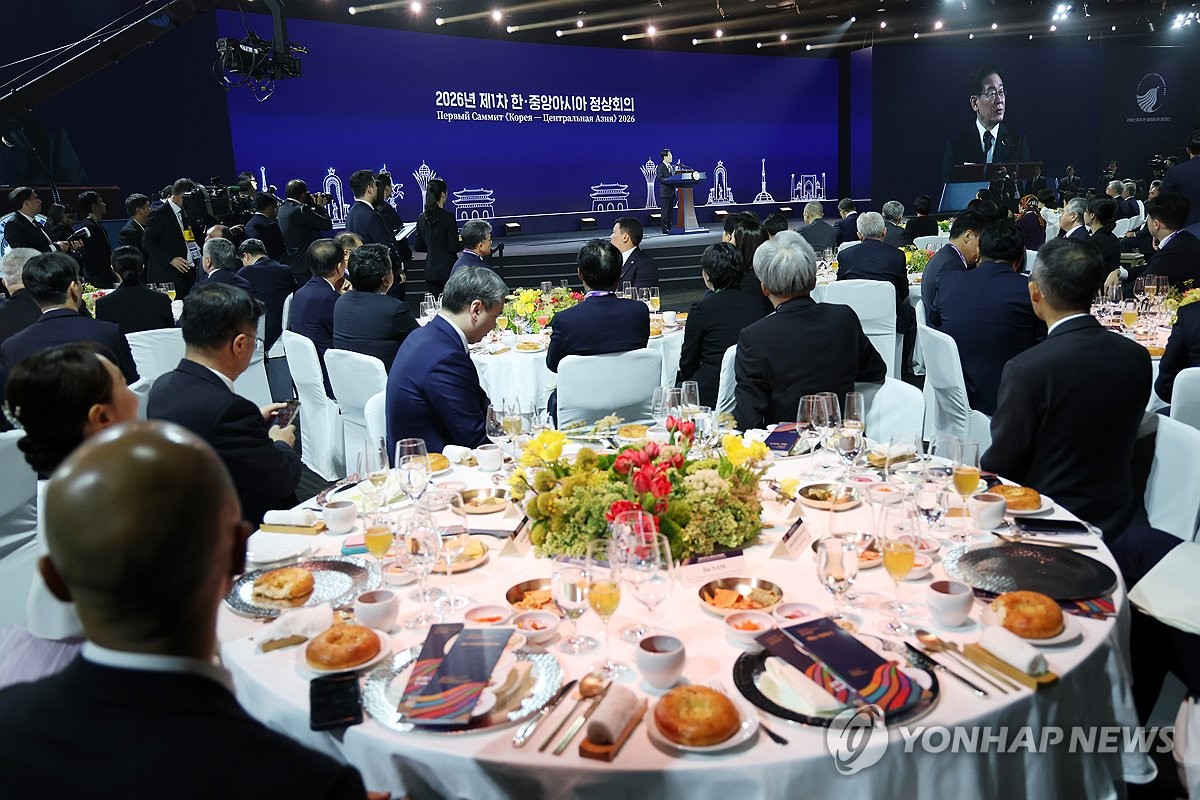
President Lee also shared a personal observation: “I heard that in Central Asia, it is customary not to fill a guest’s tea cup (piala) to the very brim. I understand this to be a warm gesture of hospitality, intended to allow frequent refills of tea so that guests can spend as much time together as possible. It is with this same spirit of warmth and consideration that I welcome you today.”
To mark the historic first Korea–Central Asia Summit, the dinner menu and cultural program featured special elements reflecting long-standing ties and harmony between the two regions.
Guests were served a set menu harmoniously combining Korean cuisine with Central Asian culinary traditions as a mark of deep hospitality. Notably, the meal featured “Korean Hanwoo Beef and Lamb Shashlik,” adapting the traditional Central Asian dish by using Halal-certified Korean Hanwoo beef.
Given that Central Asia belongs to the Islamic cultural tradition, all toasts were made exclusively with non-alcoholic beverages.
Turkmen Delegation Participates in Side Events
During the visit to the Republic of Korea, the delegation of Turkmenistan took part in the first Consultative Meeting of Industry Ministers, the Ministerial Meeting on Artificial Intelligence, Science, and Future Technologies, and the Ministerial Forum on Forestry and Climate Change Mitigation within the “Central Asia–Republic of Korea” framework.
Following the conclusion of the state visit to the Republic of Korea, President Serdar Berdimuhamedov returned to Ashgabat. /// nCa, 17 September 2026 (based on materials from TDH and official Korean government websites, photo credit – Yonhap)