


nCa Analysis
Part 1: Global Energy Analysis
Relying on assessments and structural modeling from international financial institutions, global market intelligence desks (including Goldman Sachs, J.P. Morgan, and the International Energy Agency), and predictive energy services, this section addresses the key factors driving crude oil prices above $100 per barrel and evaluates the potential global impacts if prices remain elevated through the end of the year.
Factors Driving Prices Up and Sustaining High Levels
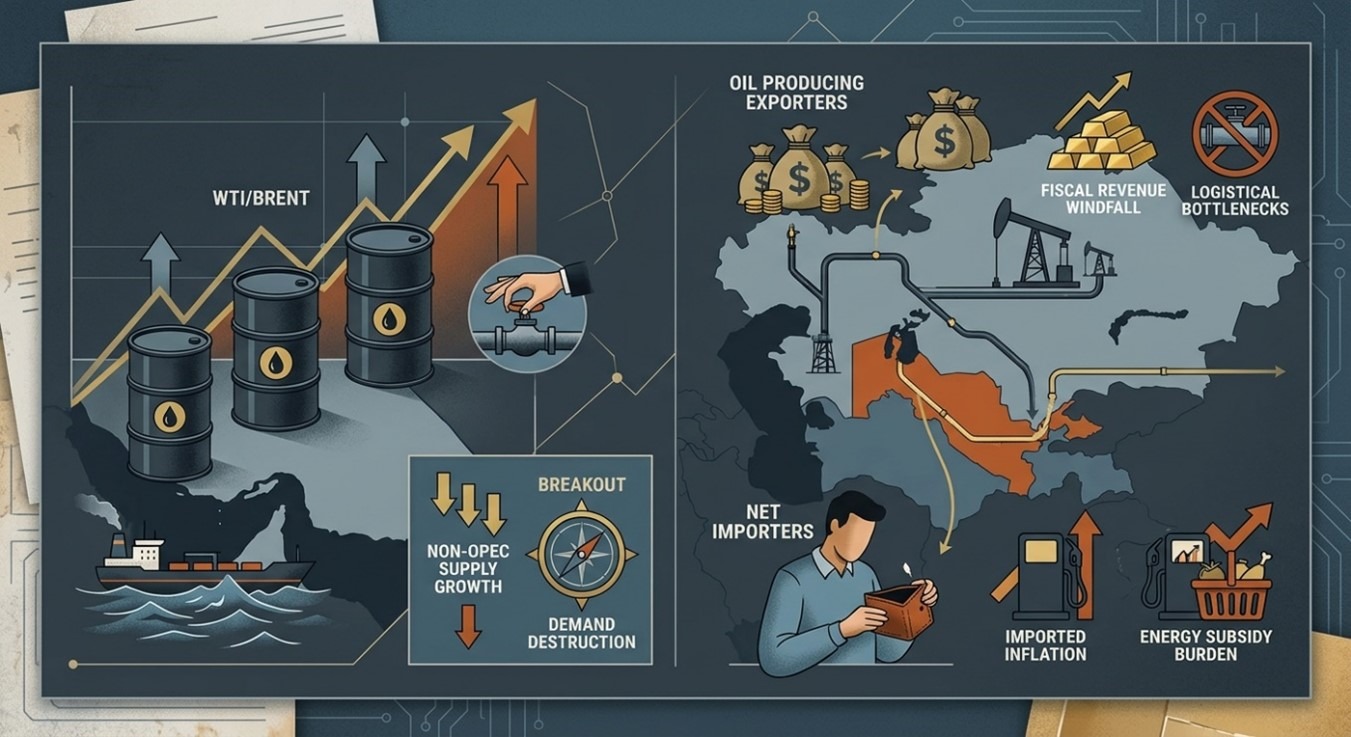
According to energy intelligence research and primary benchmark tracking, three major structural forces account for the price surge above $100/bbl:
- Escalating Geopolitical Risk Premiums: Prolonged regional instability and conflict risks across key Middle Eastern supply corridors have built a persistent geopolitical risk premium into prompt oil contracts. Physical security threats around maritime choke points (such as the Strait of Hormuz) alongside direct risks to energy and refining infrastructure have repeatedly constrained spot availability.
- OPEC+ Production Discipline and Tight Physical Supplies: Strict adherence to output quotas by OPEC+ member states continues to restrict global market supply, preventing inventory build-up despite volatile global economic growth.
- Sustained Short-Term Inventory Draws: Data from international energy agencies highlight continuous draws in U.S. and key Western crude stockpiles, driven by robust refinery runs and resilient prompt demand.
Downward and Stabilizing Factors
Predictive services and institutional analytical desks point to several counter-mechanisms that could offset geopolitical risk and bring crude prices back down toward baseline target ranges ($70–$85/bbl):
- Non-OPEC Output Expansions: Accelerating production growth from non-OPEC suppliers—led by the United States, Brazil, and Guyana—continues to add physical capacity to global markets, creating long-term structural downward pressure.
- Demand Destruction from High Prices: Prolonged price levels above $100/bbl naturally suppress consumer purchasing power and industrial activity. The International Energy Agency (IEA) and market analysts note that extended high fuel costs reduce total volume consumption across transportation and manufacturing sectors.
- De-escalation and Risk Premium Unwind: Any diplomatic resolution or stabilization of maritime routes would remove the physical supply-disruption premium embedded in futures contracts, causing prices to re-align rapidly with fundamental balance sheets.
Impacts on the Global Economy (If Prices Remain >$100 through Year-End)
If crude oil remains above $100/bbl through the fourth quarter, global market analysis highlights widespread macroeconomic and sectoral pressures:
| Sector / Economic Domain | Impact of Sustained >$100/bbl Oil |
| Global Inflation & Monetary Policy | Directly drives refined product (diesel, gasoline, jet fuel) and transport costs higher. This sticky inflation limits the ability of central banks to ease interest rates, extending tighter monetary conditions globally. |
| Aviation & Logistics | Fuel costs represent 30%–40% of operating expenses for major airlines and freight logistics. Margin compression will force higher passenger surcharges and elevated freight rates. |
| Manufacturing & Agriculture | Heightened feedstock costs for petrochemicals, plastics, and synthetic fertilizers put pressure on agricultural production costs and food pricing networks. |
| Emerging & Importing Economies | Net energy-importing nations face sharp current account deficits, currency depreciation pressure, and increased fiscal distress from maintaining domestic fuel subsidies. |
Part 2: Dedicated Analytical Take on Central Asia
While global institutions analyze macro-level dynamics, the direct structural impact of sustained >$100/bbl oil on Central Asia presents a distinct regional dynamic. The region divides into net energy exporters and energy importers, creating contrasting fiscal and economic outcomes.
Factors Driving and Sustaining Regional Energy Market Dynamics
- Logistical Disruption Premiums: Central Asia’s energy trade is constrained by export transit bottlenecks. High global prices offset the elevated transportation and discount costs associated with routing export volumes through legacy Northern pipelines or multimodal Trans-Caspian routes.
- Regional Fuel Supply Pressures: Neighboring refinery disruptions and domestic fuel demand growth have constrained internal refined product availability, reinforcing high local market prices for gasoline and diesel despite regional crude extraction capacity.
Regional Stabilization and Moderating Mechanisms
- State Price Regulations & Export Quotas: Governments across Central Asia frequently utilize price caps and export restrictions on finished petroleum products to protect domestic consumer markets from global price shocks.
- Long-Term Fixed Supply Contracts: Gas and energy export pricing mechanisms bound by multi-year bilateral agreements with major regional partners (such as China) buffer against short-term global spot market swings.
Economic Impacts Across Central Asia (> $100/bbl Scenario)
Oil-Producing Exporters (Kazakhstan, Turkmenistan)
- Fiscal & Revenue Windfalls: High global oil prices yield substantial windfall revenues for state budgets and sovereign wealth funds (e.g., Kazakhstan’s National Fund). Higher oil export values bolster trade balances, strengthen local currencies, and increase public spending capacity.
- Structural Bottlenecks & Domestic Refinement Realities: Despite raw export revenues, exporters face domestic challenges. High global crude prices incentivize export over domestic refining unless strictly regulated, keeping local fuel markets vulnerable to supply squeezes and refinery maintenance disruptions.
Net Importers & Regional Economies (Uzbekistan, Kyrgyzstan, Tajikistan)
- Imported Inflation & Household Pressure: Higher international fuel costs increase import bills for energy products, driving up transportation and food prices. This strains household purchasing power, particularly in low-income agricultural and urban transport sectors.
- Fiscal Burden of Energy Subsidies: Governments face a tough trade-off between increasing budget deficits to subsidize domestic fuel costs or allowing price pass-through, which carries risks of public discontent and reduced consumer demand. /// nCa, 2 November 2026