


Elvira Kadyrova
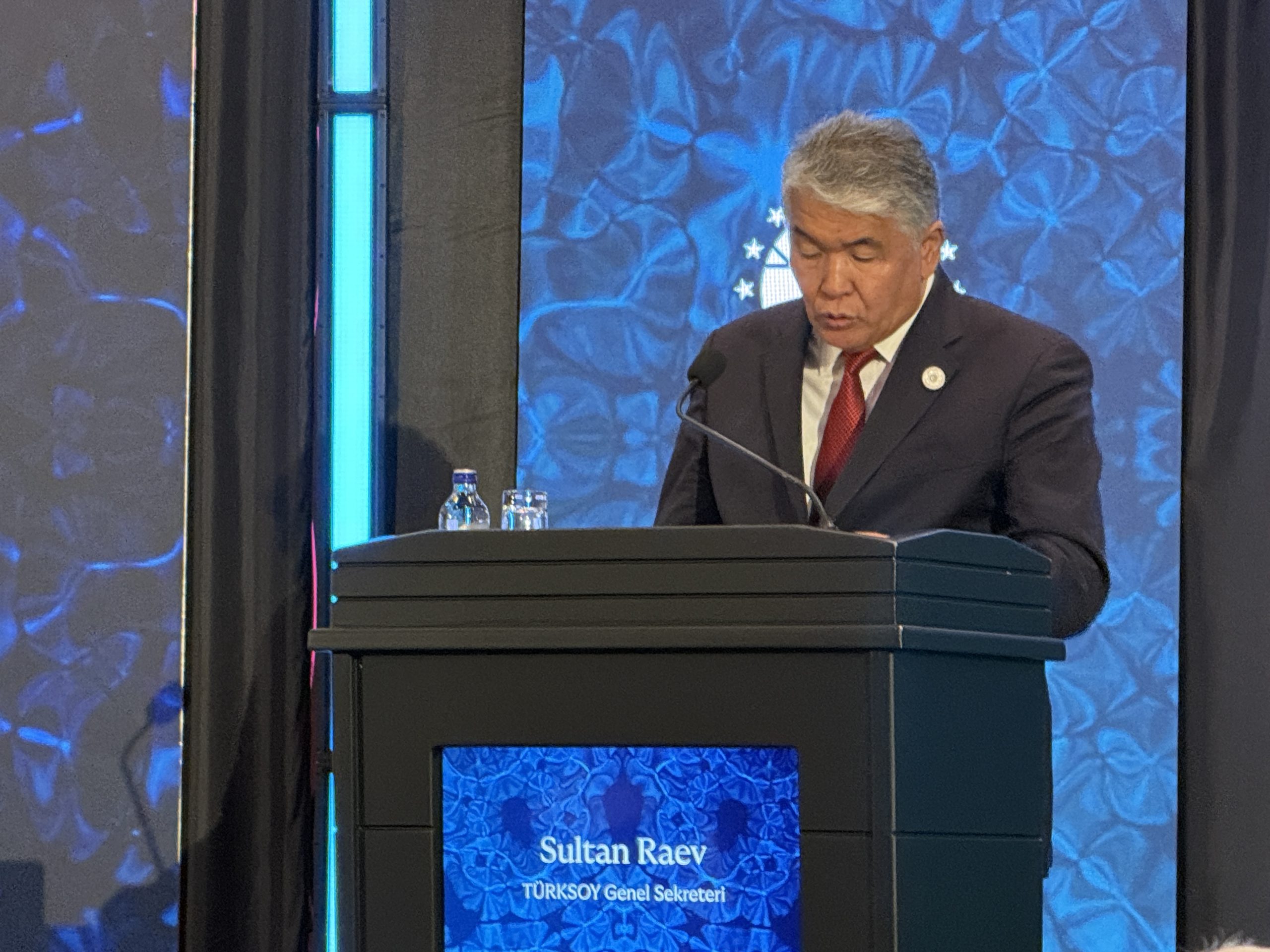
Sultan Raev, Secretary General of the International Organization of Turkic Culture (TURKSOY), called on the countries of the Turkic world to actively develop joint digital archives, language technologies, and cultural heritage platforms to ensure a full-fledged representation of their shared history and culture in the future information space.
He made these remarks in Ankara during a panel session titled “In the Footsteps of Gasprinsky: Language, Culture, and Memory in the Turkic World,” held as part of the Turkic World Dialogue Forum.
In his opening speech, Raev addressed the intellectual heritage of Ismail Gasprinsky, emphasizing the relevance of his ideas for the current stage of interaction among Turkic peoples.
The newspaper Tercüman, published by Gasprinsky in Bakhchysarai starting in 1883, served as a unique spiritual and intellectual bridge between different regions of the Turkic world, which at the time were largely deprived of opportunities for regular communication.
Gasprinsky viewed a common language and culture as crucial tools for bringing peoples together. His motto, “Unity in language, thought, and action,” was reflected not only in his publishing activities, but also in the development of schools operating on new pedagogical approaches, the spread of enlightenment, and the formation of new generations of intellectuals.
Raev noted that the Turkic world is united not only by common historical roots, but also by a rich spiritual heritage represented by names such as Ahmed Yassawi, Yunus Emre, Ali-Shir Nava’i, Magtymguly, and Abai.
Historical memory holds a special place in this heritage, as its preservation is essential to cultural identity.
“Memory is not merely a recollection of past events. Memory is the awareness of who we are and an understanding of the values with which we must move into the future,” Raev emphasized.
At the same time, he stressed that passing down knowledge to the youth is not enough—they must also be empowered to leverage historical heritage to shape the future.
From a Common Language to a Shared Information Space
According to Raev, Gasprinsky’s ideas take on a new dimension in the context of digital transformation. While connecting distant regions in the 19th century required significant effort and time, today’s information exchange happens almost instantaneously.
In this regard, the head of TURKSOY raised the question of how well the peoples of the Turkic world truly understand one another, despite modern communication tools.
He stressed the importance of working toward a shared alphabetic framework, language instruction, terminology unification, and publishing development. However, the primary task, he noted, is to ensure direct engagement with each other’s literature, scientific achievements, and creative cultural works.
Raev assigned a distinct role in this process to cinema, television, and music. He noted that works of art have the power to resonate with millions of people and foster cultural closeness far more effectively than many traditional forms of official diplomacy.
As an example, he cited youth interest in creative works produced in other Turkic countries, which allow them not only to learn the language, but also to discover shared cultural values and emotional bonds.
Raev emphasized that fostering these very connections lies at the core of TURKSOY’s work, which has been promoting cultural cooperation among Turkic peoples for more than three decades.
Artificial Intelligence
The impact of artificial intelligence on the preservation and dissemination of cultural heritage was another key focus of his speech.
“We must become a people that is not controlled by artificial intelligence, but rather one capable of guiding its development based on our own values,” Raev urged.
According to him, the question of how fully the history, literature, epics, manuscript heritage, and languages of the Turkic peoples are represented in the digital realm is acquiring critical importance.
Insufficient representation of a culture in digital resources can lead to its incomplete or distorted depiction in future information systems.
In this connection, the Secretary General of TURKSOY called for special attention to be paid to creating shared digital archives, cultural heritage platforms, language technologies, and educational programs.
At the same time, Raev stressed that preserving the text of an epic does not automatically mean preserving all the feelings and meanings it conveys. Therefore, along with technology, the human element—education, art, and creative expression—must remain at the center of attention.
A 21st-Century Tercüman
Summarizing his speech, Raev drew a parallel between the educational mission of Gasprinsky’s newspaper and the tasks facing the Turkic world today.
“Gasprinsky’s Tercüman built bridges between geographically distant regions in its era. The Tercüman of our time can take the form of shared bridges of knowledge, language, and culture that we must build together in the digital space,” he noted.
Achieving this requires not only modern technology, but also a unified understanding of goals, effective cooperation, and a shared commitment to cultural heritage.
He emphasized that following Gasprinsky’s ideas means more than just repeating his famous slogan; it means continuing his innovative approach, boldness of thought, and drive for practical transformations in today’s environment.
“Our language connects us to one another, our culture brings us closer together, and our shared historical memory gives us the strength to move into the future together,” concluded the Secretary General of TURKSOY. ///nCa, 1 November 2026