


nCa Commentary
For nearly a decade, the development agenda of Central Asia has been dominated by one objective: building connectivity. Railways, highways, ports, logistics hubs and border infrastructure have received unprecedented investment, transforming the region into one of Eurasia’s emerging transit crossroads.
Today, a new consensus is beginning to emerge.
Discussions at the recent Eurasian Development Bank (EDB) Annual Meeting and Business Forum in Almaty suggest that the next phase of regional integration is no longer about constructing additional infrastructure. Instead, the priority is to ensure that the infrastructure already in place functions as an integrated, efficient and predictable transport and trade system.
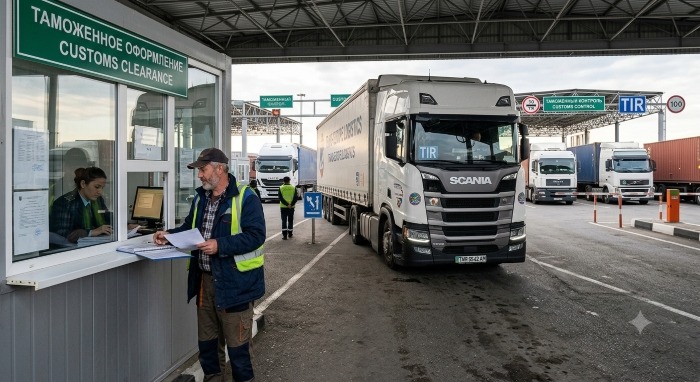
The emphasis is increasingly on harmonized customs procedures, digital documentation, interoperable logistics systems and coordinated border management. These “soft” measures may now yield greater returns than another stretch of railway or another logistics terminal.
This represents an important evolution in thinking.
A transport corridor derives its value not from the kilometres of track it contains but from the time and certainty with which cargo moves from origin to destination. Delays at border crossings, inconsistent customs practices, incompatible digital platforms and fragmented documentation can erase much of the competitive advantage created through billions of dollars of infrastructure investment.
In other words, connectivity has entered its second generation.
The focus is shifting from building corridors to making corridors work.
This perspective is particularly relevant for Central Asia, where several major international transport routes intersect. As cargo volumes continue to increase, efficiency gains are likely to come less from expanding physical capacity and more from reducing administrative friction.
Faster customs clearance, mutual recognition of electronic documents, integrated digital platforms, coordinated inspection procedures and greater transparency in transit regulations can significantly reduce transport times and costs while improving reliability.
Readers of nCa may find this conclusion familiar.
Over the past several months, nCa has consistently argued that the future competitiveness of the Middle Corridor and other Eurasian transport routes depends not only on infrastructure investment but also on institutional coordination. Our reporting has highlighted issues such as capacity constraints at key ports, the need for streamlined customs processing, smarter transit fee structures, digital integration and closer cooperation among transit countries. These are precisely the areas now receiving growing attention in regional policy discussions.
This convergence of views is encouraging. It suggests that policymakers and development institutions increasingly recognize that the region’s next competitive advantage will come from governance rather than concrete alone.
Central Asia has already demonstrated that it can build connectivity. The challenge now is to make that connectivity seamless.
If the countries of the region succeed in harmonizing procedures with the same determination that they have shown in developing infrastructure, Central Asia will strengthen its position not merely as a transit region, but as one of the world’s most efficient land bridges linking East and West. /// nCa, 2 July 2026 (photo credit – Gemeni generated image)