


Elvira Kadyrova and Liliya Zhirnova
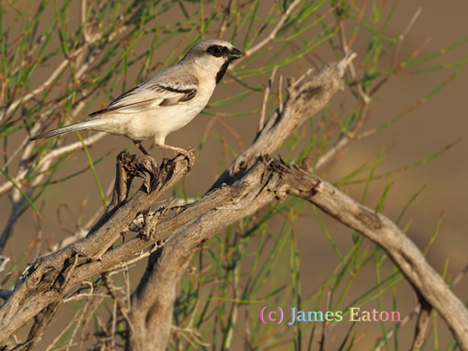
There are birds that become famous because they are spectacular, and there are birds that become memorable because finding them requires patience, knowledge and a journey into landscapes that few people ever visit. Zarudny’s Sparrow (Passer zarudnyi) belongs to the second category.
Small, unobtrusive and perfectly adapted to life in the deserts of Central Asia, the bird rarely attracts public attention. Yet among ornithologists and dedicated birdwatchers, it is considered one of the region’s most desirable sightings. Much of that reputation comes from the fact that Turkmenistan remains one of the species’ principal strongholds, offering some of the best opportunities anywhere in the world to observe it in its natural habitat.
In many ways, the story of Zarudny’s Sparrow is also the story of Turkmenistan’s deserts—vast, resilient ecosystems that continue to support a surprising diversity of life despite their seemingly inhospitable appearance.
More Than Sand
To many outsiders, deserts appear empty. Ecologists see something entirely different.
The Karakum Desert is home to a mosaic of habitats: saxaul woodlands, tamarisk thickets, clay plains, shifting dunes and seasonal wetlands. Each supports specialized plants and animals that have evolved over thousands of years to survive heat, drought and scarcity.
Zarudny’s Sparrow is one such specialist. Unlike the familiar House Sparrow that thrives in towns and villages, it prefers remote desert scrub, particularly areas where saxaul and tamarisk provide shelter and nesting opportunities. Its discreet behaviour makes it surprisingly difficult to observe, even where it is present.
For birdwatchers, that challenge is part of its attraction.
| Ten Desert Birds Every Visitor to Turkmenistan Should Know Turkmenistan’s deserts, mountains and wetlands support more than 400 recorded bird species, making the country one of Central Asia’s most rewarding destinations for birdwatching. While migratory birds attract seasonal attention, several resident species are true ambassadors of the country’s unique ecosystems. 1. Zarudny’s Sparrow (Passer zarudnyi) One of Central Asia’s most distinctive desert sparrows, recognized by its black facial mask and soft grey plumage. Turkmenistan is one of its principal strongholds. 2. Saxaul Sparrow (Passer ammodendri) Perfectly adapted to life among saxaul forests, this hardy sparrow depends on one of the desert’s most important native trees. 3. Desert Finch (Rhodospiza obsoleta) A beautifully marked finch that thrives in arid landscapes and is often seen feeding on desert seeds. 4. Macqueen’s Bustard (Chlamydotis macqueenii) One of the most iconic birds of Central Asian deserts, admired for its elegant appearance and elaborate courtship displays. 5. Greater Hoopoe-Lark (Alaemon alaudipes) An unmistakable desert specialist with long legs and a gently curved bill, famous for its remarkable song flights. 6. Desert Wheatear (Oenanthe deserti) A striking black-and-buff songbird commonly found on rocky outcrops and sandy plains. 7. See-see Partridge (Ammoperdix griseogularis) A shy resident of rocky hillsides whose soft calls often reveal its presence before it is seen. 8. Eurasian Eagle-Owl (Bubo bubo) Among the world’s largest owls, inhabiting cliffs, canyons and rugged mountain landscapes throughout parts of Turkmenistan. 9. Golden Eagle (Aquila chrysaetos) A magnificent raptor soaring above mountain ranges and open steppe, symbolizing the health of intact ecosystems. 10. Greater Flamingo (Phoenicopterus roseus) Not a desert bird in the strict sense, but a spectacular visitor to Turkmenistan’s coastal lagoons and wetlands along the Caspian Sea, demonstrating the country’s ecological diversity beyond the sands.Together, these birds illustrate the remarkable variety of habitats found within Turkmenistan—from shifting dunes and saxaul forests to mountains and coastal wetlands. |
A Global Responsibility
Although the species also occurs in neighbouring Uzbekistan and was historically recorded in northeastern Iran, Turkmenistan represents one of the bird’s most important remaining habitats.
That distinction carries an important responsibility.
When a country holds a significant share of a species’ population, protecting its habitat contributes directly to global biodiversity. Conservation therefore becomes more than a national concern; it becomes part of an international effort to preserve the natural heritage shared by all humanity.
Fortunately, much of the habitat preferred by Zarudny’s Sparrow lies within landscapes that have long been recognised for their ecological importance.
Building Conservation Quietly
Turkmenistan rarely features in international discussions about wildlife conservation.
Nevertheless, the country has steadily expanded a network of protected areas that safeguard representative ecosystems ranging from deserts and mountains to river valleys and coastal wetlands.
Among the best known are the Repetek Biosphere Reserve in the eastern Karakum, renowned for its desert research; the Badkhyz State Nature Reserve, celebrated for its rich flora and fauna; the Köýtendag State Nature Reserve, protecting dramatic mountain landscapes; and the Kaplankyr State Nature Reserve in the country’s northwest.
Together, these and other protected areas form an extensive conservation network that supports numerous rare mammals, reptiles, plants and birds, including species that depend on fragile desert ecosystems.
The work carried out in these reserves extends far beyond simply drawing lines on a map.
Scientists monitor wildlife populations, study ecological change, protect habitats from degradation and contribute valuable research on desert ecology—an area of growing importance as climate change places increasing pressure on arid environments worldwide.
International Recognition
Turkmenistan’s conservation efforts have also received international acknowledgement.
The Repetek Biosphere Reserve forms part of UNESCO’s World Network of Biosphere Reserves, reflecting decades of scientific research into desert ecosystems. The country is also a party to major international environmental agreements, including the Convention on Biological Diversity, the Ramsar Convention on Wetlands and the Convention on Migratory Species.
Participation in these frameworks encourages scientific cooperation, biodiversity monitoring and the exchange of conservation expertise with neighbouring countries and international organizations.
| Five Protected Areas Safeguarding Turkmenistan’s Natural Heritage Turkmenistan has quietly built an extensive network of protected areas covering representative ecosystems across the country. These reserves not only conserve wildlife but also serve as centres for scientific research, environmental monitoring and ecological education. Repetek Biosphere Reserve Located in the eastern Karakum Desert, Repetek is internationally recognized as part of UNESCO’s World Network of Biosphere Reserves. For nearly a century it has served as one of the world’s leading natural laboratories for desert ecology, where scientists study climate, vegetation, insects, reptiles, mammals and birds. Badkhyz State Nature Reserve Established in 1941, Badkhyz protects one of Central Asia’s richest concentrations of biodiversity. Its rolling hills, pistachio woodlands and semi-desert landscapes support numerous rare species, including the world’s largest surviving population of the Turkmen kulan (Asiatic wild ass), as well as gazelles, raptors and a remarkable diversity of flowering plants. Köýtendag State Nature Reserve Situated in eastern Turkmenistan, Köýtendag preserves spectacular mountain ecosystems, deep canyons and extensive cave systems. The reserve is home to wild sheep, mountain birds, endemic plants and some of the country’s most dramatic geological formations, including the famous dinosaur footprints. Kaplankyr State Nature Reserve Stretching across the Ustyurt Plateau in northwestern Turkmenistan, Kaplankyr protects vast desert and plateau ecosystems that support migratory birds, goitered gazelles, Ustyurt mouflon and numerous desert reptiles specially adapted to one of the harshest environments in Central Asia. Hazar State Nature Reserve Bordering the southeastern Caspian Sea, Hazar State Nature Reserve protects wetlands, lagoons and coastal habitats of international importance. It forms a vital stopover for migratory birds travelling along the Central Asian Flyway and regularly hosts pelicans, flamingos, ducks, geese, swans and many species of shorebirds. A Network with Global Significance Together, these protected areas demonstrate that Turkmenistan’s conservation efforts extend well beyond preserving individual species. They safeguard entire ecosystems—from the Karakum Desert and the Badkhyz uplands to the Köýtendag Mountains and the Caspian coastline—ensuring that biodiversity, scientific research and sustainable management remain integral parts of the country’s long-term environmental stewardship.For many international visitors, these reserves offer an opportunity to experience landscapes that remain largely unchanged by modern development. For scientists, they continue to provide valuable insights into desert ecology, climate adaptation and the conservation of species uniquely adapted to Central Asia’s challenging environments. |
Conservation and Sustainable Development
Protecting wildlife is often portrayed as being at odds with economic development. Increasingly, however, countries are finding that the two objectives can reinforce one another.
Healthy ecosystems help stabilize soils, conserve water, support pollinators and improve resilience against climate change. Protected natural areas also provide opportunities for education, scientific research and carefully managed nature tourism.
For Turkmenistan, birdwatching represents one such opportunity.
Around the world, specialist birdwatchers routinely travel thousands of kilometres to observe species with limited distributions. Their journeys frequently take them to remote areas where they contribute to local economies through accommodation, transport, guiding services and hospitality.
Central Asia has become an increasingly attractive destination for this niche form of tourism, and Turkmenistan possesses many of the ingredients that experienced birdwatchers seek: distinctive desert habitats, relatively undisturbed ecosystems and several species that are difficult to find elsewhere.
Looking Beyond the Sparrow
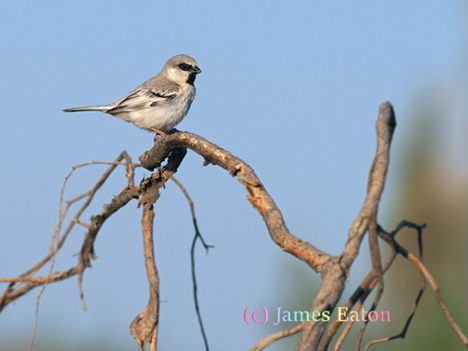
The value of Zarudny’s Sparrow ultimately lies not only in the bird itself but in what it represents.
Its continued presence reflects the health of the desert ecosystems on which countless other species also depend. Every observation recorded by researchers, every habitat protected within a reserve and every scientific survey contributes to a better understanding of these complex environments.
Many of these efforts receive little international publicity. They rarely make headlines or dominate environmental debates. Yet they form part of the steady, long-term work required to conserve biodiversity.
In an era when environmental discussions often focus on tropical forests or polar ice, the deserts of Central Asia can easily be overlooked. Zarudny’s Sparrow serves as a quiet reminder that these landscapes also deserve attention.
Sometimes, one small bird is enough to reveal a much bigger story. /// nCa, 31 July 2026