


Tariq Saeedi
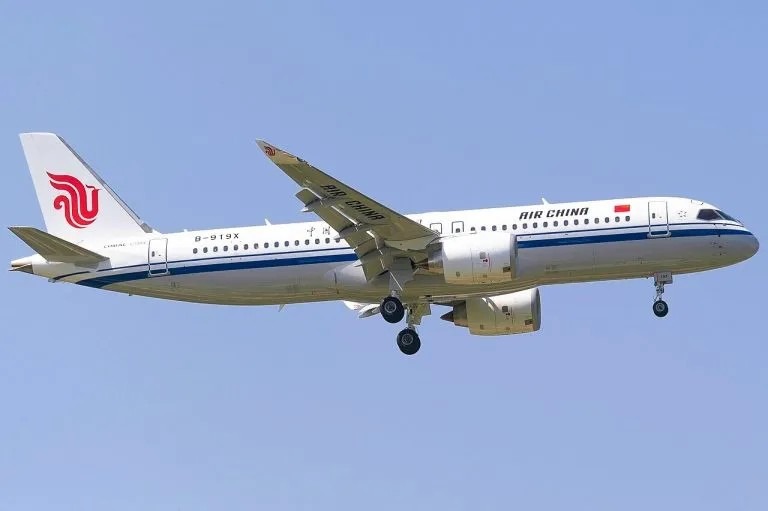
Somewhere over the Gobi, on a scheduled flight between China and Mongolia, an aircraft that has spent most of its short career flying domestic Chinese routes crossed an international border for the first time as a commercial service.
It was, on the surface, an unremarkable event — no fanfare, no ribbon-cutting, just a passenger jet doing what passenger jets do. But for anyone tracking the slow, deliberate arc of a new aircraft’s life, it was the moment the story changed. The COMAC C919 has stopped being a domestic project with international ambitions. It has become, however modestly, an international aircraft.
That distinction matters more than it might seem. Commercial aviation does not reward speed. It rewards patience, paperwork, and the accumulation of trust — and the Mongolia route is best understood not as an arrival but as a first step onto a path that is long, well-worn by other manufacturers before it, and still mostly ahead.
One Flight Does Not Make a World Aircraft
It is tempting to read a single international route as a verdict — proof that the C919 has “made it” onto the world stage. The reality is narrower and more interesting. What the Mongolia service actually confirms is that one foreign civil aviation authority, operating under its own laws and its own risk tolerance, has decided the aircraft is safe enough to fly in its skies. Nothing more, nothing less.
That is because there is no single body that certifies an aircraft for the planet. Each country guards its own airspace jealously, and while the International Civil Aviation Organization gives everyone a shared rulebook, it is national regulators — the FAA, EASA, CAAC, and dozens of others — who decide, case by case, whether a foreign-built aircraft earns a seat at their table.
So international expansion for any new aircraft happens the hard way: one relationship, one regulator, one market at a time. Mongolia is a single link in what will need to be a much longer chain.
What Regulators Are Really Buying
People imagine certification as a technical exam on the airframe — can the wings take the stress, do the engines behave, does the software do what it’s told. That is part of it, but it is far from the whole story. What a regulator is actually evaluating is whether an entire ecosystem around the aircraft can be trusted: how the factory controls quality, how mechanics are trained to maintain it, how spare parts move around the world when something breaks at three in the morning in an unfamiliar airport, how the manufacturer behaves when something goes wrong and has to be reported honestly.
In short, a regulator is not approving a machine. It is approving a promise — that everything behind the machine will hold up for the next twenty or thirty years of service. That is a heavier thing to certify than a wing spar, and it explains why even the most capable manufacturers spend years, not months, building the case.
A Shared Rulebook, Applied Differently Everywhere
ICAO gives the world a common safety language, but not a common voice. Some regulators lean on each other’s work through bilateral recognition agreements, effectively saying: if the FAA or EASA has already done the deep technical review, we will trust it and move faster.
Others insist on doing their own homework from scratch, regardless of who has gone before them. Neither approach is wrong — they simply reflect different levels of institutional caution and different national priorities.
The upshot is that there is no shortcut through a single global approval. There is only a slow accumulation of individual “yes” decisions, each one earned separately, each one built on the last.
Why Mongolia, Specifically
The choice of Mongolia as the first proving ground was not incidental — it was sensible in the way that a first step should be sensible.
The route is short, which keeps the aircraft within easy reach of Chinese maintenance and technical support rather than stranding it far from home. The bilateral relationship between Beijing and Ulaanbaatar already provided a working aviation framework, so there was no need to build regulatory trust from zero. And the operational environment itself — modest traffic, manageable weather patterns, a single well-understood corridor — offered a controlled setting in which to gather real-world experience without excessive exposure.
This is not a new playbook. Aircraft manufacturers have used neighbouring, friendly markets as a proving ground before committing to the far more demanding scrutiny of the world’s largest aviation markets. What matters is not that the first international route was modest, but that a modest first route is exactly what a careful expansion strategy is supposed to look like.
The Path That Usually Follows
If the pattern holds — and history gives reasonable grounds to expect it will — the C919’s international story will likely unfold in recognisable stages. First come the neighbouring markets, where cooperation is easy and support networks are close by. Then come regions with rising aviation demand and existing commercial ties to China, where airlines are hungry for capacity and open to new suppliers. Only later, once a substantial operational record has accumulated, does a manufacturer typically attempt the most demanding markets — those where certification is rigorous, competition is fierce, and airline procurement committees ask hard questions before writing a check.
None of this is a hierarchy of prestige. It is simply how trust gets built when the product in question can kill people if it fails, and everyone involved knows it.
Selling an Aircraft Means Selling a Support Network
Even a fully certified aircraft does not sell itself. Airlines are, in the end, extremely conservative buyers, because the cost of guessing wrong is enormous. Before committing to a new type, they want to know that parts will be available at 2 a.m. when an engine needs a component, that pilots can be trained on accessible simulators, that technical documentation is complete and current, that financiers and lessors will offer reasonable terms, and that insurers are comfortable enough with the aircraft’s risk profile to price it fairly.
An aircraft with no international support network, however well engineered, is a hard sell regardless of its specifications.
This is, in many ways, the less visible half of the C919’s international journey — quieter than headline route announcements, but just as decisive.
Confidence Is Earned in Instalments
Aviation, more than almost any other industry, runs on accumulated confidence rather than reputation claimed in advance. Each incident-free year in service, each transparent safety disclosure, each responsive technical support call adds a small deposit to an account that airlines, insurers, and regulators are all quietly watching. There is no single event that unlocks trust all at once. It compounds, slowly, the way it always has for every aircraft that has gone on to fly internationally.
Where Politics Actually Enters the Picture
It is fair to ask whether geopolitics shapes which aircraft get certified where — and the honest answer is layered. Formally, certification decisions are meant to rest on safety and technical compliance alone, and that principle remains genuinely central to how aviation authorities operate; regulators do not typically ground or approve aircraft as a matter of diplomatic signalling.
But aviation does not exist in a vacuum separate from trade policy, export controls, and the broader state of relations between countries, and those forces can shape the commercial environment — financing terms, market access, industrial partnerships — even when they don’t touch the certification file itself.
The long Boeing-Airbus disputes are instructive here. Those fights were almost entirely about subsidies and trade practices, not about keeping each other’s aircraft out of the sky. American carriers have flown Airbus jets for decades under FAA certification; European carriers have flown Boeing jets for just as long under EASA approval. The politics and the safety regulation ran on separate, largely non-intersecting tracks — a distinction worth holding onto amid speculation about how the C919’s expansion might unfold.
A Roadmap, Not a Finish Line
Seen this way, the road ahead for the C919 is less a race to a single destination and more a checklist that gets worked through patiently, over years:
- A longer track record of reliable domestic service.
- Additional international routes beyond the first.
- Maintenance, training, and technical support infrastructure built out abroad.
- Growing confidence among airlines, lessors, insurers, and financiers.
- Deeper regulatory cooperation with more civil aviation authorities.
- Steady entry into a wider set of regional markets.
- Eventually, certification attempts in the most demanding jurisdictions, if and when the commercial case supports it.
No single item on that list guarantees the outcome. Each one simply makes the next one a little more achievable.
The View From Here
The China-Mongolia service will not be remembered, years from now, as the moment the C919 conquered international aviation. It will be remembered — if it is remembered at all — as the quiet first entry in a much longer ledger.
What will actually determine whether the aircraft becomes a familiar sight at airports worldwide is not this route, or the next one, but the slower, less photogenic work behind it: the support networks being built, the regulators being persuaded one file at a time, the airlines watching from the sidelines to see how the aircraft performs when nobody outside the industry is paying attention.
That is how every commercial aircraft has earned its place in the world’s skies. There is no reason to expect the C919’s path to look any different. /// nCa, 24 July 2026