


Tariq Saeedi and Elvira Kadyrova
Walk through the glossy corridors of the Astana Hub in Kazakhstan or attend a high-profile tech summit in Tashkent, and you will hear an intoxicating narrative. — Central Asia, the story goes, is on the cusp of an absolute digital revolution. From FinTech breakthroughs and AI-driven government services to clean energy innovations, the region is deeply enamored with the “chic” solutions of the modern global economy.
Yet, beneath this high-tech veneer lies a stark demographic and economic reality: computer code cannot feed a growing population, and algorithms do not build houses.
As Central Asia aggressively pursues technological leapfrogging, it faces a dangerous temptation to neglect the very foundation of its socio-economic fabric. In the rush to look modern, regional policymakers must not lose sight of a fundamental truth: the true anchor of regional stability, livelihood, and inclusive growth remains the unglamorous, low-tech, labor-intensive sectors of the economy.
Balancing the Tech Romance with Ground Realities
There is nothing inherently wrong with this regional romance with the “digital ecosystem.”
Building state-of-the-art data centers, digitizing customs procedures, and fostering software development are perfectly fine, forward-looking goals. They are necessary milestones if Central Asia wishes to compete on the global stage. However, an economic strategy cannot be built purely on romance; it must be wedded to the capabilities of the average citizen.
A glaring disconnect emerges when the state’s intellectual and financial capital is disproportionately funneled into high-tech corridors, while the vast majority of the population lacks the specialized literacy to enter them.
The common citizen—the bazaar trader, the smallholder farmer, the rural youth—does not live in a cloud-based matrix. They require tangible, gainful employment that matches their current skills. For these millions, economic empowerment is propelled not by blockchain or quantum computing, but by accessible, brick-and-mortar opportunities found in the low-tech, labor-heavy portions of the economy.
The Math of the Masses
The mathematics of regional employment reveal the scale of this disconnect. The capital-intensive sectors that generate Central Asia’s vast wealth—most notably oil, gas, and mineral extraction—employ a fraction of the workforce. In Kazakhstan, for example, the resource sector routinely accounts for the lion’s share of export earnings but employs less than 6% of the population.
Similarly, high-tech hubs and digital services are notoriously low-employers relative to their revenue. A booming FinTech startup might scale to millions of users with just a few hundred engineers.
Meanwhile, Central Asia is experiencing a massive demographic boom. Over half of Uzbekistan’s 37 million people are under the age of 30. Tajikistan boasts the youngest median age in the region at just 21.5 years. Thousands of young people enter the job market every single month. If the state focus shifts entirely toward creating elite digital tech roles, millions of citizens who find themselves outside the highly tech-savvy demographic will be structurally left behind.
Where the Livelihoods Live
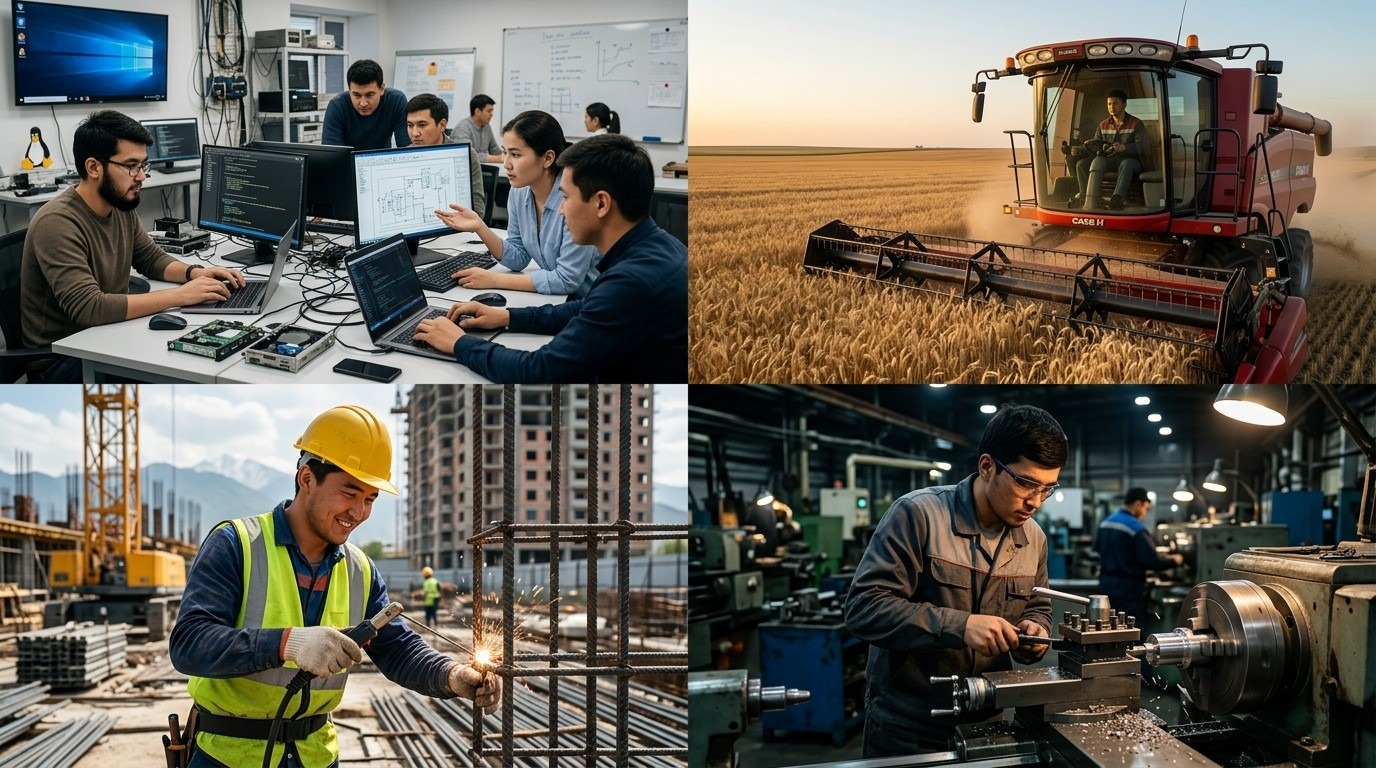
To understand where the majority of Central Asians find their daily livelihood, one must look away from the gleaming office towers and toward the fields, the construction sites, and the factory floors.
- Agriculture and Food Processing: The fertile Fergana Valley and the agricultural belts of southern Kazakhstan, Turkmenistan, and Tajikistan are the lifeblood of millions. While automation can increase yields, basic harvesting, sorting, drying, and packaging remain inherently labor-heavy. It is a sector that directly converts physical labor into household income.
- Textiles and Light Industry: The strategic transition from exporting raw cotton and leather to domestic manufacturing is already proving to be a massive job creator. Uzbekistan’s garment factories, Turkmenistan’s textile complexes, and Kyrgyzstan’s bustling apparel markets provide immediate, accessible employment for formal and informal workers alike.
- The “Economy of Simple Things”: Construction and the domestic production of building materials, furniture, and basic consumer goods act as critical economic sponges. When global commodity prices fluctuate, these localized, low-tech industries absorb the shocks by keeping local supply chains moving and keeping local workers paid.
A Balanced Equation, Not a Binary Choice
Advocating for low-tech sectors is not an argument against progress. Digitalization is essential for reducing corruption, improving logistics, and streamlining bureaucracy. However, technology should be viewed as a tool to enhance traditional industries, rather than a strategy to replace them.
When a government heavily subsidizes an AI incubator while allowing its domestic textile or shoe manufacturing sectors to be crushed by cheap foreign imports, it trades long-term social stability for short-term prestige. High-tech development creates wealth, but low-tech investment distributes it.
If Central Asian states want to avoid the severe regional inequalities that spark social unrest, they must champion a dual-track economic strategy. Let the capitals build their tech hubs, but let the state budgets give proportional attention and protection to the production of everyday goods.
The region’s economic future relies not on choosing between the shovel and the smartphone, but on recognizing that for the vast majority of its people, the shovel is still what puts food on the table. /// nCa, 8 September 2026 [photo – AI-generated image]