


Tariq Saeedi and Elvira Kadyrova
As the Republic of Tajikistan marks the 35th anniversary of its state independence on September 9, 2026, the occasion prompts a profound reflection on one of the most remarkable transformations in the modern history of Central Asia.
Three and a half decades ago, when the Soviet Union fractured, Tajikistan inherited a landscape fraught with structural economic challenges and deep geographic isolation.
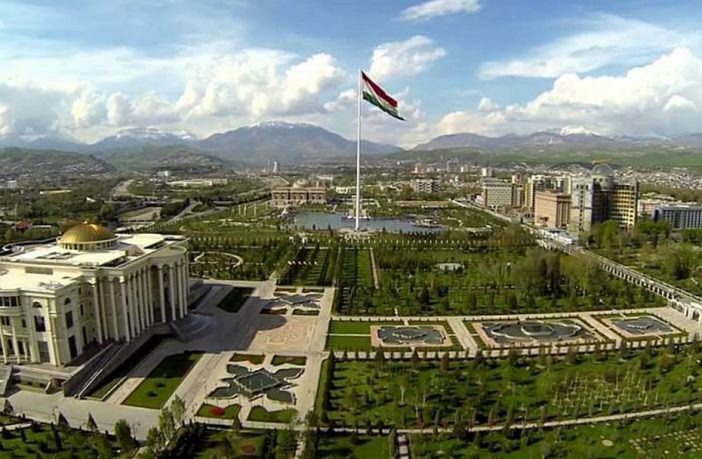
Today, however, the nation stands proud as a fast-moving, modern economy that seamlessly blends its rich historical heritage with a bold leap into the technological and sustainable frontiers of the 21st century.
Rewriting the Economic Destiny
To fully appreciate Tajikistan’s current trajectory, it is essential to recall the baseline from which it emerged. At the time of its independence declaration on September 9, 1991, Tajikistan was arguably an economically neglected and structurally marginalized component of the Soviet apparatus.
Left with minimal industrial infrastructure and facing severe connectivity bottlenecks, the fledgling republic confronted immense difficulties in its early years of independence.
The statistical journey from 1991 to 2026 illustrates a staggering arc of growth:
- Overall GDP: In 1991, Tajikistan’s nominal Gross Domestic Product (GDP) hovered at a mere $2.54 billion. By 2026, through persistent reforms and industrial diversification, the nation’s nominal GDP has scaled to $20.42 billion, while its Purchasing Power Parity (PPP) GDP has surged to an impressive $69.67 billion.
- Per Capita GDP: The wealth distribution per individual tells an even more compelling story of upward mobility. At independence, nominal per capita GDP was just a few hundred dollars. In 2026, the nominal per capita GDP has climbed to $1,939, while the cost-of-living adjusted GDP per capita (PPP) has reached a robust $6,616, signaling vastly improved economic muscle.
The Quality of Life: A Human-Centric Success
This macroeconomic expansion has translated directly into tangible advancements in the quality of daily life for the Tajik people. Decades of strategic underinvestment during the Soviet era have been replaced by robust, state-led funding in public welfare, medical access, and educational capital.
The social indicators paint a clear picture of this upliftment.
Driven by national health initiatives, the life expectancy of citizens has risen to an estimated 75.17 years in 2026, reflecting a massive historical stride in healthcare access, nutrition, and maternal care.
Concurrently, the national poverty rate has experienced an aggressive, sustained downward trajectory—plummeting from the overwhelming majorities of the early post-independence era to 14.8% recently, with further reductions continuously projected by international financial institutions.
A Vision of Unity and Strategic Direction
The primary architect of this stabilization and forward momentum is President Emomali Rahmon. In the early, turbulent years of statehood, it was President Rahmon’s unifying vision that successfully navigated the country through existential socioeconomic difficulties. By prioritizing national reconciliation, institutional strength, and a clear developmental roadmap, his leadership converted an era of profound crisis into a launchpad for long-term national growth.
In his recent address reviewing preparations for this milestone, President Rahmon underscored that the benefits of statehood are manifesting through accelerated physical infrastructure, noting that thousands of vital public facilities have been successfully commissioned ahead of schedule. He highlighted how these achievements make “an important contribution to the implementation of key economic policy priorities, including accelerated industrialization, food security, and energy independence.”
Rather than looking backward, President Rahmon’s vision has firmly trained the nation’s sights on tomorrow. Tajikistan is aggressively implementing a unique economic model engineered to spread profitable economic activities and commercial opportunities evenly across its diverse and mountainous terrain.
By decentralizing economic zones, the government is ensuring that remote valleys and metropolitan centers alike participate equally in national wealth generation.
The Pillars of Tomorrow: AI, Green Energy, and the Knowledge Economy
Looking forward, Tajikistan’s development trajectory is anchored in highly progressive fields.
The country has explicitly shifted its focus toward building a comprehensive knowledge economy.
Recognizing that human intellect is the ultimate sustainable asset, massive policy stress has been placed on adopting Artificial Intelligence (AI), expanding digital literacy, and fostering tech ecosystems among Tajikistan’s young demographic.
Simultaneously, the country is transforming its rugged terrain into a massive ecological asset.
Tajikistan is already a regional leader in renewable energy generation, utilizing its vast hydrologic networks to produce clean, carbon-free electricity. By doubling down on green, renewable sources, Dushanbe is not only securing its domestic energy sovereignty but positioning itself as the primary clean energy exporter for the wider South and Central Asian grids.
A Diplomacy of Win-Win Partnerships
On the global stage, Tajikistan has successfully cultivated a highly respected diplomatic footprint. Departing entirely from the isolation of its past, the nation plays an active, leading role in regional and international relations.
Celebrating this diplomatic evolution at a solemn ministerial gathering ahead of Independence Day, Foreign Minister Sirojiddin Muhriddin observed:
“State Independence is an invaluable achievement and a great historical blessing for the ancient Tajik nation, providing a solid foundation for national sovereignty, the country’s independent political and socio-economic development, the revival of national values, and the building of a new and progressive society.”
The Foreign Minister emphasized that a key direction of Tajik diplomacy under President Rahmon has been the proactive promotion of landmark global initiatives. Tajikistan frequently leads on addressing shared planetary challenges, particularly in the areas of water management, climate change, and environmental protection.
Crucially, Tajikistan pursues this international leadership without being assertive or adversarial.
Its diplomacy is rooted in mutual respect, quiet mediation, and constructive engagement, proving that a nation’s global influence is measured by the value of its ideas and the reliability of its partnership.
As Tajikistan celebrates 35 years of sovereignty, it stands as a testament to resilience. Guided by a clear structural vision, powered by a green and digital economic model, and unified in its national identity, the country is poised to scale new, unprecedented heights on its developmental trajectory. /// nCa, 8 September 2026