


Elvira Kadyrova in Ankara, Tariq Saeedi in Ashgabat
Executive Summary
On October 29, 2026, leaders and high-level delegations from the member and observer states of the Organization of Turkic States (OTS) arrived in Ankara, Türkiye, to participate in high-level diplomatic engagements ahead of the landmark 13th OTS Summit.
Hosted under the theme “Turkic Century: Unity in Language, Thought and Deed” (inspired by the philosophical legacy of Ismail Gasprinski and the strategic vision of the Turkish chairmanship), the pre-summit agenda on October 29 featured crucial ministerial councils, symbolic unity ceremonies, and intense bilateral diplomacy.
Here we provide a comprehensive breakdown of the pre-summit events, incorporating Turkish media findings, foreign ministerial outcomes, side events, and the vital perspective of Turkmenistan regarding its deep-rooted relationship with the Turkic geopolitical family.
The Council of Foreign Ministers Meeting (October 29, 2026)
Ahead of the presidential and head-of-state sessions, the Council of Foreign Ministers of the OTS officially convened in Ankara on October 29.
- Host & Focus: Hosted by Turkish Foreign Minister Hakan Fidan, the ministerial gathering focused heavily on cementing the institutional framework of the organization, harmonizing regional policies, and reviewing administrative and financial documents slated for final leader approval.
- Key Strategic Themes:
- Institutional Development: Discussions emphasized strengthening the inner workings of the OTS secretariat and expanding functional integration among member states (Türkiye, Azerbaijan, Kazakhstan, Kyrgyzstan, and Uzbekistan) and observer states.
- Regional Security and Afghanistan: Foreign ministers evaluated pressing regional security matrices, notably addressing the evolving situation in Afghanistan and its direct implications for cross-border stability, security, and regional connectivity. The council stressed the imperative of enhanced, multi-lateral intelligence and diplomatic consultations between member and observer states.
- Drafting the Ankara Declaration: Ministers finalized the structural texts for the overarching Ankara Declaration, which charts the course for the Turkic World Vision 2040 framework across energy, digital transformation, and economic resilience.
Pre-Summit Cultural Events and Side Activities (October 29, 2026)
In addition to formal diplomacy, October 29 coincided with Türkiye’s national Republic Day celebrations, adding a celebratory and historic backdrop to the arrivals. Several high-profile cultural and symbolic events unfolded:
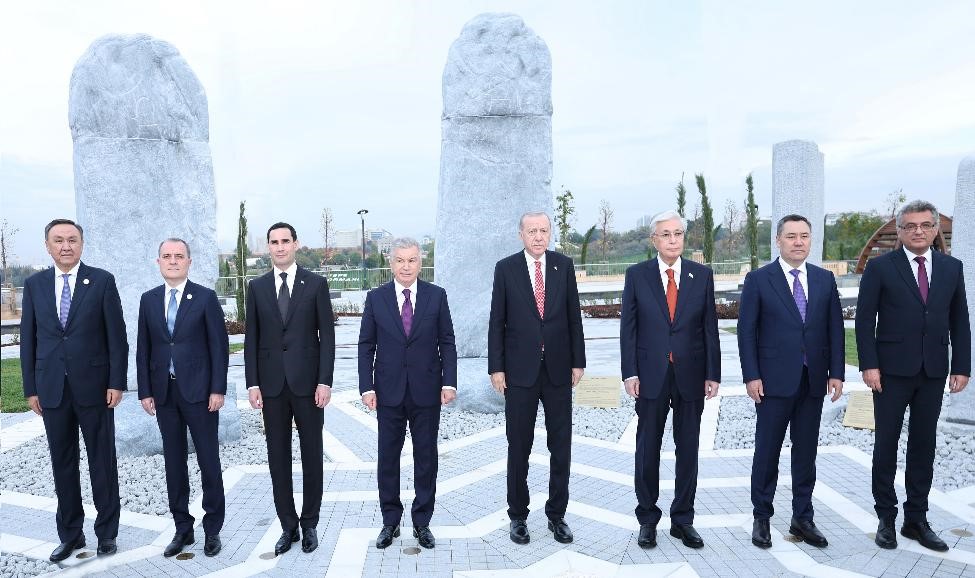
- Sapling Planting Ceremony at the Turkic States Civilization Park: President Recep Tayyip Erdoğan welcomed visiting heads of state—including President Serdar Berdimuhamedov of Turkmenistan, President Kassym-Jomart Tokayev of Kazakhstan, President Shavkat Mirziyoyev of Uzbekistan, President Sadyr Japarov of Kyrgyzstan, and TRNC leaders—at a joint tree-planting ceremony. Leaders planted pine saplings side-by-side in the park to physically symbolize enduring unity and ecological cooperation within the Turkic space.
- Military Band and Cultural Displays: Following the planting ceremony, the Ministry of National Defense Mehteran Unit (Ottoman Military Band) and the Presidential Guard Regiment Band performed traditional historical marches. The program featured rich traditional folk dance performances representing the shared heritage of the Turkic geography.
- Exhibition of Turkic Architectural Miniatures:Leaders toured a specialized exhibition area featuring detailed miniatures of monumental cultural and historical structures from across the Turkic world, including Hagia Sophia, Anıtkabir, the Çanakkale Martyrs’ Memorial, Göbeklitepe, the Selimiye Mosque, and historical rail and palace architecture.
- Turkish Stars Aerobatics Demonstration: The Turkish Air Force’s renowned aerobatics team, the Turkish Stars, executed a high-precision, flag-themed demonstration flight over the ceremony complex, witnessed by all visiting heads of state and high-ranking dignitaries (including Turkish Parliamentary Speaker Numan Kurtulmuş, Vice President Cevdet Yılmaz, and MHP Chairman Devlet Bahçeli).
The Turkmen Perspective: Philosophy of Common Space and Regional Integration
While standard international reports quantify the OTS primarily through logistical metrics, trade volumes, and the Middle Corridor transit routes, Turkmenistan’s diplomatic framework views the broader Turkic ecosystem through a distinct civilizational, neutral, and long-term cooperative lens.
In official state discourse originating from Ashgabat and highlighted during high-level arrivals, Turkmenistan approaches the OTS not merely as a geopolitical or transactional bloc, but as a common spiritual, historical, and geographic continuum. Key tenets of Turkmenistan’s relationship with the organization include:
- The Concept of a Shared Civilization: Ashgabat emphasizes that the foundation of cooperation rests on deep linguistic, cultural, and ancestral roots. In Turkmenistan’s worldview, the joint geopolitical and cultural space shared by Turkic nations represents a natural zone of peace, mutual trust, and historic solidarity.
- Neutrality and Constructive Engagement: As a permanently neutral state recognized by the United Nations, Turkmenistan’s active participation in the OTS framework demonstrates its commitment to economic, transport, and energy collaboration (such as reliable natural gas transit and Caspian connectivity) while strictly respecting mutual sovereignty, and non-alignment with external military or political blocs.
- Institutional Harmony via Neutrality: Turkmenistan views the institutional maturation of the OTS as an effective platform to amplify the voice of Central Asia and the Caucasus globally, fostering stability from the Adriatic to the Chinese border through consensus-based diplomacy.
Outlook for the October 30 Summit Sessions
With pre-summit ministerial consensus achieved and cultural foundations laid on October 29, the actual leaders’ summit opens on October 30, 2026. Key agenda items for the main sessions include:
- The Formal Transfer of Chairmanship: Türkiye officially assumes the rotating chairmanship of the OTS from Azerbaijan.
- Adoption of the Ankara Declaration: Finalizing strategic commitments on digital economies, green energy transitions, and regulatory harmonization for transit.
- Deepening the Middle Corridor: Evaluating joint investments to bypass bottlenecks across the Caspian Sea, maximizing trade efficiency between Central Asia and European markets. /// nCa, 30 October 2026 (picture credit TDH)