Elvira Kadyrova
Every city has its own rhythm and character, which is not always easy to catch during a brief visit. Yet sometimes, all it takes is a walk through a local bazaar, a visit to the main square, and a stroll in a popular park to feel the true essence of a city beyond its building facades and pre-planned tourist routes.
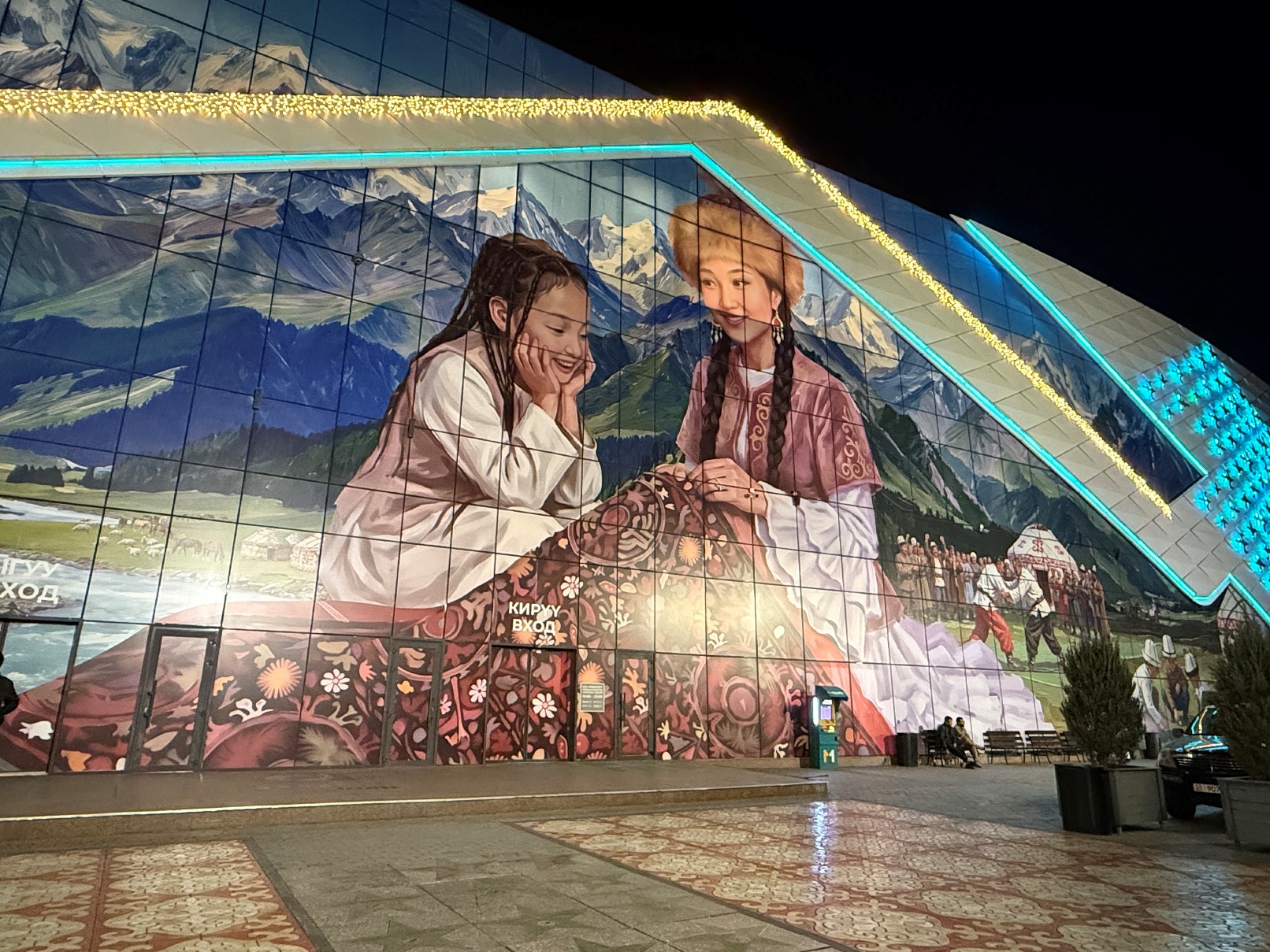
My brief yet memorable encounter with Bishkek took place while participating in the OSCE Central Asia Media Conference. On the day before the forum began, I managed to get out into the city and discover a few places that reveal the capital of Kyrgyzstan in their own special way—vibrant, welcoming, rapidly changing, yet carefully preserving the memory of its past.
Osh Bazaar: The Colors and Flavors of the City
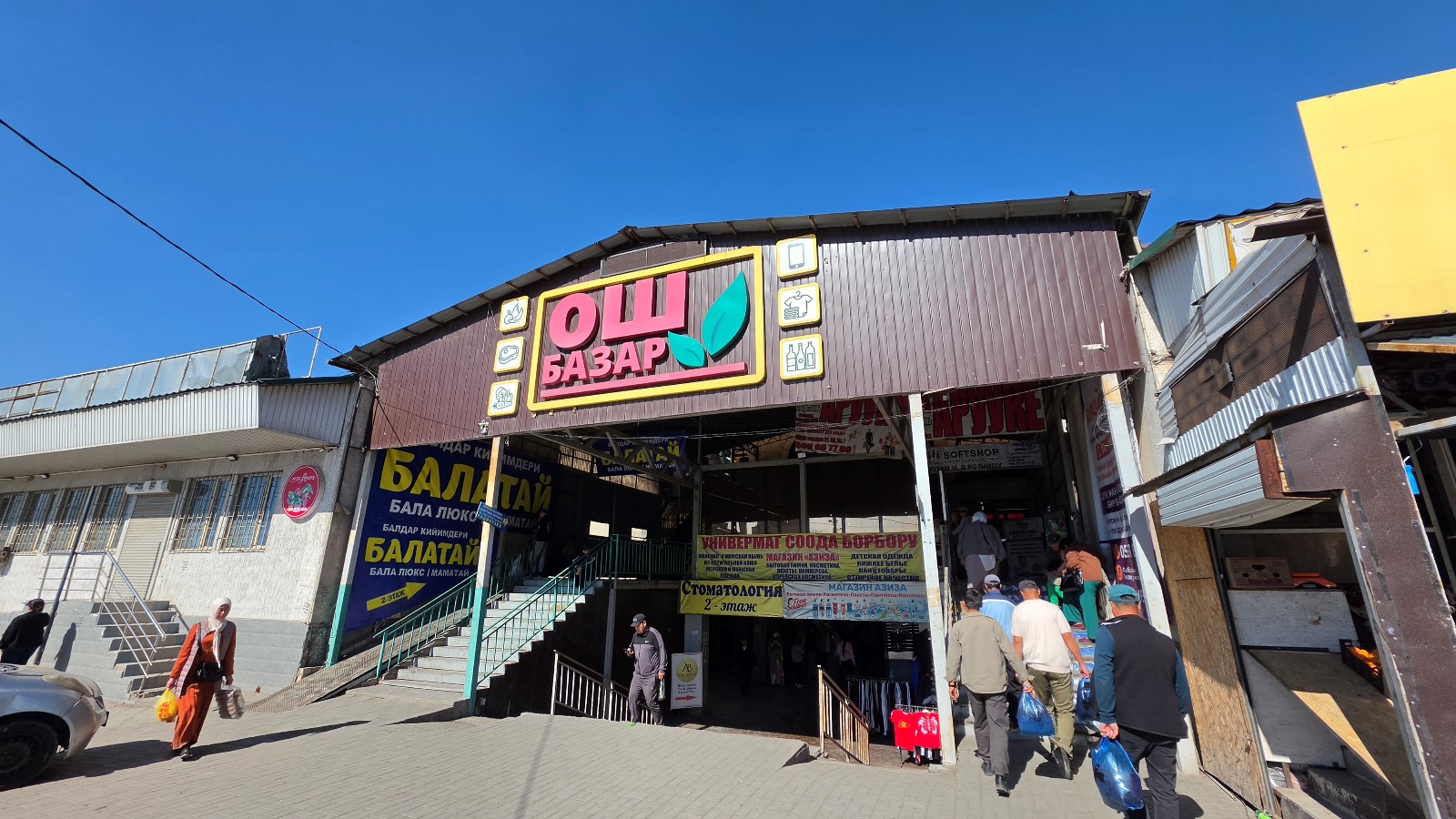
One of the first stops on my itinerary was the Osh Bazaar, located within walking distance of the Novotel Bishkek hotel, where the conference participants were staying. Here, your acquaintance with the city begins through its everyday life—the movement, the calls of the vendors, the colorful stalls, and the aromas of fresh produce.
Osh Bazaar is one of Bishkek’s famous markets, boasting a history of over four decades. For locals, it is primarily a place to buy everyday groceries, while for visitors, it offers a wonderful opportunity to experience the richness of Kyrgyz cuisine and traditional handicrafts.
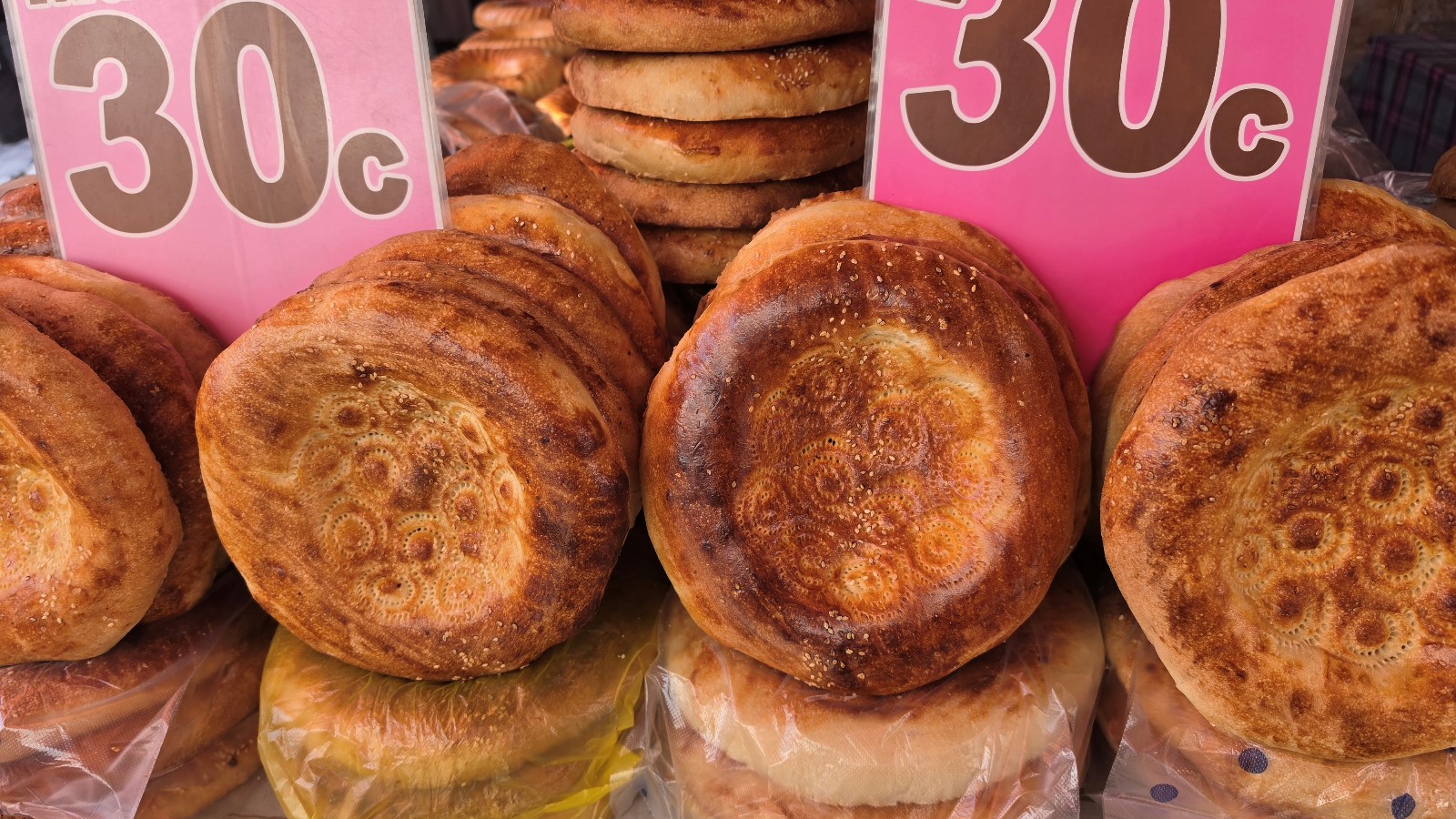
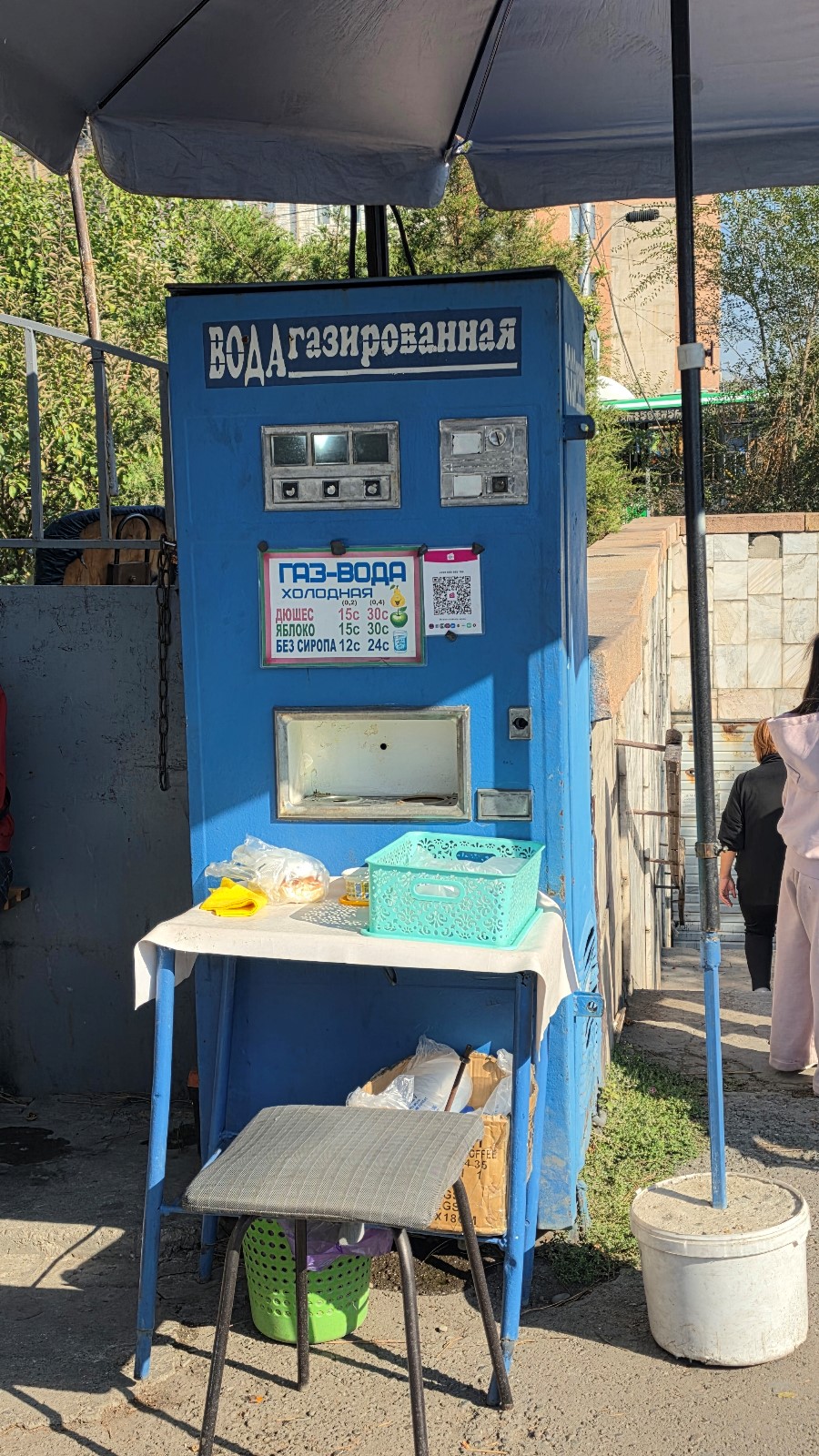
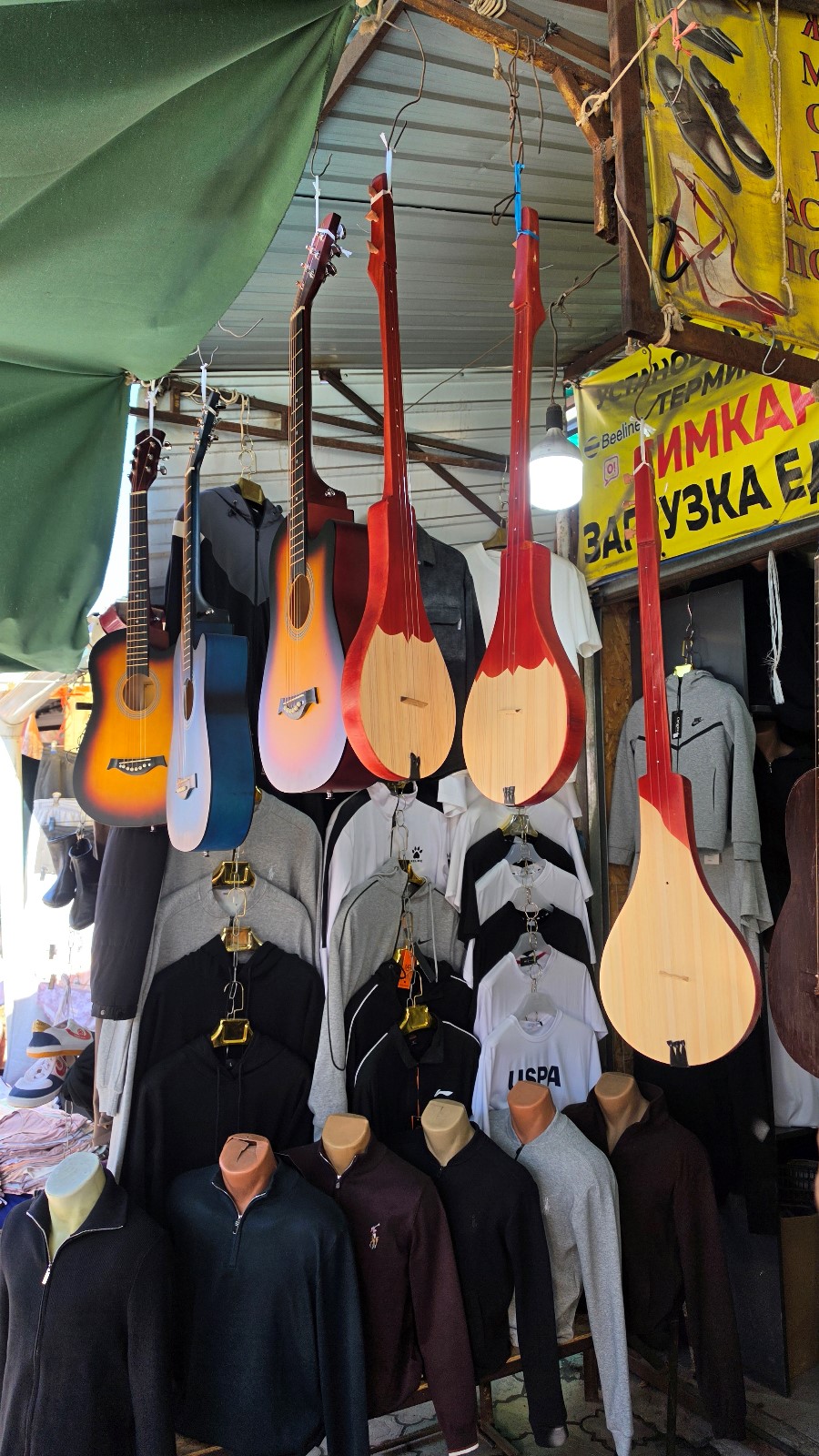
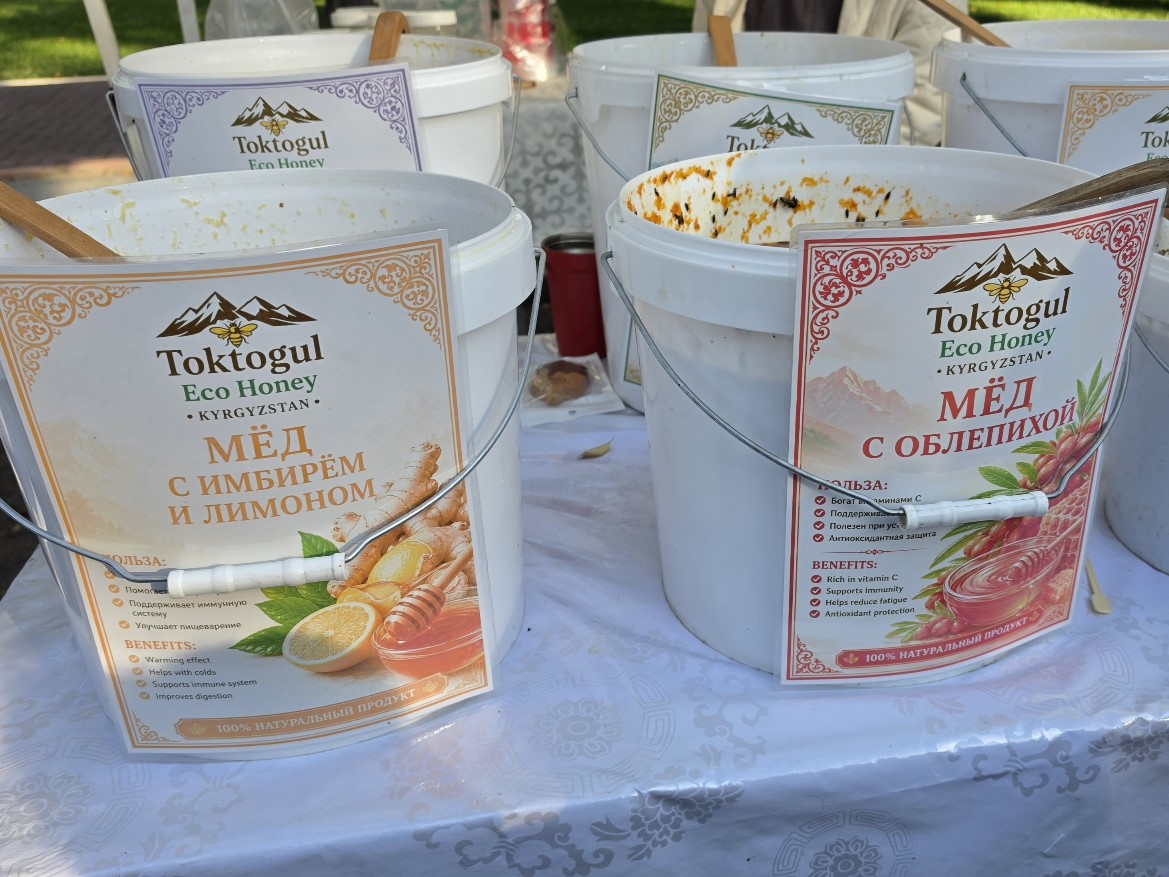
Fresh fruits, berries, dried fruits, honey, and various sweets sit side by side on the stalls. An appetizing aroma of ripe fruit hangs in the air among the fruit rows. Just by the scent alone, you can tell the produce is organic and free from excessive fertilizers.
The bazaar is fascinating not only for its gastronomic diversity. In the market stalls, you can find gifts that will keep the memory of your trip alive: men’s and women’s chapans (traditional robes), cashmere scarves with national embroidery, and women’s clothing made of heavy patterned velvet (panbarhat), which is very popular among locals.
At the same time, Osh Bazaar is a completely modern market from an economic perspective. At many stalls—even small bread counters—locals pay using QR codes. However, cash remains the most reliable option, so foreigners are advised to carry some local currency with them. There are plenty of currency exchange booths around the bazaar, which is also very convenient for visitors.
Osh Bazaar does not look like a museum set piece. At first glance, the small stalls and booths may seem like a chaotic maze of simple infrastructure. But the market operates by its own rules, perfectly tailored to the everyday needs of local residents. Here, the focus is on trade, lively conversation, and taking care of routine daily needs—from buying basic necessities to repairing shoes. It is at the bazaar that you realize that discovering a country starts not only with its monuments, but with the way its people live every single day.
Ala-Too Square: National History in the Heart of the City
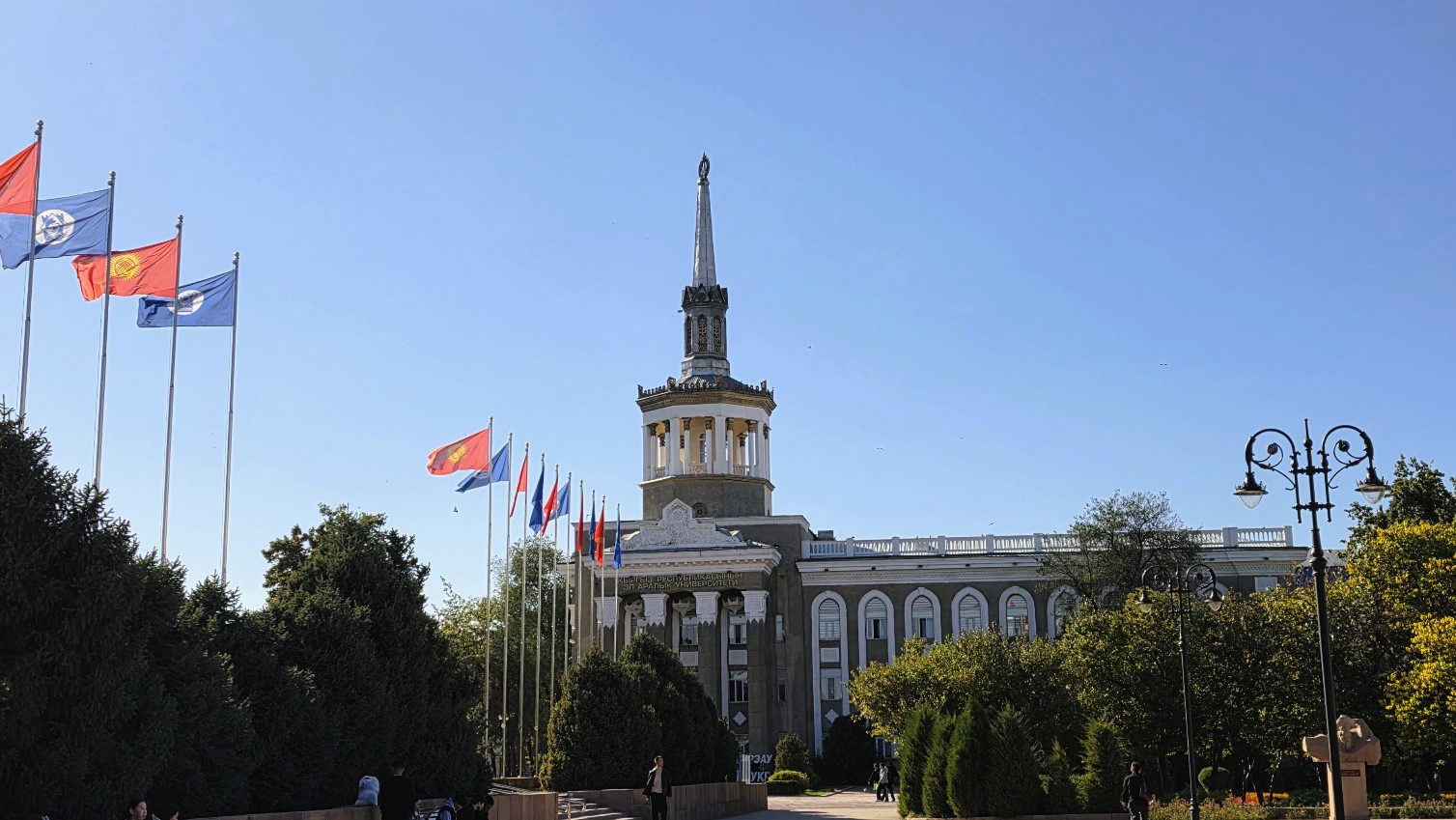
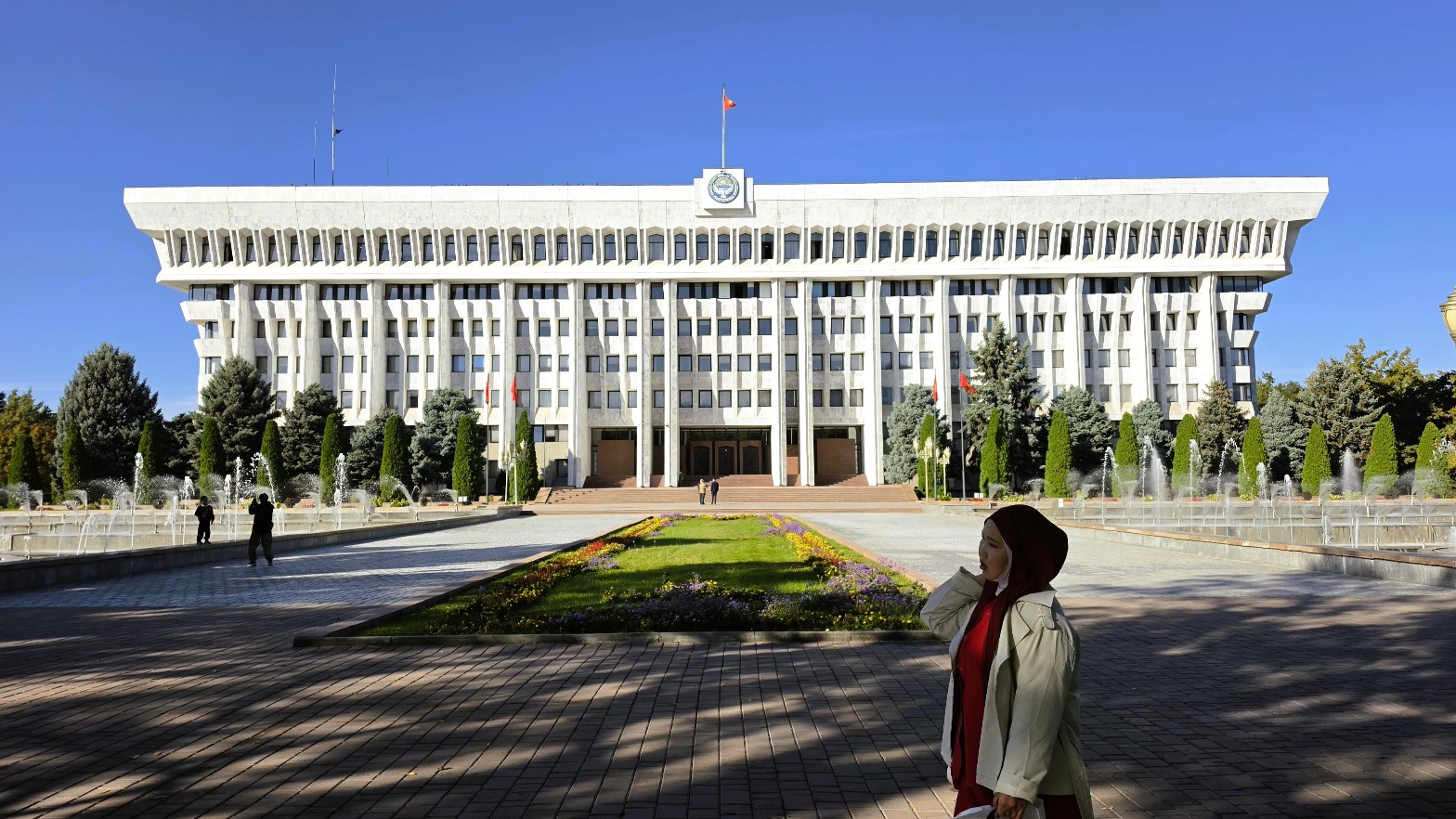
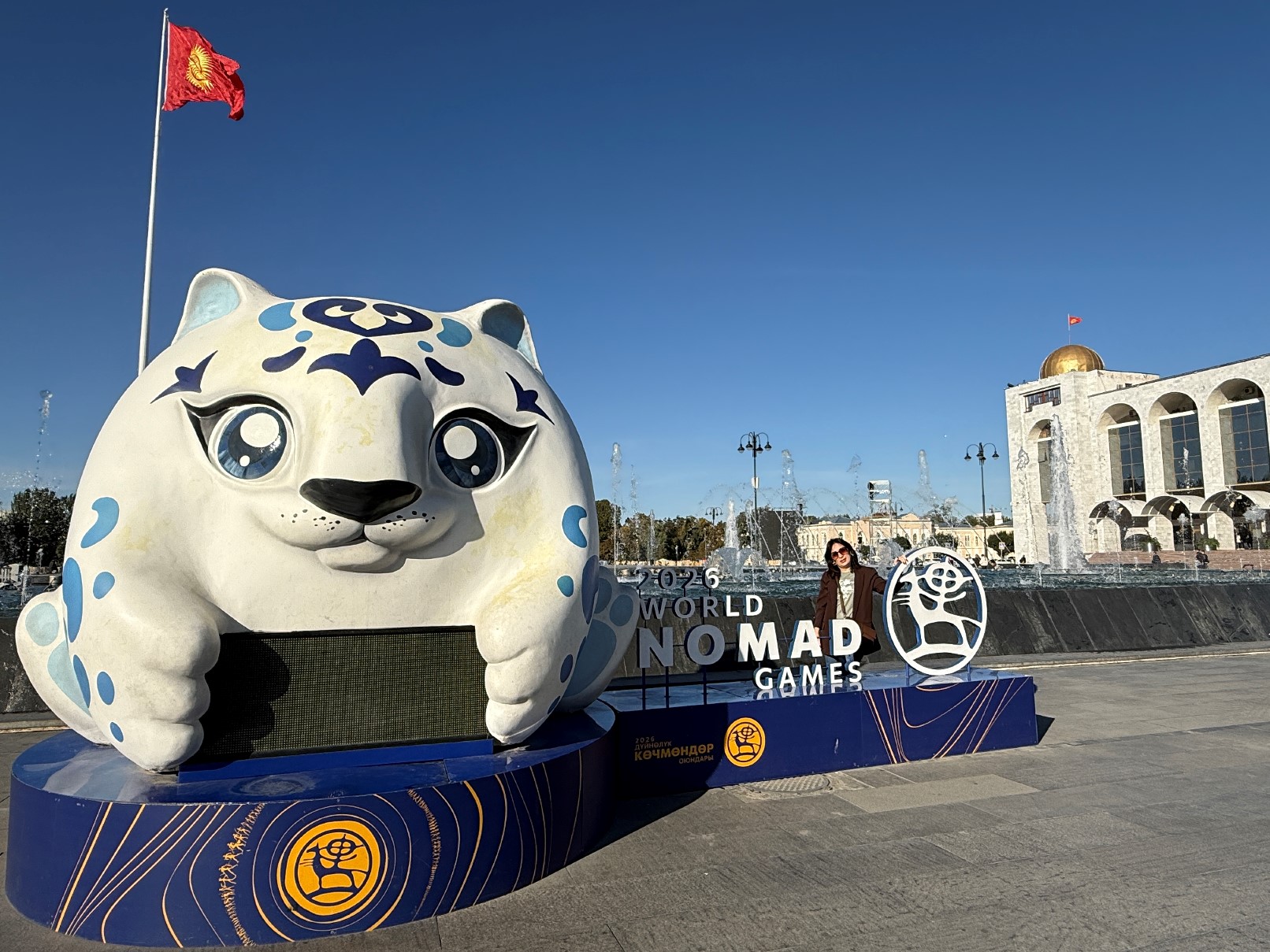
After visiting the bazaar, we set off on foot toward Ala-Too Square—Kyrgyzstan’s main square and one of Bishkek’s primary public spaces.
The name “Ala-Too” translates from Kyrgyz as “variegated mountains,” referring to mountain ranges where bright, snow-capped peaks contrast with dark rocky slopes.
The square serves as a venue for state celebrations, festivities, and major cultural events. Here, the history of Kyrgyzstan is displayed through its monuments and symbols.
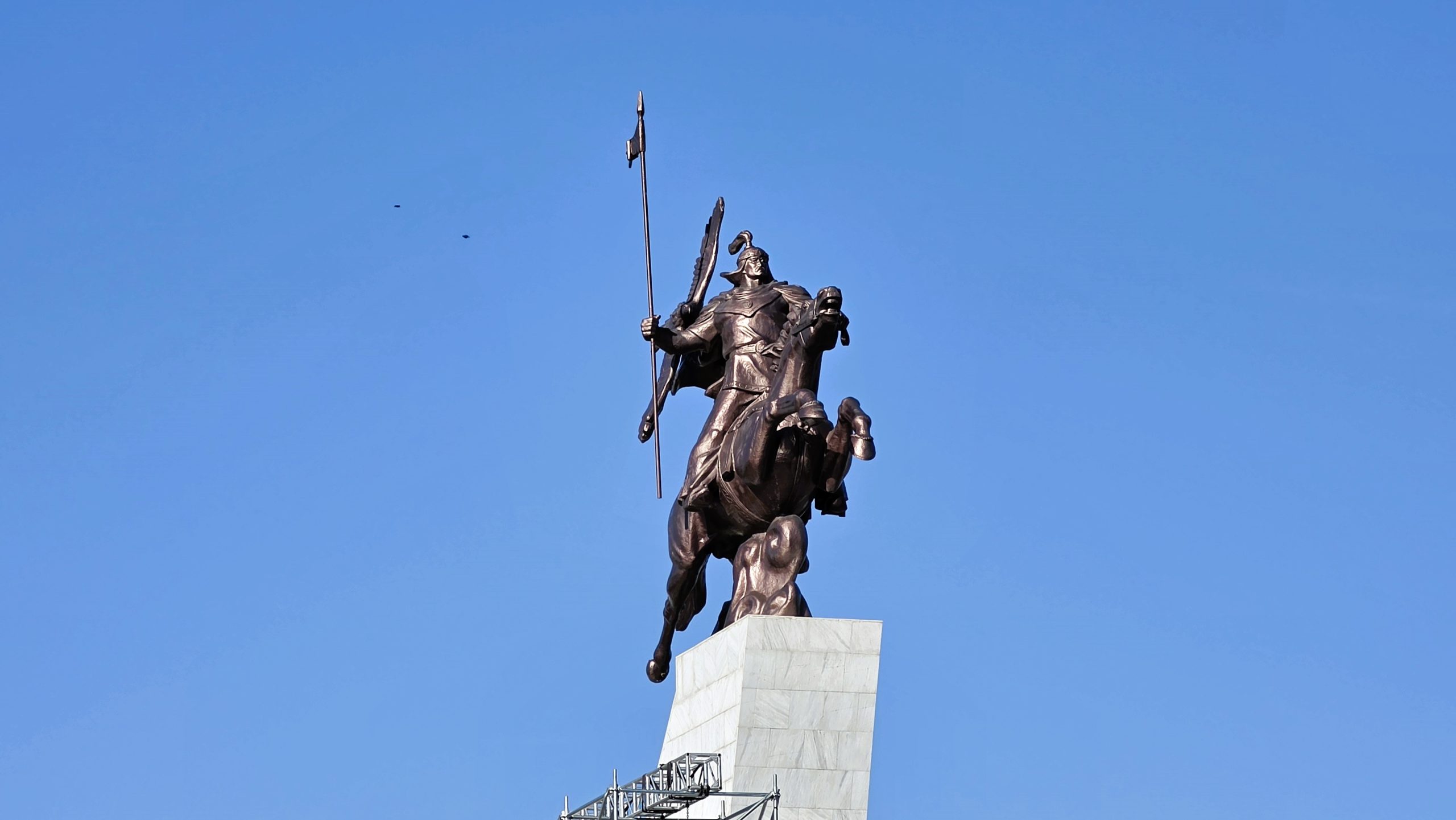
At the center of attention stands the monument to Manas, the hero of the Kyrgyz epic who holds a special place in the national culture. Manas is a grand oral epic narrating the exploits of the warrior Manas, his fight for the unity of the people, and the protection of his homeland. Passed down through generations by traditional epic storytellers (manaschi), it has become one of the most vital symbols of historical memory and Kyrgyz cultural identity.
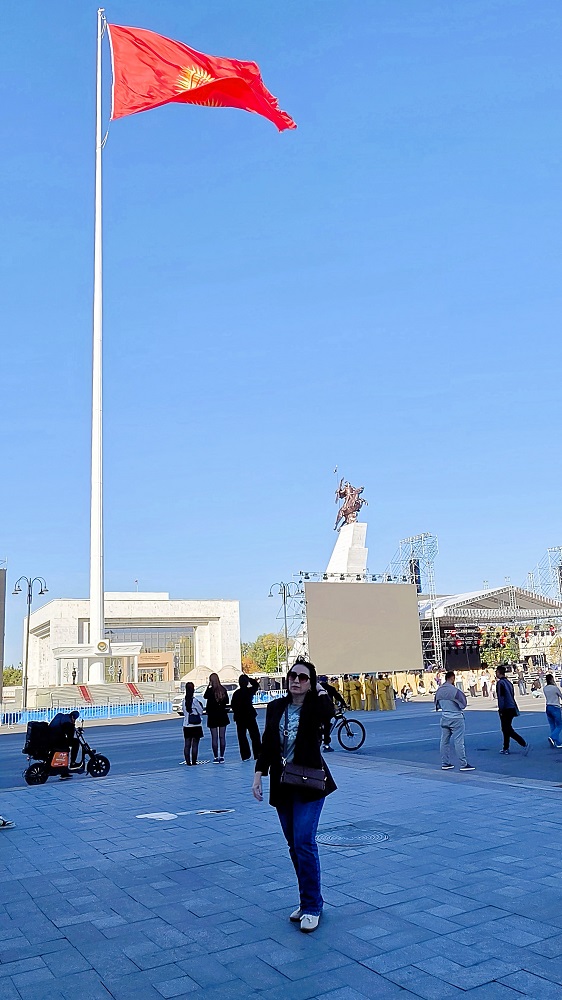
Nearby stands the official flagpole of the Kyrgyz Republic. Together, these elements of the square are felt as symbols of statehood and national continuity.
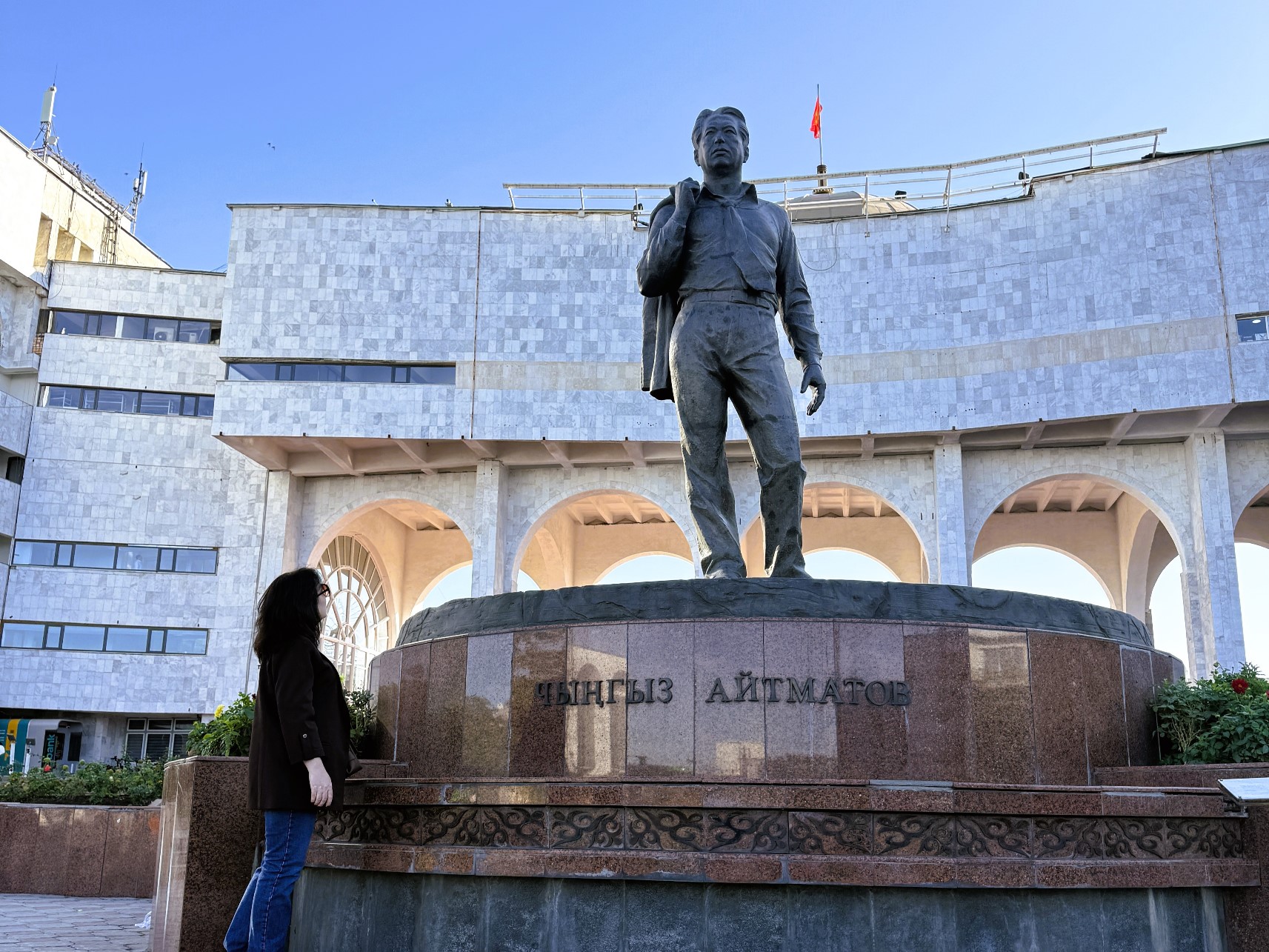
The square is also closely associated with Chingiz Aitmatov—the world-renowned Kyrgyz writer whose works have long transcended national boundaries. His writing weaves local traditions with universal themes of human dignity, memory, moral choice, and responsibility to future generations.
Kyrgyz Crafts: An Encounter with Tradition
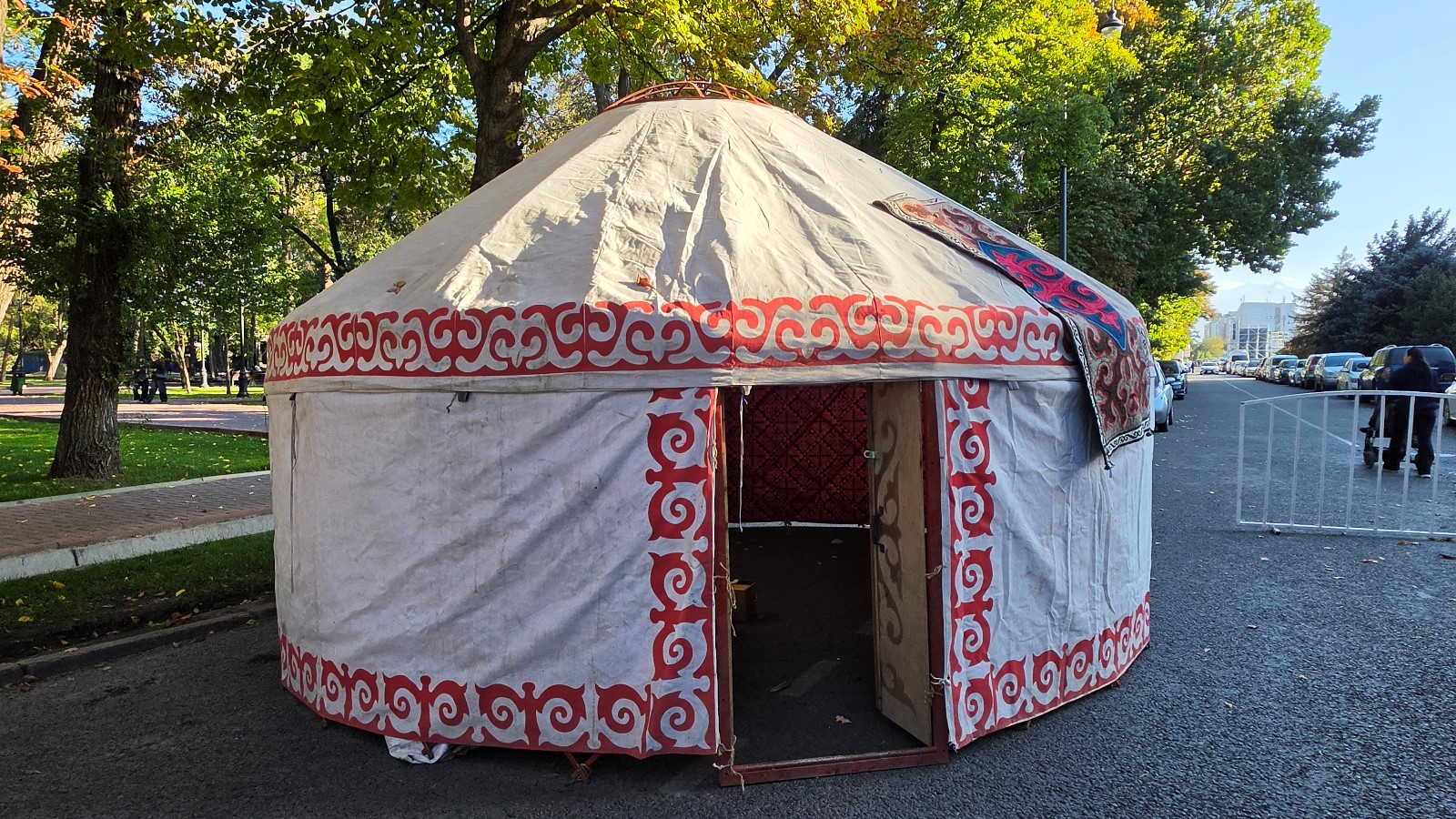
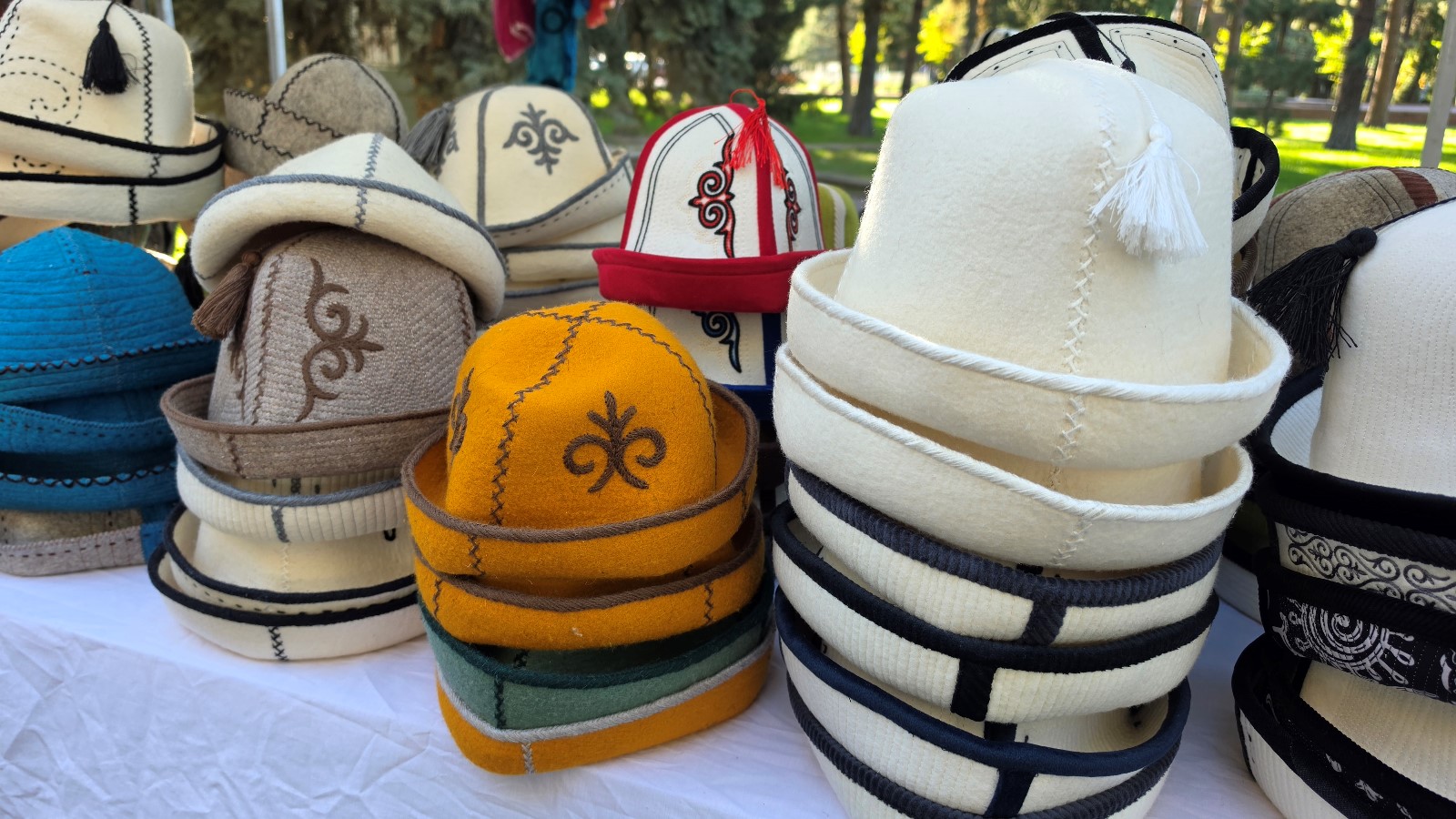
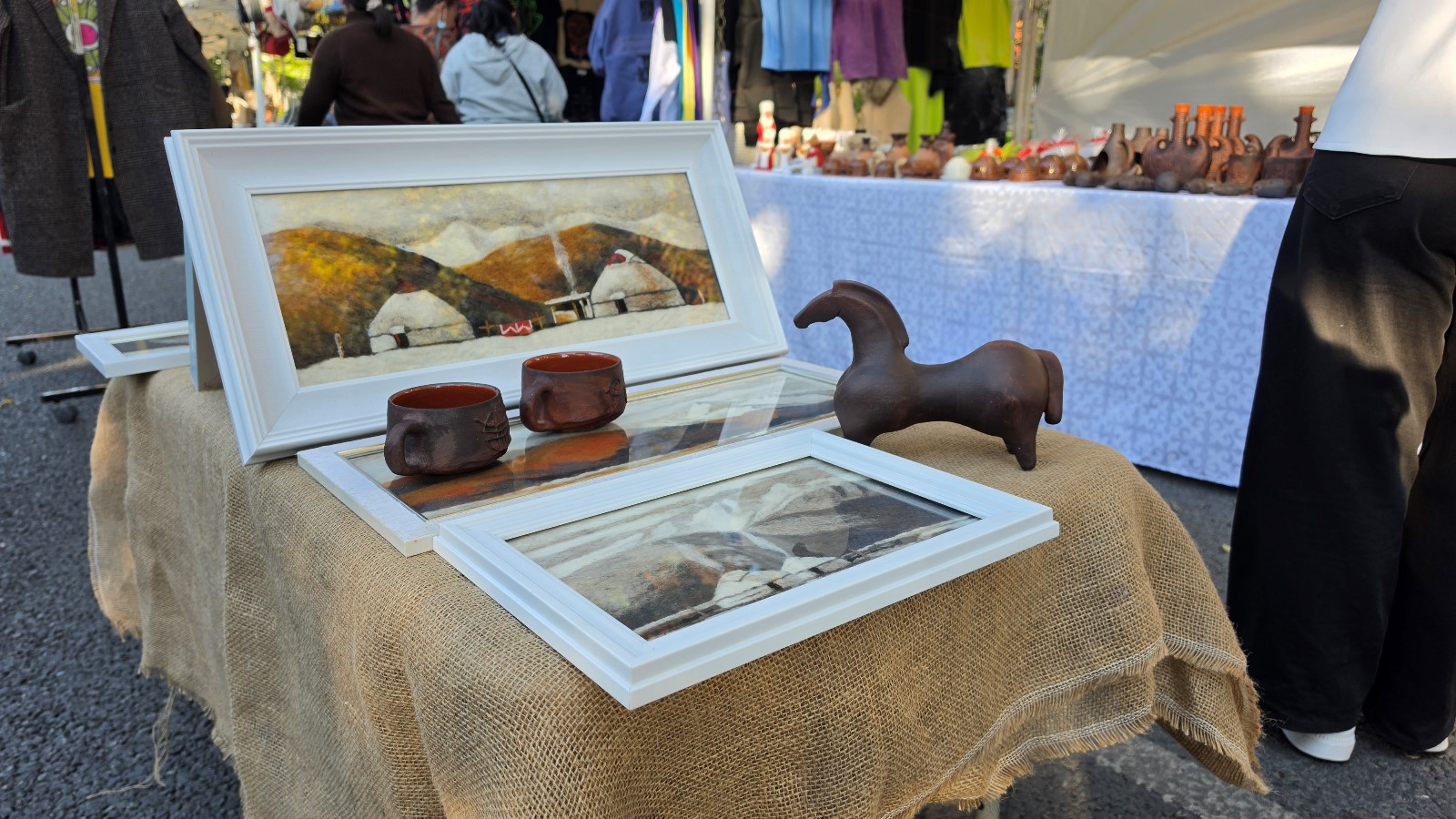
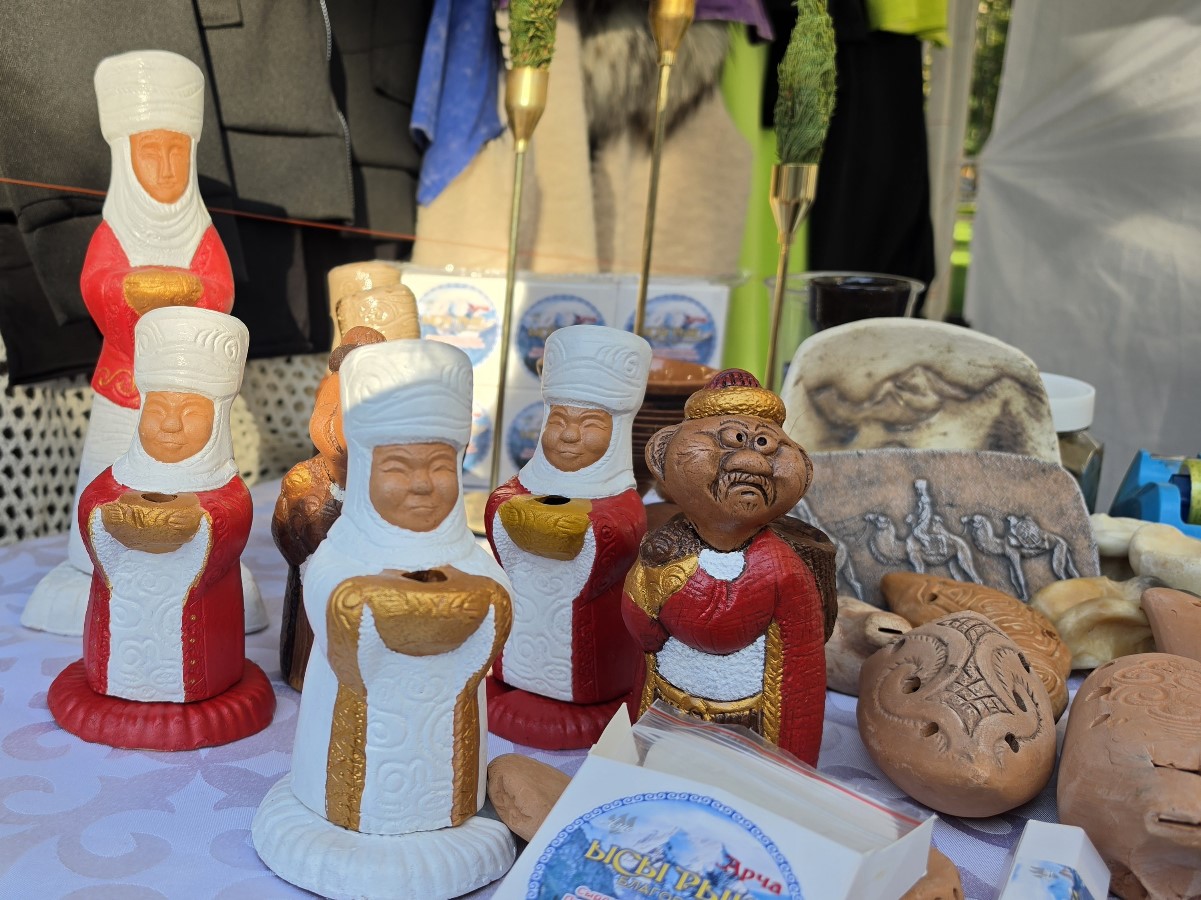
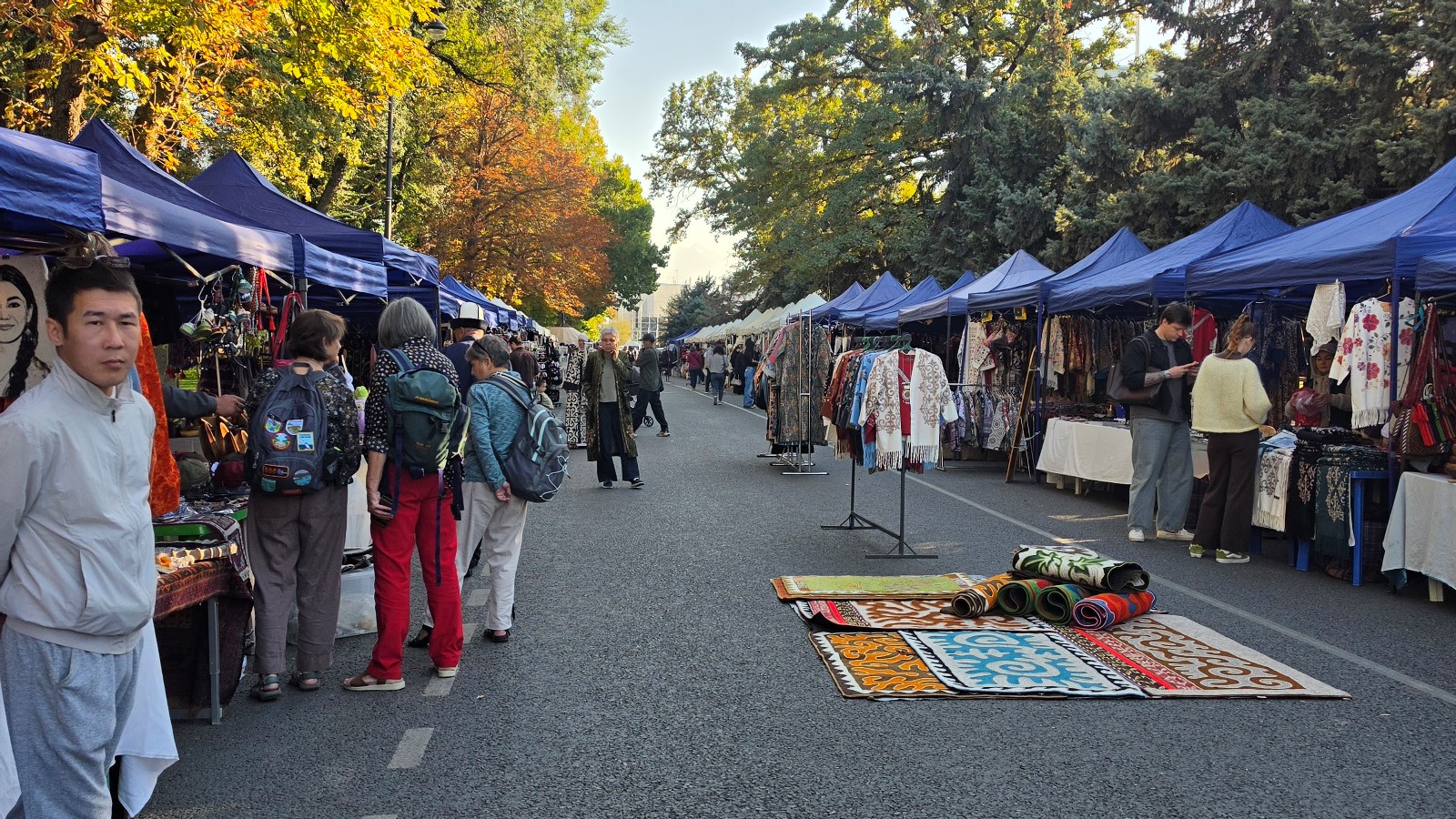
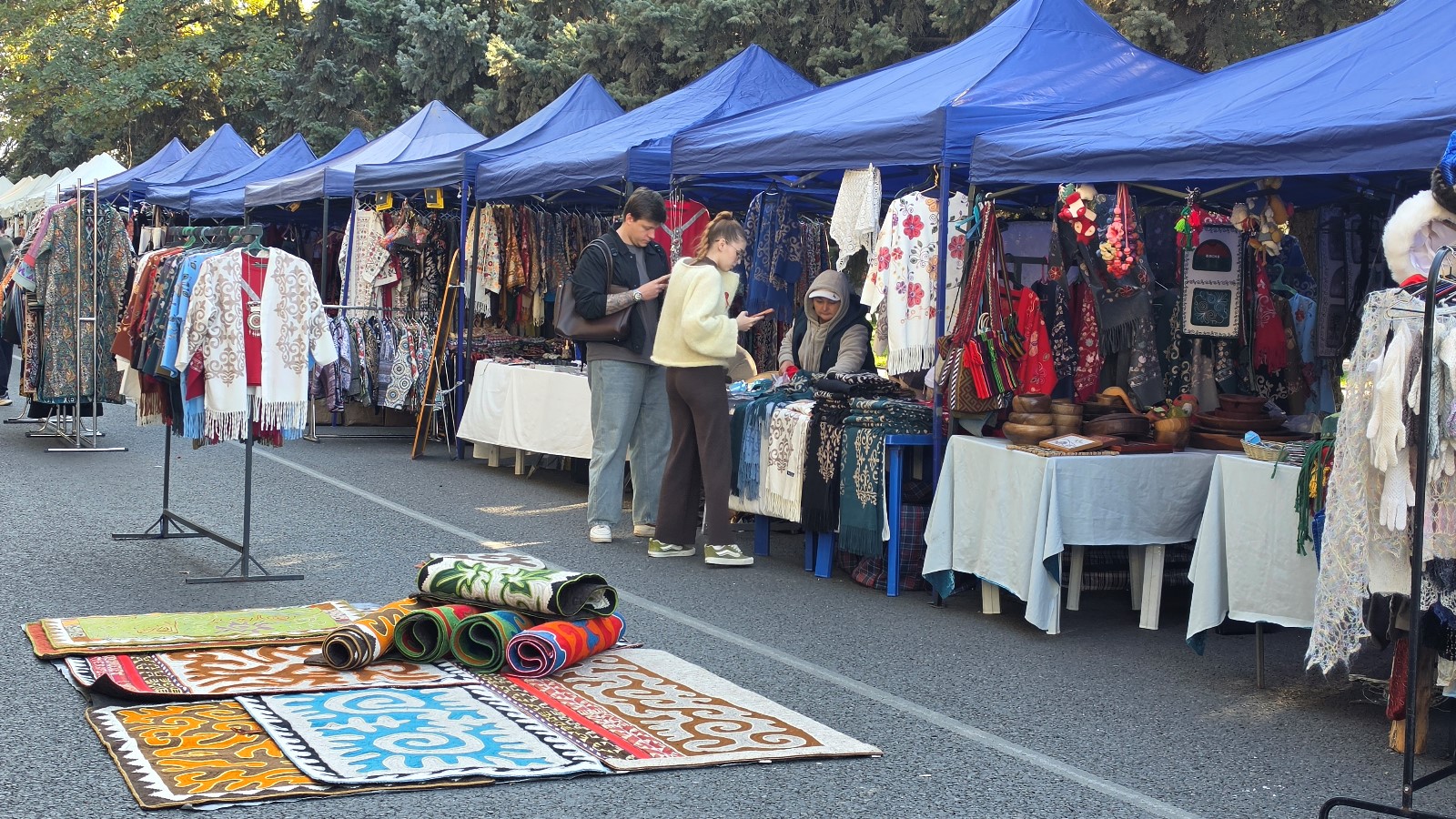
We were fortunate to be in Bishkek during the celebrations marking the 100th anniversary of the Chuy Region. On Old Square, adjacent to Ala-Too, a craft fair was in full swing. According to local media reports, around 300 artisans from various regions of Kyrgyzstan showcased their traditional arts and crafts.
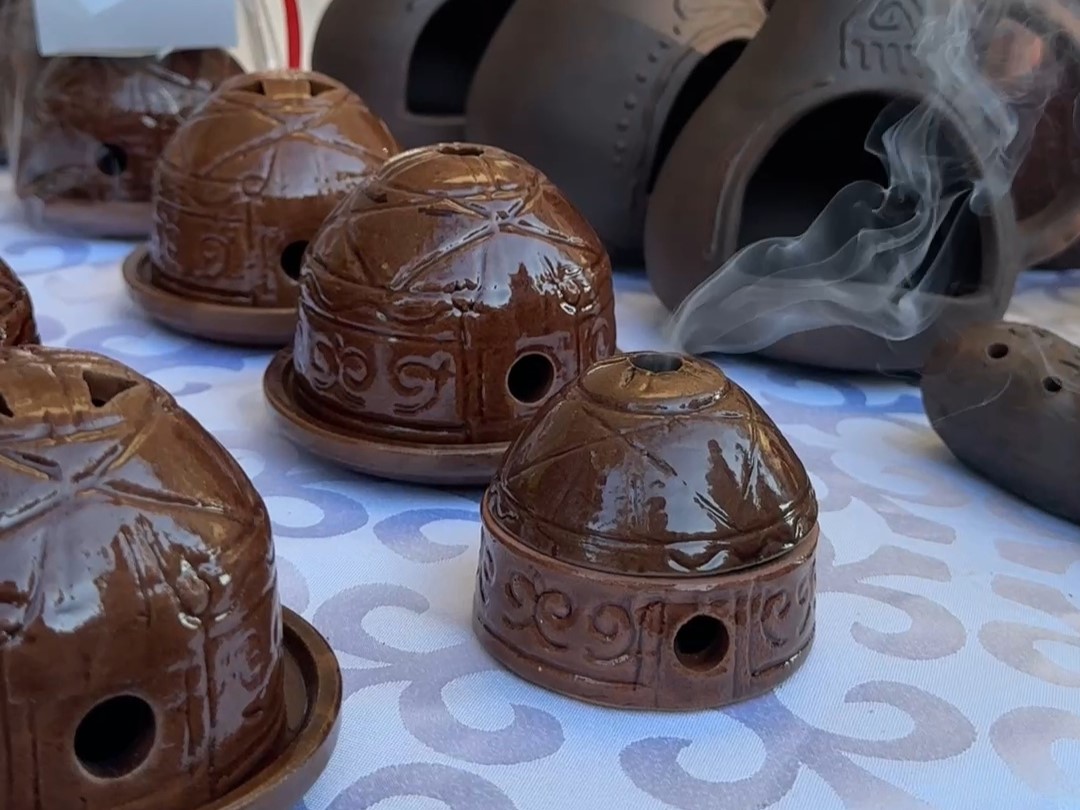
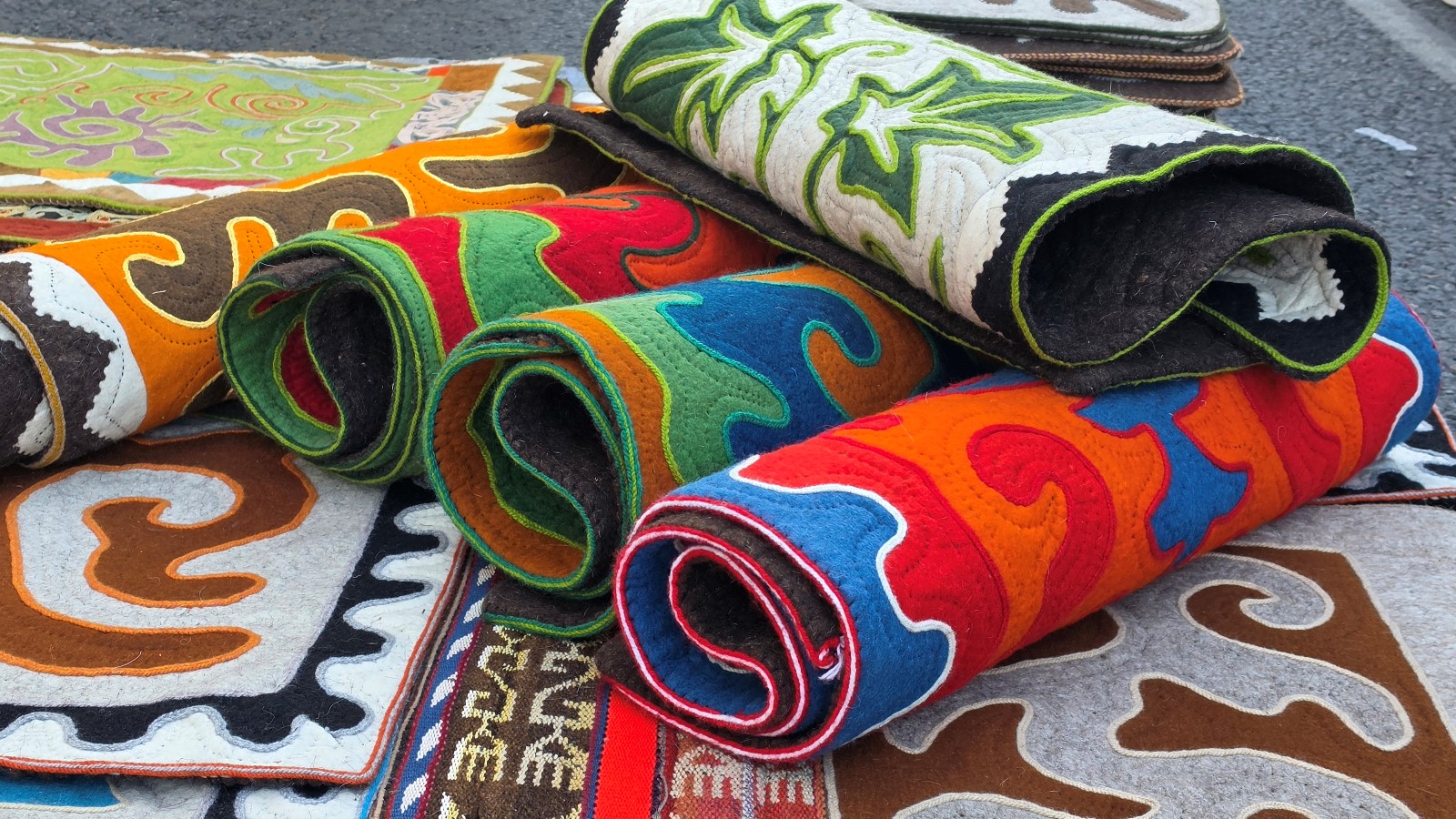
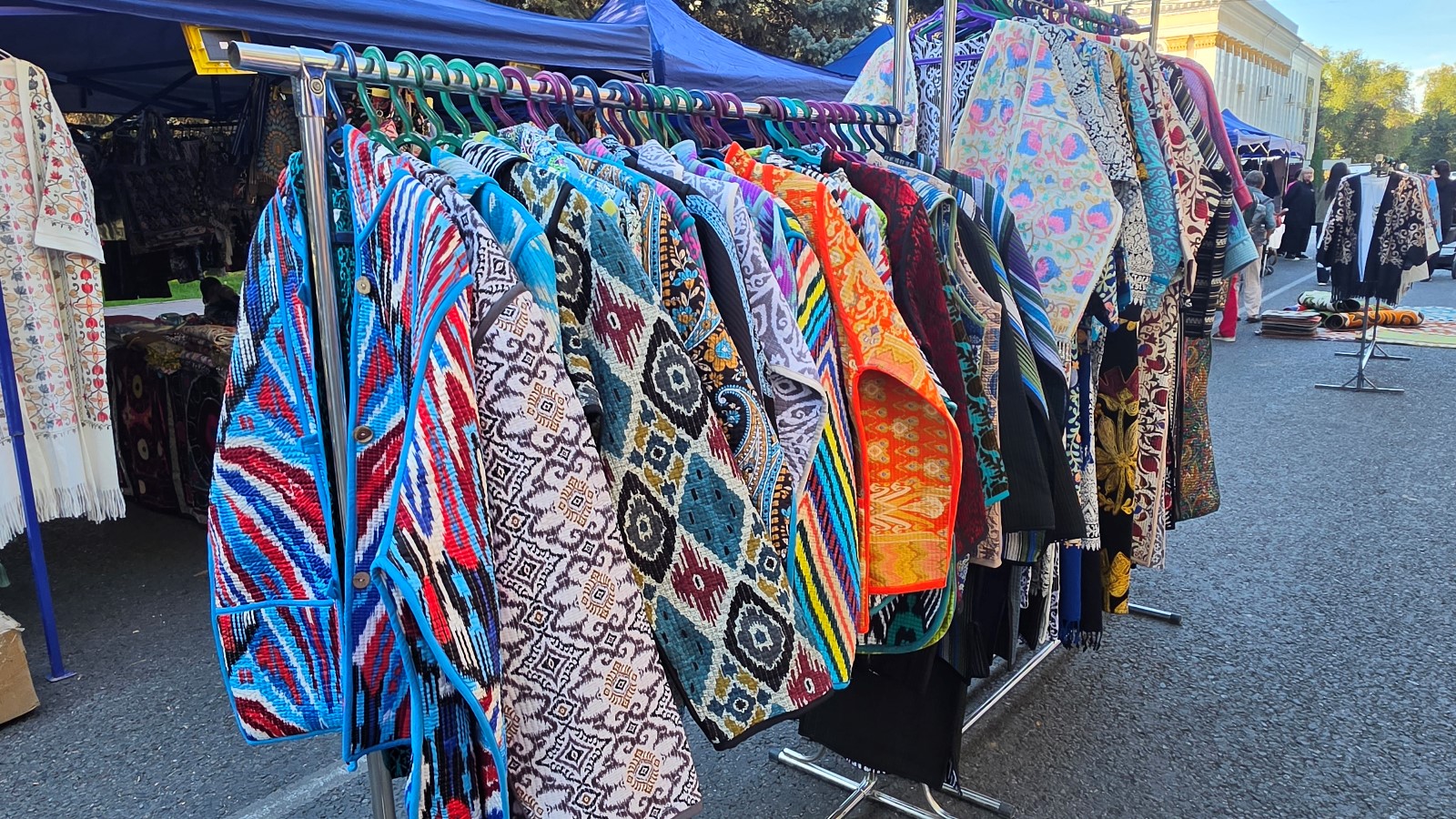
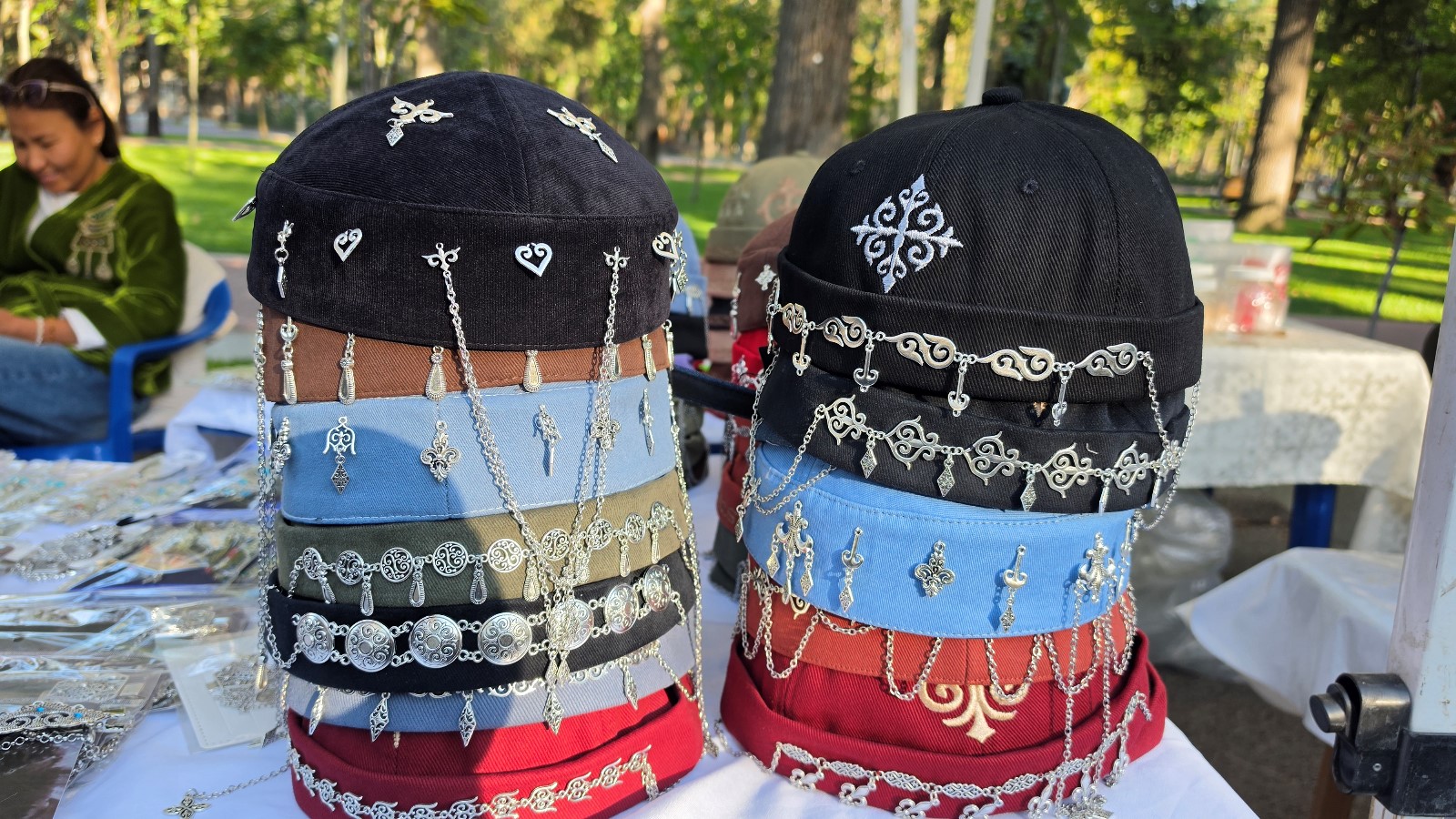
The stalls displayed traditional clothing, items made of felt, leather, clay, and wood, as well as jewelry and other handmade creations. Every piece reflects not only mastery, but the delicate nuances of craftsmanship that are carefully preserved and passed down from generation to generation.
Felt, intricate ornaments, leatherworking, and woodworking—all these are deeply rooted in the material culture of the Kyrgyz people, historically adapted to life in a mountainous environment and a nomadic lifestyle. Today, these traditional techniques are finding new applications: artisans craft items that serve as both pieces of cultural heritage and functional elements of modern daily life.
Oak Park: A Detox from Urban Bustle
On the northern side of the square stands the State Historical Museum, and just behind it begins Oak Park—one of the most remarkable places in the center of Bishkek.
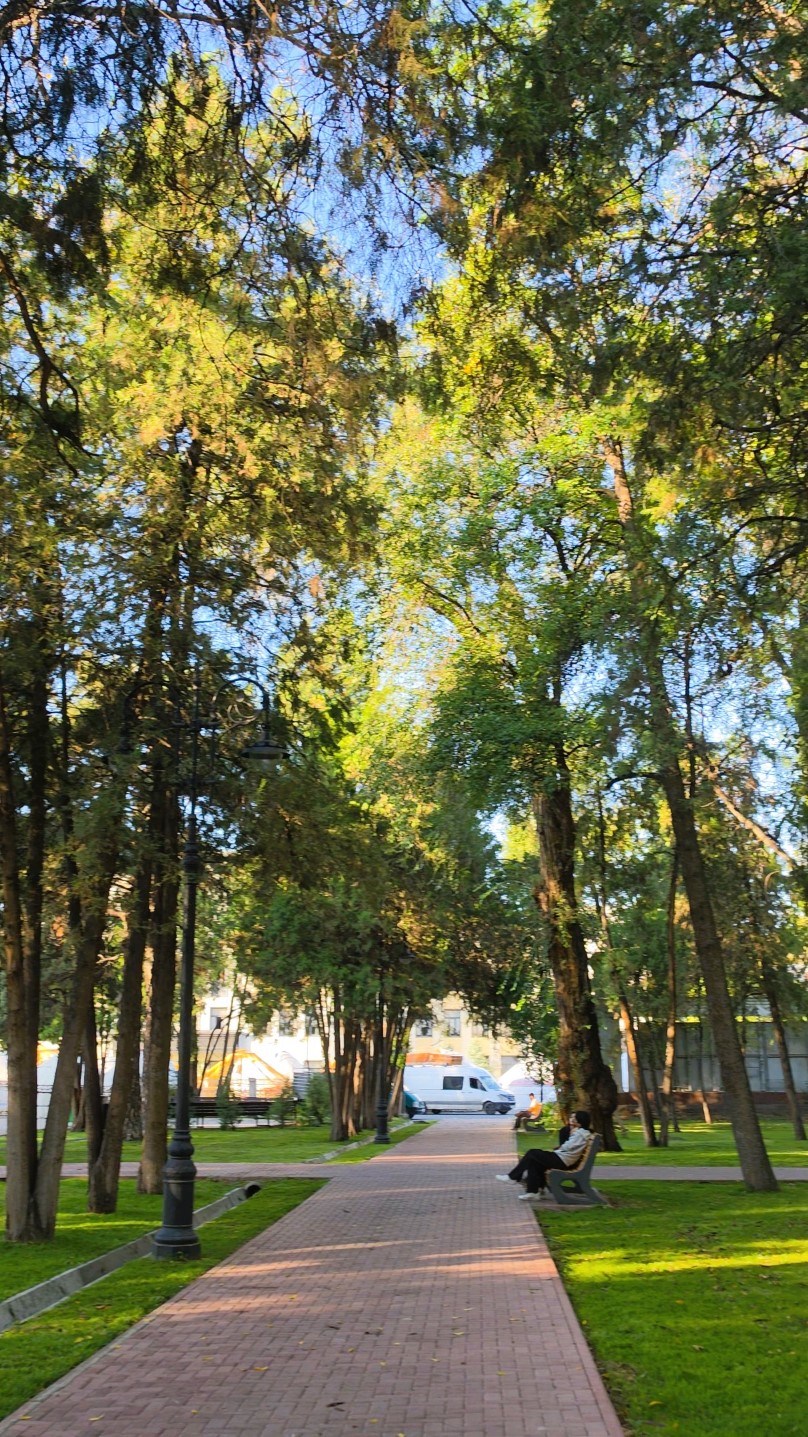
Naturally, a city with heavy traffic has a special need for spaces where one can take a brief respite. In Bishkek, this opportunity is provided by the trees, alleys, and shady corners of the old park. After the noisy streets and crowded market stalls, the mind and soul shift into a state of philosophical contemplation and peace.
The history of the park dates back to 1890. Its oaks became part of the urban landscape long before many modern buildings appeared. In 2010, the park was named after Chingiz Aitmatov, yet the name “Oak Park” is still widely used by city residents.
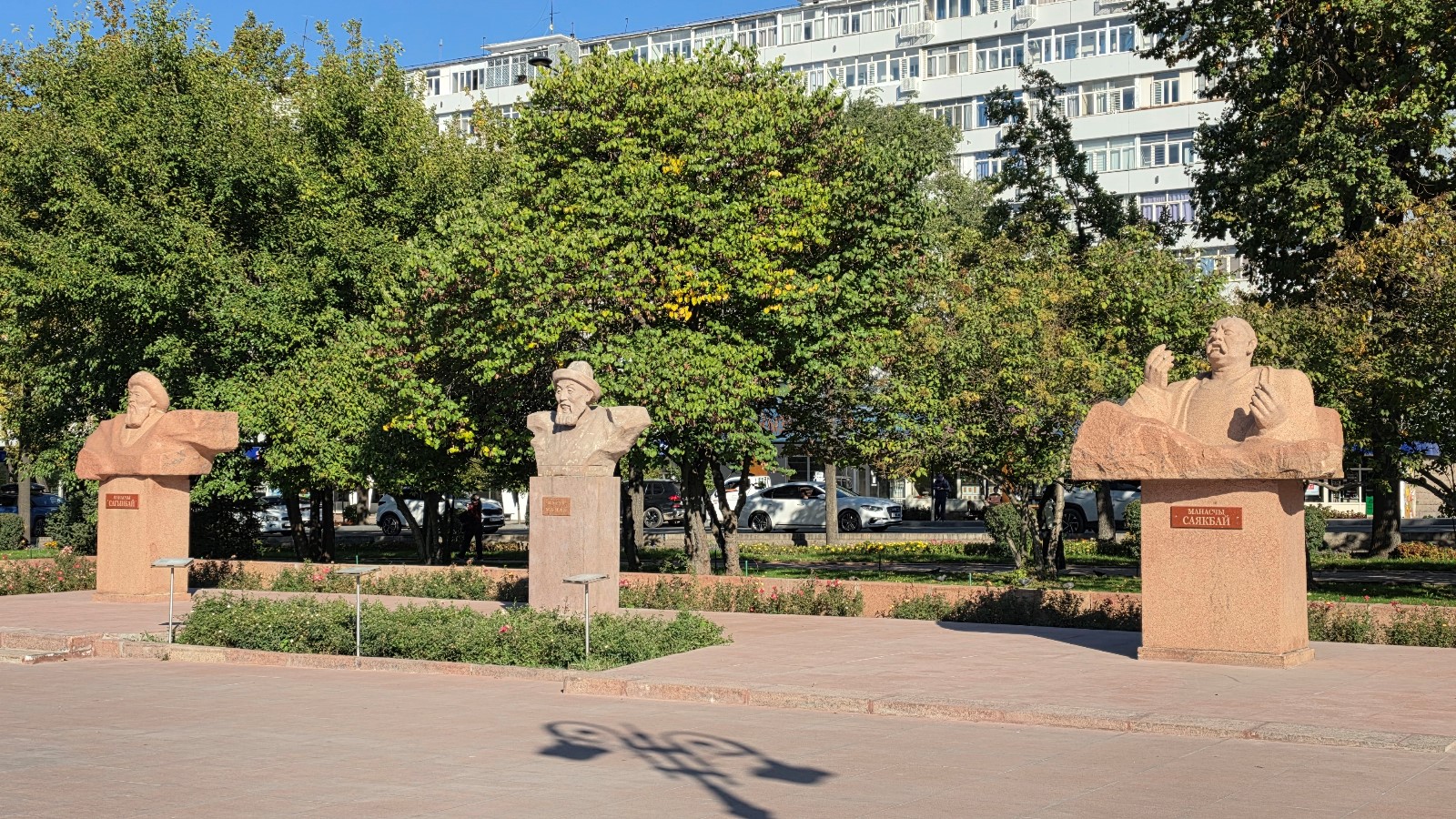
The park combines walking areas with cultural and memorial zones. Here, you can simply stroll beneath the tree canopies or stop to examine monuments, sculptures, and historical landmarks.
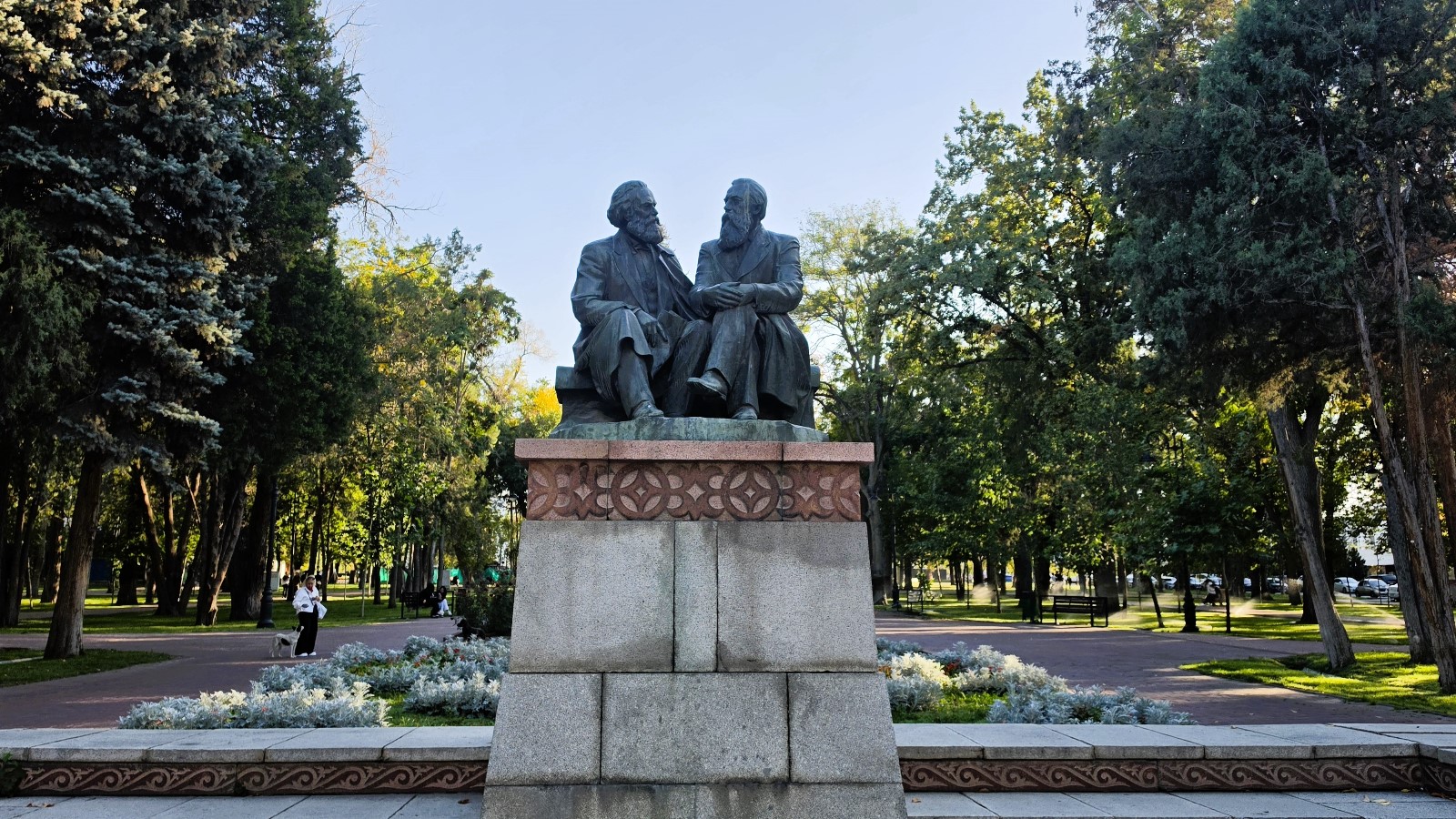
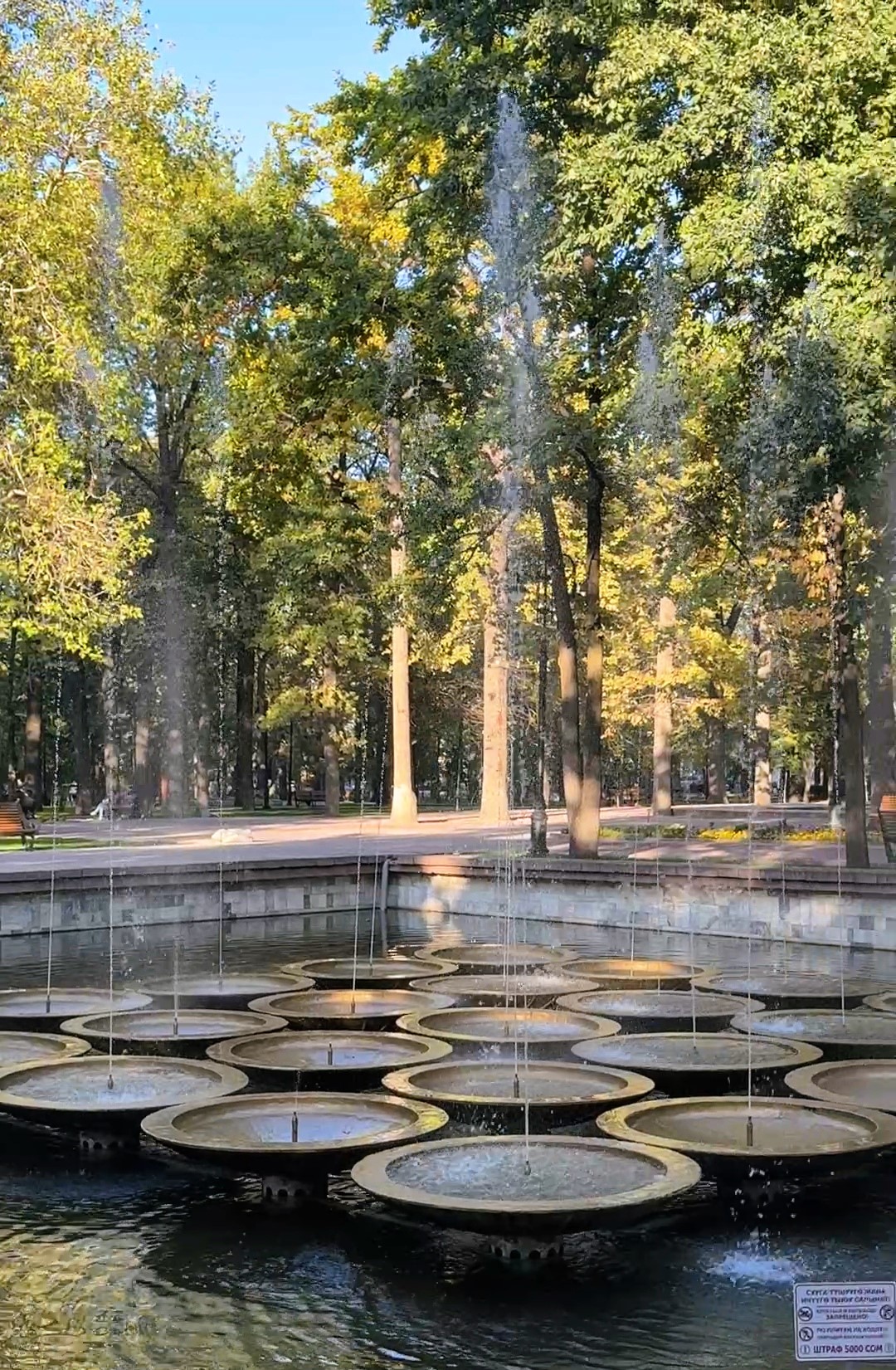
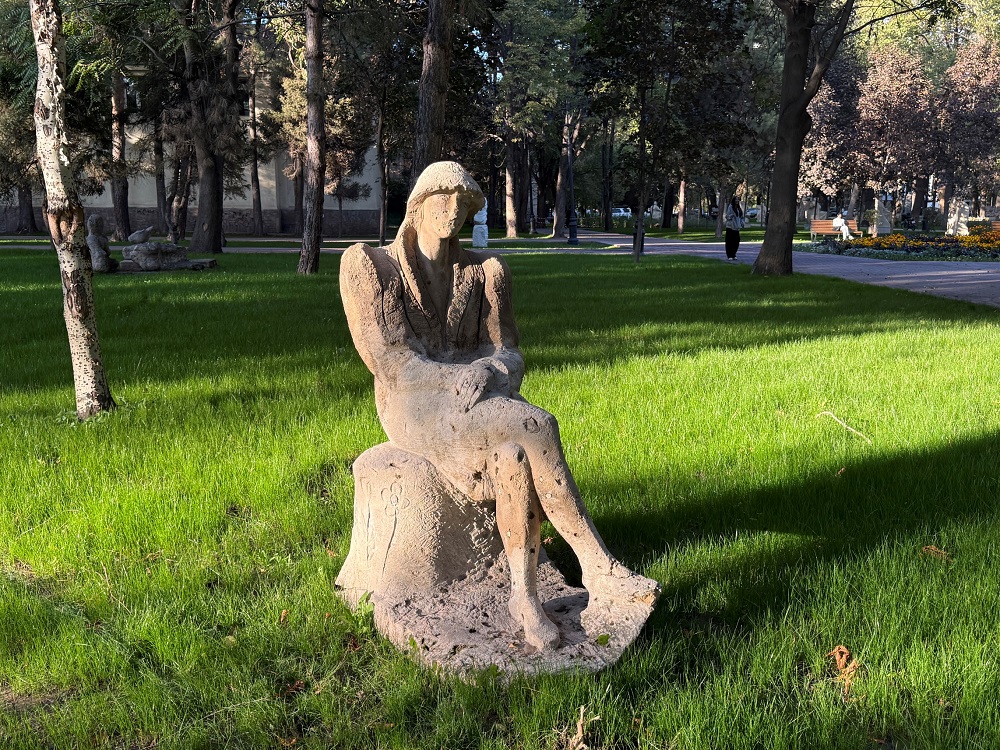
Among its attractions are the “Twelve Bowls” fountain, the Alley of Kyrgyz Statesmen, and the open-air sculpture museum.
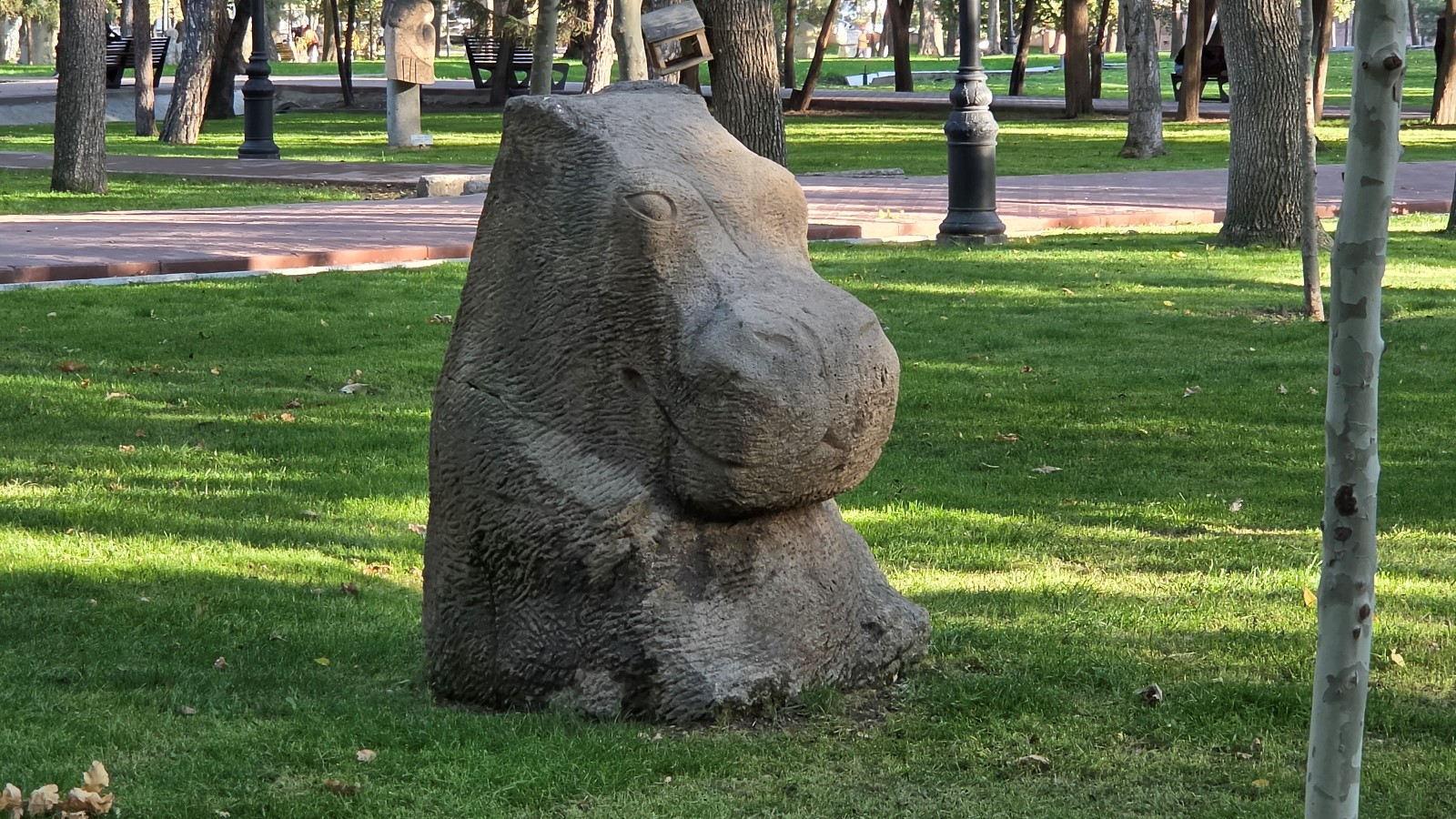
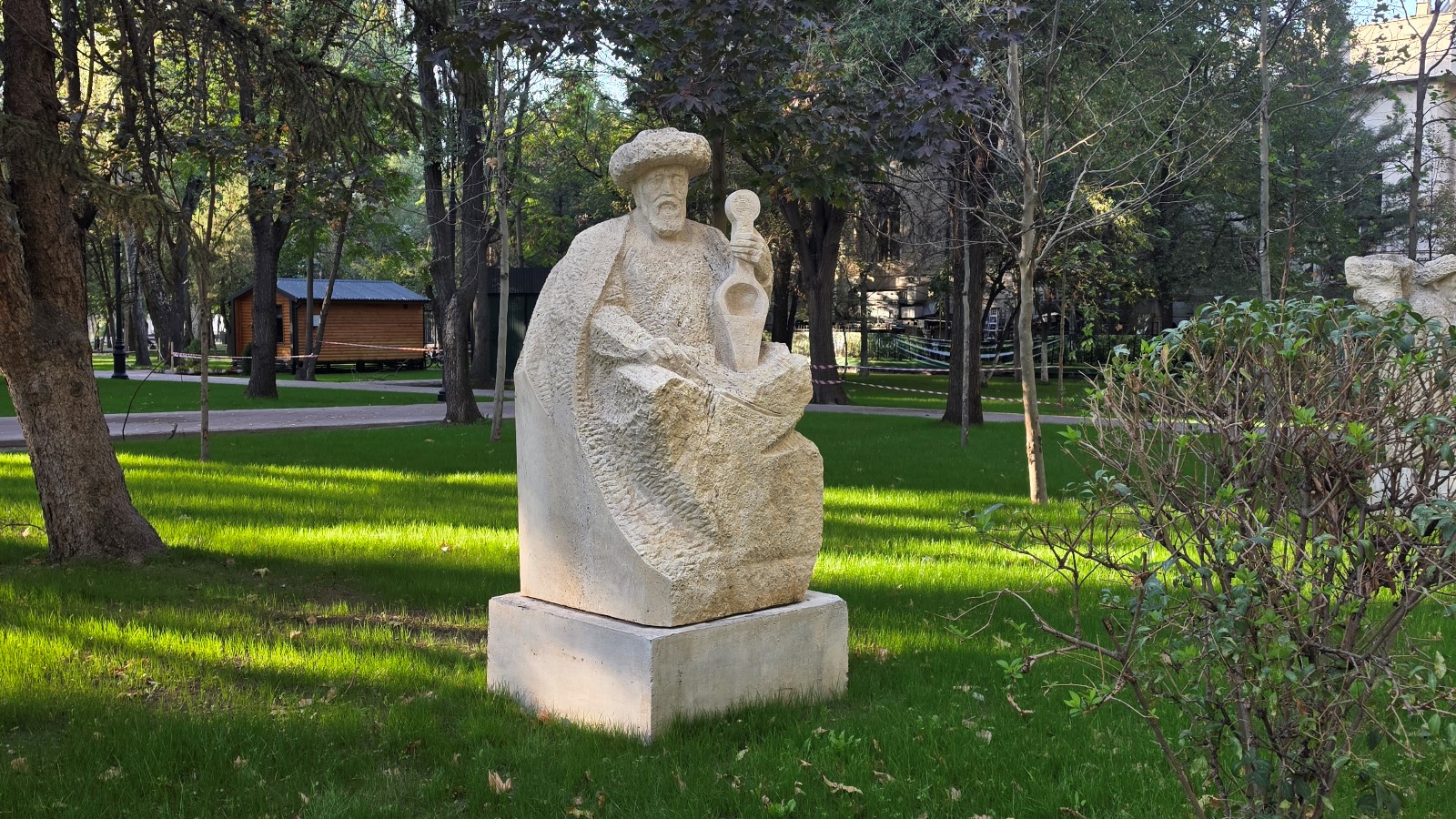
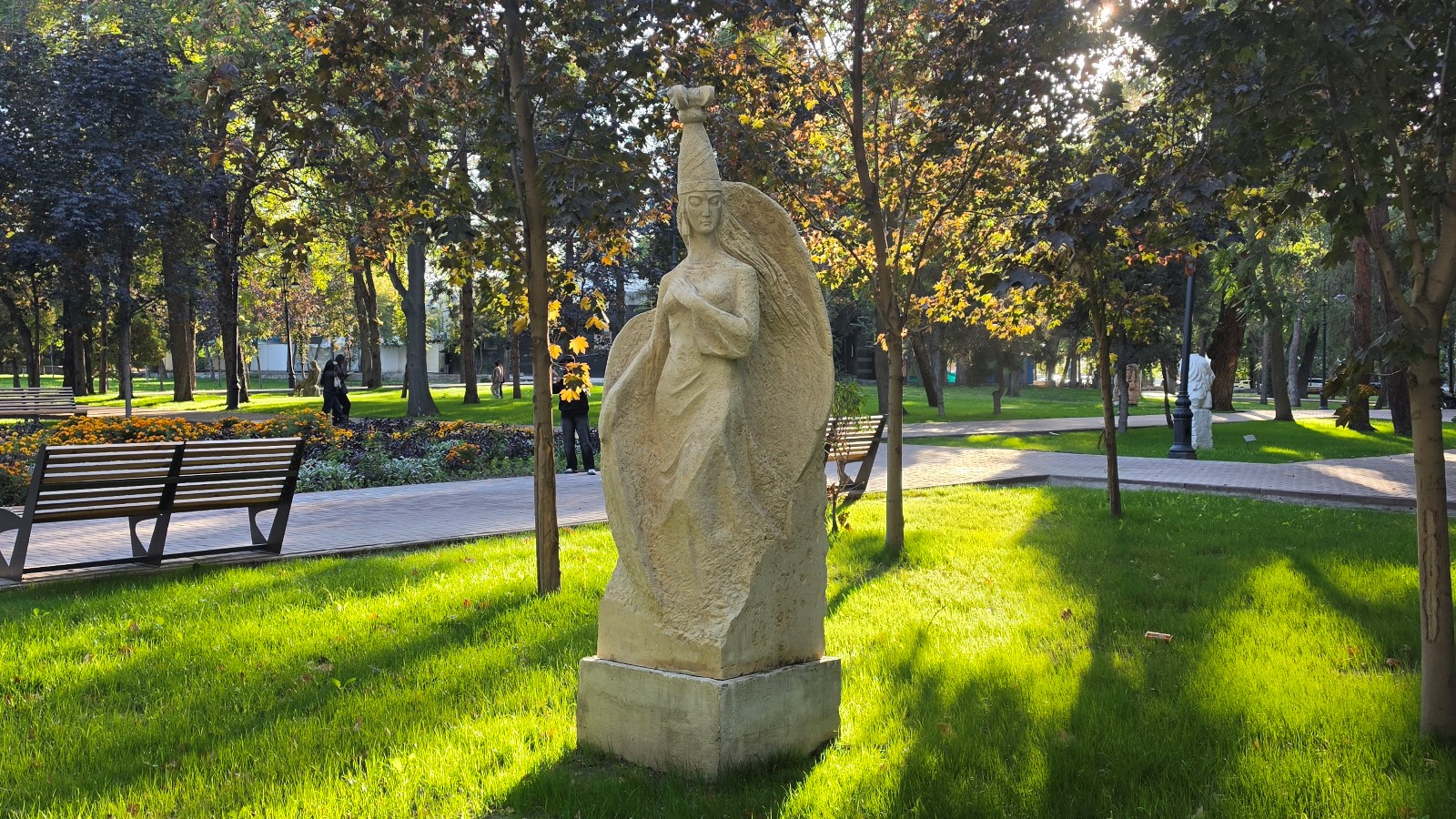
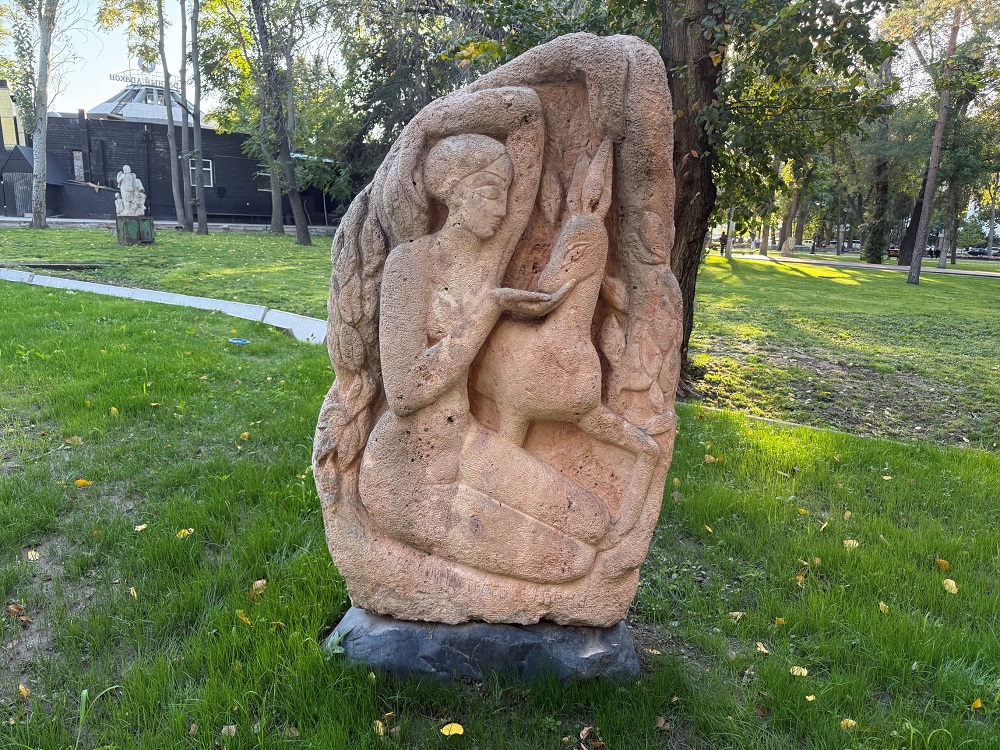
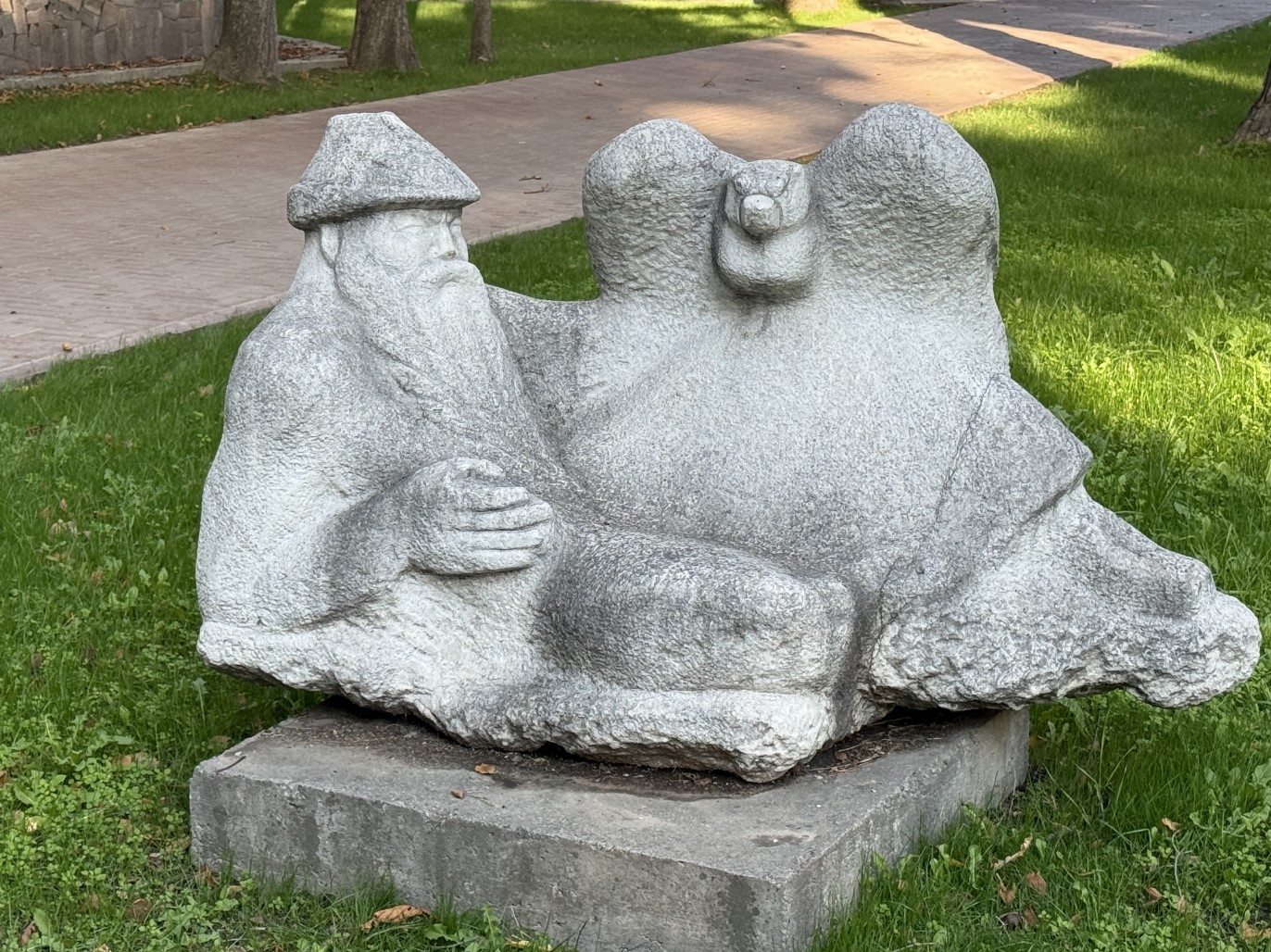
The park’s open-air sculpture collection is particularly captivating. Some of the works seem to invite quiet contemplation. Sculptural representations of wisdom, Mother Nature, and anticipation inspire personal reflections and evoke different associations in each viewer, encouraging us to look beyond the everyday and the material world.
A City That Never Sleeps
I realized that Bishkek doesn’t sleep even at night not while walking through its streets, but from my hotel room. The hands of the clock had already passed midnight. I continued working, going through the conference materials, while the hum of passing traffic kept drifting in through the window again and again.
It seemed as though the city should have quieted down, yet the movement of cars and people on the streets went on. The lit windows of apartment buildings resembled countless fireflies in the night darkness. Bishkek had no intention of falling asleep.
Traffic remains noticeable late into the evening, and certain streets clearly stay lively even in the dead of night.
With a population of around one and a half million people, Bishkek lives virtually around the clock. The city features 24/7 retail outlets, including select branches of the Globus, Narodny, Alma, and other supermarket chains. For locals, this is a matter of everyday convenience, while for visitors, it offers the chance to buy necessities at any time—even on the way to the airport.
Bishkek: A Memory That Lingers
Of course, a short visit—essentially fitting into a few hours of free time outside the conference—does not allow one to discover the city in all its depth. Yet, even within these few hours, Bishkek manages to reveal the many facets of its character.
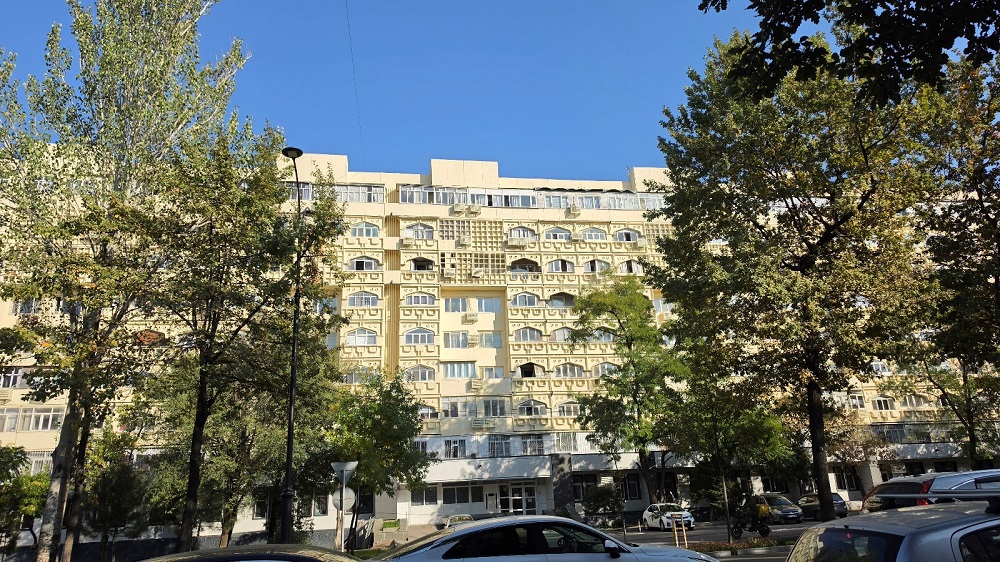
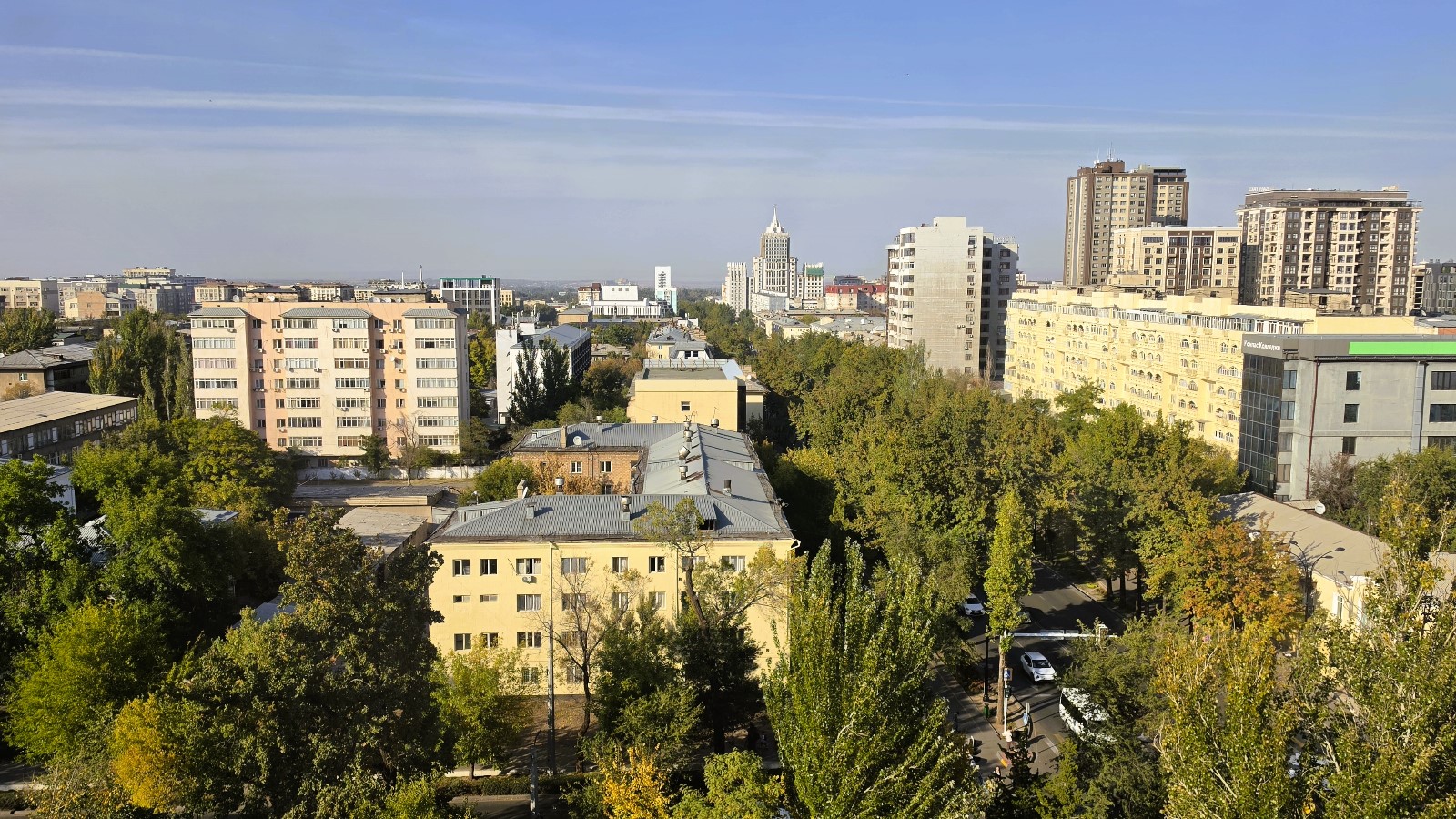
Osh Bazaar introduces you to everyday life, Ala-Too Square reminds you of national history, the craft fair transports you into the world of traditional art, and Oak Park offers a moment to pause and listen to your own thoughts. Here, side by side, exist the ancient epic of Manas, modern QR-code payments at the market stalls, century-old oaks, and new architectural landmarks like the “Moskva City” residential complex.
One of the most striking impressions of Bishkek is its intense traffic. During the day, streams of cars, busy intersections, and traffic jams have become a regular part of the urban landscape. In this regard, alternative modes of transport—bicycles and scooters—are in high demand. A narrow strip of sidewalk has even been designated for these vehicles.
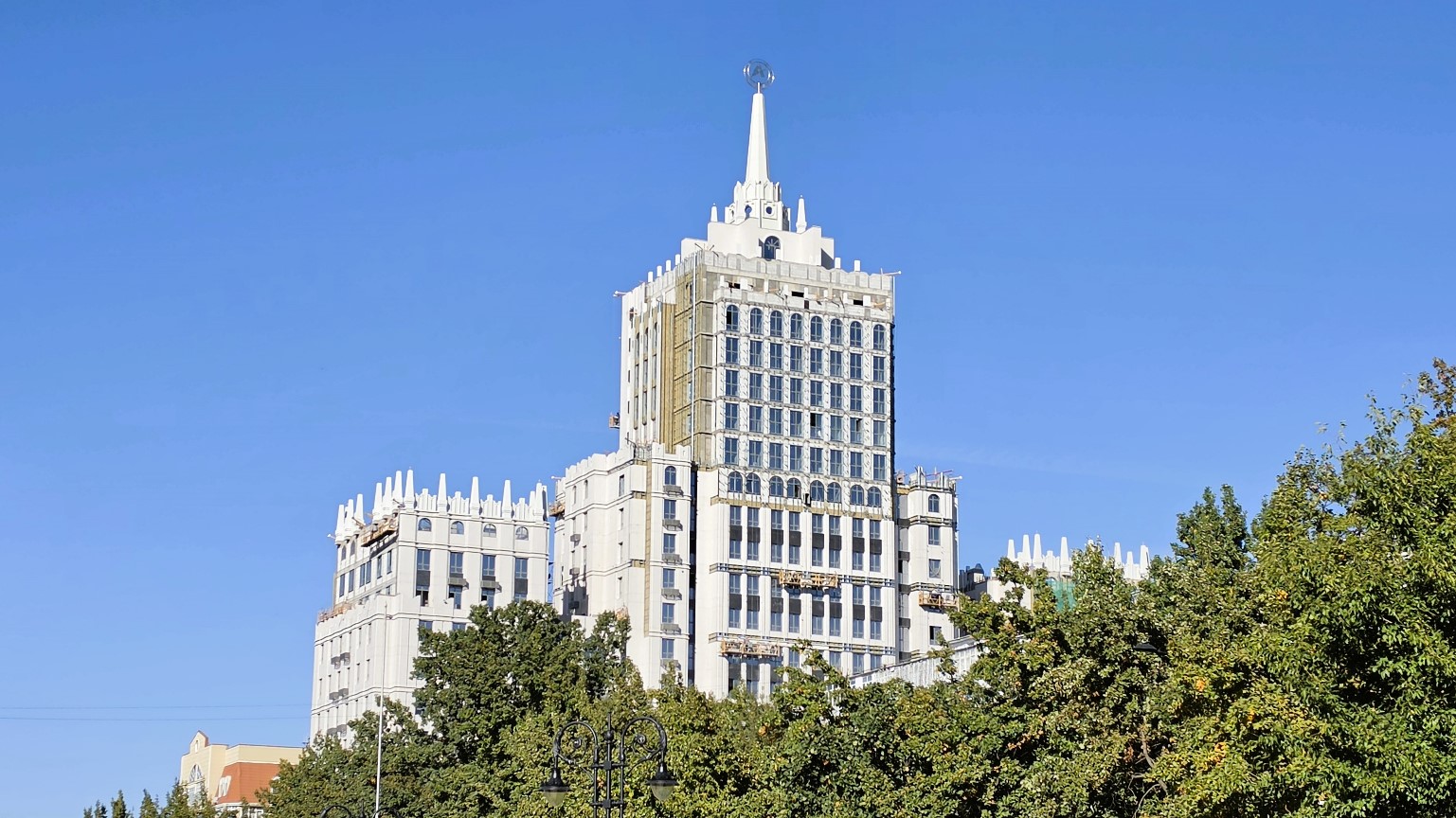
The capital of Kyrgyzstan is actively developing and building, although the city’s rapid growth inevitably raises questions about traffic load, the preservation of green spaces, and the quality of the urban environment.
Bishkek left an impression not only with its lively pace but also with the openness and kindness of its people. A couple of times, when we lost our way while following Google Maps, we had to ask passers-by for directions. Each time, people were happy to help us find our way.
Another pleasant moment came after our visit to Osh Bazaar. We were returning to the hotel by taxi, driven by an older man who worked as a private driver using his own car to earn some extra money.
When he saw our small shopping bags, he immediately offered to take them from us and carry them to the car himself, sparing us the effort.
Perhaps what makes Bishkek memorable is not only the contrast between its rich heritage and its drive towards modernity, but also the warmth of its people. Even a brief visit offers glimpses of a city that is constantly evolving yet remains welcoming to strangers. And sometimes, it is these small, human moments that leave the strongest impression—and make you want to return to discover more./// nCa, 14 October 2026
Here are some photos of Bishkek: