


Discussions at GOTECH 2026 are highlighting a significant shift in the international energy conversation: technology is advancing rapidly, but energy security, regional connectivity and access to large-scale resources remain fundamental. For Central Asia — and Turkmenistan in particular — the combination is creating a new strategic opportunity.
Taking place in Dubai from 29 September to 1 October, GOTECH brings together energy executives, engineers, technology companies and professional organisations to examine artificial intelligence, digital transformation, sustainability and the technologies likely to influence the next phase of energy development.
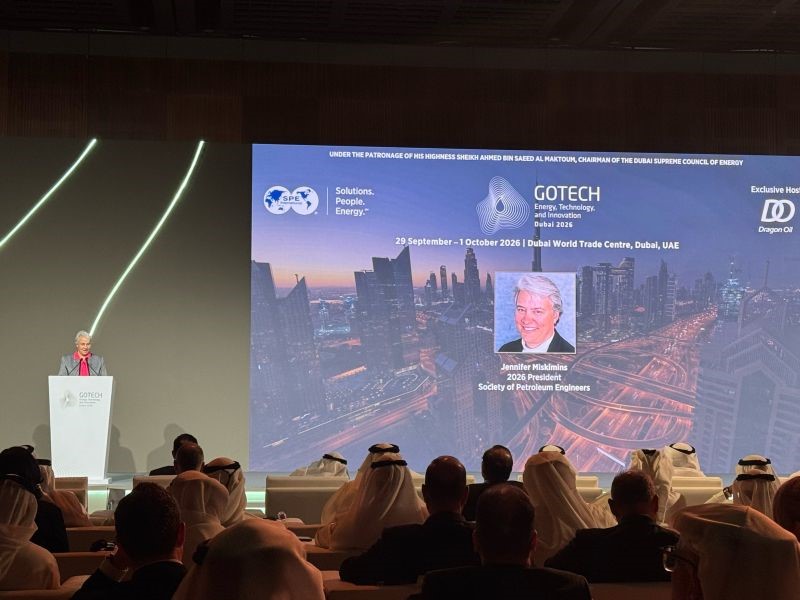
GOTECH 2026 is hosted by Dragon Oil, which is also a Diamond Partner of OGT 2026. The company’s involvement in both events connects the discussion of energy technologies in Dubai with the forthcoming dialogue on the development of Turkmenistan’s energy sector in Ashgabat.
Among those participating are Saeed Mohammed Al Tayer, Chairman of Dragon Oil’s Board of Directors; Abdulkarim Ahmed AlMaazmi, CEO of Dragon Oil; Jennifer Miskimins, 2026 President of the Society of Petroleum Engineers; Dr. Carole Nakhle, CEO of Crystol Energy; and Ismadi Bin Ismail, CEO of PETRONAS Carigali (Turkmenistan), alongside representatives of other international energy companies.
Yet one of the particularly relevant discussions for Central Asia is not simply about technology.
It is about geography.
A changing role for Central Asia
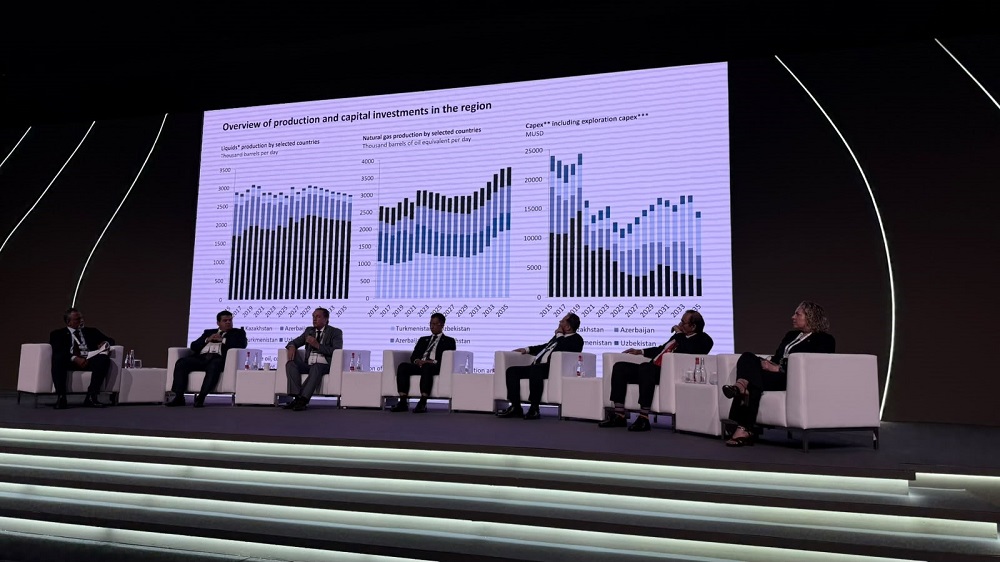
The GOTECH programme includes an Executive Plenary titled “CIS as Emerging Powerhouse”, reflecting growing international attention towards a region possessing significant hydrocarbon resources while occupying a strategic position between major Asian, European and Middle Eastern markets.
Within this landscape, Turkmenistan occupies a distinctive position.
The country possesses a major natural gas resource base, established pipeline infrastructure connecting it with China, and the potential to develop additional corridors towards South Asia through the Turkmenistan–Afghanistan–Pakistan–India pipeline.
The next phase of development of the giant Galkynysh gas field is also important in this context.
Phase IV is expected to add approximately 10 billion cubic metres per year of production and treatment capacity, while TAPI has a planned design capacity of 33 billion cubic metres annually. These projects place Turkmenistan directly within the wider discussion about diversification and regional energy connectivity.
The Caspian dimension adds another layer. Offshore development, new exploration opportunities and international cooperation could broaden Turkmenistan’s energy relationships while attracting technology, investment and specialist expertise.
Technology changes the equation
What makes the current period different is that resource development is increasingly being shaped by technologies that were not central to the industry a decade ago.
Artificial intelligence, predictive analytics, automation and digital twins are changing how companies approach production and asset management.
Meanwhile, methane detection, emissions monitoring, carbon management and energy-efficiency technologies are becoming increasingly relevant to the commercial competitiveness of oil and gas projects.
For Central Asian producers, this creates both a challenge and an opportunity.
Large reserves remain strategically important, but future competitiveness will increasingly depend on how efficiently and responsibly those reserves can be developed and connected to markets.
This makes cooperation with international technology providers, service companies and professional organisations increasingly important.
From a regional producer to a regional connector
Turkmenistan’s evolving role can therefore be viewed through two dimensions.
The first is its traditional role as a major producer and exporter of natural gas.
The second is its potential role as a contributor to broader regional energy connectivity, particularly between Central and South Asia.
TAPI remains the clearest example. Beyond the transportation of gas itself, the project has wider implications for economic cooperation and infrastructure integration across the region.
The same principle applies to the development of new export routes and deeper processing of gas inside Turkmenistan. Petrochemicals and gas monetisation can diversify the country’s energy value chain while creating different forms of international partnership.
The dialogue moves to Ashgabat
These questions will move from Dubai to Ashgabat on 21–23 October, when Turkmenistan hosts the 31st International Conference and Exhibition “Oil and Gas of Turkmenistan – OGT 2026.”
International industry representatives participating in discussions in Dubai expressed interest in continuing the dialogue at OGT and exploring developments in Turkmenistan’s energy sector.
The Ashgabat agenda will bring together many of the issues currently being debated internationally: energy security, Galkynysh development, TAPI and regional connectivity, Caspian investment, gas monetisation, artificial intelligence and digitalisation, methane reduction and international partnerships.
The sequence from GOTECH to OGT is significant.
Dubai provides a global platform for examining how technology is changing energy.
Ashgabat will provide an opportunity to consider how those technologies, together with international capital and expertise, can be applied to one of Central Asia’s largest energy resource bases.
For a region seeking greater connectivity with international markets, that conversation extends well beyond Turkmenistan.
From Dubai to Ashgabat, the emerging question is not simply where the next volumes of energy will come from, but how resources, technology and new corridors can reshape Central Asia’s place in the global energy system. /// nCa, 30 September 2026 (in partnership with OGT 2026)