


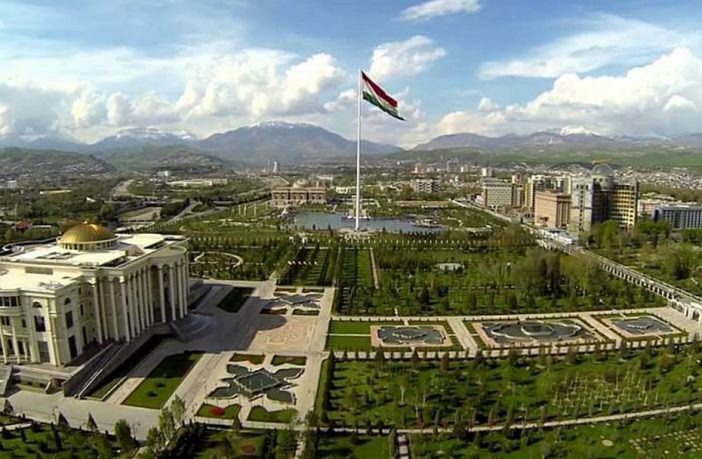
Tariq Saeedi and Elvira Kadyrova
Beneath the surface of day-to-day geopolitics, a quiet transformation is taking place in Tajikistan. It is currently executing a series of far-reaching strategic pivots in environmental diplomacy, green energy, digital infrastructure, and public health that deserve genuine international praise.
A Global Voice for the Frozen Commons
Perhaps the most notable achievement of modern Tajikistan is its ascension as an authoritative global voice in water diplomacy and climate action. While the nation itself faces the direct, devastating brunt of rising temperatures, it has chosen to lead rather than merely react.
Through the ongoing Dushanbe Water Process, the Tajik capital has evolved into a vital international hub for hydrologic policy. The country recently hosted a landmark water conference that united representatives from over 110 nations, successfully driving global coordination toward achieving Sustainable Development Goal 6 (Clean Water and Sanitation).
More profoundly, Tajikistan has shifted the UN’s environmental focus toward the world’s vulnerable high-altitude ecosystems.
Recognizing the rapid decay of its own mountain glaciers—which feed the entire Central Asian basin—the Tajik government successfully championed a UN General Assembly initiative proclaiming 2025–2034 as the Decade of Action for Cryospheric Sciences.
Backed by ten distinct water-centric UN resolutions and the establishment of a dedicated UN Trust Fund for glacier preservation, Tajikistan has effectively institutionalised the protection of global water towers.
Rewiring for a Green Future
Domestically, this climate awareness is translating into an ambitious overhaul of the national energy grid. Historically, Tajikistan has relied heavily on seasonal hydropower, resulting in winter energy deficits when river flows decline. The solution currently underway is a massive diversification into solar energy.
The centrepiece of this shift is a monumental 500-megawatt solar photovoltaic project spanning the Asht and Jayhun districts. Backed by key multilateral investors, this project is designed to fundamentally stabilize the national grid, eliminate transmission vulnerabilities, and significantly reduce the country’s carbon footprint.
Simultaneously, the state is breathing new life into its existing legacy infrastructure. Significant funding has been funnelled into modernizing the aging Nurek and Sarband Hydropower Plants. By replacing outdated turbines with high-efficiency systems, Tajikistan is securing its status as a major regional clean energy exporter while maximizing its precious water resources.
Securing Health and Harvests in the Countryside
The true metric of a nation’s development, however, lies in the tangible well-being of its most vulnerable citizens. In rural Tajikistan, targeted public health and agricultural initiatives are yielding quietly spectacular results.
According to data verified by the World Food Programme (WFP), long-term national nutrition campaigns have successfully reversed critical trends in child health. Over a decade of focused effort, child stunting rates plummeted from 26% down to 14%, while child wasting dropped to 6%.
Parallel to these health outcomes is the World Bank-supported Strengthening Water and Irrigation Management (SWIM-2) project. Backed by a $75 million grant, this massive infrastructural undertaking is currently rehabilitating irrigation systems across 100,000 hectares of farmland. By vastly improving water conveyance efficiency, the project is directly securing the livelihoods and food security of roughly 470,000 rural farmers, turning arid stretches into reliable economic lifelines.
The Digital Leap Forward
For years, Tajikistan’s landlocked, mountainous geography acted as a physical barrier to the digital age, resulting in slow speeds and prohibitive costs. Today, an aggressive regulatory and infrastructural push is bridging that digital divide.
Fixed-line internet speeds have shown a marked improvement, climbing from roughly 30 Mbps in early 2025 to over 45 Mbps by March 2026—the country’s best performance on the Speedtest Global Index in five years.
This progress has been paired with regulatory action that cut wired internet tariffs by an average of 55%, opening the doors of the global digital economy to a new generation of Tajik entrepreneurs and students.
Mobile connectivity, by contrast, remains a work in progress: The authorities have set a target of full 4G coverage by 2027 and a 5G rollout by 2030 to close that gap.
Furthermore, Tajikistan’s forward-thinking stance on technology has resonated on the international stage. The UN General Assembly recently adopted a Tajik-led resolution officially designating August 31st as the International Day of Safe, Secure, and Trustworthy Artificial Intelligence, placing the country at the forefront of global digital governance advocacy.
Forging New Links
These domestic advancements have laid the groundwork for enhanced international economic integration. Just this week, Tajikistan joined its regional neighbours at a ministerial-level industrial meeting in Seoul, pledging to strengthen critical supply chain cooperation with South Korea. This move positions Tajikistan to leverage its abundant mineral wealth, ensuring it plays a pivotal role in the shifting landscape of global trade. /// nCa, 15 September 2026