


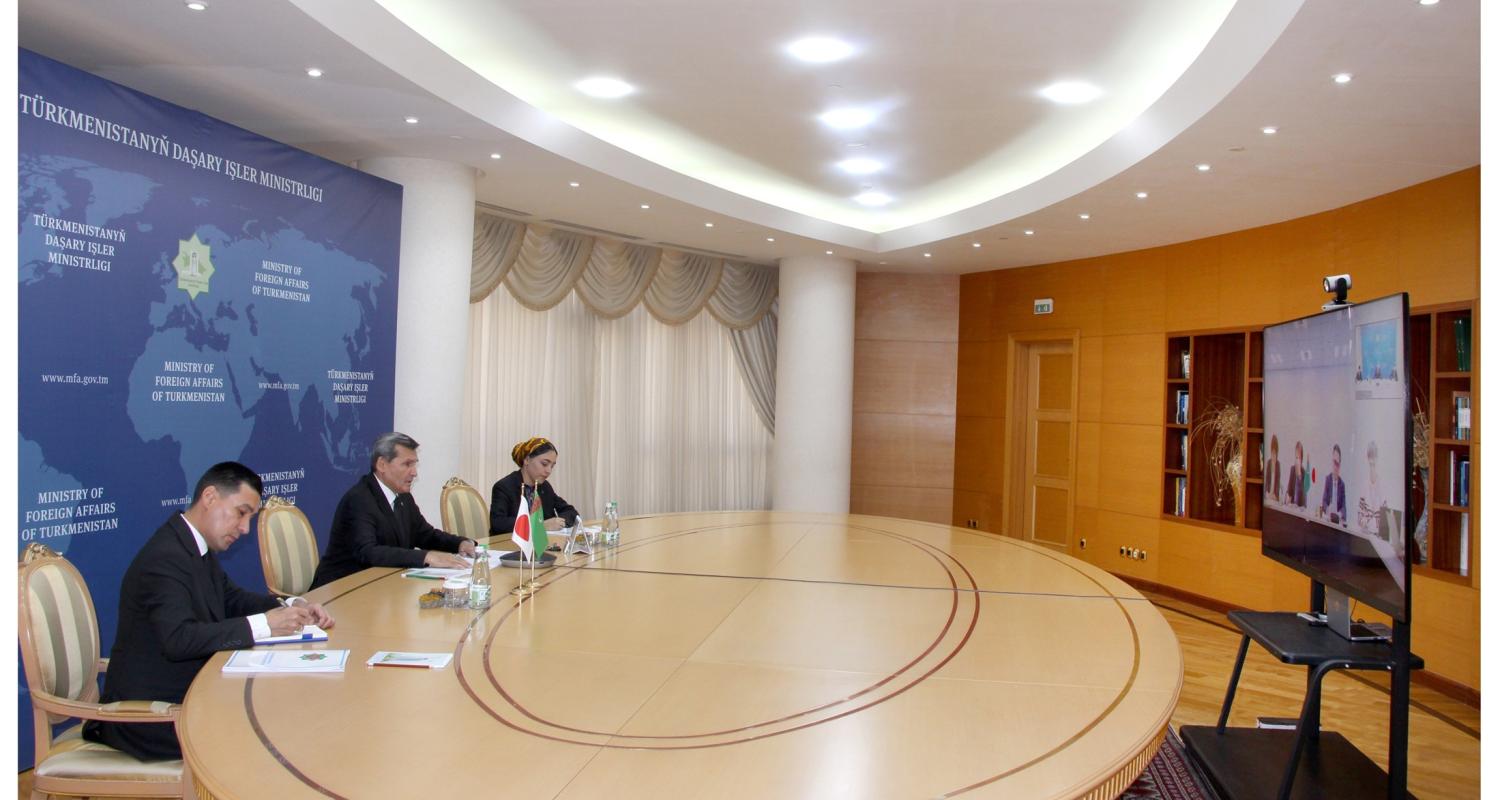
Turkmenistan and Japan are preparing a package of documents to be signed following the meeting of the Turkmen-Japanese and Japanese-Turkmen Committees for Economic Cooperation.
According to the Ministry of Foreign Affairs of Turkmenistan, during a videoconference on Wednesday, 26 August, Minister of Foreign Affairs Rashid Meredov and Hiroyuki Tsubai, Chairman of the Japanese-Turkmen Committee for Economic Cooperation, agreed on the key agenda items and work programme for the Joint Meeting of the Committees for Economic Cooperation.
The sides also reached agreements on preparing bilateral documents to be signed following the meeting.
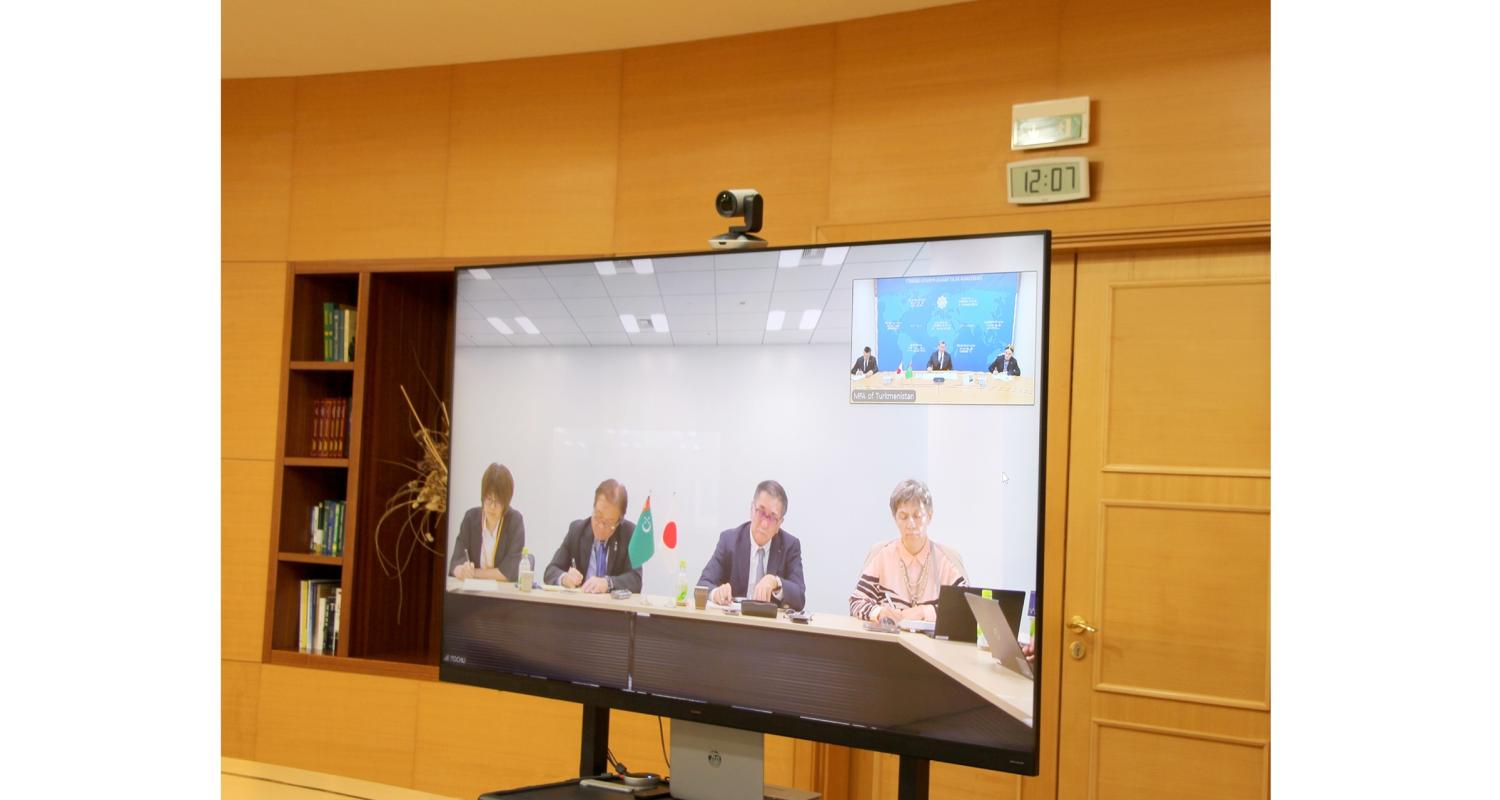
During the online meeting, the sides discussed current issues in bilateral cooperation, including ongoing and prospective projects in such areas as the gas chemical industry, transport, the circular economy and other fields.
It was previously reported that the 16th meeting of the Turkmen-Japanese and Japanese-Turkmen Committees for Economic Cooperation will be held in Tokyo from 14 to 16 December 2026.
The Turkmen-Japanese and Japanese-Turkmen Committees for Economic Cooperation serve as bilateral platforms for coordinating trade, industrial and investment projects between the two countries.
Japan is one of Turkmenistan’s largest investment partners. A total of 44 investment projects involving Japanese companies, with a combined value of more than US$11 billion, have been registered in Turkmenistan. Projects worth around €256 million and nearly ¥190 billion are also being implemented, according to data as of April 2025.
The new agreements to be formalised at the upcoming joint meeting will build on the expanding economic cooperation between Turkmenistan and Japan. During President Serdar Berdimuhamedov’s visit to Japan in December 2025 to attend the first Central Asia-Japan Summit, the sides signed a number of documents involving major Japanese companies, including Sumitomo Corporation, Mitsubishi Corporation and Kawasaki Heavy Industries. The agreements covered gas chemicals, transport, digital technologies, the financial sector and education.
Among the major industrial projects are cooperation with Kawasaki Heavy Industries on the maintenance of the Ahal Gas-to-Gasoline Plant, as well as the participation of Japanese companies in a project to build a urea production complex with an annual capacity of 1.155 million tonnes in Balkan Region.///nCa, 26 August 2026