


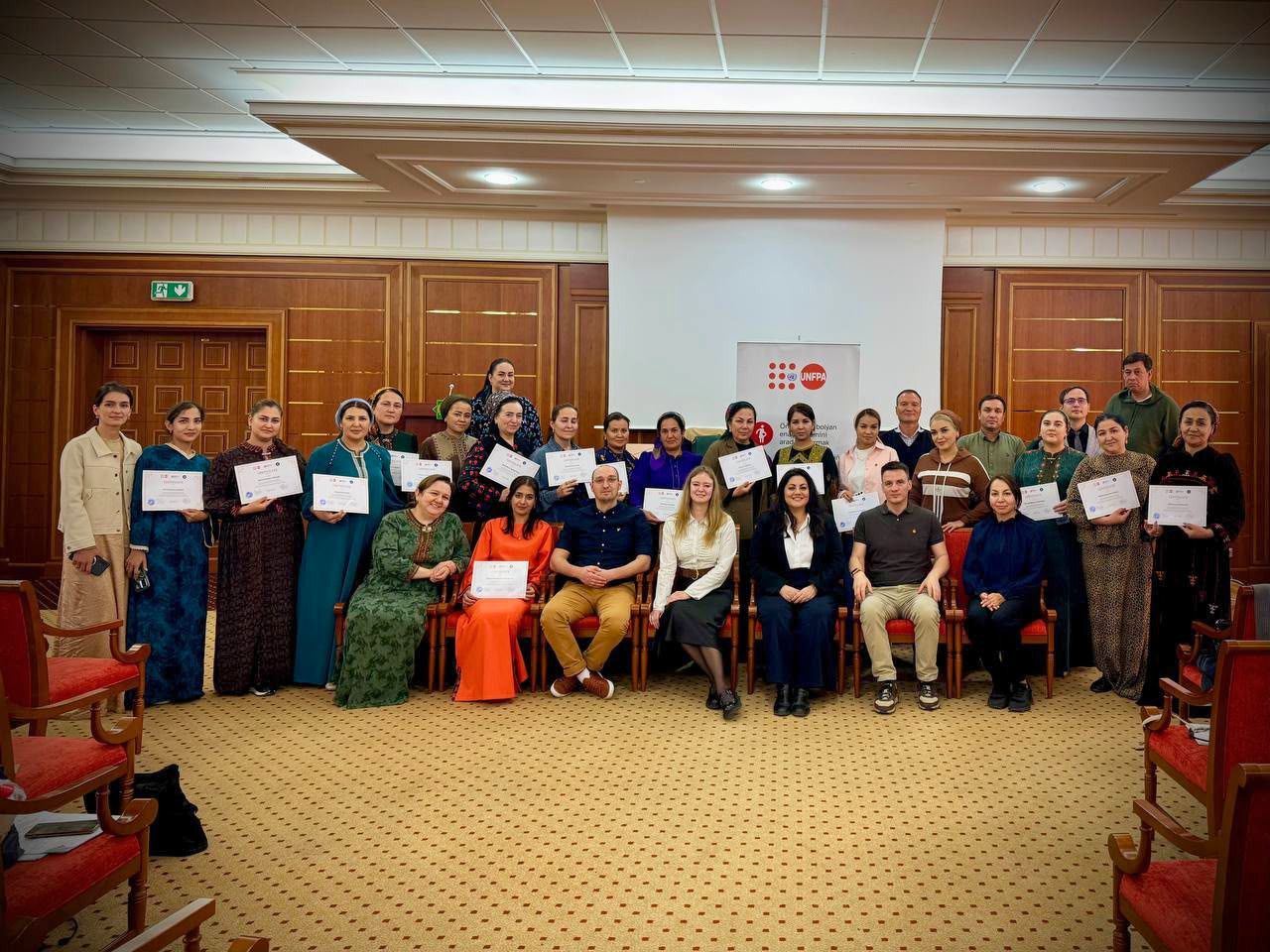
From 20 to 29 October, the United Nations Population Fund (UNFPA), in cooperation with the State Statistics Committee of Turkmenistan, conducted a seminar to prepare for a Time Use Survey. The seminar was held within the framework of the regional CISPop project, with the participation of experts from the National Research University Higher School of Economics (HSE University, Russian Federation) and the United Nations Development Programme (UNDP). It aimed to strengthen national capacity to prepare for and conduct the survey, as well as to ensure the quality of the data collected.
A Time Use Survey helps examine how people allocate their time across different activities, including unpaid domestic work and care work. The data collected can provide a deeper understanding of people’s daily lives, the distribution of paid and unpaid work, and differences in time use across population groups and types of activity. Such information complements existing statistical data and can be used to analyse socio-economic processes and develop measures that respond to the needs of different population groups.
Specialists from the State Statistics Committee of Turkmenistan participated in the training seminar in Ashgabat. The training was delivered by experts from the Centre for Interdisciplinary Studies of Human Potential at the Institute for Social Policy of HSE University — Maria Nagernyak, Vasily Anikin, Sergey Ter-Akopov and Natalia Ter-Akopova. Ilaria Mariotti, a gender expert from UNDP, also participated in the seminar. The experts’ contributions covered survey methodology, the refinement and testing of data collection tools, the specific requirements of collecting data through this type of survey, and gender aspects of unpaid work.
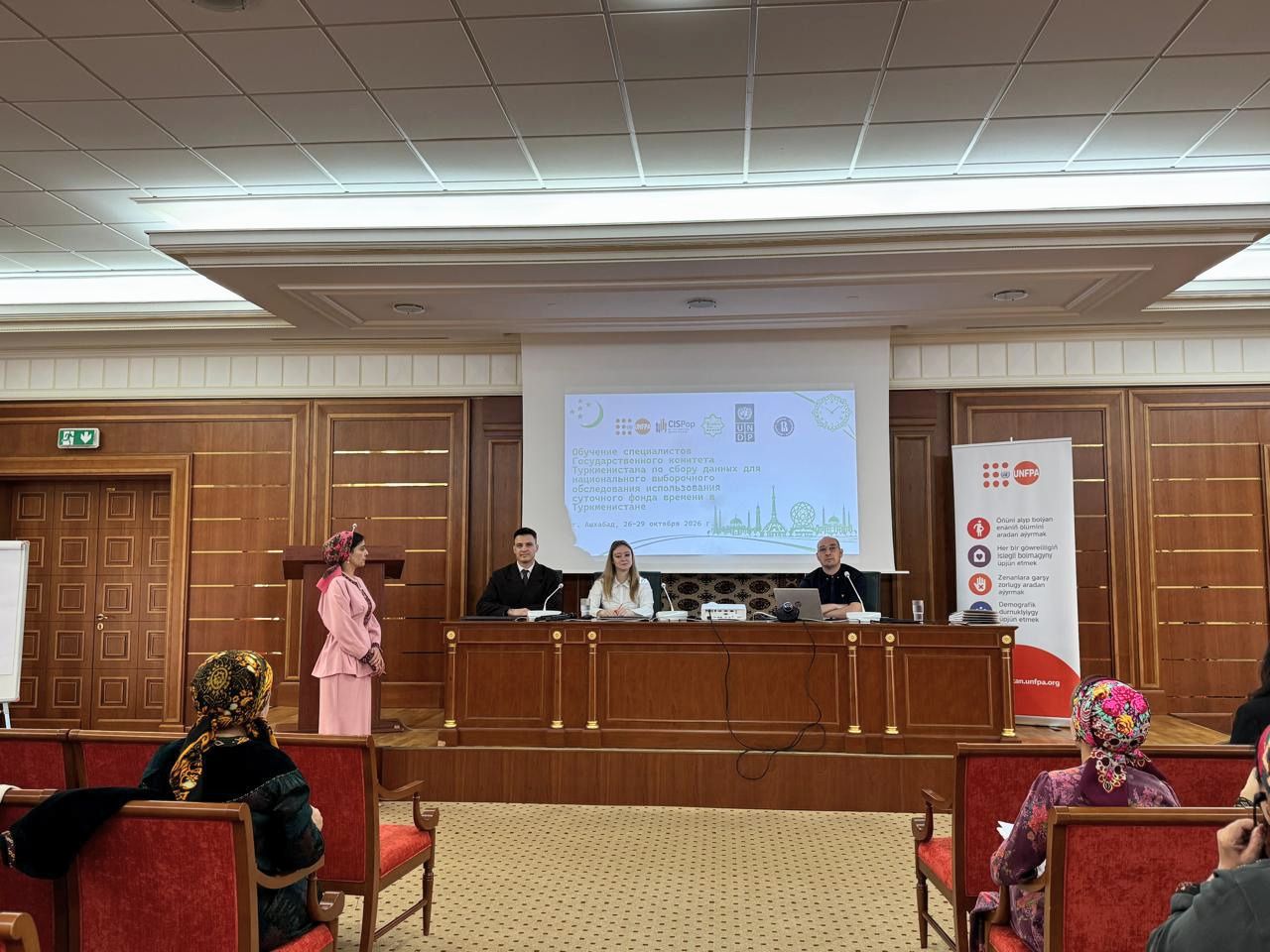
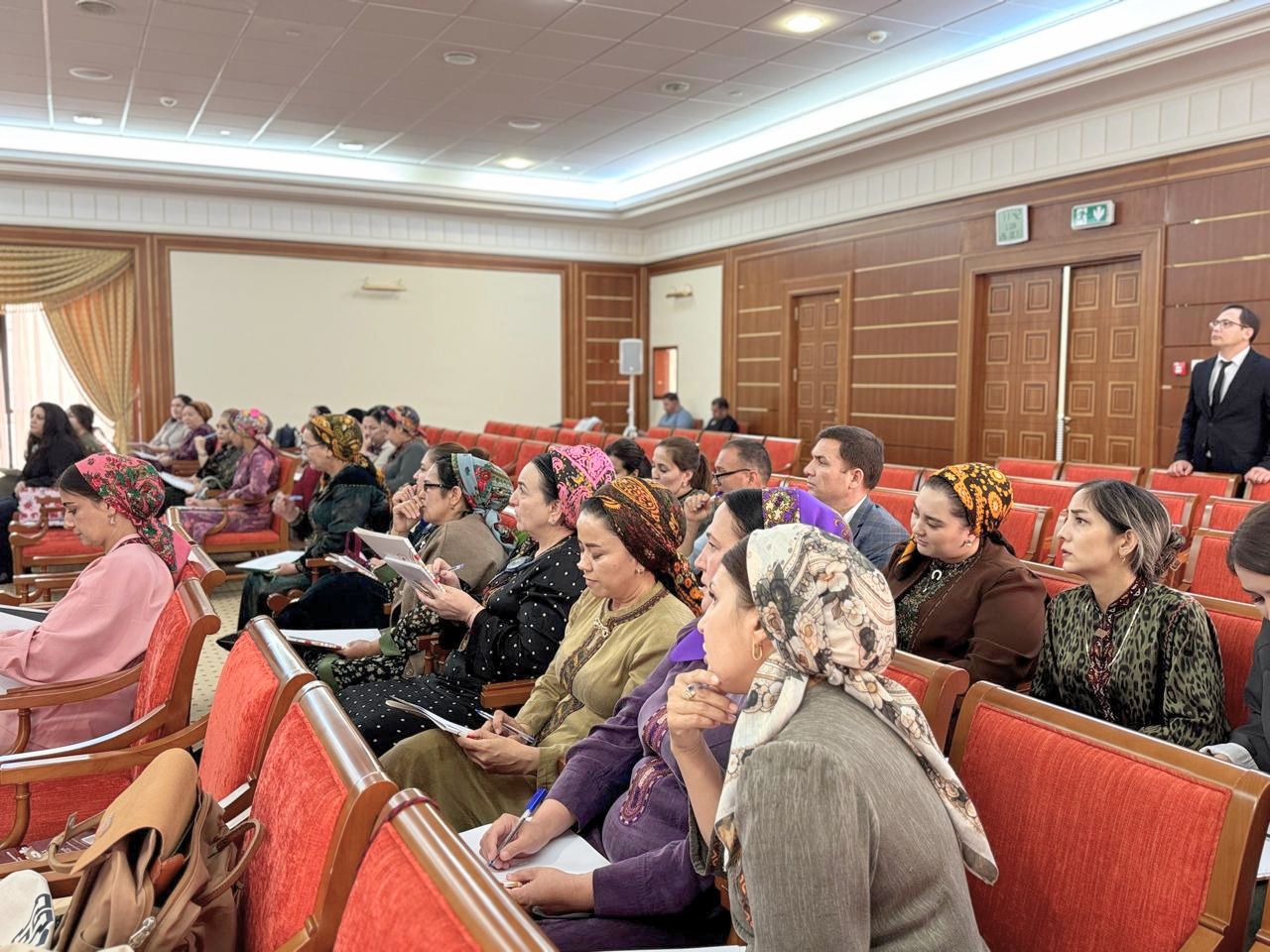
The training programme covered the main stages of survey preparation, including familiarization with the methodology and data collection tools, practical exercises on interviewing techniques, completing time-use diaries, and organizing pilot testing of the tools. The programme also included practical exercises, discussions of challenging cases, and approaches to encouraging respondents to participate in the survey. Particular attention was given to pilot testing questionnaires and time-use diaries in both urban and rural settings, data quality control, and consistent application of the methodology. Participants also studied the ethical principles of conducting surveys, including informed consent, voluntary participation, confidentiality, personal data protection and gender sensitivity.
Speaking at the opening of the seminar in Ashgabat, Kemal Goshliyev, Head of the UNFPA Country Office in Turkmenistan, emphasized the importance of high-quality data for evidence-based decision-making, effective planning and strengthening the country’s demographic resilience. “Understanding how people allocate their time between work and personal life, caring for loved ones and other activities, disaggregated by sex and age, will provide data to inform government planning and the development of strategic documents based on people’s needs. UNFPA stands ready to continue supporting Turkmenistan in advancing gender equality, investing in human capital and strengthening demographic resilience using data from the survey,” said Kemal Goshliyev.
The seminar was particularly timely, coinciding with the International Day of Care and Support on 29 October. It recognizes the paid and unpaid care work that sustains families, communities and economies, much of which goes uncounted in official statistics. In a joint message for the Day, UNFPA, ILO and UN Women stressed that responding to demographic change requires a long-term approach with women and gender equality at its centre. “Resolving the care crisis is essential to building demographic resilience amidst rapid population change. When women carry the silent weight of unpaid care alone, their life opportunities shrink and entire economies are held back,” said Florence Bauer, UNFPA Regional Director for Eastern Europe and Central Asia.
According to UN data, women across Europe and Central Asia spend 3.4 times more time than men on unpaid care and domestic work. Time-use surveys are the main source of this evidence, including for SDG indicator 5.4.1: the proportion of time spent on unpaid domestic and care work by sex, age, and location.
UNFPA continues to cooperate with the State Committee of Turkmenistan on Statistics to strengthen national capacity to collect, analyse and use data in the context of demographic changes. Training specialists and testing survey tools have been important steps in efforts to develop the national statistical system and expand opportunities for analysing population well-being.
***
Maria Nagernyak is Deputy Vice-Rector of HSE University and Head of the Centre for Studies of Well-Being and Time Use Budgets of the Population at the Institute for Social Policy. Her areas of expertise include social policy, the labour market, population well-being and human potential development. She leads research projects on population time use and coordinates expert and analytical work on the development and use of human capital.
Vasily Anikin is a Senior Research Fellow at the Centre for Interdisciplinary Studies of Human Potential at the Institute for Social Policy and an Associate Professor at the Faculty of Social Sciences of HSE University. He holds a PhD in Sociology from the University of Essex, United Kingdom, and a Candidate of Economic Sciences degree. He has extensive experience in planning and organizing sample surveys, leads research projects on human potential, and specializes in its socio-economic dimensions.
Sergey Ter-Akopov is a Research Fellow at the Centre for Interdisciplinary Studies of Human Potential at the Institute for Social Policy of HSE University. He specializes in sample survey methodology, statistical data analysis and tools for collecting information on population time use. He has contributed to the development of methods and tools for surveys conducted by Russian statistical authorities, as well as methodological recommendations for conducting time-use surveys.
Natalia Ter-Akopova is a Leading Expert at the Centre for Interdisciplinary Studies of Human Potential at the Institute for Social Policy and a Senior Lecturer in the Department of Sociology at the Faculty of Social Sciences of HSE University. She holds a Candidate of Sociological Sciences degree and specializes in the study of time use among children and adults, child well-being, quantitative data analysis methods and comparative social research. She has contributed to the development of time-use measurement methods, methodological recommendations and tools for sample surveys, as well as interviewer training.
Ilaria Mariotti is a Gender Analyst at UNDP’s Istanbul Regional Hub, where she has worked since 2020. She coordinates regional work on the care economy and women’s participation in political and public life across Europe and Central Asia. Her areas of expertise include the gender dimensions of unpaid work, care systems and the use of time-use data. She has authored and co-authored UNDP analytical publications on gender equality and the care economy. ///nCa, 2 November 2026 (in in cooperation with UNFPA Turkmenistan)