


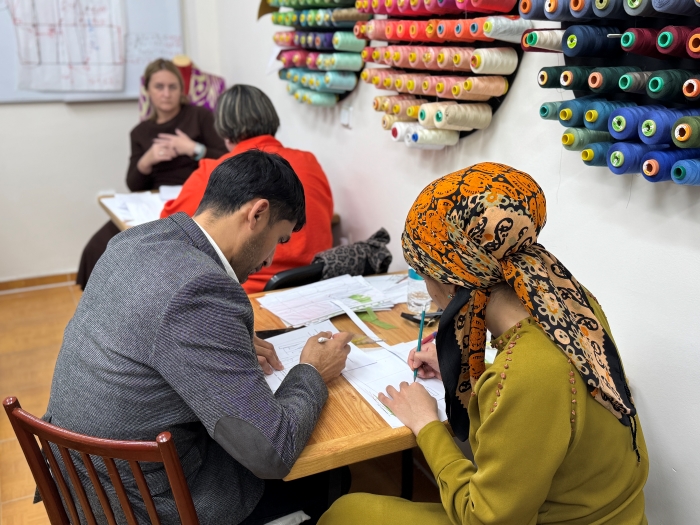
From 26 to 30 October, a five-day practical training on pattern-making for women’s jackets and blazers was held in Ashgabat for garment industry specialists, atelier professionals and designers from Turkmenistan. The event marked the third stage in a series of training programmes for the sector organised by the International Trade Centre (ITC) under the European Union-funded project “Turkmenistan: Enhancing Trade Resilience and Integration”.
The programme brought together more than 20 specialists and began with methods for taking measurements, making calculations and drafting basic blocks. Participants then explored the construction of sleeves, collars, lapels and pockets. Particular attention was paid to the accuracy of calculations and the correct matching and assembly of garment components, which are essential for achieving a precise fit and a polished finished appearance.
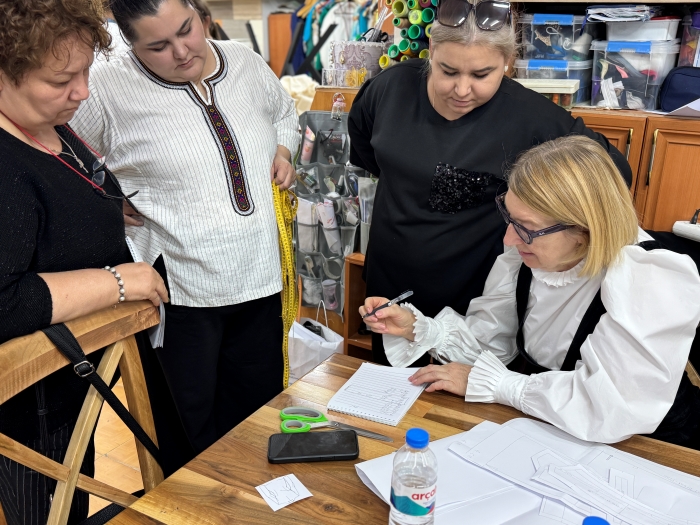
During subsequent sessions, participants learned to work with different fabrics, explored contemporary approaches to jacket design, including popular oversized styles, and practised adapting basic blocks to different clothing styles. On the final day, the specialists consolidated their knowledge through practice by completing individual assignments to draft patterns and produce jacket mock-ups tailored to different body shapes and client requirements.
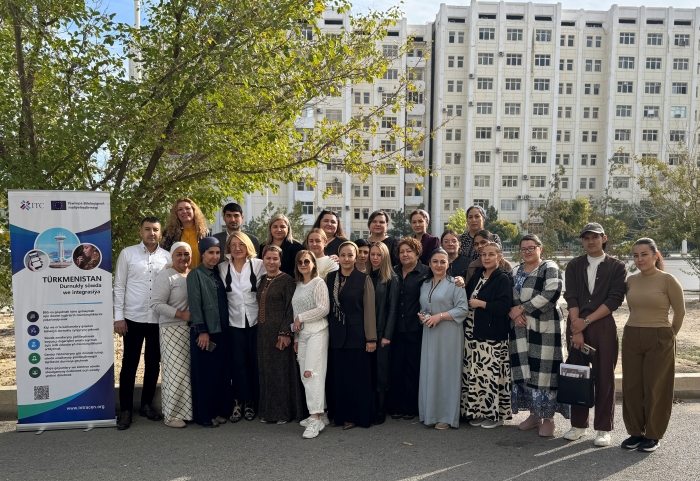
The training continued ITC’s systematic work to develop Turkmenistan’s textile and garment sectors and support small and medium-sized enterprises. Such training initiatives aim to strengthen the skills of local professionals, improve product quality and enhance the competitiveness of local producers.
About the project “Turkmenistan: Enhancing Trade Resilience and Integration”
The European Union-funded project aims to contribute to economic development and decent work in Turkmenistan by improving the business climate and strengthening the competitiveness of SMEs. The project will support Turkmenistan’s participation in regional and global trade, including with the European Union. ///nCa, 2 November 2026