


Some lives are measured in decades. Others are measured in the worlds they leave behind.
There is something profoundly moving about the life of Hoshgeldy Shahberdiyev, the Turkmen artist who died at just 40, leaving behind nearly 2,500 paintings and graphic works, a circle of devoted friends and admirers, and the memory of a man whose extraordinary gifts extended far beyond his art.
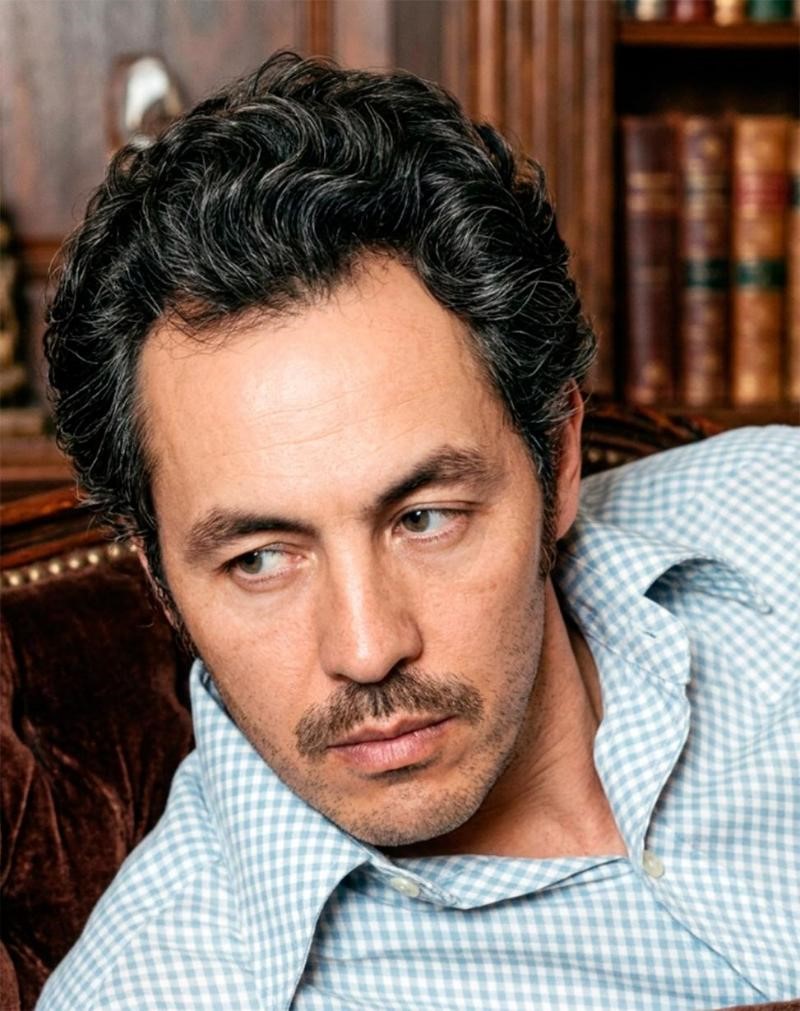
His story is not simply one of artistic talent cut short. It is a story of courage in the face of an uncertain future, of a remarkable eye for the world around him, of generosity that touched the lives of others, and of a creative spirit that continued to work even when time was no longer on its side.
A personal exhibition of Shahberdiyev’s paintings and graphic works at the State Museum of Fine Arts of Turkmenistan has brought renewed attention to an artist whom fellow painters remember as one of the finest among them. The exhibition also offers an opportunity to rediscover the man behind the canvases: a sensitive observer of human life, an unconventional artist and, by all accounts, an unusually warm and inspiring personality.
This tribute is based on two articles by Tamara Glazunova, published on 20 and 21 October 2026 by the official media of Turkmenistan. Read together, they offer a touching portrait of a man whose life was brief, but whose creative legacy and personal influence were remarkably enduring.
A childhood with a pencil in hand
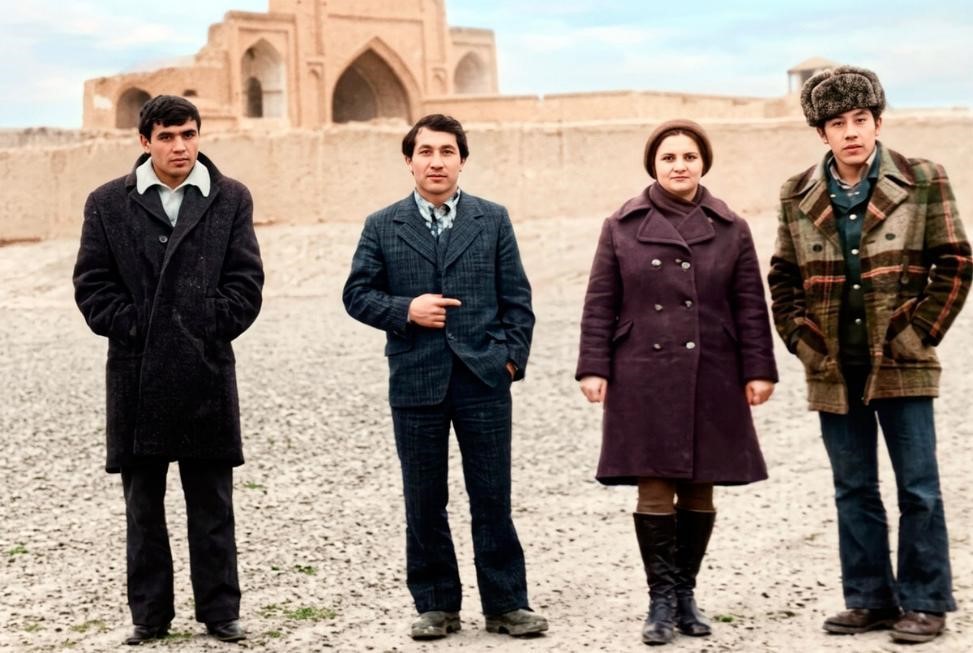
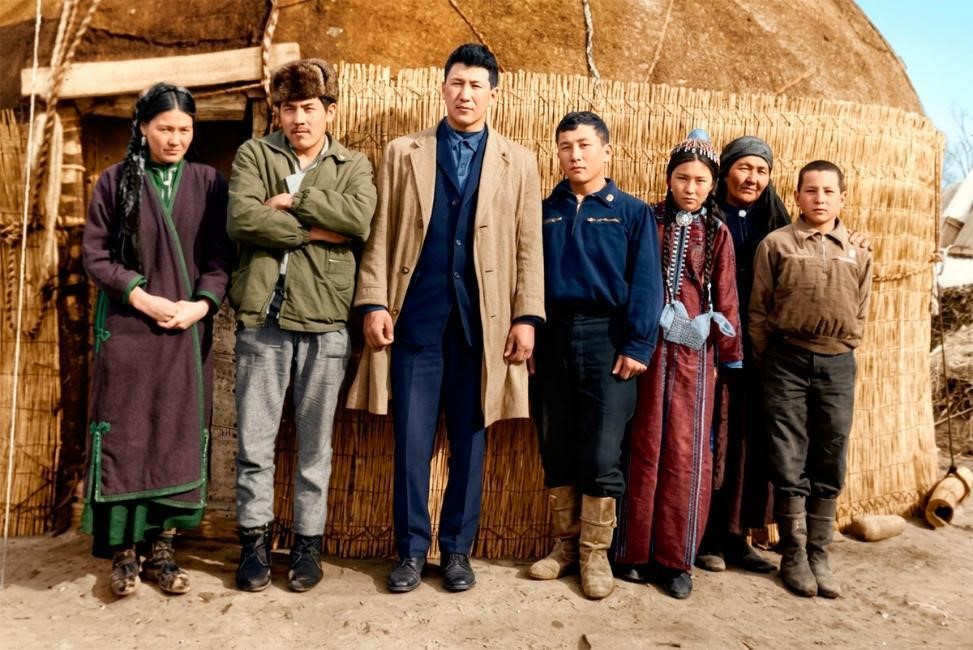
Born in 1946, in the years immediately following the Second World War, Shahberdiyev grew up in a family deeply rooted in Turkmen cultural life. His father, Hally Shahberdiyev, was among the pioneers of Turkmen literature and theatre, while his cousin Medeniyet Shahberdiyeva would become one of the celebrated voices of Turkmen and Soviet vocal art. His aunt, Bibiniyaz Ahmedova, was also known for her contribution to the country’s artistic heritage.
Talent surrounded him, but Hoshgeldy possessed a distinctive way of seeing that was his own.
According to his niece, Cheper Durdyeva, he was rarely without a notebook and pencil, even as a child. Whatever caught his attention found its way onto paper. It was an instinctive habit, but it also revealed something fundamental about the artist he would become: the world was always offering him something worth noticing.
His curiosity was not confined to landscapes, faces or objects. He seemed equally interested in the people behind them. Durdyeva recalled that when he spoke with someone, he could discover qualities in that person of which even the individual might have been unaware. Conversations with him left people feeling uplifted, as though he had helped them recognise something good within themselves.
That ability to see beyond the obvious may well have been as important to his art as his technical skill. Shahberdiyev looked at people not merely as subjects to be painted, but as human beings carrying their own stories, sorrows, hopes and contradictions.
The courage to keep creating
After graduating with distinction from the Turkmen State Art School, Shahberdiyev continued his studies at the All-Union State Institute of Cinematography in Moscow, where he entered the painting faculty. For a young artist from Mary, this was an opportunity to immerse himself in museums, libraries, distinguished teachers and the stimulating company of fellow students.
He studied there for three years. Then his health failed him.
Heart problems forced him to abandon his studies, and the medical outlook was grim. As Glazunova recounts, the doctor who operated on him warned that he did not have long to live.
Faced with such news, Shahberdiyev made a decision that says much about his priorities. He returned to Turkmenistan. He was an artist, he reasoned, and he had learned enough to continue working.
There is a quiet courage in that choice. He did not allow an unfinished education to define him, nor did he wait for better circumstances before resuming the work that mattered most. He returned home and painted.
His life would indeed be short, but it would not be idle. The collection now held by the State Museum of Fine Arts—almost 2,500 paintings and graphic works donated by his family—stands as a remarkable testament to the urgency with which he approached his calling.
One can only imagine how many more works he might have created had he been granted a longer life. Yet the sheer scale of what he accomplished makes it impossible to regard his artistic journey as incomplete.
An artist who refused to see the world in only one way
Shahberdiyev came of age when socialist realism held a dominant position in Soviet art. He worked within the realist tradition, but he did not simply reproduce its conventions. His paintings retained a distinctive personal touch, sometimes introducing other stylistic elements and allowing the imagination to enrich the reality before him.
The results are evident in the works highlighted at the exhibition.
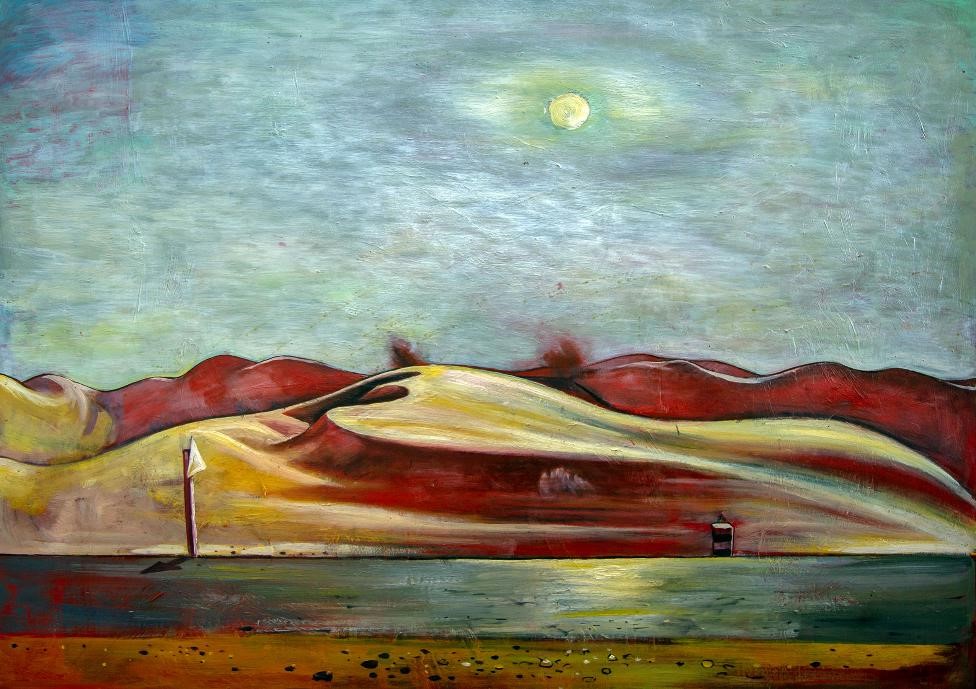
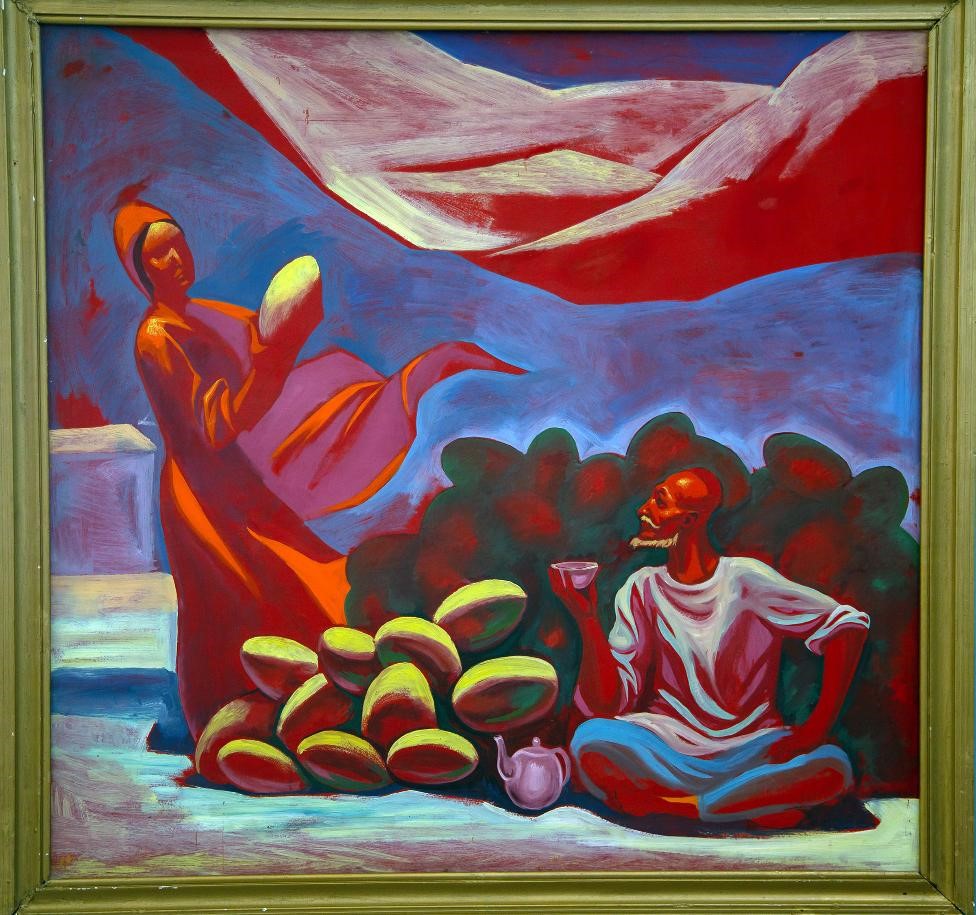
In The Road to Merv, the desert landscape is transformed through the subtle use of glazes, giving the dunes a particular depth and luminosity alongside the modern road that passes them. In Melon Seller, an ordinary scene becomes a celebration of honest labour: a vendor sits with the produce he has grown with his own hands, offering it to passers-by with a quiet dignity.
Neither subject needs grand gestures to command attention. Shahberdiyev found significance in everyday life and treated ordinary people as worthy of an artist’s careful attention.
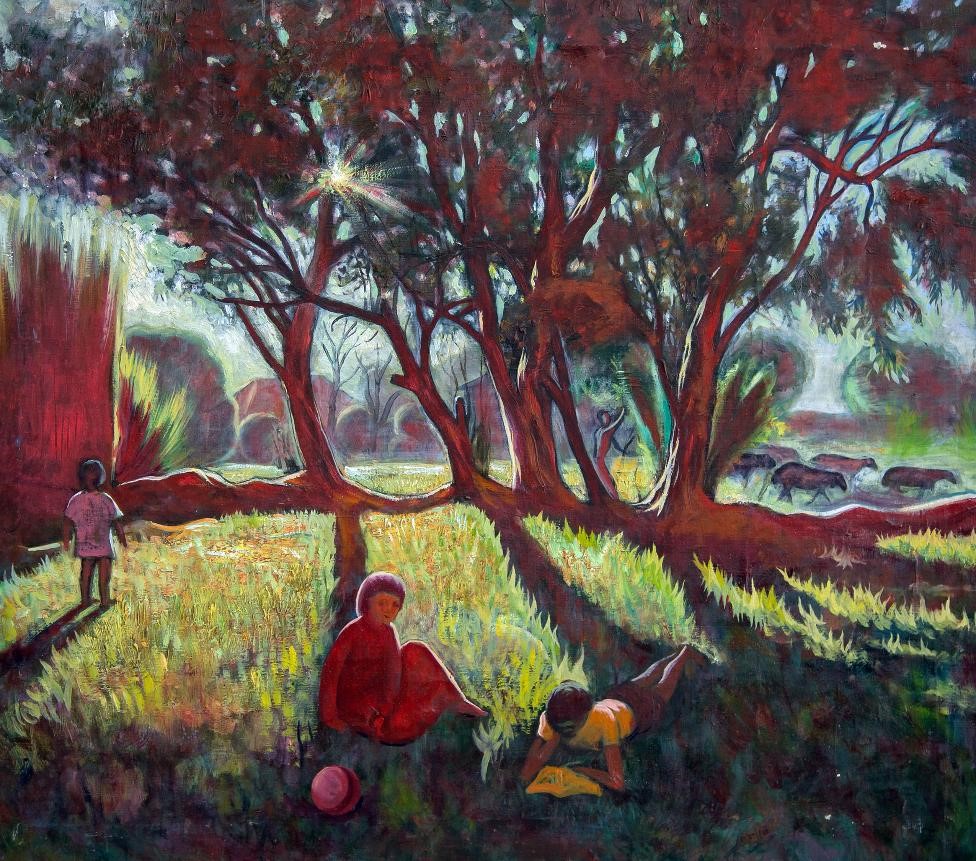
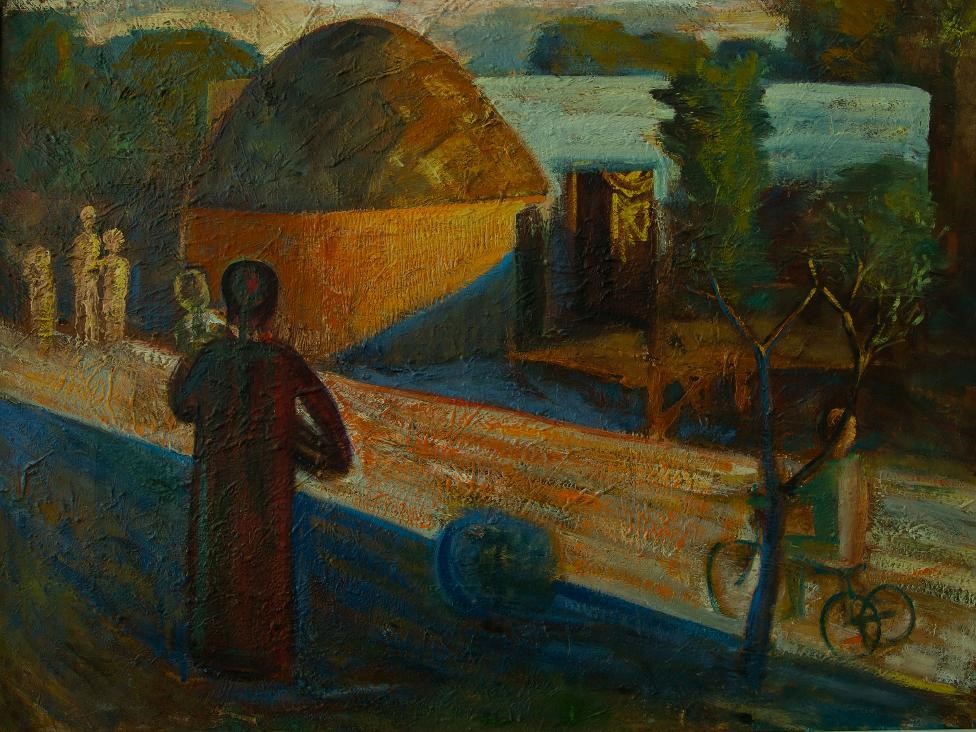
His Home reaches even further into the realm of memory. A mother returns home in the evening with her children and those of the neighbours. The road catches the moonlight, rendered with a palette-knife technique that gives it an almost tangible shimmer. The scene is intimate and familiar, yet it carries the emotional weight of childhood remembered from a distance.
In Autumn in the Native Village, the focus shifts to a more painful kind of memory. A man and a woman who once shared happiness encounter one another again after years apart. Their love has not entirely disappeared, but neither has the wound that life left behind.
These are not merely pictures of places and people. They are reflections on the experiences that make a life: childhood, work, love, separation, homecoming and the passage of time.
Shahberdiyev could embellish reality without losing its truth. His paintings invite the viewer to look again at familiar things and discover the feelings hidden within them.
The human cost of war
The Second World War left a deep impression on the generation to which Shahberdiyev belonged. As a boy growing up in its aftermath, he shared the fascination of many of his contemporaries with the courage and sacrifice of those who had fought at the front.
That preoccupation remained with him throughout his life.
One of his most affecting paintings, Farewell to the Front, depicts his father volunteering for military service. His wife watches him leave with anxiety and hope in her eyes, while their little daughter cannot understand why the adults are crying or where her father is going.
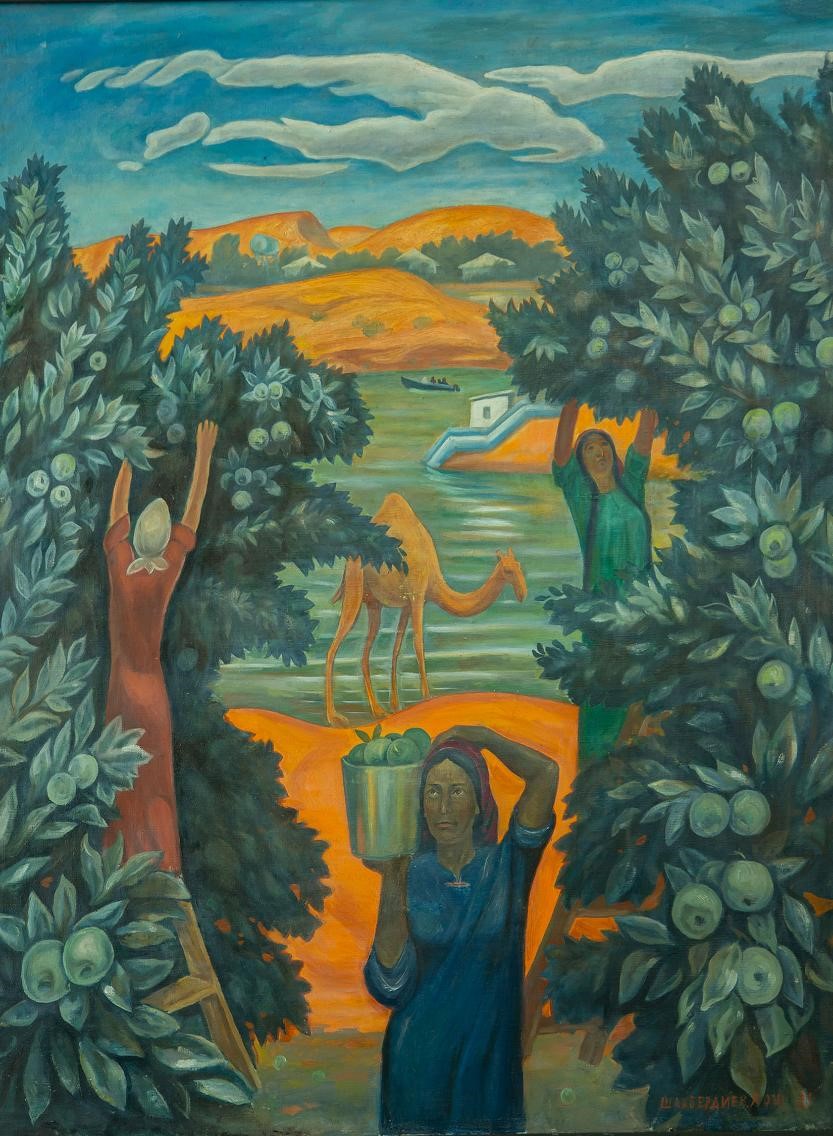
There are no triumphal gestures here, no attempt to turn private anguish into a grand public spectacle. Instead, Shahberdiyev shows war at the point where history enters a family home and changes the lives of those who remain behind.
The painting’s power lies in its humanity. A man departs for the front; a wife waits; a child cannot comprehend the tears. The great events of history become painfully real through the emotions of three people.
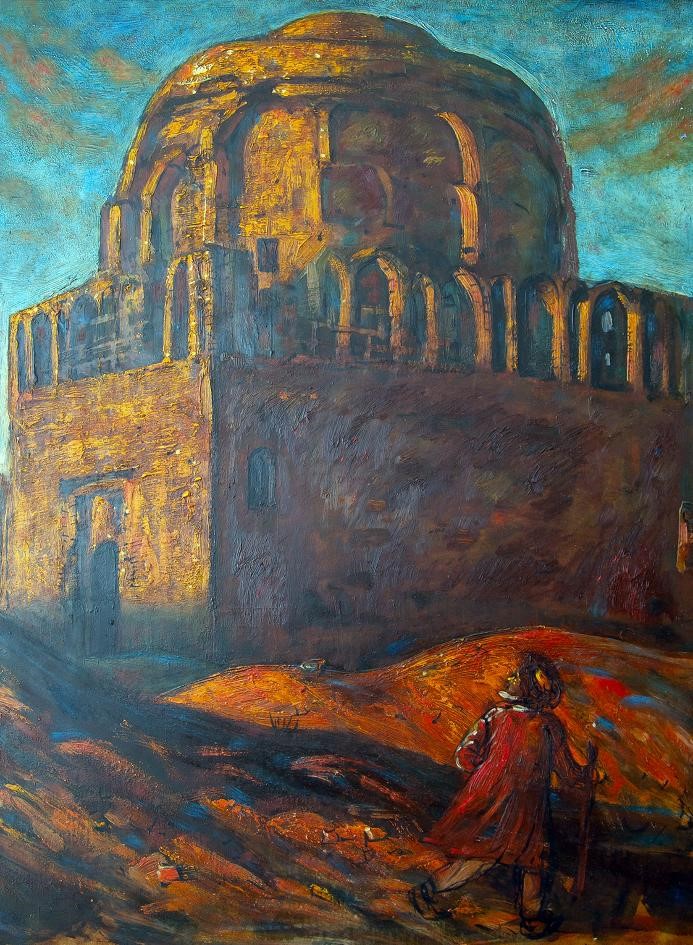
War returned to his thoughts in his final known work, the study The Price of Victory!. In sombre blue-black tones, he depicted a battlefield strewn with fallen soldiers who would never live to hear the celebratory salute marking victory.
According to his relatives, Shahberdiyev intended to develop the study into a large canvas. He had only just created it when, a few days later, he died.
The unfinished ambition lends the work a particular poignancy. The artist who had spent so much of his life reflecting on war’s human consequences had one more statement to make, but time ran out before he could give it the form he envisioned.
The study remains a final reminder that victory, however necessary or hard-won, is never without a human cost.
The extraordinary warmth of an unconventional man
Those who knew Shahberdiyev remembered more than his paintings. They remembered his generosity, his ability to win people’s affection and a personality that seemed to defy ordinary expectations.
His fellow student, the People’s Artist of Turkmenistan Myodjek Charyev, recalled an episode from their art-school days. When their teacher assigned them to draw a vase, most students produced the conventional image they had been taught to make. Shahberdiyev presented his vase at an unusual angle. The others received marks of four; he received a five.
The anecdote captures something essential about his artistic instinct. He could see a familiar object differently, and he was willing to trust what he saw.
Charyev also recalled how Shahberdiyev gave him a coat during the bitter Moscow winter when he was struggling to keep warm. The coat was synthetic, too, yet Charyev remembered it as surprisingly warm. The gesture mattered because it was spontaneous and practical: a friend had a problem, and Shahberdiyev helped.
Other recollections portray a man who moved comfortably among people from different walks of life. During his years in Moscow, he formed friendships with artists and cultural figures, including the distinguished painter and teacher Dmitry Zhilinsky. According to fellow artist Baba Ovganov, Shahberdiyev had a remarkable ability to establish rapport even with people whom other students approached with apprehension.
Some accounts of his unusual perceptive abilities became part of the stories people told about him. Whether remembered as mystery, intuition or something harder to explain, these anecdotes reflect the impression he made on those around him. They saw him as a man who seemed to notice what others missed.
His friendships extended across the cultural life of Turkmenistan. After returning home, he was welcomed by writer Tokar Tugurov, poet Gurbannazar Ezizov, directors of the Narlyyev family and People’s Writer Italmaz Nurymov, among others.
The affection he inspired was not confined to professional circles. After Shahberdiyev’s death, actor Vladimir Konkin visited his grave. Glazunova recounts that, standing beside the artist’s mother and holding her hands, Konkin was unable to hold back his tears.
It is a small but powerful detail. Fame and artistic recognition may explain why people seek out an artist, but grief of that kind speaks to something more personal. Shahberdiyev had mattered to people.
A legacy far larger than a lifetime
The nearly 2,500 works that his family entrusted to the State Museum of Fine Arts are perhaps the most tangible measure of Shahberdiyev’s extraordinary productivity. They are also an act of generosity in their own right, ensuring that the work of a much-loved relative can be seen, studied and appreciated by others.
One of his graphic works was acquired by the Tretyakov Gallery in Moscow, a significant recognition of his artistic achievement. Yet his legacy cannot be measured solely by institutional collections or the number of works preserved.
It lives in the memories of those who knew him, in the emotions his paintings continue to awaken, and in the discovery that an apparently ordinary scene—a road at night, a melon seller, a family returning home—can contain an entire world.
Among the exhibition’s self-portraits, visitors encounter Shahberdiyev at different stages of his life: young and older, cheerful and serious. Nearby is a portrait painted by his friend Chary Ovvaev shortly after his death. Shahberdiyev appears in the foreground, with a whole world behind him: ancient architectural monuments, people, towns and rural landscapes.
Ovvaev titled the painting Samsara – The Cycle of Life, suggesting that while the Earth continues to turn, life goes on.
It is an apt image for remembering Shahberdiyev. His own life stopped far too soon, but the world he observed and painted has not disappeared. It remains available to those willing to pause before his work and look closely.
Perhaps that is the most enduring quality of his art. It asks us to pay attention—to the tenderness of a family farewell, to the dignity of a working person, to the ache of an old love, to the quiet beauty of home. And it reminds us that the value of a life cannot be determined by its length alone.
Hoshgeldy Shahberdiyev was given only forty years. He used them to create, to give, to form friendships and to see the world with a rare sensitivity. His story carries sadness, but it is not a story of defeat. It is a story of what a determined and generous spirit can accomplish, even when time is painfully short.
The exhibition in Ashgabat offers visitors the chance to encounter his work. Those who take that opportunity will find more than a record of Turkmen life and landscape. They will find the traces of a man who looked at the world with unusual tenderness—and who left behind enough of that vision for others to share.
Forty years were not enough for Hoshgeldy Shahberdiyev. But they were enough to leave a world of his own, and to ensure that his light continues to reach us. /// nCa, 22 October 2026 [pictures credit Yusup Turshekov / TDH / family archive of Shahverdiyev]