


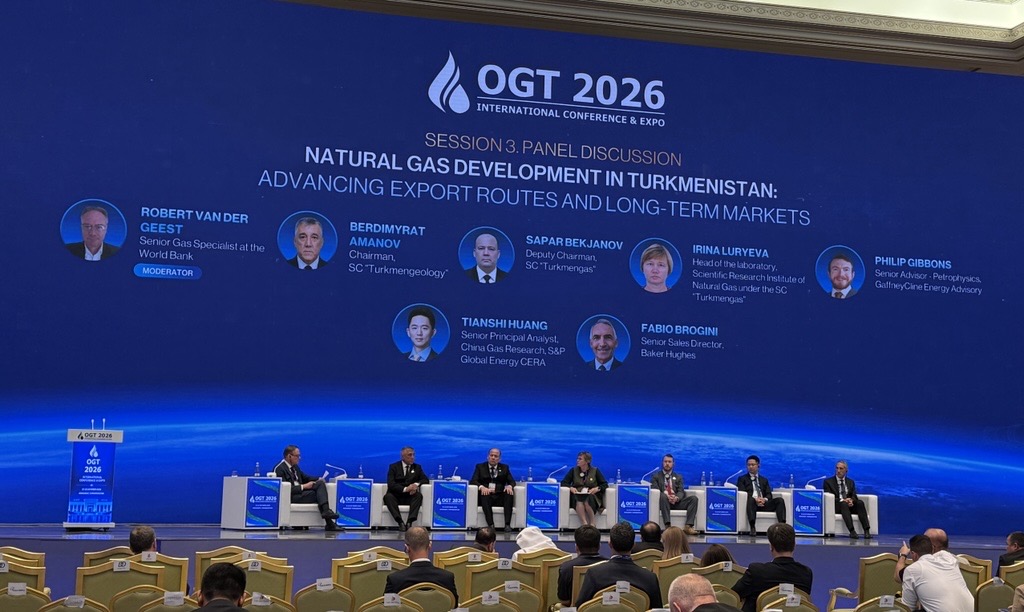
More than 30 exploration wells have been drilled at the Galkynysh gas field in Turkmenistan, and eight production wells are currently being drilled. At the same time, the country is holding consultations with potential investors on developing the second and third phases of the field. This was reported by Irina Luryeva, head of a laboratory at the Natural Gas Research Institute of the State Concern Turkmengaz, speaking at the OGT 2026 international conference in Ashgabat.
According to Luryeva, 3D seismic surveys are ongoing in the southern part of the Galkynysh structure. The data obtained may confirm further expansion of the field to the south.
The first phase of development is in pilot commercial operation. A total of 54 production wells have been drilled during this phase and are ready for commissioning, while another eight wells are being actively drilled.
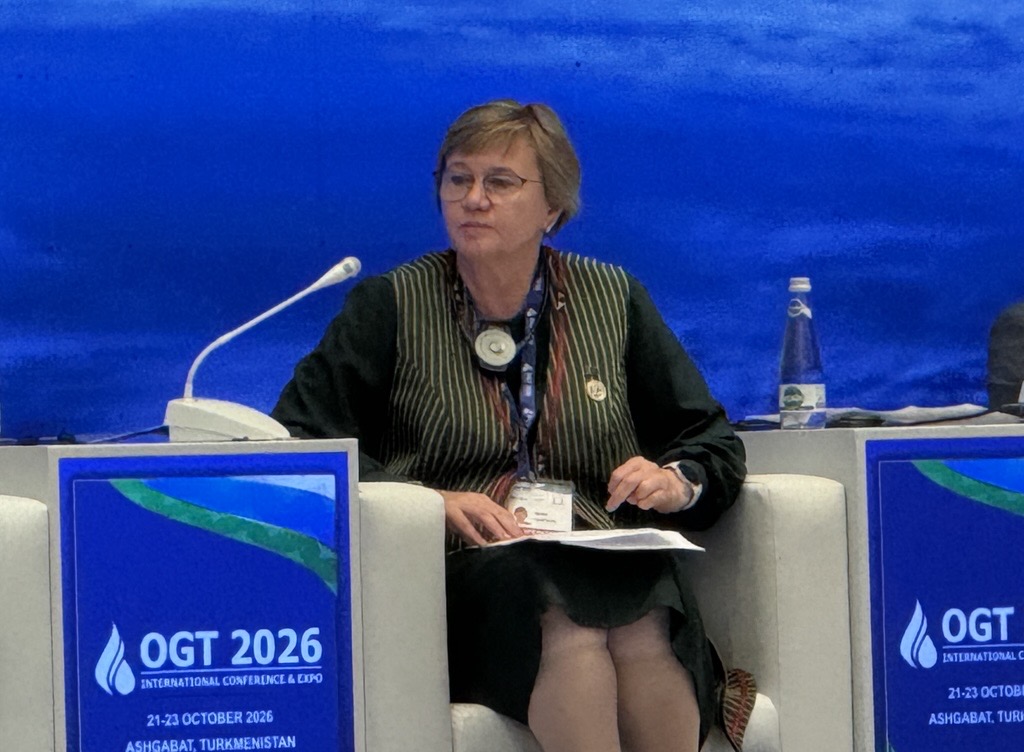
Lurieva noted that the actual capabilities of the reservoir allow for higher well productivity than the design figures provide for. With a design flow rate of 1.5 million cubic meters of gas per day, the reservoir’s potential makes it possible to operate wells over the long term at a daily flow rate of more than 2 million cubic meters.
“In addition, within the first phase we have three wells whose placement and design have made it possible to produce 3 million cubic meters of gas daily for about four years now,” the speaker said.
Three gas processing facilities have also been built at the field, with a combined capacity allowing the production of up to 30 billion cubic meters of commercial gas per year.
Speaking about future plans, Luryeva noted that Turkmenistan has begun developing the fourth phase of Galkynysh. At the same time, active consultations are under way to attract investors for the second and third phases, which, according to the presented design figures, envisage the production of 30 billion and 33 billion cubic meters of commercial gas per year, respectively.
Another important area of work will be updating the field’s geological and dynamic model. According to Lurieva, the update is necessary for more accurate development planning, well-founded allocation of investment, and forecasting of future production levels.///nCa, 22 October 2026