


Elvira Kadyrova
A ten-hour layover between flights is too long to spend entirely at the airport, yet far too short to truly get to know one of the world’s largest and most multifaceted cities. Sometimes, however, it is just enough for a brief encounter that leaves you wanting more.
That was precisely the case for our group of journalists from Ashgabat, bound for Bishkek. Along the way, a ten-hour layover in Istanbul awaited us. Rather than spending all that time in the transit area, we decided to seize the opportunity to step out into the city. That left us with roughly five hours for a quick tour of Istanbul, lunch, and a brief breather before our next flight.
Timing Is Key
For a transit passenger, the main question is not so much what to see, but what is realistically doable. A ten-hour layover, as in our case, does not mean ten hours of free time. Istanbul Airport is located quite far from the historical center. Depending on traffic conditions, a car ride can take anywhere from 40 minutes to an hour and a half—or even two hours. You must also factor in time to exit the airport, clear formalities, and return for your onward flight (roughly four to five – four and half hours in total).
While planning the trip back in Ashgabat, we considered various options, including the free Touristanbul guided tours offered by Turkish Airlines to eligible international transit passengers. However, the schedule of these organized tours did not align with our timeline, so we opted for a different approach.
At a travel agency inside the airport, we arranged a chauffeured vehicle for six people. This saved us from wasting precious time searching for public transport, navigating subway transfers, or looking up bus routes.
And so, our brief journey through Istanbul began—with the full understanding that we had only a few hours to spare.
The Bosphorus: A City Spanning Two Continents
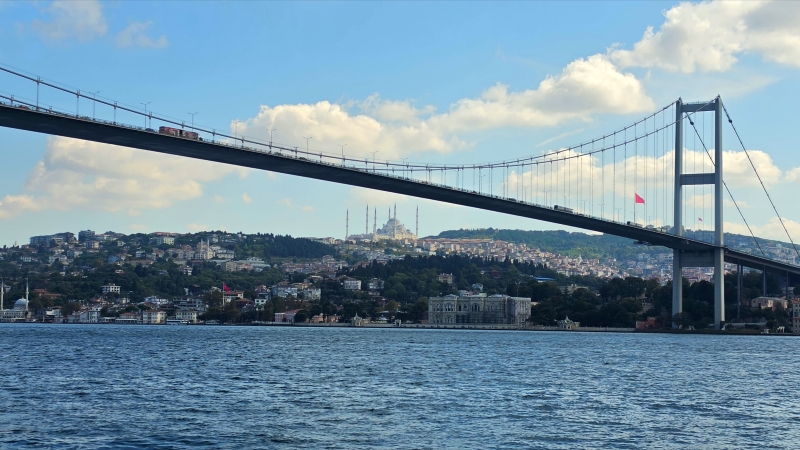
Our first stop was the Ortaköy neighborhood on the European shore of the Bosphorus. Right at the water’s edge stands the Grand Mecidiye Mosque (Büyük Mecidiye Camii), more commonly known simply as the Ortaköy Mosque.
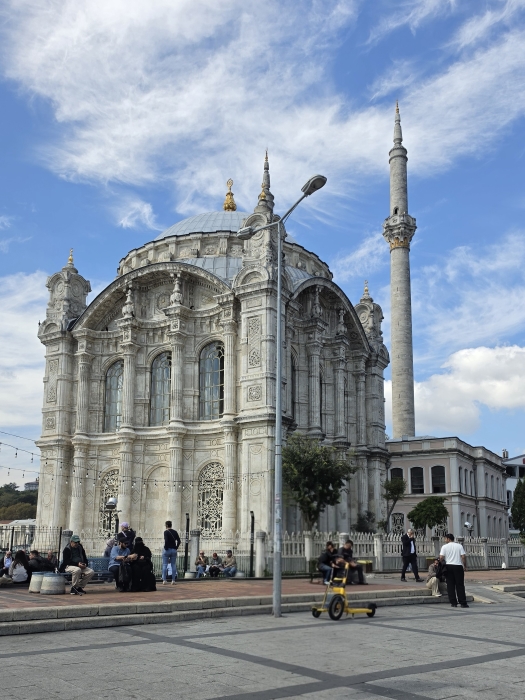
Commissioned by Sultan Abdülmecid I, the mosque features an elegant facade and architecture infused with elements of European Baroque. Yet it is its location that has brought it widespread fame: set against the white stone structure, the piers of the Bosphorus Bridge rise into the sky, with the Asian shore visible just across the strait.
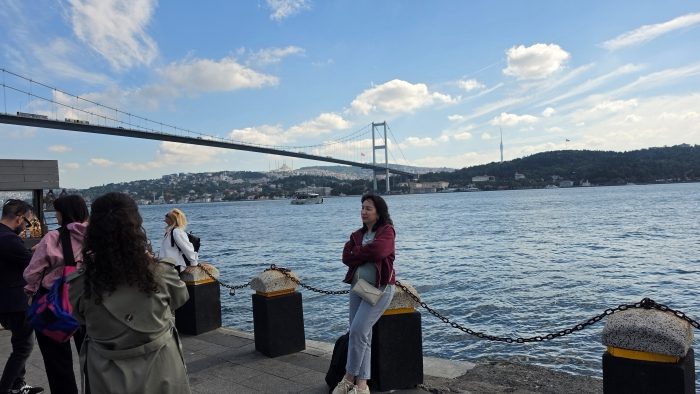
It is here that the city’s unique geography feels especially vivid. Istanbul spans two continents at once, with the Bosphorus binding its European and Asian sides into a single, seamless urban landscape. Vessels glide across the water, a continuous stream of traffic flows over the bridge, and tourists pause on the promenade to take in the unfolding panorama.
Ortaköy proved to be a perfect start to our stroll. There was no need for a complex sightseeing itinerary or spending hours visiting individual landmarks. It was enough to walk along the waterfront, pause by the mosque, admire the city from the shore, and, of course, snap dozens of photos and selfies.
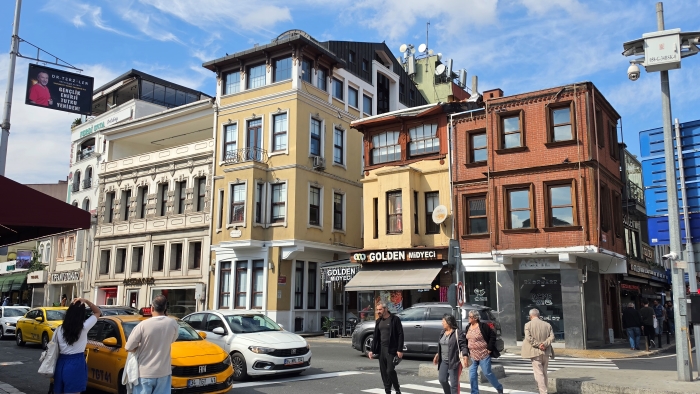
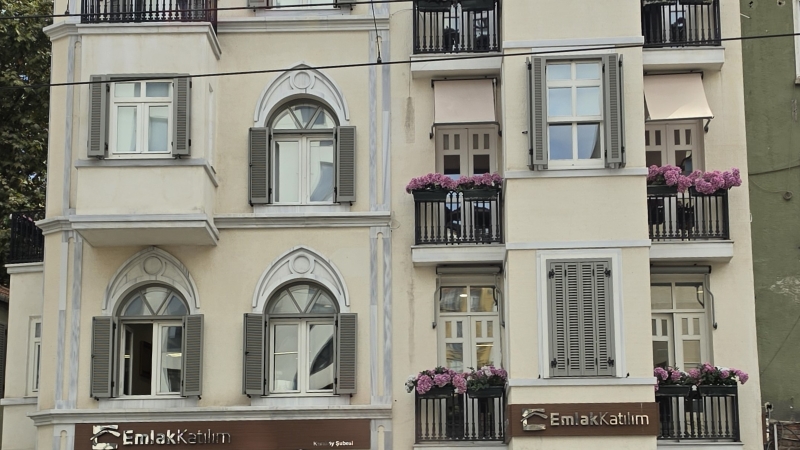
Lunch with a View of the Bosphorus
Leaving the Bosphorus waterfront, we headed toward the Galata Bridge for our next stop—and lunch.
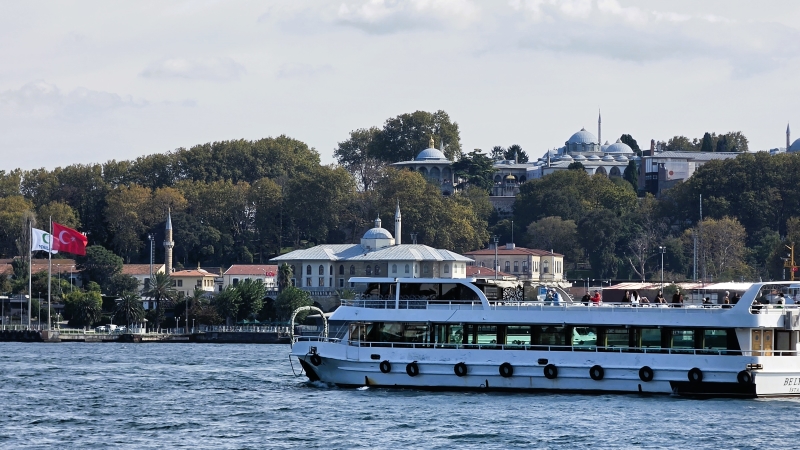
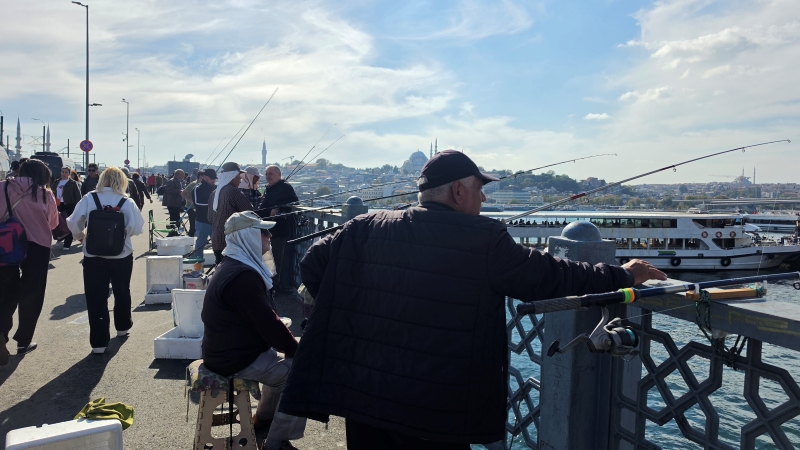
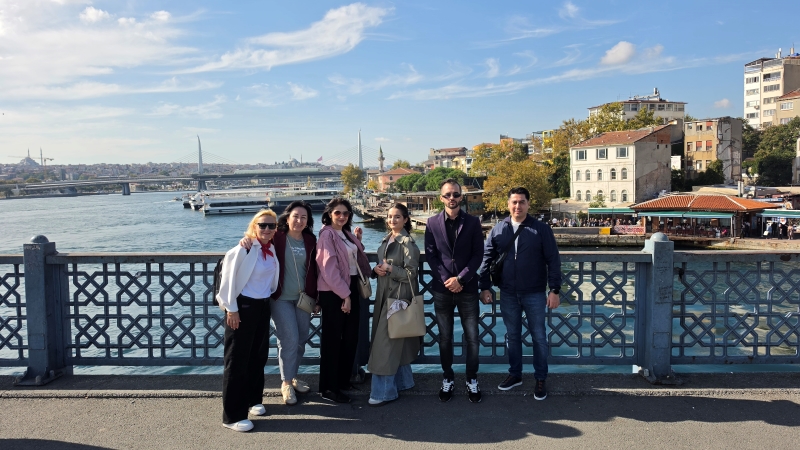
Crossing the Golden Horn, the Galata Bridge is another iconic landmark of central Istanbul. Traffic hums on the upper level, anglers line up along the sidewalk with their fishing rods, while the lower level is packed with restaurants and cafes.
A fascinating element of this cityscape is the anglers themselves. Amid the urban rush, they stand along the railings in no hurry, patiently awaiting their catch, seemingly indifferent to the surrounding traffic.
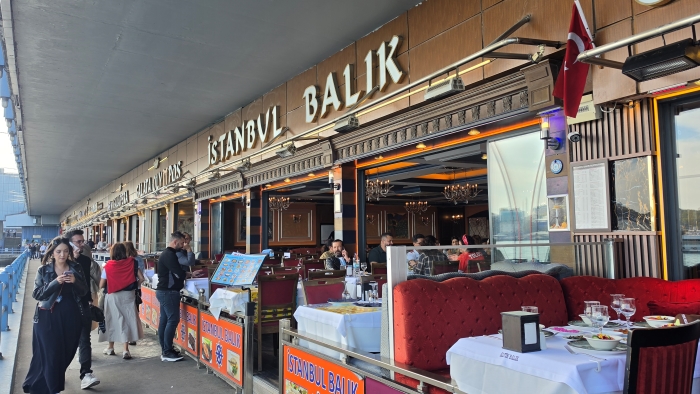
At a restaurant on the bridge’s lower deck, we sampled local seafood dishes. After our walk along the Bosphorus, lunch was not just a chance to refuel, but a moment to slow down, catch our breath, and exchange initial impressions with colleagues.
The Galata Bridge is also intriguing because it bridges two distinct neighborhoods. On one side lies the historical peninsula with its mosques and monuments; on the other, the district leading toward Beyoğlu and the bustling Istiklal Street. Here, Istanbul reveals itself as a city where history and modernity exist side by side.
Taksim Square
Our next stop was Taksim Square, one of the primary public spaces of modern Istanbul.
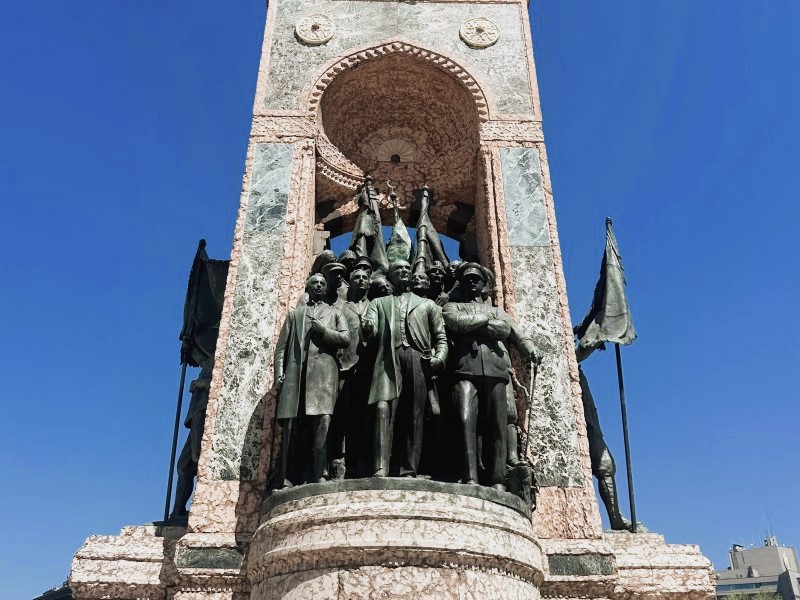
At the center of the square stands the Republic Monument (Cumhuriyet Anıtı), unveiled in 1928 to commemorate the founding of the Republic of Türkiye. The composition features Mustafa Kemal Atatürk along with other key figures instrumental in creating the new state. The monument serves as a reminder of a pivotal moment in Turkish history and holds an important place in the country’s civic life.
Yet Taksim is about more than just historical memory. Here, a different Istanbul comes to life: dynamic and bustling. Nearby lie the Atatürk Cultural Center and Gezi Park, while Istiklal Street—one of the city’s most vibrant pedestrian thoroughfares—stretches out from the square.
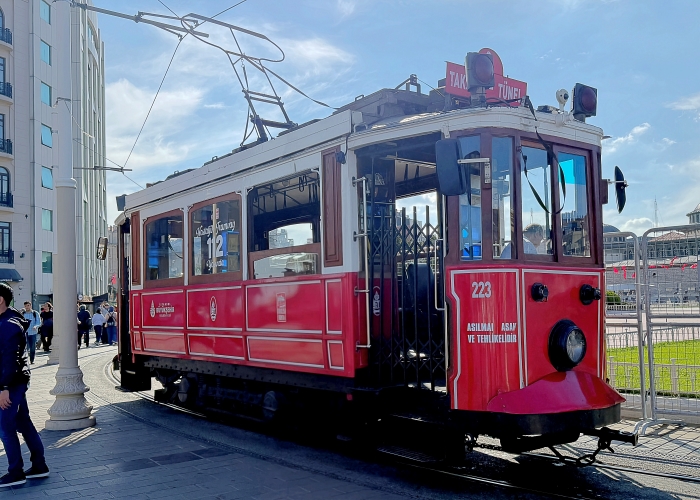
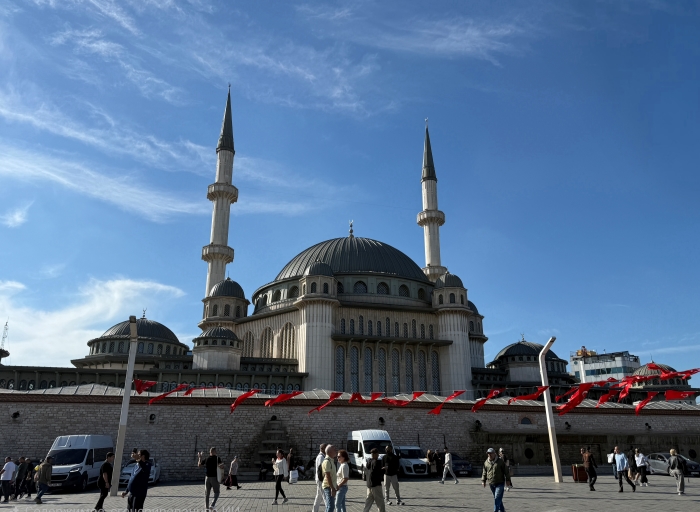
Amid the endless stream of passersby, the historic red tram stands out as it slowly makes its way along the tracks lined down the street. Its clanging bell warns pedestrians of its approach, while the tram itself has long since become one of the city’s most recognizable symbols.
After the Bosphorus and the Galata Bridge, Taksim revealed yet another facet of the city. While the waterfront offered a sense of open space and sweeping panoramas, here we experienced the raw energy of the streets and non-stop movement. In just a few hours, we managed to see only a tiny fraction of Istanbul, yet even this brief route allowed us to feel the rich diversity of its urban life.

And, of course, we paused for a quick cup of Turkish tea accompanied by baklava—a sweet conclusion to our whirlwind tour after an event-filled walk.
Catching the Next Flight
Time flew by much faster than expected. We made it back to the airport right on schedule and continued our journey to Bishkek.
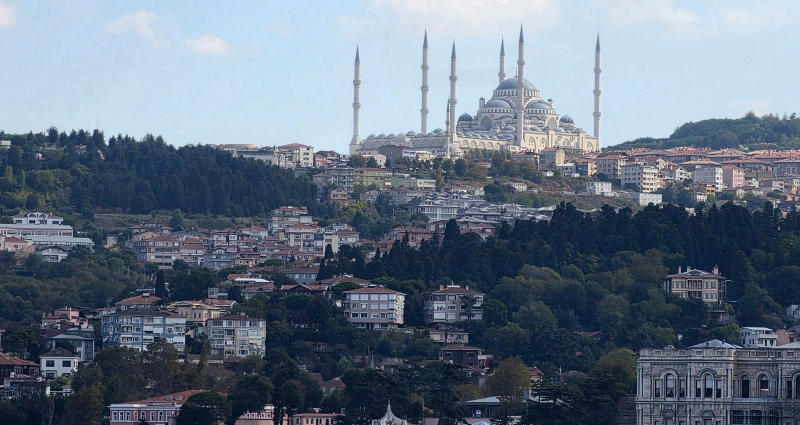
Needless to say, five hours is hardly enough to truly experience Istanbul. In a city where every neighborhood and corner boasts its own history and whole worlds hide behind familiar facades, even several days might not suffice. We never intended to tick off every major landmark.
No matter how tight your schedule may be, Istanbul has a way of making even a few hours deliver fresh impressions and leave you longing to return.
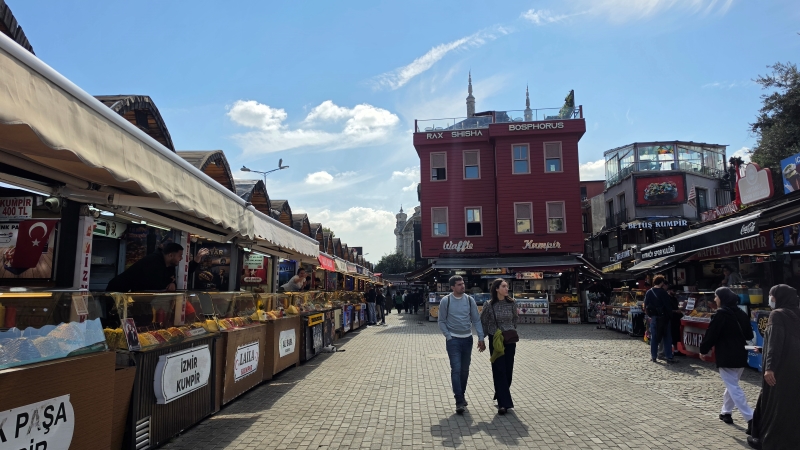
For those planning to venture into the city during a long layover, the golden rule is simple: estimate travel times in advance, choose a few locations close to one another, and leave a generous cushion of time for your return to the airport. Whether you opt for an organized tour, public transit, or a hired car with a driver depends entirely on your flight schedule and budget. /// nCa, 16 October 2026