


Tariq Saeedi and Elvira Kadyrova
Gut health has become a cornerstone of modern nutritional science, yet the key to achieving optimal digestive wellness does not require expensive imported supplements or rare health foods.
The bazaars and markets across Turkmenistan offer a wide array of whole, unprocessed, and traditionally preserved foods that naturally foster a thriving microbiome. By looking at locally available foods through the lens of nutritional biology, we can build a daily routine that supports digestion, strengthens immunity, and protects long-term health.
What Is Gut Health and Why Is It Essential for Everyone?
The human gastrointestinal tract is home to trillions of microorganisms—including beneficial bacteria, fungi, and yeasts—collectively known as the gut microbiome. Gut health refers to the balance, diversity, and functional integrity of these microbial communities alongside a strong intestinal mucosal barrier.
Maintaining a healthy gut is crucial for everyone, regardless of current health status:
- Digestion and Nutrient Absorption: Beneficial microbes break down complex carbohydrates, proteins, and fibers into bioavailable nutrients and short-chain fatty acids (SCFAs) like butyrate, which nourish the intestinal lining.
- Immune System Regulation: Approximately 70% to 80% of the body’s immune cells reside in the gut. A balanced microbiome trains the immune system to distinguish between harmful pathogens and benign substances.
- The Gut-Brain Axis: The gut produces key neurotransmitters, including serotonin and gamma-aminobutyric acid (GABA), influencing mood, mental clarity, and sleep quality.
- Metabolic Health: A diverse microbiome helps regulate blood sugar response, systemic inflammation, lipid levels, and energy expenditure.
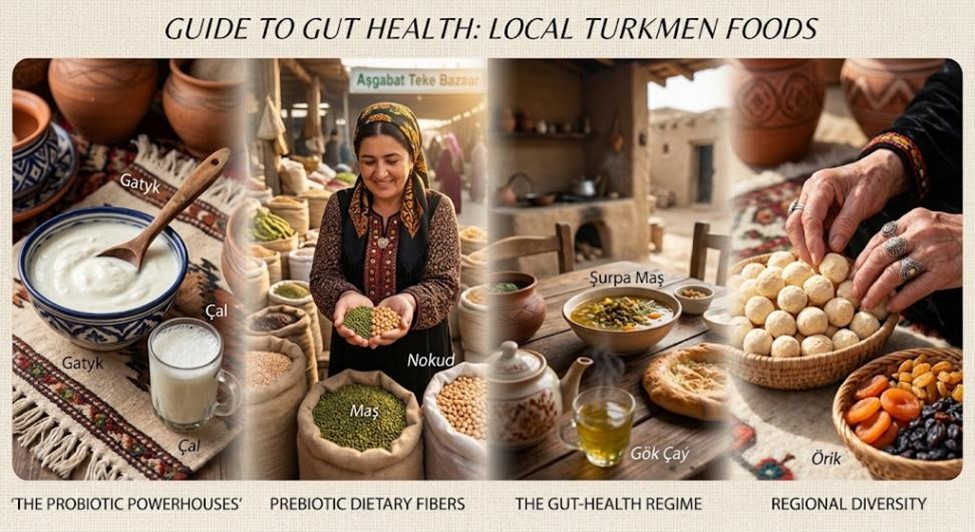
Local Elements for Supporting Gut Health
In traditional Turkmen markets—from Ashgabat’s Teke and Altyn Asyr Bazaars to regional market squares—you can find dietary elements that fulfill three core nutritional needs: Probiotics (live beneficial microbes), Prebiotics (fibers and compounds that feed beneficial microbes), and Anti-Inflammatory/Digestive Supports.
1. The Probiotic Powerhouses (Cultured & Fermented Dairy)
- Çal (Chal): Fermented camel’s milk, naturally effervescent and rich in unique lactic acid bacteria and yeasts, known for supporting gut microbial balance.
- Gatyk: Traditional cultured milk made from cow or sheep milk, packed with live active strains similar to traditional kefir and yogurt.
- Suzmeh: Strained, dense gatyk that acts as a concentrated probiotic paste and a soothing condiment.
- Gurt (Kurt): Salted, dried curd balls made from fermented whey and milk, providing durable, microbial-derived bioactive nutrients.
2. Prebiotic Dietary Fibers & Complex Carbohydrates
- Mung Beans (Maş): A regional staple legume featured in dishes like şurpa maş. Mung beans are rich in soluble fibers and resistant starches that fuel SCFA production in the colon.
- Chickpeas (Nokud): Commonly added to soups (nohudli-chorba), providing prebiotic galacto-oligosaccharides.
- Whole Wheat & Yarma: Coarse, unrefined wheat grains (yarma) used in porridges (yoke) and whole-grain flatbreads (çörek) supply insoluble fiber to support regular bowel movements and maintain bowel lining health.
- Local Pumpkins (Kädi) & Root Vegetables: Pumpkins, onions, garlic, and carrots—frequently integrated into soups, steamed dumplings (manti), and baked breads (ichlekli)—provide prebiotic oligosaccharides and beta-carotene.
3. Market Gems: Fruits, Nuts, Seeds, and Herbal Teas
- Turkmen Melons & Wild Berries: Renowned for their sweetness and hydration, melons provide natural electrolytes and soluble pectin. Dried apricots (örik), raisins, and sour plums (alça) present in local soups and dishes supply polyphenols and natural digestive stimulants.
- Walnuts and Seeds: Locally grown walnuts and melon seeds contribute anti-inflammatory omega-3 fatty acids and dietary fiber.
- Green Tea (Gök Çaý): Consumed throughout the day, green tea delivers catechins and polyphenols that promote beneficial gut species while suppressing harmful microbial overgrowth.
- Fresh Herbs: Fresh mint (pulpul), dill, parsley, and cilantro added generously to meals provide natural carminative compounds that ease bloating and smooth digestion.
Tailoring Gut Health Regimes for Chronic Health Conditions
While traditional foods offer general digestive support, individuals managing specific health conditions may benefit from adapting how they select and combine local options:
1. Diabetes & Blood Sugar Management
- Focus: Prioritize low-glycemic prebiotic fibers over high-sugar fruits to avoid blood glucose spikes.
- Recommendations: Combine legumes like maş and nokud with fresh green herbs, cucumbers, and tomatoes. Choose unsweetened gatyk or suzmeh to pair with meals, as the organic acids produced during dairy fermentation can help improve post-meal glycemic response. Limit concentrated dried fruits.
2. Hypertension & Cardiovascular Conditions
- Focus: Manage sodium intake while boosting potassium, magnesium, and dietary fiber.
- Recommendations: Opt for fresh fermented milks like çal and gatyk rather than highly salted gurt or heavily salted ayran. Incorporate potassium-rich local items such as fresh melons, pumpkin (kädi), cooked mung beans, and dried apricots in moderation. Sip hot gök çaý between meals to support vascular and endothelial health.
3. Tendency Toward Loose Stool or Diarrhea
- Focus: Rest and soothe the digestive tract, restore lost fluid/electrolytes, and introduce binding, gentle fibers.
- Recommendations: Use strained suzmeh or well-tolerated gatyk to rebuild gut flora gently. Choose cooked, easy-to-digest grains such as soft rice porridges or yarmanyň aşy cooked in mild vegetable broth. Soluble pectin from stewed apples, quinces, or mild squash helps firm up stool consistency.
4. Tendency Toward Constipation or Sluggish Digestion
- Focus: Increase insoluble fiber, osmotic hydration, and natural digestive stimulants.
- Recommendations: Increase intake of yarma (coarse wheat porridge) and whole-grain çörek alongside high-fiber legumes. Consume dried sour plums (alça) or soaked dried apricots (örik) in the morning to stimulate peristalsis. Drink plenty of fluids, including warm gök çaý and fresh çal.
Conclusion
Building a resilient, balanced gut microbiome does not rely on standardized commercial products. By understanding the functional properties of locally available foods—from fermented camel milk and dense cultured curds to nutrient-dense legumes, fresh herbs, and whole grains—readers can make informed dietary choices tailored to their personal preferences and health needs. /// nCa, 16 October 2026