


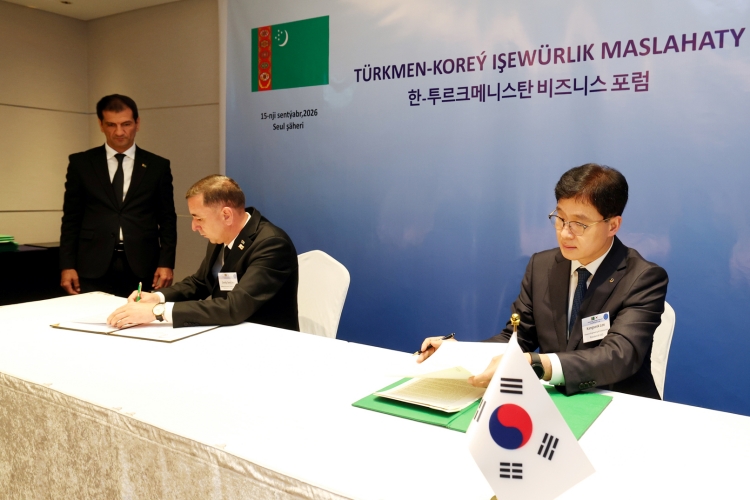
South Korean company Daewoo Engineering & Construction (Daewoo E&C) will take part in the modernization of the Karakum Canal in Turkmenistan. A memorandum of understanding was signed with the State Committee for Water Management of Turkmenistan at the Turkmen-Korean Business Forum in Seoul on 15 September.
The memorandum is intended to strengthen cooperation between the two sides and provide a basis for the modernization of an approximately 250-kilometre section of the lower part of the Karakum Canal, in which Daewoo E&C is considering participating, the company said in a press release.
Daewoo E&C said the memorandum provides a foundation for the company to enter Turkmenistan’s water management and environmental infrastructure market.
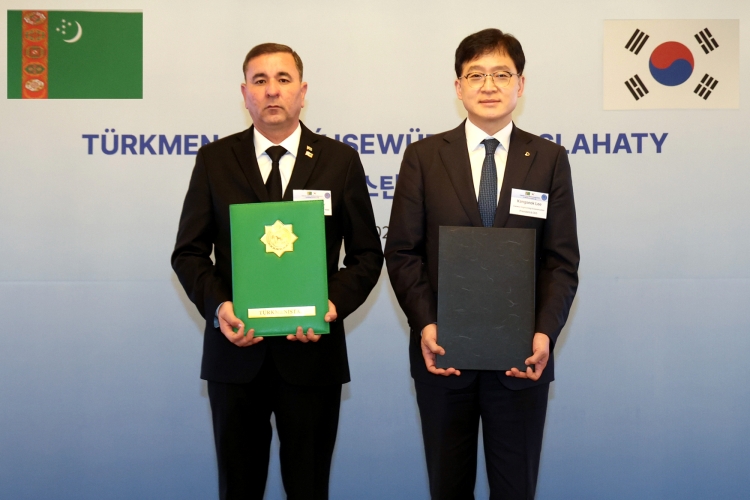
“We will draw on Daewoo E&C’s technological capabilities and civil engineering experience to successfully implement this project and continue expanding cooperation with Turkmenistan across various fields,” a company representative said.
The two sides also plan to explore opportunities for cooperation on future projects in Turkmenistan involving water resources and environmental infrastructure.
During the Turkmen-Korean Business Forum, Daewoo E&C Chairman Jung Won-ju met with President of Turkmenistan Serdar Berdimuhamedov. The company presented its plans to further expand its activities in the country.
The Karakum Canal begins at the Amu Darya River in northern Turkmenistan and runs across the country from east to west. It is about 1,100 kilometres long and 25–30 metres wide. Built in the 1960s, the canal plays an important role in supplying water for agriculture, households and industry. In recent years, the need to modernize the canal has grown in order to improve water resource management and ensure a stable water supply.
In May last year, Daewoo E&C won a contract to build a mineral fertilizer plant in Turkmenistan, marking the company’s entry into the country’s market. The plant is expected to produce 350,000 tonnes of phosphate fertilizer and 100,000 tonnes of ammonium sulfate annually and is scheduled to be commissioned in 2028.
The company views the project as a foundation for further participation in industrial and infrastructure construction projects in Turkmenistan.///nCa, 16 September 2026