


Tariq Saeedi
The relationship between Pakistan and Afghanistan has, over the past year, moved well past the point where “confrontation” adequately describes it. What began as border skirmishes and mutual accusations over the Tehreek-e-Taliban Pakistan (TTP) escalated in February 2026 into open warfare — Pakistani airstrikes on Kabul, Kandahar and other Afghan provinces, hundreds of civilian casualties, well over a hundred thousand people displaced, and a border that has been substantially closed ever since.
Successive truces — around Eid al-Fitr in March, after Chinese-hosted talks in April, and briefly again around Eid al-Adha in May — have each dissolved within weeks into renewed exchanges of fire. Bilateral trade, which exceeded a billion dollars in the first half of the last fiscal year, has fallen by roughly half.
It is tempting, faced with that record, to conclude that the relationship is simply broken, and that nothing short of a comprehensive political settlement can put it right.
That may be precisely the wrong way to look at it.
Pakistan and Afghanistan do not have one problem. They have a collection of problems — some extremely serious, some historical, some political, some essentially administrative. The costliest mistake either side has made over the past year has been to treat this as a single problem requiring a grand settlement — or a military solution — before anything else can move forward.
The October 2025 talks tried to compress security, trust and normalization into one negotiation with one outcome; when that failed, the relationship had nowhere to go but down.
A more promising approach would be to take the bundle apart.
Each contentious issue should sit on its own negotiating track, with people specifically chosen to handle it. Progress on one track should not be hostage to failure on another.
At the same time, Pakistan and Afghanistan should deliberately build economic and humanitarian connections that create constituencies for peace — because the alternative, waiting for a single grand bargain, has already been tried, and it produced a war.
This would not solve everything overnight. But it could begin to change the fundamental direction of the relationship — from confrontation toward managed coexistence and, eventually, cooperation.
The geography cannot be negotiated away — or bombed away
There is an elementary fact that neither Islamabad nor Kabul can escape, and that no amount of military pressure changes: Pakistan and Afghanistan are geographically complementary.
Afghanistan is landlocked but occupies the geographical bridge between Central Asia, South Asia and parts of the Middle East. Pakistan has ports, a large consumer market, industrial capacity and access to the Arabian Sea. Afghanistan provides the natural land connection between Pakistan and Central Asia; Pakistan provides Afghanistan its shortest, most direct access to the sea.
This is more than ordinary neighbourhood. The two countries occupy adjoining parts of a single geopolitical space in which roads, railways, electricity lines, pipelines, markets and people naturally move across the border.
Several major regional projects already embody this logic, and — notably — technical work on at least one of them has continued even through the worst of the fighting. The Uzbekistan-Afghanistan-Pakistan (Trans-Afghan) Railway, intended to link Termez in Uzbekistan through Mazar-i-Sharif and Logar to Pakistan’s rail network at Kharlachi, remains at the feasibility-study stage under a trilateral framework agreement signed in July 2025. Even after the February 2026 escalation, Uzbek, Afghan and Pakistani officials met repeatedly through the year — in February, June and July — to keep that feasibility work moving forward.
CASA-1000 tells a similar story. The $1.2 billion project to carry summer surplus hydropower from Kyrgyzstan and Tajikistan through Afghanistan to Pakistan has seen construction in the other three participating countries essentially finished, with only the Afghan section outstanding; the World Bank has indicated the project is expected to be fully commissioned by the end of 2027, contingent on completing that section. The same underlying logic applies to the wider energy architecture envisioned for the region, including TAPI and the proposed TAP electricity corridor.
In other words, Pakistan and Afghanistan are not merely neighbours who happen to have disagreements. Their geography makes them potential partners in a much larger regional system — and, as the railway talks show, that potential does not simply switch off because the security relationship has deteriorated. It should now become part of the way out, rather than a fact obscured by the crisis.
Stop trying to solve everything at once
The conceptual change required is deceptively simple:
Separate the issues.
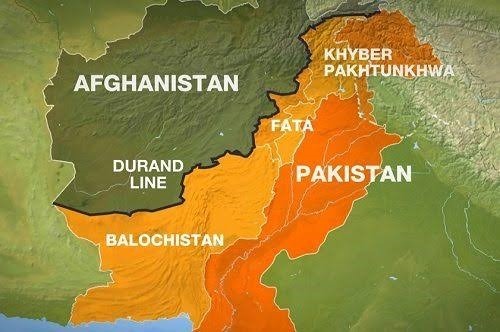
The TTP question is a security issue. The Durand Line is a historical and political issue. Border crossings are an administrative and security issue. Trade is an economic issue. Refugees are a humanitarian and political issue. Afghanistan’s relationship with India is a regional geopolitical issue. Energy and transport corridors are development issues.
They interact with one another, but they do not need to be negotiated as a single package. The October 2025 to date experience is itself the cautionary case: talks organized around a single overriding demand — action against the TTP — as the gate through which everything else had to pass gave each side an effective veto over the entire relationship, and when the security track stalled, it dragged the rest down with it.
The alternative is a multi-track settlement: a security track, a border track, a trade and transit track, a humanitarian track, and a regional connectivity track, each with its own representatives, timetable and measurable objectives.
A breakthrough on trade should not depend on agreement about the Durand Line. Humanitarian arrangements should not depend on progress against the TTP. A mechanism for preventing border clashes should not depend on Afghanistan’s relations with India.
This is not naïve compartmentalization. It is a practical way of preventing one unresolved dispute — currently the most intractable one — from paralysing everything else, as it has for the past year.
Pakistan should make the first move
Pakistan is in the stronger position to initiate such a process — not only because of its greater military and economic resources, but because it possesses something potentially more valuable: a much larger pool of individuals with personal, religious, cultural and historical connections to the Afghan Taliban and Afghan society.
This is where conventional diplomacy may need to give way to something more imaginative.
Pakistan could appoint a Special Dialogue Envoy for Afghanistan — or, preferably, several. They need not be conventional diplomats. One could be a respected religious scholar. Another the head of a major madrasa. Another a Pashtun elder or political figure with credibility on both sides of the border. Another a businessman experienced in Afghan trade.
The essential qualification should not be official rank. It should be acceptability in Kabul.
Pakistan has used informal and religious channels with Afghan actors before, and track-two diplomacy through jirgas has repeatedly been identified as a useful mechanism for communication and confidence-building between the two countries.
The innovation now would be to formalize the concept — several small, narrowly mandated dialogue missions rather than one delegation trying to negotiate everything at once:
Security Envoy: terrorism, TTP, cross-border attacks and verification. Border Envoy: crossings, fencing, movement of people, and border incidents. Trade Envoy: customs, transit, banking, trucking and commercial disputes. Religious and Social Envoy: religious issues, tribal relations and people-to-people confidence. Economic Connectivity Envoy: railways, ports, energy and regional corridors.
A narrow mandate makes success far more attainable than a sweeping one — which is, in essence, what the single-track approach of the past year has demonstrated by its failure.
The TTP question requires verification, not just accusation and airstrikes
The most urgent issue remains security. Pakistan cannot reasonably be expected to accept attacks against its citizens originating from Afghan territory. Afghanistan, for its part, has consistently rejected the accusation that it deliberately sponsors such attacks. A year of exchanged accusations — and, since February 2026, exchanged fire — has not resolved that argument; it has instead produced hundreds of civilian deaths and a closed border.
The practical question is not who is telling the truth in the abstract, but:
Can both sides create a mechanism capable of establishing what actually happens?
There is already a partial precedent, even if it did not survive contact with events. The Doha and Istanbul talks of October 2025, mediated by Türkiye and Qatar, produced a joint statement in which both governments agreed in principle to a monitoring and verification mechanism intended to maintain the ceasefire and identify violations. That mechanism was never substantively built out before the ceasefire itself collapsed — but the fact that both sides accepted the underlying concept in writing is worth building on, rather than discarding because the surrounding truce did not hold.
That concept should be revived and expanded, this time as a standing institution rather than a clause in a ceasefire statement. Pakistan could propose a permanent Afghanistan-Pakistan Security Verification Commission, with Chinese, Turkish, Qatari or other mutually acceptable third-party participation. Its mandate need not settle the entire political status of the TTP; its immediate responsibilities could be narrower — investigating major cross-border attacks, examining evidence presented by either government, establishing whether armed groups are operating from particular locations, maintaining a secure channel for urgent intelligence exchange, investigating alleged border violations, and issuing confidential findings and recommendations to both governments.
The crucial principle is evidence before escalation. If Pakistan presents evidence of an attacker’s presence in Afghanistan, Kabul should have a mechanism through which that evidence can be examined rather than simply rejected. If Afghanistan alleges Pakistani strikes on civilians — as it has, including the March 2026 strike Kabul says hit a drug-rehabilitation facility — Pakistan should be prepared to have those allegations investigated as well. Verification does not require either side to surrender its narrative; it creates a mechanism for preventing each incident from automatically triggering the next round of escalation, which is precisely what has happened, repeatedly, since February.
A hotline should become routine, not exceptional
The two militaries should establish permanent, direct communication between commanders responsible for the principal border sectors: a military hotline, local commander-to-commander contacts, an emergency mechanism for border incidents, agreed procedures for recovering the dead and wounded, advance notification of major exercises near the border, and a commitment to investigate incidents before retaliating.
A border of this length and history cannot be managed safely through statements issued from Islamabad and Kabul after an incident has already occurred — a pattern that has defined nearly every flare-up over the past year, from the initial October 2025 clashes through the repeated truce collapses since. The objective should be to make de-escalation automatic. If soldiers exchange fire at one point on the border, the first response should be a telephone call, not an artillery barrage.
Give Afghanistan something tangible to gain from peace
This is perhaps the most important economic component, and the one area where there is genuine, verifiable momentum to build on.
Pakistan should offer Afghanistan a package that makes improved relations economically attractive. The idea of a dedicated Afghan terminal and warehouse facility at Gwadar deserves serious consideration — not merely an announcement that Afghan cargo is “allowed” to use the port, but a genuine Afghan Logistics Zone at Gwadar: dedicated warehousing, bonded storage, container handling, customs facilities, Afghan-owned or Afghan-operated logistics offices, cold storage for agricultural exports, preferential handling, digital cargo tracking and secure onward transport to Afghanistan.
There is already a practical foundation for this. Afghan transit cargo has moved through Gwadar under the Afghanistan-Pakistan Transit Trade Agreement, including a 20,000-tonne shipment of DAP fertiliser that berthed there in mid-2025 — part of a broader pattern of Pakistan easing bank-guarantee requirements and expanding the port’s role as an Afghan trade gateway.
Pakistan should go further and make that offer explicit: “You are landlocked. We will help turn that geographical disadvantage into a commercial advantage.” That would be a powerful message precisely because it does not require the security dispute to be resolved first.
Create Pakistan-Afghanistan joint logistics companies
The next step could be more ambitious still: jointly owned logistics companies handling cargo along the Gwadar/Karachi–Peshawar/Torkham–Kabul–Central Asia corridor and in the reverse direction, operating trucks, warehouses, freight-forwarding services, container depots and, eventually, rail freight.
The model should deliberately include Afghan ownership. Afghanistan should not feel it is being offered merely a transporter role; it should feel it is being invited into a regional logistics system as a partner. This could eventually evolve into an Afghanistan-Pakistan-Central Asia Logistics Consortium, with commercial participation from Uzbekistan, Turkmenistan and other interested Central Asian states. The more countries with a financial stake in keeping the corridor open, the harder it becomes for bilateral political disputes to shut it down — as the continued railway feasibility talks through 2026 suggest is already, to some degree, happening.
Turn the border from a security barrier into an economic interface
The border itself needs a new philosophy. At present it is viewed almost entirely through the prism of security, which is understandable given the past year — but a border mix can be simultaneously secure and commercially efficient.
Pakistan and Afghanistan could establish Joint Border Economic Zones at selected crossings, beginning with Torkham and eventually Chaman, containing customs offices, truck terminals, storage, banking services, inspection facilities and marketplaces. Security would remain strict; commercial movement would become predictable. The goal is simple: a legitimate truck should know exactly what documents it needs, what fees it will pay, and how long clearance will take.
Predictability is often more important to business than low cost — and after roughly a year of closures that have cost Pakistani exporters an estimated $177 million a month, restoring that predictability has its own economic urgency.
Separate legitimate trade from smuggling
The two governments also need to stop treating all cross-border commerce as inherently suspicious. Smuggling thrives when legitimate trade is made excessively complicated or expensive. A joint customs programme — electronic documentation, pre-arrival cargo declarations, risk-based inspections, trusted-trader programmes, electronic seals, joint customs databases, designated commercial corridors — would let authorities concentrate on genuinely suspicious cargo rather than treating every truck as a potential threat. The result would be simultaneously more trade and better security.
Refugees should be moved into a separate humanitarian track
The refugee question should not be allowed to become another instrument of bilateral retaliation. Pakistan has legitimate concerns about undocumented migration and national security; Afghanistan has legitimate concerns about the treatment and livelihoods of Afghans living in Pakistan. These can be handled through a dedicated humanitarian mechanism covering registration of undocumented Afghans, voluntary return, temporary residence, work permits, family reunification, and medical, student, business and transit visas.
The principle should be that security screening and humanitarian treatment are not mutually exclusive. A person can be screened without an entire population being collectively stigmatized — and given that displacement from this year’s fighting alone runs into the hundreds of thousands, the humanitarian track carries more weight now than it did a year ago, not less.
Do not make India a test of Pakistan-Afghanistan relations
Afghanistan will maintain relations with India; Pakistan will understandably watch those relations closely. But demanding that Afghanistan choose between the two would make any settlement far harder to reach. Pakistan should instead adopt a more sophisticated position: Afghanistan’s relations with India need not be directed against Pakistan. If Kabul wants Indian investment, humanitarian assistance or commercial relations, that need not automatically be read as an anti-Pakistan alignment. Pakistan should, in turn, seek assurances that Afghan territory will not be used for hostile operations against it. These are two different questions, and the test should be what Afghanistan does, not with whom Afghanistan talks — a distinction that could remove one of the largest sources of strategic mistrust between the two capitals.
Make energy projects peace projects
Perhaps the most imaginative step would be to deliberately connect bilateral peace with regional infrastructure. CASA-1000 is close to an ideal case: a $1.2 billion project in which construction in Kyrgyzstan, Tajikistan and Pakistan is essentially complete, and only the Afghan section — expected to be finished with full commercial operation targeted for the end of 2027 — stands between the region and a functioning shared power grid.
TAPI (Turkmenistan-Afghanistan-Pakistan-India) gas pipeline project is making discernible progress. The gas from Turkmenistan may reach Herat by the end of this year. On the other hand, Pakistan has energy crisis and the Turkmen gas is among the most viable solutions to this crisis. The project needs to speed up with Pakistan taking credible steps for its implementation.
Pakistan and Afghanistan could establish an Energy Security Dialogue dedicated to protecting shared energy infrastructure, with the same principle extended to CASA-1000, TAPI and TAP.
The underlying philosophy: infrastructure that crosses borders must become infrastructure that both sides have an interest in protecting. A pipeline, railway or electricity line should not merely cross Afghanistan — it should generate Afghan revenue, Pakistani benefit and regional interdependence. That is how infrastructure becomes a peace mechanism rather than simply another asset at risk from the conflict.
Create a Pakistan-Afghanistan Development Fund
Pakistan could also propose a modest bilateral development fund, initially financed by Pakistan and international partners, for practical projects: border markets, cold-storage facilities, agricultural processing, roads connecting border communities, health facilities, water projects, vocational training, small industrial zones.
The fund should operate on a principle of visible benefit — a farmer in Khost, a trader in Jalalabad, a transporter in Peshawar and a warehouse worker in Gwadar should all be able to see what improved relations mean in practical terms. Peace becomes more durable when ordinary people associate it with income, particularly after a year in which many of them have instead associated the relationship with displacement and lost trade.
Establish a permanent Pakistan-Afghanistan Business Council
Government diplomacy has limits; businesspeople often take a more pragmatic view. A permanent bilateral business council bringing together chambers of commerce, transport companies, banks, manufacturers, exporters and importers could take on a highly practical mandate: identify every obstacle to legitimate bilateral trade and assign responsibility for removing it. A quarterly “Trade Friction List” of the ten most serious obstacles facing traders, addressed one by one, is the opposite of grand diplomacy — it is diplomacy through problem-solving.
A new principle: progress where possible, disagreement where necessary
The objective should not be a grand peace treaty in which Pakistan and Afghanistan suddenly agree on everything. That is unlikely, and the attempt to force it in late 2025 arguably made matters worse rather than better. The two sides may continue to disagree over the Durand Line, over the TTP, over refugees, over India, over the history between them. Normal relations do not require identical interpretations.
The wider European experience offers a useful lesson: countries can cooperate extensively while retaining serious, unresolved disagreements.
Pakistan and Afghanistan should aim for the same principle: disagreement without destruction. They do not have to love each other. They have to learn to coexist profitably — and, at minimum, to stop the cycle in which every incident becomes a pretext for the next escalation.
A fresh 100-day initiative
Given where the relationship now stands, any roadmap has to start by acknowledging that the October 2025 framework did not hold — but its individual components remain usable, and a fresh 100-day initiative could draw on them:
First: a mutually observed ceasefire, this time reinforced by the standing verification mechanism rather than a statement of intent alone.
Second: reopening humanitarian channels — medical travel, family movement, essential humanitarian cargo — insulated from the political dispute.
Third: appointing the dialogue envoys, respected individuals acceptable to Kabul, each with a narrow mandate.
Fourth: standing up the security verification mechanism as a permanent institution, moving the TTP question from accusation and denial toward evidence, verification and agreed responses.
Fifth: reopening selected commercial crossings under enhanced security and digital customs procedures — beginning to reverse a trade collapse that has already cost both economies heavily.
Sixth: formally announcing the Gwadar Afghan Logistics Zone, building on the transit shipments already moving through the port, as Pakistan’s most visible gesture of economic goodwill.
Seventh: establishing the bilateral business and connectivity councils to work on railways, energy, logistics and border infrastructure — continuing, rather than starting from scratch, the technical cooperation on the Trans-Afghan Railway that has persisted even through the fighting.
Eighth: protecting the major regional projects — CASA-1000, TAPI, TAP and future transport corridors — through dedicated mechanisms involving other regional stakeholders.
None of these measures requires resolving the Durand Line. None requires Afghanistan to abandon its relationship with India. None requires Pakistan to abandon its security concerns. None requires either side to surrender its political position. That is precisely why they are achievable — and why the alternative, another year like the last one, is not a neutral option but an active cost to both countries.
The larger prize is bigger than Pakistan and Afghanistan
The stakes extend well beyond the two countries. A functioning Pakistan-Afghanistan relationship could reconnect several economic spaces that currently operate largely in isolation: Central Asian energy and electricity moving south, Central Asian goods reaching the Arabian Sea, Afghan minerals and agricultural products reaching world markets, Pakistani manufactured goods reaching Afghanistan and Central Asia, Gwadar and Karachi serving as maritime gateways for landlocked Central Asian economies. The Trans-Afghan Railway, in particular, could become part of a new Central Asia–South Asia commercial system — a framing Pakistan’s own policy documents already use.
Afghanistan could consequently cease being viewed primarily as a geopolitical problem and begin to be treated as a geographical opportunity. That transformation would benefit Pakistan considerably. It would benefit Afghanistan even more.
The way out is not a grand bargain
There is a tendency in international affairs to search for the grand bargain — the single agreement that resolves everything. Pakistan and Afghanistan tried something close to that in October 2025, and the result, within months, was open war. Their relationship has accumulated too much history, mistrust and now fresh grievance for a single settlement to carry the whole weight of normalization.
The more realistic path is closer to the opposite: a hundred small agreements may be more valuable than one grand agreement. A mechanism to prevent border firing. A mechanism to verify claims about terrorist attacks. One border crossing kept reliably open. A customs procedure. Medical visas. A railway feasibility study carried through to completion. An Afghan logistics zone at Gwadar. Protected electricity infrastructure. Joint logistics companies. A business council. A hotline. Then building on those agreements, one at a time.
The process would gradually create something neither military pressure nor diplomatic declarations have managed to produce over the past year: a vested interest in each other’s stability.
Pakistan and Afghanistan cannot change their geography. They cannot erase their history. They will not eliminate every disagreement. But they can choose whether their geography becomes a source of continuing confrontation or the foundation of a mutually beneficial regional partnership — and after a year that has tested the first path to destruction, the second deserves a serious, structured attempt.
The most effective message Islamabad could send to Kabul may therefore be remarkably simple: We do not have to agree on everything. Let us start by agreeing on the things we can solve. /// nCa, 1 September 2026