


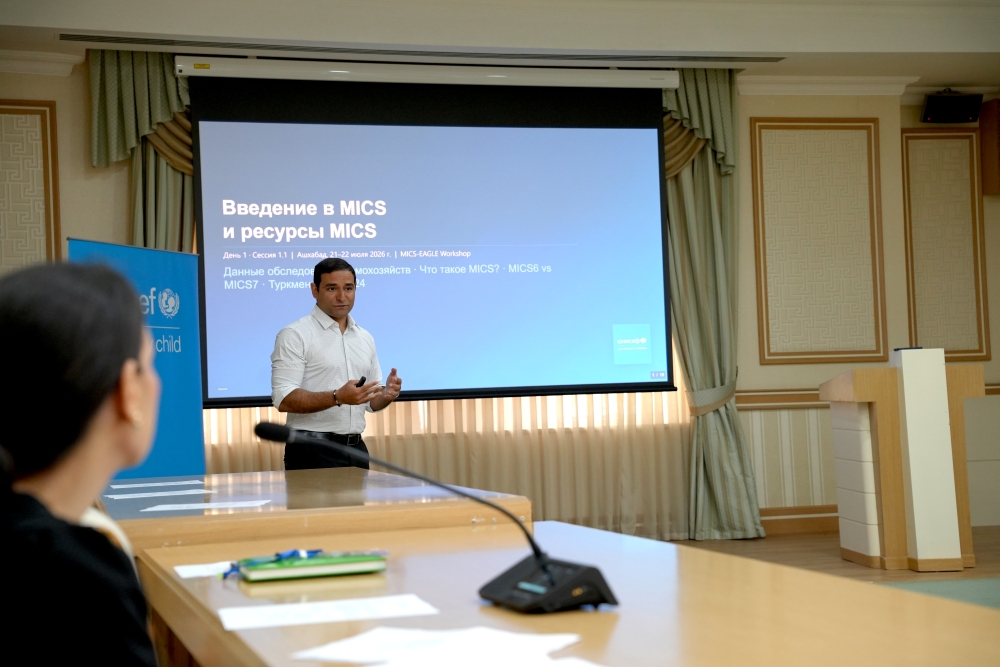
UNICEF and the Ministry of Education convene national workshop on MICS-EAGLE analysis
Ashgabat, 22 July 2026 – UNICEF, in partnership with the Ministry of Education of Turkmenistan, conducted a two-day capacity-building workshop on 21–22 July to strengthen the use of Multiple Indicator Cluster Survey (MICS) data for evidence-based education planning, policymaking and monitoring.
The workshop introduced the Education Analysis for Global Learning and Equity (MICS-EAGLE), a global analytical framework developed by UNICEF to help countries better understand barriers to learning and educational equity using MICS data. The event brought together representatives of the Mejlis, Ministry of Education, Ministry of Health and Medical Industry, Ministry of Finance and Economy, Ministry of Labour and Social Protection of the Population and the Institute of State, Law and Democracy.
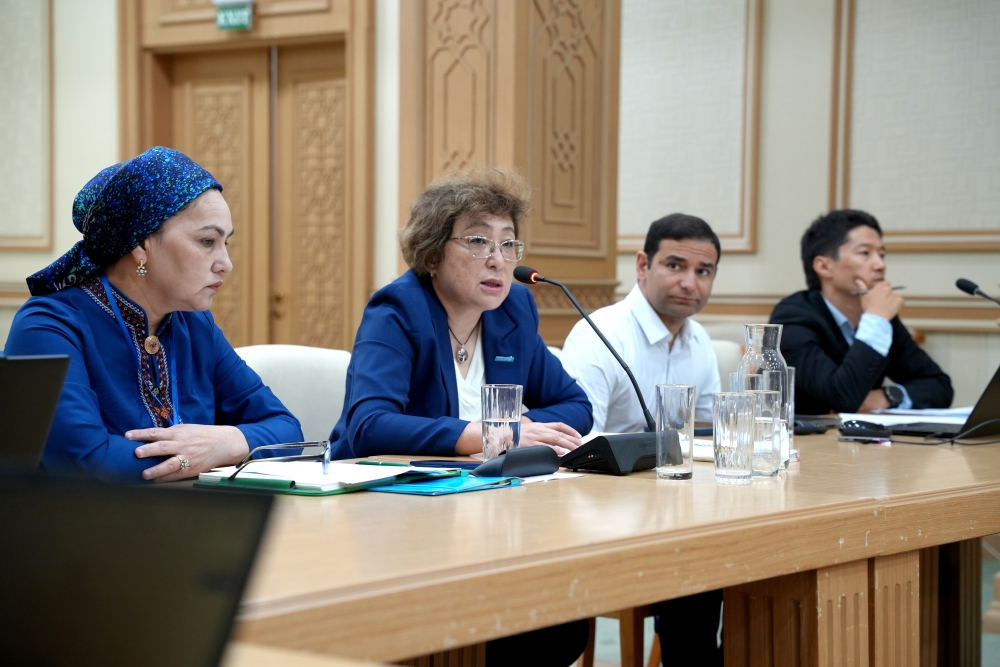
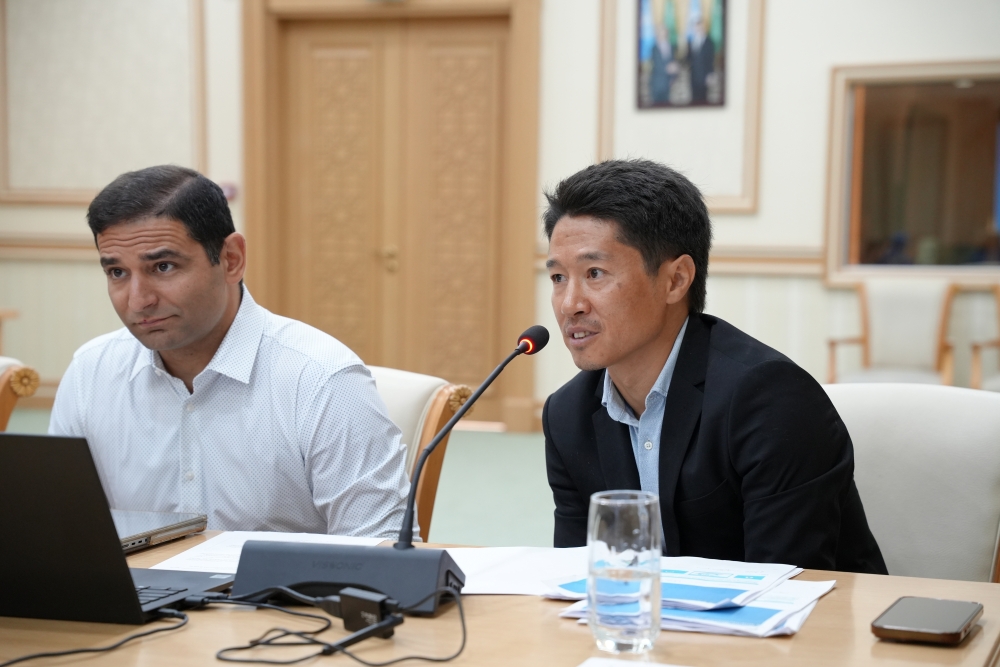
Over two days, participants explored key education-related findings from Turkmenistan’s latest MICS, including foundational learning, early childhood education, children out of school, inclusive education, youth skills, information and communication technology (ICT) competencies and links between education and child protection. Through group exercises and practical sessions, participants strengthened their skills in interpreting data, identifying policy implications and developing analytical briefs to support evidence-informed decision-making.
The workshop also introduced participants to the MICS-EAGLE methodology and demonstrated how disaggregated data can help identify disparities in education outcomes, better understand barriers affecting different groups of children, and inform more equitable education policies and investments.
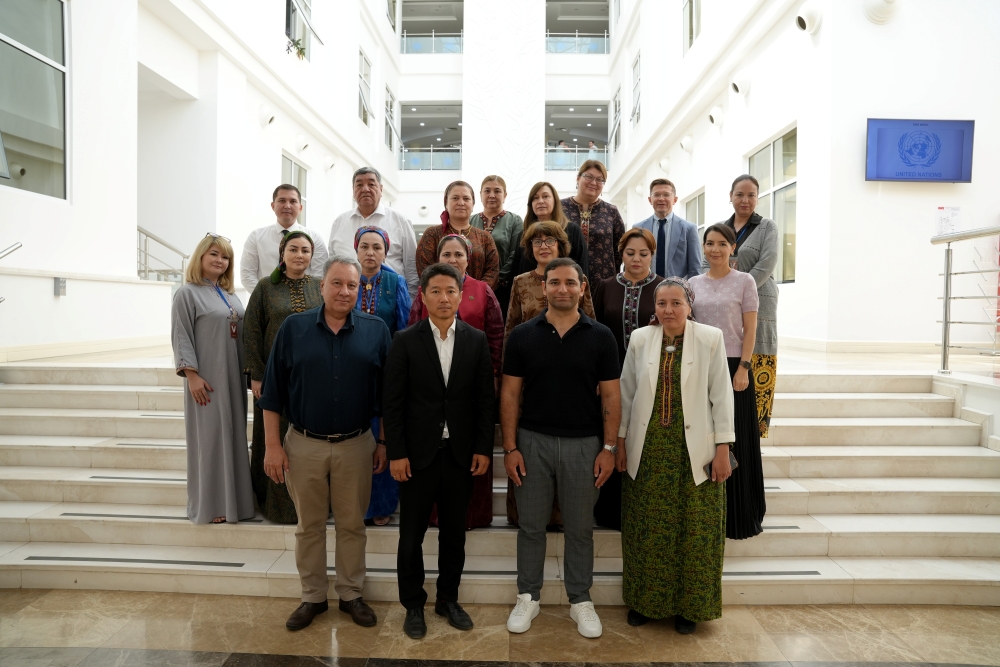
The initiative forms part of UNICEF’s continued support to the Government of Turkmenistan in strengthening national capacities to generate, analyse and use high-quality data for planning and monitoring social sector policies. By enhancing the use of evidence in decision-making, the workshop contributes to improving education outcomes and ensuring that every child has equitable opportunities to learn and thrive. ///nCa, 23 July 2026 (in cooperation with UNICEF Turkmenistan)