


Today, our series featuring heads of diplomatic missions in Turkmenistan continues with an exclusive interview with Lee Won-jae, Ambassador of the Republic of Korea in Turkmenistan.
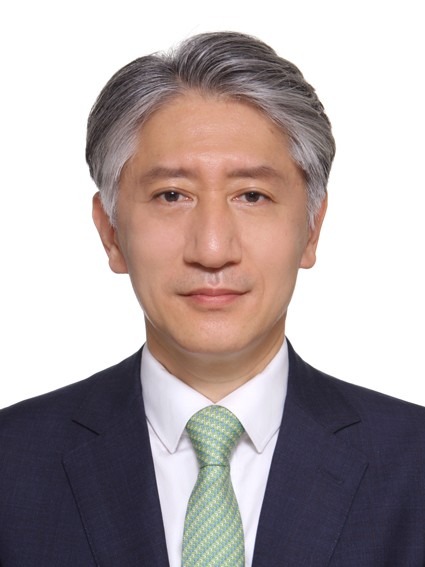
nCa: Ambassador Lee Won-jae, Welcome to Turkmenistan. — With your rich and versatile experience and your remarkable achievements, I am sure you will elevate the Korea-Turkmenistan partnership to new heights. Could you please describe your plans and expectations during your tenure here?
Lee Won-jae: Since the establishment of diplomatic relations in 1992, Korea and Turkmenistan have maintained a robust high-level exchanges. Our cooperation has expanded significantly across diverse sectors—including energy, shipbuilding, defense, IT, transportation, health, and culture—as evidenced by a more than sevenfold increase in bilateral trade.
I am deeply honored to assume my post as Ambassador during such a milestone year, as the Republic of Korea is to host the historic, inaugural Korea–Central Asia Summit in Seoul on September 16~17. This landmark event is expected to significantly elevate the strategic partnership between our two nations to a new level.
nCa: With the difficult geopolitical situations in several parts of the world, including the neighborhood of Central Asia, do you think some new dimensions will emerge in the partnership between Korea and Turkmenistan?
Lee Won-jae: Under the current international landscape, marked by heightened global uncertainty, Korea seeks to navigate this polycrisis through pragmatic diplomacy centered on national interests.
Turkmenistan, as the holder of the world’s fourth-largest natural gas reserves, is gaining strategic importance as a geopolitical hub for transportation and logistics connecting Central Asia and Europe. Recognizing its value as a key partner for supply chain diversification and a gateway to emerging markets, Korea aims to strengthen its pragmatic partnership with Turkmenistan by further advancing the objectives of the New Northern Policy.
Specifically, we see strong potential to expand cooperation in the following areas: security cooperation encompassing non-traditional sectors; mutually beneficial economic cooperation based on the complementary nature of our economies; and forward-looking cooperation aimed at promoting sustainable growth and fostering people-to-people exchange.
Furthermore, Turkmenistan’s foreign policy, which prioritizes “Permanent Neutrality” and places importance on international norms and order, aligns closely with Korea’s diplomatic vision. As the ninth-largest contributor to the United Nations and a responsible global actor, Korea actively participates in addressing global challenges through the UN and various multilateral and minilateral frameworks. Based on this shared commitment, we will continue to strengthen cooperation with Turkmenistan in international security and economic fora.
nCa: President Serdar Berdimuhamedov of Turkmenistan is scheduled to visit Korea in September 2026. What could be the outcomes of the visit?
Lee Won-jae: As this marks President Serdar Berdimuhamedov’s first visit to the Republic of Korea, we expect this visit will serve as a pivotal momentum to further consolidate our bilateral ties. In particular, we anticipate that it will not only deepen our existing collaboration in energy plants, shipbuilding, and the defense industry but also significantly broaden the scope of our cooperation into new horizons, such as railway transport, telecommunications, and water resource. Korea is committed to making thorough preparations to ensure the success of President Berdimuhamedov’s visit.
nCa: The visit of the President of Turkmenistan will coincide with the first C5+Korea Summit. What is the agenda of the summit and what are the expectations from this summit?
Lee Won-jae: As this will be the first-ever summit-level meeting with Central Asia countries, we anticipate that the Summit will serve as a crucial platform to institutionalize cooperation between Korea and the five Central Asian nations, while comprehensively addressing a wide range of issues, including security, economy, energy, the environment, infrastructure, and people-to-people exchanges.
Notably, with the trade volume between Korea and Central Asia reaching a record high over $10 billion in 2025, we are confident that this inaugural Korea-Central Asia Summit will provide significant momentum to further strengthen cooperation among our countries.
nCa: Korea is among the world leaders in science and technology. Which areas in science and technology carry strong potential for partnership between Korea and Turkmenistan?
Lee Won-jae: We believe there is significant potential to advance future-oriented cooperation with Turkmenistan in areas such as smart mobility systems, digital transformation, ICT, and water resource management. In particular, Korea stands ready to explore ways of cooperation in accordance with the Turkmenistan’s efforts to strengthen eco-friendly transportation capabilities and further advance the development of the smart city of Arkadag, which has been designed as a next-generation urban model integrating advanced digital technologies, sustainable infrastructure, and environmentally friendly public services. Cooperation in areas such as hydrogen-powered public transportation, electric vehicle infrastructure, and autonomous driving systems could serve as promising avenues for bilateral collaboration.
nCa: Are there any plans to upgrade the mega-projects done by Korea in Turkmenistan? Are there any talks to start new projects?
Lee Won-jae: In the shipbuilding area, a Korean company, Koryo Shipbuilding Industry Technology is currently achieving great success in the joint construction of multi-purpose cargo vessels with the Balkan Shipyard of Turkmenistan. We hope this cooperation can further expand in the future to include the construction of railway ferries.
Furthermore, with the ongoing fertilizer plant construction project in Turkmenabat led by another Korean company, Daewoo Engineering & Construction serving as a foundation, we hope to broaden the scope of our partnership. We see significant opportunities for Korean firms to contribute to various strategic sector, such as the Karakum Canal improvement project, the modernization of railway networks, and the establishment of manufacturing facilities for optical fiber cables and steel pipes. ///nCa, 12 May 2026