


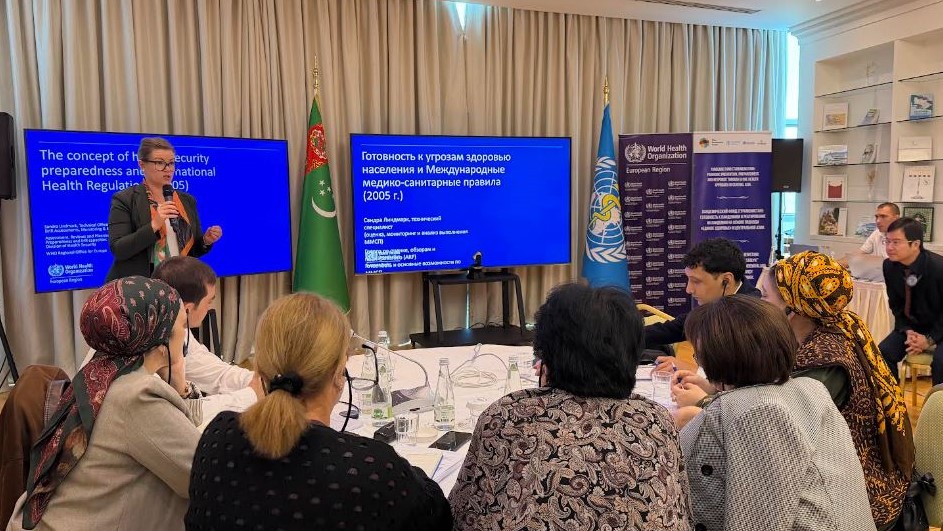
Ashgabat, Turkmenistan, 24 October 2026 – The World Health Organization (WHO), in collaboration with the Ministry of Health and Medical Industry of Turkmenistan, is supporting national efforts to strengthen preparedness for public health emergencies through a training on the International Health Regulations (2005) and an introductory workshop on the Joint External Evaluation (JEE).
The four-day workshop, which took place from 20 to 23 October in Ashgabat, brought together representatives from the health sector and other relevant ministries and agencies to strengthen understanding of the International Health Regulations (2005) and the process of assessing national capacities to prevent, detect and respond to public health threats.
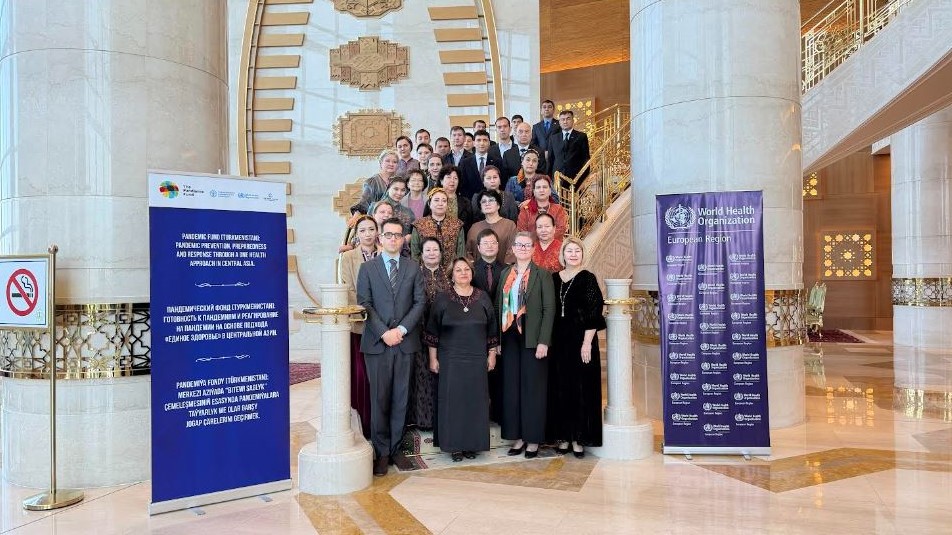
The activity was supported by WHO’s Regional Office for Europe and the WHO Country Office in Turkmenistan and was implemented under the Pandemic Fund’s multicountry project, Pandemic Prevention, Preparedness and Response through a One Health Approach in Central Asia.
Strengthening national capacities through the International Health Regulations
The International Health Regulations (2005) provide a framework for countries to prevent, detect, assess and respond to public health risks that may cross borders. Effective implementation requires coordinated action across sectors, timely information-sharing and the ability to identify and assess potential public health threats.
The training covered key aspects of the Regulations, including recent amendments adopted in 2024, the functions of the National IHR Focal Point and the National IHR Authority, event detection and risk assessment, information-sharing mechanisms, and the monitoring and evaluation of the IHR core capacities, including those at points of entry.
Participants also explored the four components of the IHR monitoring and evaluation framework: annual reporting, external evaluation, simulation exercises and after-action reviews. Specific emphasis was placed on the updated third edition of the State Party Annual Reporting (SPAR) tool.
Preparing for the Joint External Evaluation
A key component of the workshop was introducing participants to the Joint External Evaluation, a voluntary, collaborative process that helps countries assess their capacities to prevent, detect and rapidly respond to public health threats.
Through presentations and group work, participants examined the JEE tool, methodology, the self-assessment process covering capacities across 19 different technical areas. The programme included initial intersectoral discussions, the preparation of self-assessment materials and presentations, and consideration of the next steps for completing the national assessment.
The workshop brought together representatives of the Ministry of Health and Medical Industry, the State Sanitary and Epidemiological Service, emergency medical services, public health and laboratory institutions, and authorities working at points of entry. Other participating sectors included emergency management, agriculture and veterinary services, environmental protection, migration, border control, customs, transport, communications and public information.
This multisectoral approach reflected the importance of collaboration across human, animal and environmental health, as well as other sectors involved in emergency preparedness and response, in the continuous work to maintain and further strengthen Turkmenistan’s capacity to prepare and respond to health emergencies.
Supporting sustainable health emergency preparedness
The workshop was intended to strengthen national understanding of the JEE process and support preparations for the next Joint External Evaluation of the implementation of the International Health Regulations (2005) in Turkmenistan. Discussions also addressed follow-up actions, responsibilities and timelines for completing the self-assessment, as well as links with the National Action Plan for Health Security (NAPHS), aligning health-security planning in Turkmenistan with broader health-system priorities.
Through its continued collaboration with the Ministry of Health and Medical Industry and other national partners, WHO supports efforts to strengthen the capacities and coordination needed to protect population health and respond effectively to public health emergencies. ///nCa, 25 October 2026 (in cooperation with WHO Turkmenistan)