


Ashgabat and Beijing are expanding scientific and technical cooperation on combating desertification, with Turkmenistan proposing the creation of a regional center for Central Asia and China offering to deepen cooperation with Turkmen researchers.
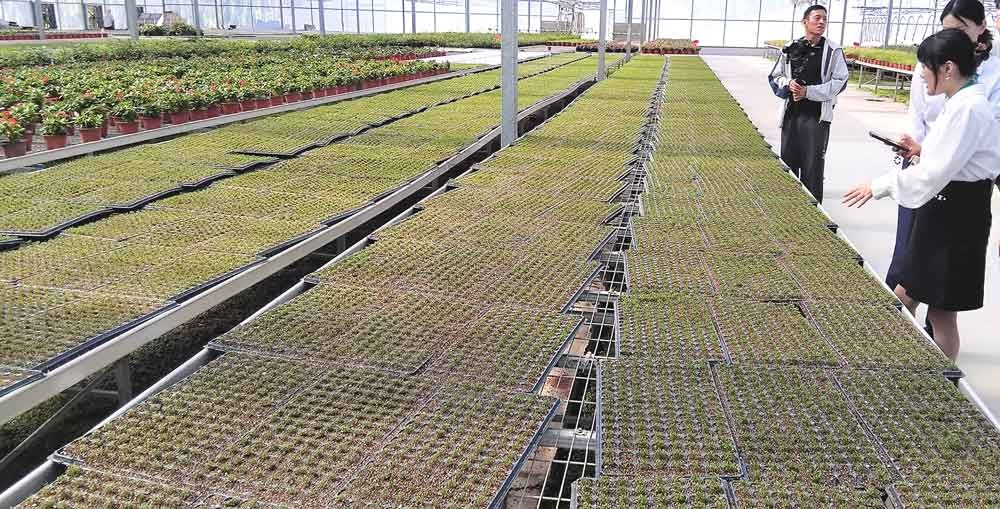
A Turkmen delegation of scientists and environmental specialists took part in advanced training courses on combating desertification in Yinchuan, the capital of China’s Ningxia Hui Autonomous Region, highlighting growing cooperation between the two countries on land degradation, desert ecosystems and sustainable land management.
In an article published by the newspaper ‘Neutral Turkmenistan’, Pirli Kepbanov, Director of the National Institute of Deserts, Flora and Fauna under the Ministry of Environmental Protection of Turkmenistan, shared the outcomes of the visit.
Kepbanov said the arid regions of northwestern China and Central Asia face broadly similar environmental pressures. Increasing temperatures and limited precipitation are contributing to soil moisture loss, land drying, secondary salinization and changes in the productive capacity of agricultural land.
The similarity is also linked to the geographical and climatic conditions of the wider region stretching from the Caspian Sea toward northern China, according to the Turkmen scientist.
Both Turkmenistan and China have launched large-scale environmental programmes aimed at improving degraded landscapes, restoring vegetation and increasing the productive use of arid land.
Kepbanov pointed to Turkmenistan’s Altyn Asyr Turkmen Lake project and China’s “Three Norths” programme as examples of large-scale initiatives that include afforestation and land restoration.
Chinese specialists have developed approaches to restoring degraded sandy areas through staged land improvement, including the creation of forest pastures, cultivation of drought-resistant vegetation and the introduction of perennial fruit trees.
According to Kepbanov, solar energy is also being used in China to pump water from deeper underground sources for irrigation in desert areas. The restoration of degraded land is combined with the production of forage crops and livestock development, creating additional employment opportunities in rural areas.
The experience is particularly relevant to Central Asian countries, where water scarcity, drought, soil degradation and dust and sand storms pose growing challenges to agriculture and ecosystems.
An important step in this cooperation came in July 2025, when China established the China-Central Asia Cooperation Center for Combating Desertification. The center has since become a platform for professional training and the exchange of scientific and practical experience.
The Yinchuan programme was the second round of such training courses. Chinese scientists presented research and practical approaches covering desert ecology, forestry, pest control, the impact of dust and sand storms, wildfire prevention, sand stabilization, desert development and the rational use of water resources.
Turkmen specialists, in turn, shared national experience and recent research with their Chinese counterparts and exchanged specialized scientific publications.
Among the materials presented by the Turkmen side was ‘Problems of Desert Development’, an international scientific and practical journal published in Ashgabat. Feng Zhanwen, head of the Chinese center, was also invited to join the journal’s editorial board.
Chinese specialists emphasized that China’s desert research community gained important expertise during the second half of the 20th century through cooperation with scientific institutions in Ashgabat and through the work of Turkmen desert researchers in China and other countries.
One of the most significant outcomes of the exchange was the discussion of Turkmenistan’s initiative to establish a Regional Center for Combating Desertification in Central Asia.
Experts from the Chinese Center for Cooperation on Combating Desertification supported this initiative, Kepbanov notes.
As part of further cooperation, China also plans to strengthen interaction with Turkmenistan’s National Institute of Deserts, Flora and Fauna.
Such cooperation could provide a platform for sharing technologies and research on land restoration, water management, desertification control and the mitigation of environmental risks across Central Asia, where many challenges extend beyond national borders.
Course participants regarded the exchange of scientific knowledge and practical experience as highly productive and expressed interest in further cooperation with Turkmenistan.///nCa, 14 September 2026