


nCa Report
For centuries, the Silk Road connected civilizations across Eurasia through a network of trade routes that carried goods, ideas, technologies, and cultures between East and West.
In the twenty-first century, the concept has been reimagined in multiple forms under China’s Belt and Road Initiative (BRI). Among these is the Aviation Silk Road—also known as the Air Silk Road—a framework that seeks to use aviation as a catalyst for connectivity, trade, logistics, tourism, and economic cooperation.
While railways, highways, ports, and pipelines often dominate discussions about Eurasian connectivity, aviation is increasingly becoming an indispensable component of modern trade. High-value goods, e-commerce shipments, perishables, medical supplies, and business travel all depend on efficient air transport networks. The Aviation Silk Road aims to provide precisely such connectivity.
What is the Aviation Silk Road?
The Aviation Silk Road is an aviation cooperation framework developed under the Belt and Road Initiative. First proposed by Chinese President Xi Jinping in 2017, it forms part of a broader “four-in-one” connectivity strategy encompassing land, sea, air, and cyberspace connectivity.
Rather than being a single route or project, it is a comprehensive framework for aviation cooperation among participating countries.
Its principal objectives include:
- Expanding international passenger and cargo air routes.
- Developing aviation hubs and logistics centers.
- Enhancing airport infrastructure and air navigation cooperation.
- Facilitating aviation safety, environmental, and technological collaboration.
- Promoting people-to-people exchanges, tourism, and business travel.
- Strengthening air cargo supply chains and e-commerce logistics.
- Encouraging cooperation in aircraft leasing, aviation services, and aerospace industries.
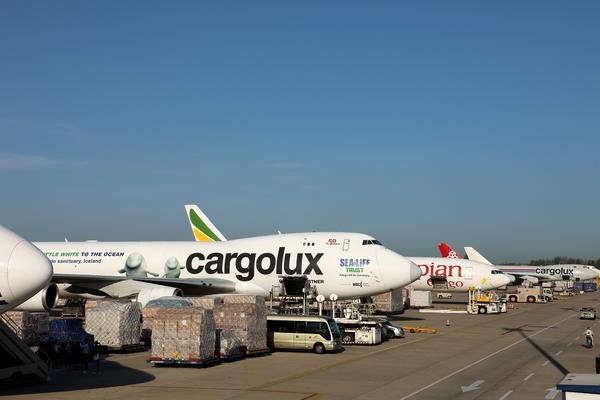
The best-known embodiment of the concept is the Zhengzhou–Luxembourg cargo corridor, often described as the flagship project of the Air Silk Road. This route has evolved into a major logistics bridge linking China with Europe through a dual-hub model connecting Zhengzhou Airport in central China and Luxembourg Airport in the heart of Europe.
What Has the Aviation Silk Road Achieved So Far?
Nearly a decade after its launch, the Aviation Silk Road has produced measurable results.
According to the Civil Aviation Administration of China (CAAC) and the National Development and Reform Commission (NDRC), China now operates scheduled passenger services to 61 Belt and Road partner countries and cargo services to 33 partner countries.
Historically, Chinese airlines have operated routes to 110 partner countries, creating an aviation network that broadly mirrors the six major economic corridors of the Belt and Road Initiative.
The scale of activity is significant. Between 2017 and mid-2025, China and Belt and Road partner countries completed approximately 1.56 million flights, carried 200 million passengers, and transported nearly 6 million tons of cargo and mail.
The Zhengzhou-Luxembourg corridor has become a showcase of what aviation-led connectivity can achieve. The route has expanded into a network reaching hundreds of cities across Europe, Asia, and North America. Cargo volumes have surpassed one million tons, while associated investments have generated substantial economic returns and contributed to the emergence of Zhengzhou as one of the world’s major cargo airports.
The Aviation Silk Road also demonstrated resilience during the COVID-19 pandemic. While many transportation channels faced severe disruption, air cargo routes continued to transport medical supplies and essential goods, highlighting aviation’s strategic importance in global supply chains.
Another notable achievement has been the broadening of cooperation beyond transportation.
Aviation authorities have increasingly collaborated on regulatory harmonization, safety management, environmental sustainability, digital technologies, and aviation training. Such “soft connectivity” is often as important as physical infrastructure because it enables seamless international operations.
Why Central Asia Matters
If Europe represents the western terminus of the Aviation Silk Road, Central Asia occupies its geographic heart.
Historically, Central Asia served as the crossroads of the ancient Silk Road. Today, the region once again finds itself at the center of Eurasian connectivity. The five Central Asian republics lie between China, Russia, South Asia, the Caucasus, the Middle East, and Europe, making them natural transit points for both air and surface transportation.
For the Aviation Silk Road, Central Asia offers several strategic advantages:
A Natural Transit Corridor
Flights between East Asia and Europe frequently traverse Central Asian airspace. The region’s location allows airlines to optimize routes, reduce flying times, and improve operational efficiency. As global aviation expands, Central Asia’s role as an aerial bridge is likely to increase.
Emerging Aviation Markets
Central Asia’s economies are becoming more diversified and internationally connected. Growing trade, tourism, business travel, and e-commerce are generating demand for better air connectivity. Participation in the Aviation Silk Road can help countries modernize airports, attract airlines, and improve aviation services.
Cargo and Logistics Opportunities
The rise of e-commerce and time-sensitive supply chains has increased the importance of air freight. Central Asian airports can position themselves as regional cargo hubs linking China, Europe, the Middle East, and South Asia. Such a role would complement the region’s growing importance in rail and road transit.
Infrastructure Development
China and Central Asian countries have already begun institutional cooperation in aviation. In 2023, the CAAC signed memorandums with Kazakhstan and Tajikistan to jointly build the Air Silk Road. These agreements cover policy coordination, infrastructure cooperation, safety standards, environmental sustainability, and technological collaboration.
Tourism and People-to-People Exchanges
Improved air connectivity lowers barriers to travel and investment. Direct flights stimulate tourism, academic exchanges, business cooperation, and cultural interaction. For Central Asian states seeking to diversify their economies, aviation can become an important enabler of growth.
Benefits for Central Asia
The Aviation Silk Road presents several potential benefits for Central Asian countries:
Economic diversification: Stronger aviation sectors reduce dependence on commodities and create opportunities in logistics, tourism, services, and technology.
Hub development: Cities such as Almaty, Astana, Tashkent, Ashgabat, Bishkek, and Dushanbe can strengthen their positions as regional aviation nodes.
Integration into global supply chains: Better air connectivity allows local businesses to participate in high-value international trade.
Technology transfer: Cooperation in air traffic management, safety systems, airport operations, and sustainability can raise industry standards.
Employment generation: Airport development and aviation-related services create skilled jobs and support local economic ecosystems.
Importantly, aviation connectivity complements rather than competes with railways, highways, and maritime routes. The region’s strategic value increases when all modes of transport operate as an integrated system.
Is the Aviation Silk Road an Open-Ended Concept?
One of the most important questions is whether the Aviation Silk Road functions as an exclusive geopolitical project or as an open-ended framework capable of integrating with other international aviation initiatives.
Evidence suggests that the concept is inherently open-ended.
Unlike a fixed transportation corridor, aviation operates through global standards established by organizations such as the International Civil Aviation Organization. Airlines, airports, and air navigation systems depend on international interoperability. As a result, any successful aviation initiative must be compatible with global norms.
The Aviation Silk Road appears to follow this logic. Its emphasis on route development, infrastructure connectivity, regulatory cooperation, and technological collaboration is largely compatible with other regional and global aviation programs. Rather than replacing existing aviation frameworks, it seeks to add new connections and capacities.
This means the Aviation Silk Road can potentially dovetail with:
- Middle Corridor and Trans-Caspian connectivity initiatives.
- European aviation networks.
- Gulf aviation hubs.
- South Asian air transport development programs.
- International cargo and e-commerce logistics platforms.
- Global sustainability and green aviation initiatives.
Its success will therefore depend not only on Chinese investment or policy support but also on how effectively participating countries integrate it with their own national development strategies and broader international partnerships.
The Road Ahead
The Aviation Silk Road reflects a broader transformation in the nature of connectivity. In the digital age, economic competitiveness increasingly depends on the rapid movement of people, goods, information, and services. Aviation provides the speed that modern economies require.
For Central Asia, the concept offers an opportunity to leverage geography in a new way. The region has long benefited from its position on land routes linking East and West. The Aviation Silk Road extends that advantage into the skies.
If implemented in an inclusive and cooperative manner, the Aviation Silk Road could become more than a Belt and Road component. It could evolve into a genuinely international platform that complements existing aviation networks, strengthens Eurasian connectivity, and helps transform Central Asia from a transit region into a dynamic aviation crossroads of the twenty-first century. /// nCa, 26 June 2026