


Uladzimir Valetka, ECONOMIST
In Turkmenistan, systems thinking and strategic foresight have helped the UN Country Team (UNCT) engage the Government more effectively to identify strategic entry points for advancing national development aspirations and accelerating progress on the Sustainable Development Goals (SDGs). This shift did not happen overnight. It followed a phased approach—steadily building the UNCT’s internal capacities, processes, and confidence to move from diagnostic analysis to forward-looking, action-oriented decision making.
How it started
When I joined the Resident Coordinator’s Office (RCO) in Turkmenistan as an Economist in 2022, one of my initial priorities was to make country analysis more actionable. For the 2022 Common Country Analysis (CCA), we applied a systems thinking lens and identified ten cross-sectoral ideas that could potentially form the basis of joint programming. Two years later, in 2024, with support from the UN Futures Lab and an external expert, we introduced a foresight approach during a UNCT retreat. The objective was to turn the CCA into a continuous sense-making mechanism—one that informs not only the analysis, but also the Cooperation Framework and associated joint programmes over time.
To institutionalise systems thinking and foresight in the way we work, the UNCT asked the RCO to first strengthen internal capacity on these approaches. The RCO staff was the first to enrich its own knowledge of UN 2.0 skills. It included a better understanding of anticipatory governance and strategic foresight for SDG integrated planning, use of horizon scanning, introduction to behavioral science and application of the Power BI tool. It was further followed by the development of the Rapid Foresight Tool — a concise, two-page, seven-step, in-house guidance designed to help UNCT members facilitate foresight exercises independently.
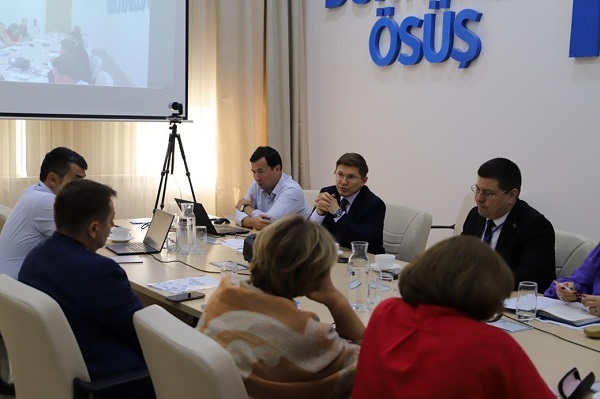
We piloted the tool during the CCA update in October 2025 with around 30 participants, including members of the Foresight and Country Analysis Task Force (which I lead as the RCO Economist) and the Monitoring, Evaluation and Learning (MEL) group. Based on the positive pilot and the feedback from participants in the foresight tool training, the tool was further simplified and finalised for wider use. The UNCT subsequently endorsed the Rapid Foresight Tool for Cooperation Framework implementation. In addition, the Foresight and Country Analysis Task Force was formally included in the 2026–2030 Cooperation Framework governance structure, institutionalising foresight as a standing way of working. Foresight training has since become mandatory for UNCT members to ensure that joint programming and analysis are consistently informed by long-term, anticipatory, and risk-informed thinking.
Foresight in Action: Identifying Strategic Entry Points in the Energy Sector
Strategic foresight proved particularly valuable in the energy sector, given its central role in the country’s economy, and the importance of managing both near-term efficiency gain and longer-term transition risks. Through foresight analysis, the UNCT helped the Government position methane abatement as a high-impact and pragmatic first step within a broader pathway of green energy transition, contributing to Turkmenistan’s pledge to reduce methane emissions by 30 per cent by 2030—potentially equivalent to around one per cent of global energy-related methane emissions reductions.
While the Government had already committed to reducing methane emissions, the joint programme “Support to Policy Making and Building National Capacity towards Green Energy Transition in Turkmenistan” (November 2024–November 2025), funded by the Joint SDG Fund, provided a critical entry point to deepen engagement by engaging stakeholders to promote energy efficiency to achieve key SDG targets. As part of the programme, a foresight consultant led a structured five-step process:
- Scoping: Several in-person and virtual meetings to agree on objectives and the analytical roadmap
- Desk review: Review of historical and current documents.
- Horizon scanning: Six UNCT entities jointly identified and analysed emerging signals.
- Scenario development: by moving from a narrower thematic lens to a broader strategic perspective, this step generated a range of preferred futures and risk scenarios to test possible energy transition pathways and identify priority areas for actions and risk management.
- Analysis and recommendations: Scenario analysis through backcasting—working backwards from the preferred futures to identify actions needed today.
The draft recommendations were presented to the UNCT for feedback, and the final report, complemented by independent satellite data analysis, identified methane abatement as a particularly strategic entry point as it linked climate action with operational efficiency, reduced losses, and stronger resource stewardship in a gas-dependent economy in Turkmenistan.
Under the leadership of the Resident Coordinator, selected UNCT entities then engaged the Government decision-makers in open, evidence-based dialogues. These discussions highlighted how methane abatement could simultaneously advance national priorities—including energy efficiency, climate action, economic resilience, job creation, and stronger social protection—while contributing to global climate goals. The foresight approach helped bring a systems lens into policy discussions, made trade-offs visible (including who gains, who loses, and implications for Leaving No One Behind principles), and ultimately supported the Government’s recognition of methane abatement as a collective priority.
Long-term investment in data—such as the Multiple Indicator Cluster Survey (MICS) and Beyond GDP diagnostics—also proved essential for shaping an energy transition pathway that is socially informed and attentive to vulnerable groups. These analyses revealed “hidden” vulnerabilities, including rising stunting, extremely high out-of-pocket health spending, widespread informality, and weakening social protection. This set of evidence strengthened UN engagement with the Government to ensure that the energy transition pathway is sequenced in a way that protects vulnerable households, supports jobs, and maintains social and fiscal resilience.
What’s on the Horizon
Developing foresight capabilities has helped UNCT Turkmenistan shift from backward-looking diagnostics to forward-looking choices on the future of a gas-dependent economy, including energy-sector reform, diversification, and systemic risk management. Joint energy foresight and scenario stress testing with international financial institutions (IFIs) demonstrated that decisions taken in the next five years will be crucial in determining whether Turkmenistan secures resilient and diversified growth.
Building on this evidence and growing government interest, the UNCT is now developing an IFI–UN joint programme on methane abatement, with an initial USD 30 million blended finance envelope—including USD 10 million in government co-financing—designed to leverage USD 550–800 million in conventional investment by national oil and gas companies by 2030. This work can also help strengthen the evidence base for Turkmenistan’s evolving climate and energy policy framework, including the update of its Nationally Determined Contribution (NDC 3.0).
Encouraged by this experience, the UNCT has decided to expand foresight and financing exercises to three additional high-impact SDG transitions, while explicitly linking them to the energy transition through shared risks and trade-offs related to water availability, food systems, jobs, fiscal resilience, and environmental sustainability. A dedicated cross-thematic exercise will link water availability scenarios to food security, agrifood production, employment, shock-responsive social protection, and biodiversity outcomes. Parallel policy dialogues have focused on “no regret” options to protect macroeconomic stability, unlock high-value investment, and shield public finances and the young workforce from global energy and geopolitical shocks.
In Closing
Foresight is not a silver bullet. In Turkmenistan, however, it has proven invaluable for bridging the gap between analysis and implementation.
By combining horizon scanning, strategic foresight, integrated SDG financing strategies, and political economy insights, the UNCT has developed a roadmap for transformative change that can be continuously updated as the context evolves. In line with the revised Country Analysis Guidance, as the RCO Economist and the lead of the Foresight and Country Analysis Task Force, I remain committed to leading and facilitating regular foresight sessions—such as during UNCT retreats—to keep long-term, risk-informed thinking alive. ///UN Turkmenistan, 29 June 2026