


Across many parts of the world, rapid urbanization and changing environmental conditions are reshaping the natural habitats that both people and wildlife depend on. In Turkmenistan, these changes are also being observed by young minds eager to understand and respond.
At Secondary School No. 55, 7th-grade student Ovezmurad Sapargeldyev began to notice a simple but meaningful change – fewer sparrows in his surroundings.
Curious to understand why, he started observing their behavior more closely. With the guidance of his biology teacher, Anna Shamova, Ovezmurad explored the challenges faced by the house sparrow, a species that has long lived side by side with humans.
What he discovered reflects a broader regional trend.
Urban development, shifting temperatures, and changes in available nesting spaces and food sources are affecting bird populations in many countries. These factors disrupt the delicate balance that species like sparrows rely on to survive and reproduce.
“When I started observing sparrows, I realized they were finding it difficult to adapt to the changing environment. I wanted to help them, not let them disappear,” says Ovezmurad.
Motivated to act, he developed his project, “Climate-tolerant nesting.”
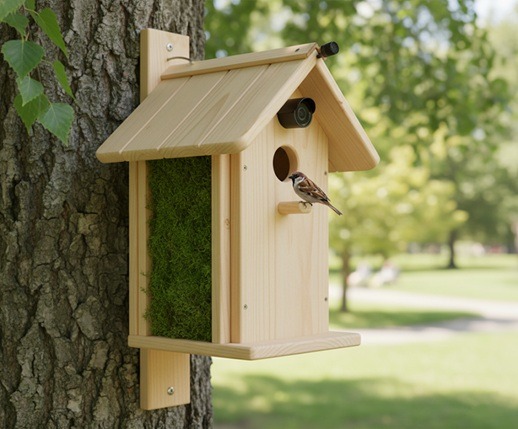
At the heart of the project is a practical and innovative solution – climate-resistant birdhouses designed to provide safer and more stable nesting conditions. Using a “sandwich” structure, the nests combine layers of wood with insulating materials such as moss, hay, or foam to regulate internal temperatures.
The results were both encouraging and measurable. The nests reduced internal temperatures by up to 4.5°C and increased chick survival rates by 35 percent, demonstrating how simple, locally adapted solutions can support biodiversity.
“This project shows how scientific thinking can start with simple observations and lead to practical solutions. Ovezmurad didn’t just study the issue – he worked to address it,” says his teacher, Anna Shamova.
From Classroom Learning to Climate Action: The UNDP Climate Box Initiative
Ovezmurad’s work is part of a broader effort to strengthen climate education among young people.
His project was inspired and supported through the United Nations Development Programme (UNDP) regional initiative “Climate Education for Sustainable Development Goals and Climate Action (Climate Box),” implemented with support from the Russian Federation Trust Fund.
Available in 17 languages and used in thousands of schools worldwide, the Climate Box has reached tens of thousands of students and trained more than 7,000 educators. The programme promotes climate literacy across Eastern Europe, Central Asia, and Southeast Asia by equipping students and teachers with interactive tools and practical knowledge.
Through this initiative, students like Ovezmurad are not only learning about climate change, but they are also contributing to solutions in their own communities.
As part of the programme, Ovezmurad participated in the Schoolchildren’s Festival in Thailand, where he engaged with peers from different countries across the region. His achievements also enabled him to take part in the International Climate School in Thailand, where participants exchanged ideas and explored innovative approaches to addressing climate challenges.
“When I met students from other countries, I saw that we all have similar problems. It made me want to keep going and think of new ideas,” he says.
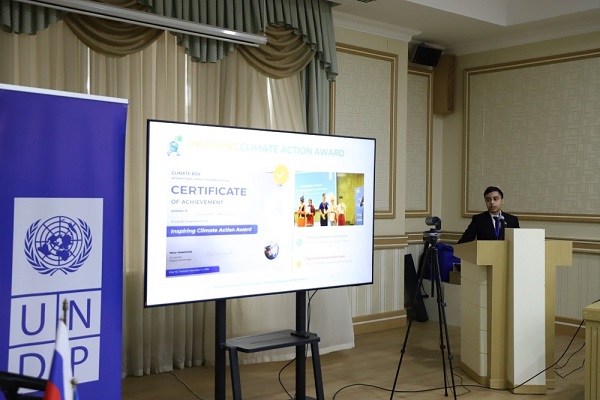
Ovezmurad’s eco project was later presented at the final seminar of the Climate Box initiative held at the United Nations building in Ashgabat on 1 April 2026, where it was met with great interest and warmly encouraged, and recognized as part of a broader effort to advance climate education and youth engagement.
The event brought together educators, experts, and partners to exchange knowledge and strengthen collaboration in climate education.
Opening the seminar, Narine Sahakyan, UNDP Resident Representative in Turkmenistan, emphasized the importance of education in addressing climate challenges:
“Climate change remains one of the defining challenges of our time. Our response depends largely on how effectively we invest in education and foster environmental awareness, especially among young people. The ‘Climate Box’ is a powerful example of how educational tools can help build a generation that not only understands climate challenges but is ready to act.”
H.E. Mr. Ivan Volynkin, Ambassador Extraordinary and Plenipotentiary of the Russian Federation to Turkmenistan noted:
“This project, launched in 2012 with the direct participation of the Government of the Russian Federation, remains an effective tool for fostering environmental awareness and culture among the younger generation in Central Asian countries.”
Following the event, Ovezmurad’s initiative received further recognition within the broader Climate Box framework, with the Embassy of the Russian Federation in Turkmenistan expressing appreciation for his work and confirming its support for the further development of the project, including through technical and financial assistance.
Small Actions, Lasting Impact
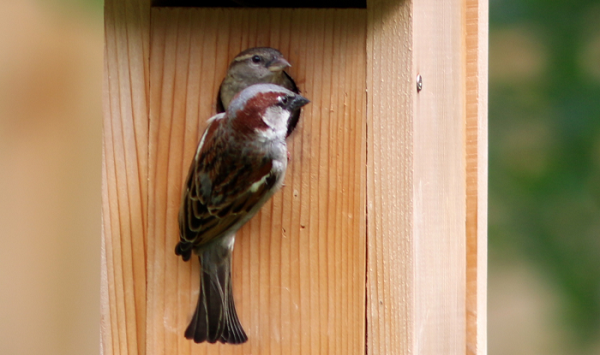
Today, the small wooden nests appearing across schools have become a symbol of something far more significant. They embody curiosity, responsibility, and the growing role of youth in addressing environmental challenges.
Ovezmurad is still a student, but his story proves that meaningful climate action doesn’t always require vast resources or complex technologies. It begins with the ability to observe, the willingness to learn, and a simple decision to act.
As the sparrows return to these safe nesting grounds, they leave us with a powerful reminder: even the smallest actions-when driven by knowledge, care, and cooperation-can help restore our ecosystems and ensure that the joyful song of birds remains constant in our lives. ///nÇa, 6 May 2026 (in cooperation with UNDP Turkmenistan)