


Tariq Saeedi
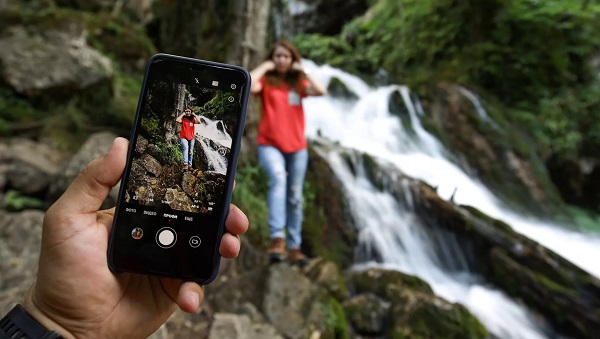
There’s a moment most travellers know. You’re standing in front of something genuinely extraordinary—the turquoise domes of Samarkand catching the late afternoon sun, or a yurt camp spread across a Kyrgyz valley as the light turns amber—and you point your phone at it, tap the screen, and come away with something that looks, somehow, almost nothing like what you’re seeing.
The photo isn’t wrong, exactly. But it’s flat. It doesn’t hold the depth, or the stillness, or the particular quality of that light. You know the feeling. And you suspect that a different version of you—one with a bit more skill, a bit more time—might have captured something worth looking at for years.
This gap between the experience and the record of it is where a genuinely new kind of travel service is beginning to find its footing.
The problem no one talks about at the travel agent
Tourism has changed more in the last decade than in the previous fifty years, and not just in where people go or how they book. The relationship between travelling and documenting has been transformed almost beyond recognition. For many travellers—and not only young ones—the experience and the record of it have become inseparable.
People already shoot constantly on their smartphones. They edit clips, post to Instagram, share reels with family back home. But what most of them lack—quietly, without quite naming it—is skill in composition and visual storytelling, time to edit during a fast-paced itinerary, and the technical confidence to know what they’re doing wrong when a shot doesn’t land.
The result is that the memories many travellers come home with are, visually at least, a long way below what they actually saw.
Why Central Asia, specifically
The region has an unusual combination of qualities. Its landscapes are dramatic in ways that reward photography: mountains, deserts, steppe, the ancient urban geometries of the Silk Road cities.
Its visual identity is strong and distinctive—bazaars piled with colour, carved wooden doors, the patterned felt of nomadic crafts, faces that tell long stories. And it remains, compared to Southeast Asia or Western Europe, genuinely underexposed in the global visual imagination.
In practical terms, that means that good photographs and footage from Central Asia land with real impact. They don’t compete with ten thousand identical Eiffel Tower shots. They find an audience primed for something unfamiliar. The person who comes back from Uzbekistan or Kazakhstan with a well-edited video of their journey has something genuinely worth sharing.
What they usually lack is someone who knows how to help them make it.
The travel content companion
The idea emerging in a small number of tour operations—still nascent, still finding its shape—is to include a dedicated content specialist as part of the tour itself. Not a photographer who takes pictures of tourists for the brochure. Something more useful and more collaborative than that.
Think of it as a storytelling guide. Someone travelling alongside the group whose job is to help each person shoot better footage: advising on composition, catching the good moments, suggesting what to do with the light at a particular hour. During evenings, or on long bus rides between stops, they run quick editing sessions.
By the end of the trip, each traveller has a short, well-constructed highlight reel of their own journey. The tour operator gets a group-level montage. Everyone comes home with something genuinely good.
What a storytelling guide might offer:
- In-the-field coaching on composition and timing
- Evening editing sessions during downtime
- Personal highlight reels for each traveller
- A group montage for the tour operator’s use
- Advice on captions, hashtags, and when to post
- Shared cloud folders and pre-designed templates
The business logic for tour operators is, if anything, even more compelling than the value to travellers. Instead of waiting for reviews to accumulate or paying for advertising, operators would receive real-time, authentic content across multiple social channels—each traveller’s own network, each one organically reaching different people.
That kind of reach, at that level of authenticity, is difficult and expensive to replicate through conventional marketing.
A word about the travellers themselves
This is worth saying carefully, because the people most likely to be interested in this service are not always the ones who come to mind first when you think about social media and content creation.
Older travellers—those in their fifties, sixties, and beyond—are increasingly active on platforms like Facebook and Instagram. They have more time, often more resources, and frequently more genuine interest in documenting and sharing their experiences than their younger counterparts.
They also tend to be less confident technically, more likely to come home with footage that doesn’t do justice to what they saw, and more grateful for patient, practical help with the editing process.
For this group, the appeal isn’t about chasing likes or building an audience. It’s simpler and more personal: they want to show their families what they saw. They want to remember it properly. They want to give the experience the visual weight it deserves.
A service designed with them in mind—unhurried, supportive, focused on the quality of the memory rather than the speed of the upload—could be genuinely transformative.
The real challenges, honestly stated
None of this is without difficulty. Adding a content specialist to a tour raises costs, and not every traveller will want to pay the premium. Tiered packages—a standard tour alongside a content-enhanced version—are probably the right approach, letting people opt in rather than imposing the service on those who’d rather travel quietly.
There’s also a subtler risk. Travel that becomes too focused on capture can start to feel like performance. Some people want to put the phone down, look with their own eyes, and not worry about whether the moment is being recorded. That preference deserves respect. The best version of this service is one that’s present when wanted and invisible when not—supportive, not dominant.
Practical logistics matter too. Internet connectivity is still patchy in parts of Central Asia, particularly in remote mountain areas. Instant upload to social platforms won’t always be realistic. But delayed posting, cloud syncing at the end of the day, or simply handing each traveller an edited video at the trip’s end—these all work perfectly well without reliable connectivity on the mountain pass.
How operators might approach this
Full-time content specialists on every tour may be a stretch for smaller operators. A more practical model might involve partnerships with freelance creators—people who rotate across multiple tours, or who combine the content guide role with travel influencer work of their own.
Some tours could be marketed explicitly as creator-friendly, attracting travellers who’ve already decided they want to document their journey seriously.
The key insight is that this doesn’t need to be expensive or complicated to start.
Even a basic version—a knowledgeable companion who can coach people on their shots, run a 90-minute editing workshop in the evenings, and help someone put together a ten-minute video of their trip—would represent a significant improvement on what most travellers currently take home.
What it’s really about
Strip away the business case and the logistics, and this is fundamentally about the quality of how we remember things. A well-made ten-minute video of a journey through the Fergana Valley, or across the high passes of Tajikistan, or through the medieval lanes of Khiva, or thorugh the enchanting Karakum desert of Turkmenistan — that’s not just content. It’s a record of something real that happened to a real person. It’s what gets shown to grandchildren. It’s what gets watched again, years later, with the particular mix of pleasure and loss that comes from looking at a time you can’t return to.
Central Asia is a place that earns that kind of attention. Its landscapes and its history and its people deserve to be seen, and remembered, and shared with some care. A service that helps travellers do exactly that is not a gimmick. It’s the recognition of something that was always missing. /// nCa, 6 May 2026