


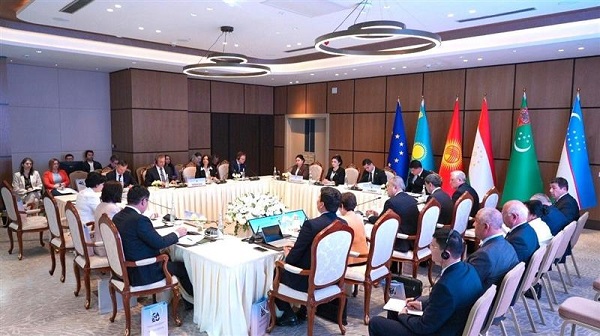
On 30-31 March 2026, the first Central Asia – European Union Interparliamentary Cooperation Forum took place in Samarkand. The event served as a dialogue platform for the systematic development of parliamentary diplomacy and the expansion of practical cooperation between the region and Europe.
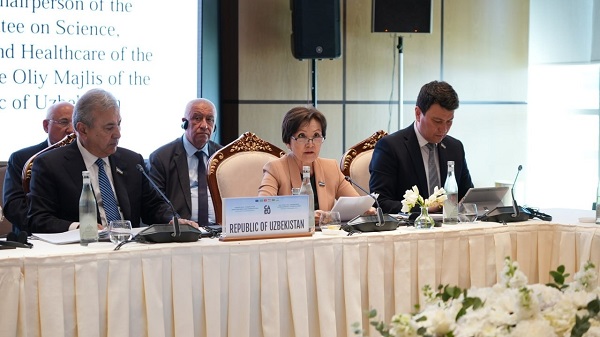
At the opening ceremony, Sodik Safoev, First Deputy Chairman of the Senate of the Oliy Majlis of Uzbekistan, noted that this format is a vital platform for strengthening interparliamentary dialogue, increasing trust, and broadening practical engagement. It was emphasized that the “Central Asia – European Union” summit held in Samarkand a year ago elevated interregional cooperation to the level of a strategic partnership. The Forum itself is one of the initiatives born from that summit, signaling that relations have reached a new, qualitatively higher level.
Christel Schaldemose, Vice-President of the European Parliament, stated that EU cooperation with Central Asia is comprehensive, highly targeted, and aimed at ensuring stability and prosperity based on the principles of multilateralism, free trade, and democracy.
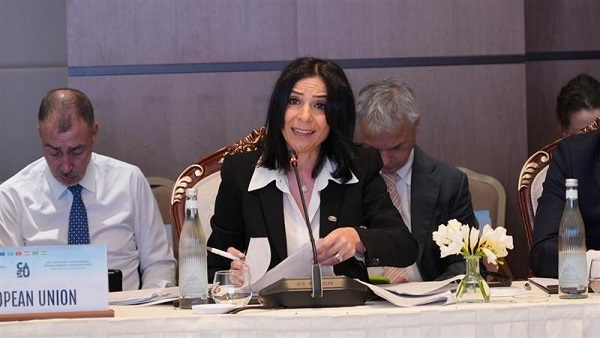
Giusi Princi, Chair of the European Parliament’s Delegation for relations with Central Asia and Mongolia, highlighted the importance of deepening dialogue to ensure sustainable development and the rule of law.
Maksat Kuliyev, Chairman of the Committee of the Mejlis of Turkmenistan on International and Interparliamentary Relations, emphasized that UN member states, including those in Central Asia and the EU, consistently support Turkmenistan’s legal status of neutrality. He noted the country’s significant role in ensuring global peace and its proactive international initiatives.
Specifically, it was noted that Turkmenistan has proposed declaring 2028 as the “International Year of International Law,” supporting the primacy of legal frameworks and the central role of the UN in international relations.

Kuliyev stressed that parliamentary-level forums and meetings are essential not only for exchanging legislative experience but also for discussing regional security and strengthening friendly ties between nations.
The holding of the first “Central Asia – European Union” heads of state summit last April, along with the adoption of the Joint Declaration on Strategic Partnership, played a pivotal role in elevating cooperation between the region and Europe to a new, higher level.
During the forum’s opening ceremony, several key officials delivered presentations, including Aigul Kuspan, Chairperson of the Committee on International Affairs, Defense, and Security of the Mazhilis of the Parliament of Kazakhstan; Mavsuma Muini, Deputy Chairperson of the Majlisi Namoyandagon of the Majlisi Oli of Tajikistan; and Saltanat Amanova, Deputy Chairperson of the Committee of the Jogorku Kenesh of the Kyrgyz Republic on Science, Education, Innovative Development, Information Technology, Culture, Sport, and Youth Policy.
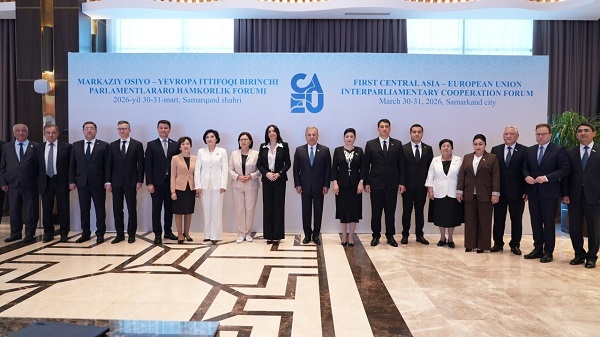
The forum continued its work through thematic sessions:
- The first session focused on the “Current State and Prospects of Political Dialogue between Central Asia and the European Union.” Participants paid particular attention to the implementation of agreements reached at the 2025 Samarkand Summit, the refinement of legal frameworks, and the advancement of parliamentary diplomacy.
- The second session addressed economic connectivity, sustainable growth, and the “green” transformation. Specific focus was placed on expanding transport and logistics links, developing the green economy, and intensifying investment cooperation.
- The third session centered on the rule of law, digital transformation, and inclusive governance. Key topics included the protection of human rights, enhancing security in the digital space, and the legal regulation of modern technologies.
Upon the conclusion of the event, the Joint Statement of the First Central Asia – European Union Interparliamentary Forum was adopted, reflecting the initiatives and agreements established during the proceedings. /// nCa, 1 April 2026 (Based on materials from the Senate of the Oliy Majlis of Uzbekistan and the Mejlis of Turkmenistan)