


By 2030, electricity consumption in Central Asia is projected to grow by 40%, and by 2035, the region will require 62.8 GW of new generating capacity. Faced with rising demand, carbon reduction targets, and aging infrastructure, the region may adopt a “Middle Path” to navigate the energy transition. This model is detailed in the new Eurasian Development Bank (EDB) report, “Central Asia’s Power Sector: Modernisation and Energy Transition.”
The proposed Middle Path is a balanced approach that combines the modernisation of traditional fossil-fuel generation with the accelerated development of renewable energy sources (RES).
Globally, the energy transition is gaining unprecedented momentum. In 2024, record volumes of solar and wind power plants were commissioned, and investments in clean energy have already surpassed those in fossil fuels. However, these milestones come with new challenges.
Electricity demand is currently outstripping the growth of green energy. As a result, global CO₂ emissions continue to rise.
At the same time, a reliable power supply is becoming vital for the development of emerging sectors—Artificial Intelligence, data centers, electric vehicles, and the vast array of connected devices.
Two Primary Approaches to Energy Development
An analysis of energy policies across various countries reveals two main approaches to power sector development:
- Conservative Approach: This strategy focuses on maintaining and expanding the existing generation mix, relying on the availability of fossil fuels and current infrastructure. However, this approach reinforces technological inertia, leads to asset depreciation, and increases vulnerability to future environmental and market risks.
- Green Maximalism: On the other hand, some countries advocate for rapid and complete decarbonization by phasing out traditional generation in favor of an uncompromising scale-up of renewable energy sources (RES). This approach may face challenges such as underdeveloped grid infrastructure, an overall decline in the reliability of the power supply, and potentially higher electricity tariffs.
“A balanced energy policy must rely on a set of optimal technological and investment solutions that reduce systemic risks across all planning horizons, while also accounting for financial and environmental constraints,” according to the EDB.
Central Asia possesses the necessary resources for a successful energy transition. Southern Kazakhstan and the deserts of Uzbekistan are home to some of Eurasia’s premier solar zones; Kyrgyzstan and Tajikistan boast powerful mountain rivers ideal for hydropower; and Western Kazakhstan and the Caspian coast experience strong, consistent winds. Additionally, Central Asia holds vast reserves of natural gas and uranium, and fundamental decisions have already been made regarding the development of nuclear power.
Consequently, Central Asia is well-positioned to follow a “Middle Path” that simultaneously addresses the goals of environmental sustainability, energy security, and affordability.
Actions to Implement the Middle Path Strategy
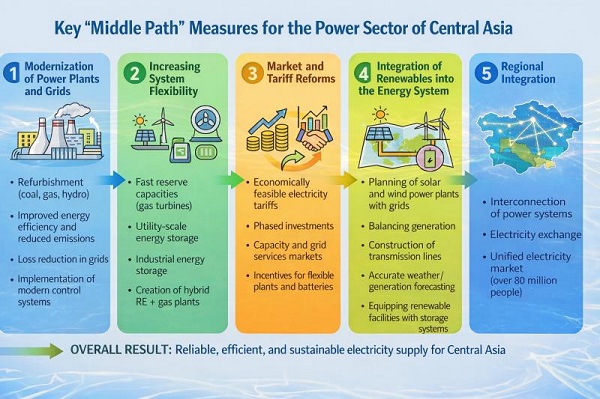
To realize this strategy, EDB experts highlight five key areas of action:
1.Modernisation of existing power plants and grids. Upgrading equipment at existing coal, gas, and hydroelectric power plants increases their efficiency, reduces emissions, and extends their service life. Concurrently, grid infrastructure must be reconstructed to ensure it can reliably integrate the growing volumes of renewable energy sources.
2.Enhancing power system maneuverability. Rapid-response backup capacity is essential to compensate for the intermittency of solar and wind generation. This involves constructing modern gas turbine units, deploying energy storage systems, and implementing demand-side management (for instance, “smart” meters for consumers). A promising solution is the creation of hybrid parks that combine RES, gas generation, and battery storage at a single site to provide 24/7 electricity supply.
3. Market and tariff reforms. A gradual, well-calibrated transition to cost-reflective tariffs—with mandatory targeted protection for low-income consumers—will ensure an inflow of investment and sufficient financing for the energy sector.
4. Integration of RES into the power grid. The development of solar and wind generation must proceed in tandem with the strengthening of grid infrastructure. It is crucial to plan new solar and wind farms in areas where the grids are capable of handling additional capacity. Furthermore, power transmission lines should be laid to promising generation areas in advance, rather than responding only after deficits occur.
5. Regional integration. Linking the power systems of Central Asian countries and engaging in electricity trade with neighboring nations can enhance the reliability of the energy supply and reduce costs. Investments in interconnector capacity expansion, joint power system coordination, transparent markets are needed to enable countries to exchange electricity at large and, in particular, to utilize full potential of the region’s “green battery” – hydropower resources.
Impact of the Middle Path
Regional Benefits: Capital expenditures are 30–45% lower than under “Green Maximalism,” the cost of electricity is 25–35% lower, and the carbon footprint is five times smaller than under the “Conservative” scenario.
Thus, the integral “Middle Path” strategy can provide Central Asia with the modernization of its energy infrastructure, a reliable and affordable power supply, a reduced carbon footprint, and an energy transition without shocks—benefiting the economy while meeting climate commitments.
Further details on the report “Power Sector of Central Asia: modernization and the energy transition” and other analytical materials are available on the Bank’s website. ///nCa, 22 March 2026