


nCa Report

Overview of the Forum
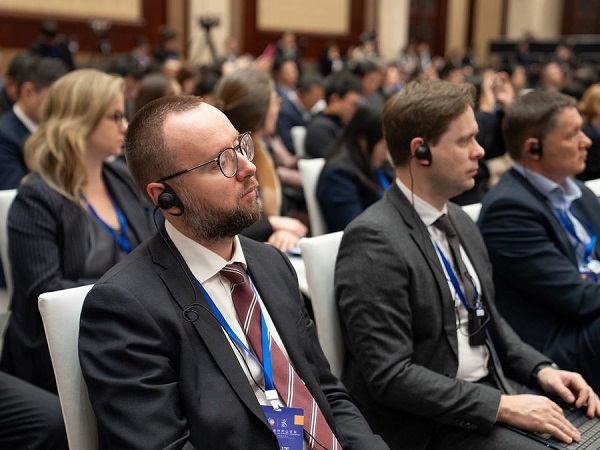
The inaugural Tianshan Forum for Central Asia Economic Cooperation opened on December 2, 2025, in Urumqi, capital of northwest China’s Xinjiang Uygur Autonomous Region. Xinhua reports that the two-day event drew over 300 government officials and representatives from financial institutions, think tanks and the private sector to discuss promoting trade and investment across the region.
China Daily noted that the forum brought together approximately 380 participants, including academics, government officials and representatives from international organizations, all from member countries of the Central Asia Regional Economic Cooperation (CAREC) Program.
The forum’s theme, “Unlocking Connectivity and Investment in Central Asia,” focused discussions on four key areas: trade, transport, energy and digital connectivity in the region, according to Xinhua.
CAREC Program and Institute Background
The CAREC Program is a partnership of 11 countries working together to promote regional economic cooperation. According to multiple sources, the member countries include Afghanistan, Azerbaijan, People’s Republic of China, Georgia, Kazakhstan, Kyrgyz Republic, Mongolia, Pakistan, Tajikistan, Turkmenistan, and Uzbekistan. The program was established in 1997 by the Asian Development Bank, which serves as the CAREC Secretariat.
The CAREC Institute, headquartered in Urumqi since 2015, serves as an intergovernmental organization dedicated to promoting economic cooperation through knowledge generation, capacity building, and knowledge sharing. Xinhua reports that since establishing its physical base in Urumqi in 2015, the institute has conducted over 180 research studies and empowered more than 2,000 government officials of CAREC member countries through 150 training programs.
Key Speakers and Their Messages
Chinese Finance Minister Lan Fo’an delivered opening remarks emphasizing that CAREC cooperation has made significant progress and should expand in scale and depth to benefit people in the member countries, as reported by Xinhua. China Daily noted that Minister Lan highlighted Central Asia’s growing significance on the international stage, underpinned by strengthened economic cooperation, and stressed the need to expand the scope and scale of collaboration.
Charymuhammet Shallyyev, director of the CAREC Institute, emphasized the forum’s bridging role. Xinhua quoted him saying, “The Tianshan forum will serve as a bridge linking policymakers, the private sector, development partners and the research community to offer solutions to our shared challenges.”
Pakistan’s Federal Minister for Planning, Development & Special Initiatives Ahsan Iqbal delivered a significant address at the forum. According to Xinhua, he noted that the current global landscape is undergoing profound transformation, with Central Asia and South Asia emerging as core engines driving global economic growth. Arab News reported that Iqbal positioned Pakistan as aiming to become a central trade and connectivity hub for China and Central Asia, highlighting that Pakistan’s Gwadar Port could offer the region the fastest maritime access to global markets and drastically reduce transit times for goods.
Arab News further reported that Iqbal unveiled four cooperation mechanisms to accelerate regional integration: a joint task force on economic connectivity and trade facilitation; co-developed regional special economic zones; a Eurasian Energy and Green Transition Partnership; and a Digital Silk Road and Future Skills Alliance focusing on AI, cybersecurity and fintech. The Islamabad Post noted that he highlighted successful Pakistan-China projects and called for deeper cooperation on industry, people-to-people exchange, agriculture and technology, describing the China-Pakistan Economic Corridor (CPEC) as “a strategic development framework built on trust and long-lasting partnership.”
Mzia Giorgobiani, Deputy Minister of Infrastructure of Georgia, also participated in the forum, as shown in photographs published by Xinhua and other sources, representing Georgia’s interests in Central Asian connectivity.
Launch of Central Asia Fiscal Cooperation Research Center
A significant development at the forum was the launch of a Central Asia fiscal cooperation research center, established by the CAREC Institute and Xinjiang’s regional department of finance, according to Xinhua. This new center represents an institutional commitment to deepening fiscal cooperation among member countries.
Regional Trade Context and Xinjiang’s Role
Xinhua reported that Central Asia is a crucial hub at the heart of Eurasia, and trade between China and Central Asia has surged since the first China-Central Asia Summit in May 2023, totaling 94.8 billion U.S. dollars in 2024. The region’s strategic importance has been growing under China’s Belt and Road Initiative.
Xinjiang plays a pivotal role in these developments. As reported by The Diplomatic Insight, Xinjiang’s import and export value to the five Central Asian nations exceeded 100 billion yuan in the first five months of 2025, accounting for 39.4% of China’s total trade with these countries, according to data from Urumqi Customs. Global Times noted that more than 16,000 China-Europe (Central Asia) freight trains transited through Xinjiang’s Alashankou and Horgos ports in 2024, reaching a record high.
Travel and Tour World reported that in 2024, more than 16,400 China-Europe freight trains passed through Xinjiang, representing over half of the national total and marking a 14-percent year-on-year increase. These trains transport electronics, machinery, textiles and other goods to Europe while returning with industrial equipment and commodities.
Xinhua noted that bordering multiple Central Asian countries, Xinjiang is strengthening its role as a core hub along the Belt and Road. The establishment of the China (Xinjiang) Pilot Free Trade Zone in 2023 has further accelerated this development, with Travel and Tour World reporting that in less than two years, the FTZ has attracted more than 40,000 enterprises, including a growing number of foreign-invested companies.
Belt and Road Initiative Context
The forum takes place within the broader context of China’s Belt and Road Initiative. According to Wikipedia, the BRI was launched by Chinese President Xi Jinping in 2013 while visiting Kazakhstan, and as of 2024, participating countries account for nearly 75% of the world’s population and over half of global GDP. Economic development of China’s western regions, particularly Xinjiang, is one of the government’s stated goals in pursuing the BRI, with Xinjiang’s strategic location recognized as central to the initiative’s success.
Significance and Future Outlook
The Tianshan Forum represents a significant step in institutionalizing Central Asia regional cooperation. China Daily reported that participants discussed opportunities and challenges, the business environment and innovative investment tools to advance regional connectivity. The forum’s establishment in Urumqi underscores Xinjiang’s transformation from a relatively closed inland region to what Global Times described as “a frontier of opening-up and innovation” and “a core area of the Silk Road Economic Belt.”
With the creation of new institutional mechanisms like the Central Asia fiscal cooperation research center and the continued growth of trade volumes, the forum positions itself as an annual platform for deepening economic integration across the CAREC region. The participation of high-level government officials, international organizations, and private sector representatives indicates strong commitment to advancing the forum’s goals of unlocking connectivity and investment opportunities across Central Asia. /// nCa, 4 December 2025 (photo credit – SCO, Xinhua)