


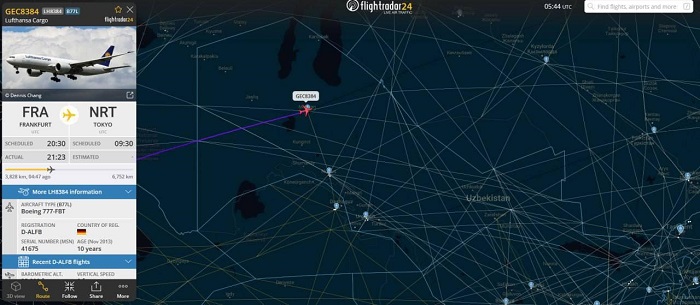
Uzbekistan and Kazakhstan have joined forces to implement a new air navigation corridor designed to minimize the hydrocarbon footprint of air travel.
Officially launched on 11 July 2024, this route reduces flight distances, leading to a significant decrease in harmful transportation emissions.
The Ministry of Transport in Uzbekistan announced the official opening of new segments within the T-916 zonal navigation route for aircraft.
Notably, German airline Lufthansa became the first carrier to utilize this optimized path.
The 40-kilometer reduction in flight distance translates to several environmental benefits:
• Reduced Carbon Footprint: Airlines operating daily flights on this route are projected to save 220-250 tons of carbon dioxide emissions annually.
• Fuel Efficiency: Daily fuel consumption for airlines is anticipated to decrease by 30 to 50 tons per year.
• Lower Oxygen Consumption: The new route is expected to result in a 50-70 ton reduction in oxygen consumption each year.
Forecasts suggest that over 30 airlines will be incorporating this efficient route into their daily operations.
Furthermore, the Uzaeronavigation (Uzbekistan Air Navigation) Center plans to continue collaborating with neighboring countries’ air traffic service providers to develop new, environmentally friendly routes. ///nCa, 14 July 2024