


Agamyrat Soltanov
In the era of the Revival of a new era of a powerful state, the initiatives of the National Leader of the Turkmen People, Hero Arkadag, in the area of environmental protection and transforming the country into a blooming garden are being successfully implemented under the wise leadership of President Serdar Berdimuhamedov.
Thanks to the annual spring and fall nationwide tree planting campaigns, in which citizens of all ages actively participate, hundreds of thousands of trees are planted across our country. Regular care is also provided for previously planted trees.
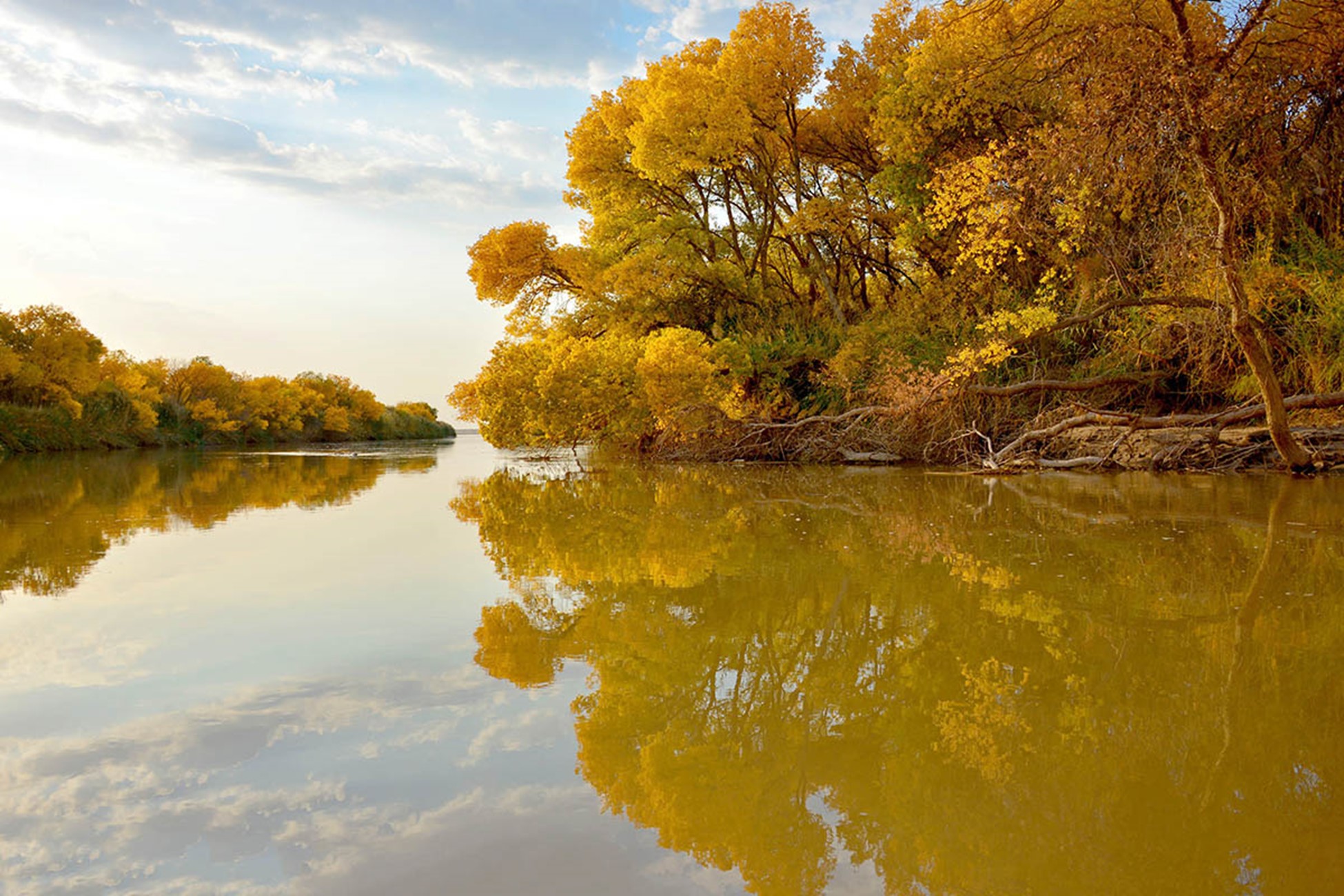
This clearly demonstrates the effective implementation of environmental policy in the country. Protected areas are given a special place in the comprehensive environmental protection measures, which are a key focus of the state strategy. Among the sites successfully implementing environmental protection activities is the Amu Darya State Nature Reserve, which captures the imagination with its unique beauty at any time of year.
A. Sadykov, head of the reserve’s scientific department, spoke about the staff’s activities and the unique features of this natural area:
The Amu Darya State Nature Reserve was established in 1982 for the scientific study and conservation of the tugai forest ecosystems bordering the banks of the middle reaches of the Amu Darya (Jeyhun) River and the coastal areas of the Kyzylkum and Karakum deserts. The reserve included the Gereldinsky, Gabaklynsky, and Nargyzsky sections, and the Kelifsky Sanctuary was also transferred to its jurisdiction.
The reserve’s main sections are located in the northeastern part of the Lebap velayat, within the Dyanev, Darganatyn, and Farab etraps, covering an area of 48,350 hectares. The Kelif Nature Reserve is located in the southeastern Karakum Desert, within the Khalach and Kerki etraps, and covers an area of 103,000 hectares. The reserve is located within the northern sandy desert landscape region of the Turan Lowland. The Gabakly and Gereldin sections of the reserve lie on the left bank of the Amu Darya, while the Nargyz section lies on the right.
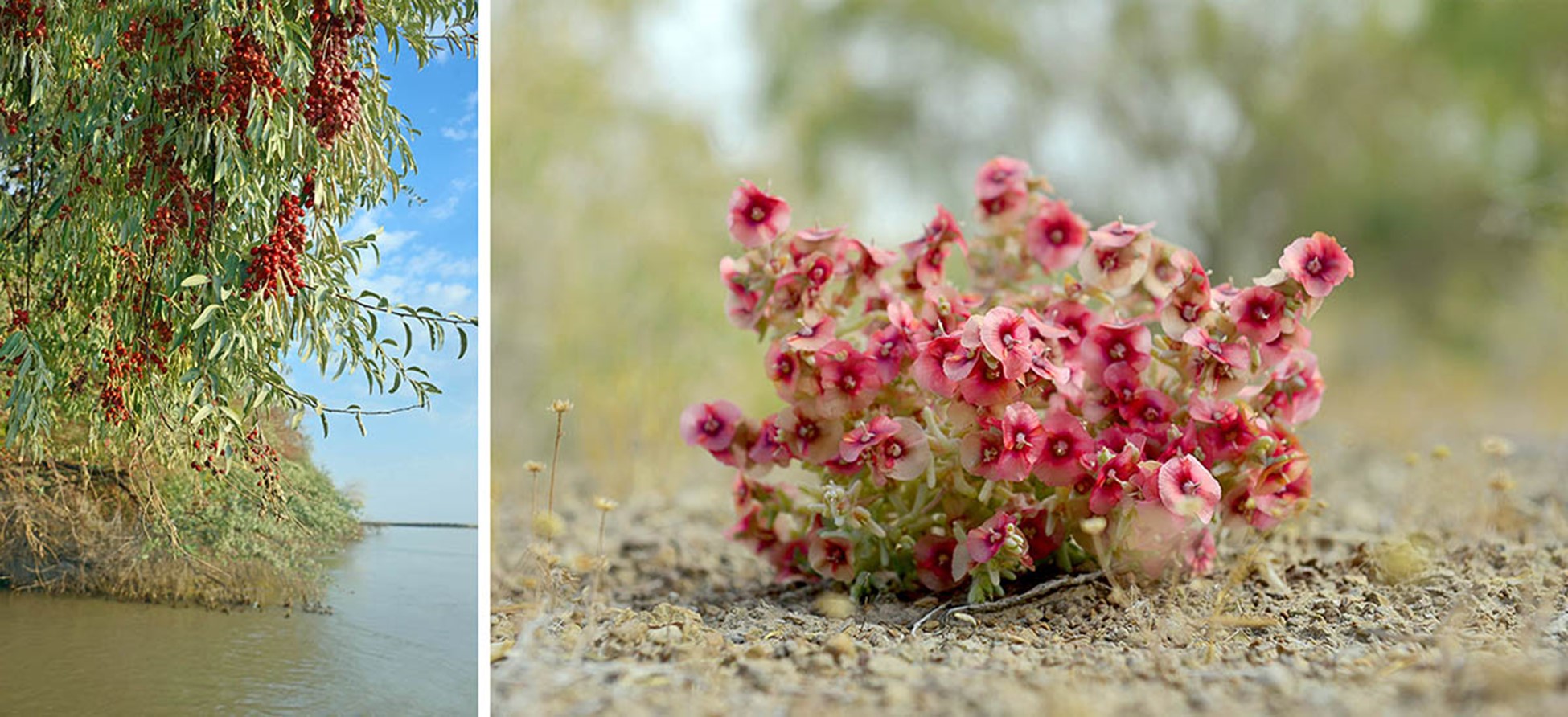
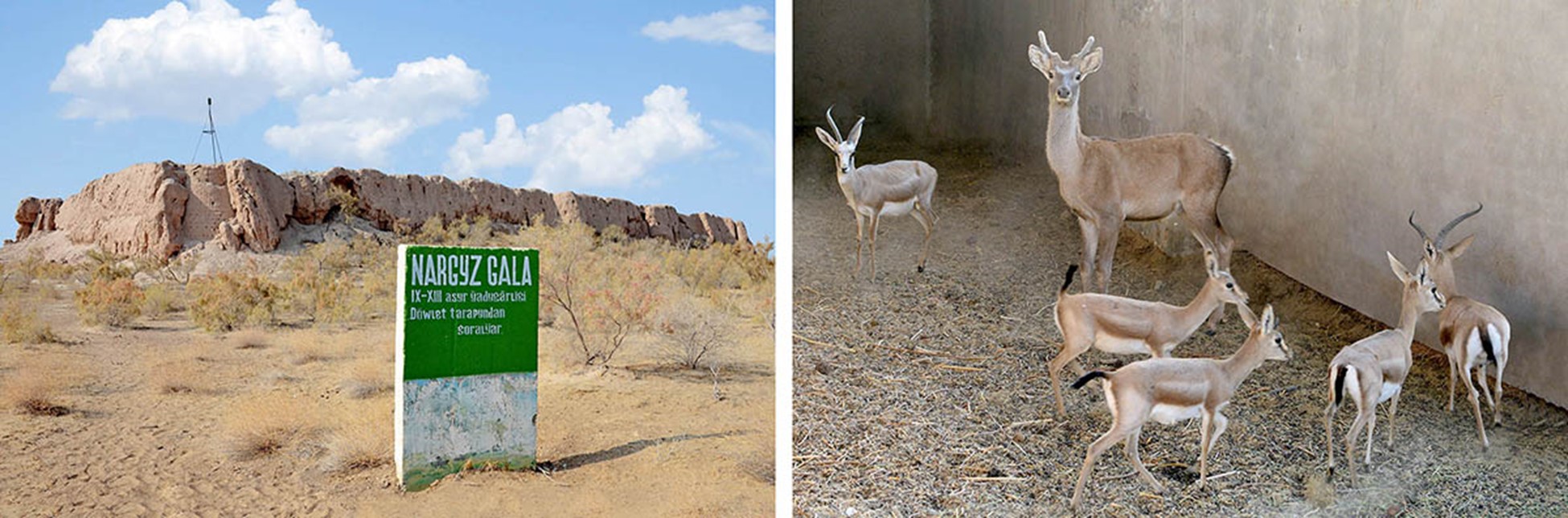
The Nargyz area, with a total area of 28,177 hectares, consists not only of coastal tugai forests but also encompasses the desert landscapes of the Kyzylkum Desert on its northeastern border. Forests occupy 3,246 hectares of this territory. Large specimens of saltwort, oleaster, and Euphrates poplar (Turanga arborescens), reaching heights of 13–14 meters, testify to the ancient origins of the local tugai forests.
The Gabakly section of the reserve is located on the left bank of the Amu Darya, 6 kilometers from the village of Gabakly. To the southwest, it borders the Karakum Desert, and to the northeast, it faces the river, beyond which lies the Kyzylkum Desert. The site’s topography is highly varied. It features river channels separating forested areas, reed-covered lowlands, sand dunes, and sparse, dense tugai thickets.
The Gereldinsky section of the reserve is located in the Darganatyn district, in the northern Lebap province. This 2,058-hectare area, completely surrounded by forests, borders the Karakum Desert to the southwest. Bukhara deer have been recorded to be highly active here. The vegetation in the tugai forest is dense and mixed.
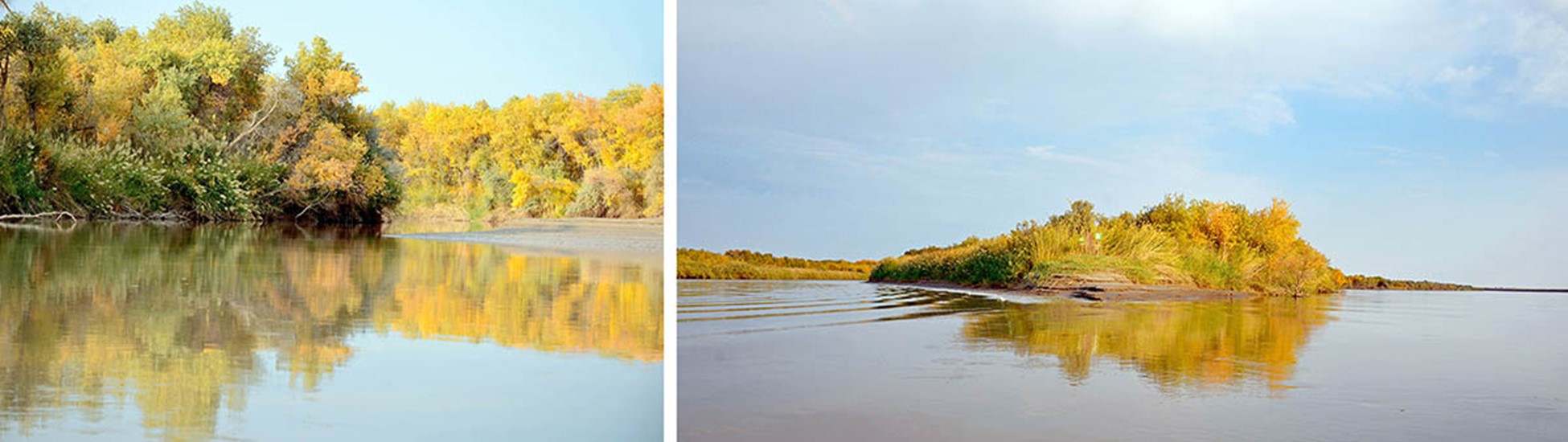
In the nearly 45 years since the establishment of the Amu Darya State Nature Reserve, numerous scientific studies have been conducted on environmental protection, flora, fauna, and ecosystems. Effective work is underway to restore and enrich the reserve’s flora and fauna.
The reserve is home to 41 species of mammals, 36 species of fish, 2 species of amphibians, 29 species of reptiles, several hundred species of invertebrates (including over 80 species of spiders), and 175 species of birds. Furthermore, these areas provide shelter for many wintering and migratory birds migrating along the river. One of the reserve’s key features is its presence of the Bukhara deer, commonly known as the tugai red deer. Efforts to protect and increase its population are currently yielding successful results.
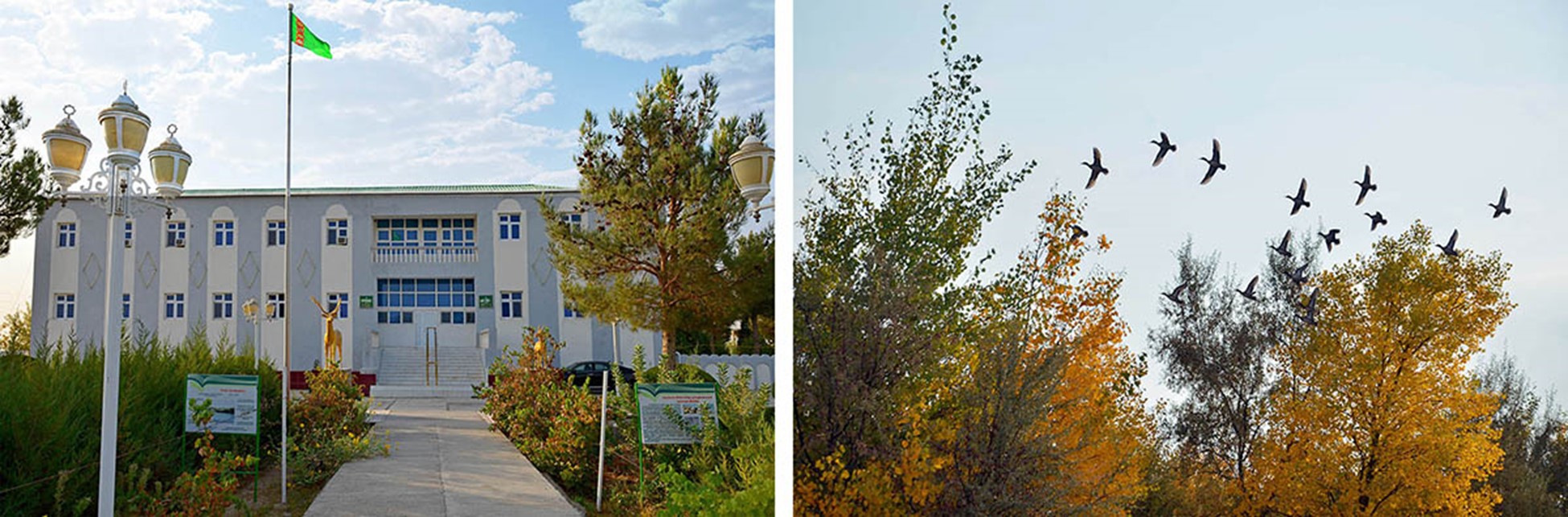
The leaves, flowers, fruits, and roots of the plants growing in the tugai forests serve as the primary food source for the local fauna. Among the birds inhabiting the reserve, the most notable are the Amu Darya pheasant, white-tailed eagle, great white and Dalmatian pelicans, black duck, pallid eagle, eagle owl, night heron, greylag goose, and others.
Among the mammals here you can find otters, jungle cats, Bukhara deer, badgers, honey badgers, steppe cats, jackals, goitered gazelles, hares, and long-eared hedgehogs.
The flora of the Amu Darya Nature Reserve is also distinguished by its diversity. It is home to 227 species of higher plants. Scientific research has identified 125 plant species in the desert areas, 15 of which are medicinal. Forested areas are home to 86 species, more than 30 of which are recognized as medicinal.
Trees such as poplar, saltwort, oleaster, and Djungarian willow predominate here. Impenetrable riparian thickets of tamarisk, chingil, licorice, w)olfberry (khash), and common reed form the primary habitat for wildlife, their true natural home. Thirty-five species of medicinal plants, which have been used in folk medicine since ancient times, have been recorded in the coastal riparian forests of the Amu Darya.
The reserve’s scientists carry out important work to preserve and propagate rare plant species. They also make a significant contribution to the implementation of state environmental policy and the promotion of environmental stewardship. All of this work is aimed at maintaining the region’s ecological well-being and preserving nature’s wonderful treasures. /// 13 November 2026 (cross post from TDH – originally published at https://turkmenistan.gov.tm/ru/post/112025/amudarinskij-zapovednik-zhivopisnaya-krasota-i-prirodnay…https://turkmenistan.gov.tm/ru/post/112025/amudarinskij-zapovednik-zhivopisnaya-krasota-i-prirodnay…