


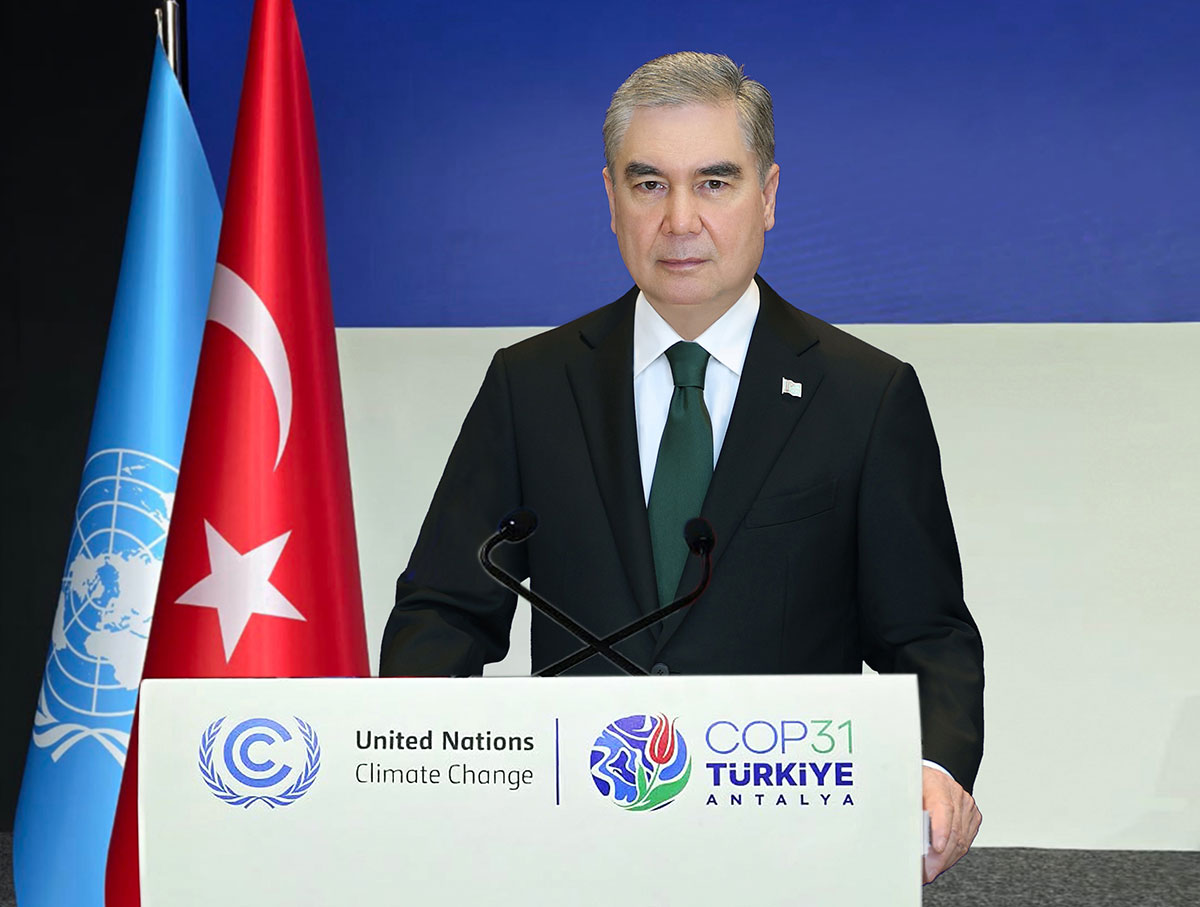
Addressing the plenary session of the Leaders’ Summit at the 31st Conference of the Parties to the United Nations Framework Convention on Climate Change (COP31) in Antalya, the National Leader of the Turkmen people, Gurbanguly Berdimuhamedov, unveiled a comprehensive package of global and regional climate initiatives put forward by Ashgabat.
Key proposals include declaring 2028–2037 the UN Decade of Climate Resilience and Adaptation, establishing an inclusive Ashgabat Climate Dialogue, developing a Digital Atlas of Climate Change, and drafting a UN-backed International Environmental Code.
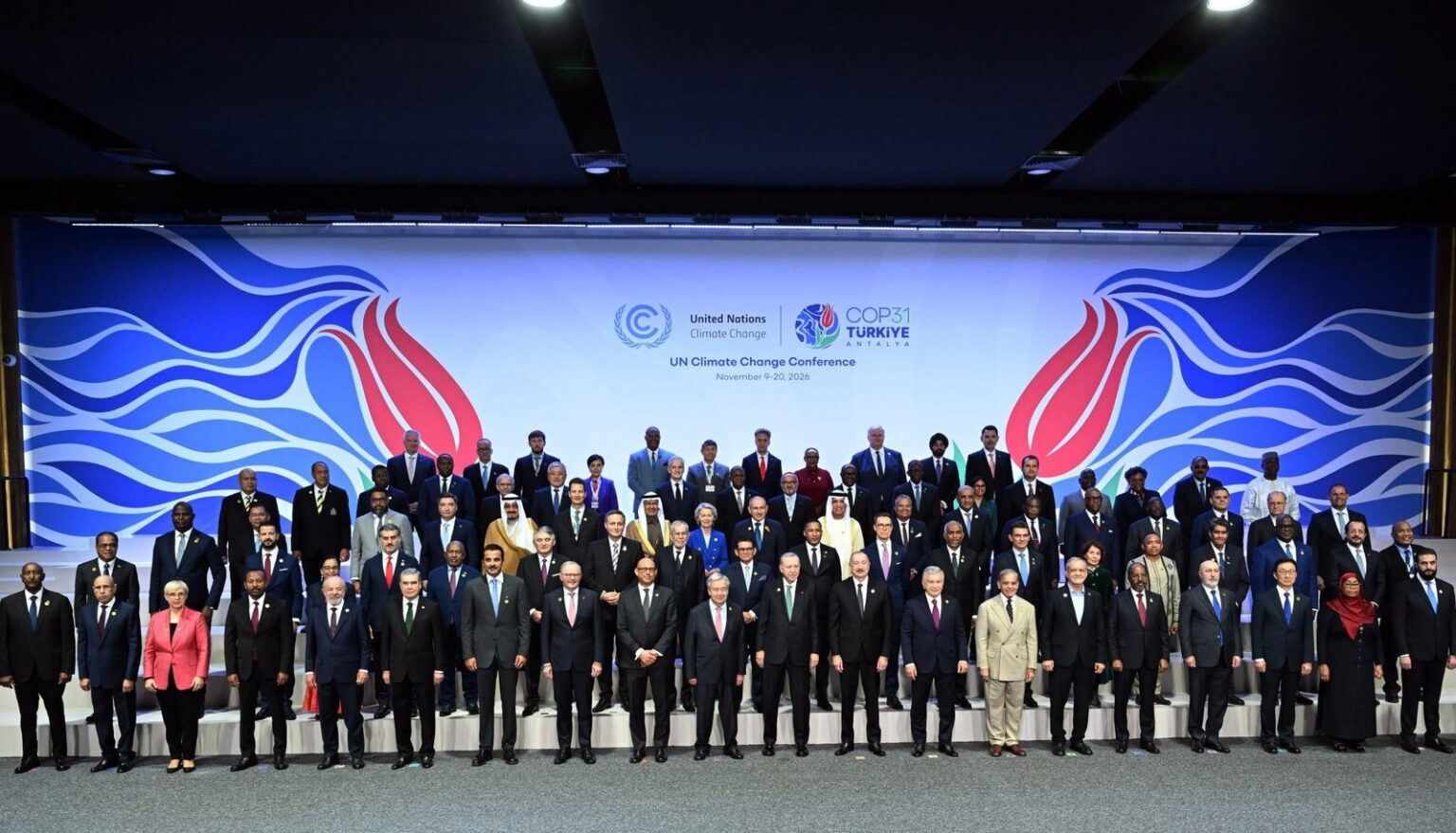
Hosted under the Türkiye’s Presidency, COP31 runs from 9 to 20 November 2026. The global climate forum’s agenda encompasses nearly 100 items across 12 key thematic areas, ranging from energy and climate finance to agriculture and artificial intelligence. Held at the Antalya EXPO center, the conference has convened world leaders and experts from nearly 200 countries.
The centerpiece high-level segment is the World Leaders Climate Action Summit on 11–12 November 2026. The first day of the leaders’ forum focuses on the Zero Waste initiative, while the second day is dedicated to Sustainable Cities and Infrastructure.
Delivering his remarks at the plenary session, Turkmenistan’s National Leader reaffirmed the country’s firm commitment to fulfilling its international obligations under the UNFCCC and the Paris Agreement.
“We view national efforts to advance the climate agenda as a vital component of regional cooperation. The development of Central Asian countries across economic, social, environmental, nature conservation, water-energy, and other sectors is deeply interconnected,” Berdimuhamedov emphasized.
Here are several key initiatives put forward by Turkmenistan at the COP31 Leaders’ Summit:
Declaring 2028–2037 the UN Decade of Climate Resilience and Adaptation — designed to focus international efforts on strengthening national climate resilience and ensuring the targeted allocation of resources.
Establishing the Ashgabat Climate Dialogue — a new, inclusive format for engagement and an open international platform. Turkmenistan proposed hosting the dialogue’s inaugural international meeting in Ashgabat in 2027.
Developing a Digital Atlas of Climate Change and Its Adverse Impacts — creating a comprehensive information and analytical framework for continuous climate monitoring, impact assessment, and identifying adaptation measures, in partnership with UNEP, WMO, UNDP, the World Economic Forum, and other stakeholders.
Launching a Global Partnership for Climate Technology Transfer — a new multilateral cooperation mechanism aimed at expanding developing countries’ access to clean technologies, innovation, and climate finance.
Drafting a UN International Environmental Code — establishing a unified legal instrument to streamline existing international rules, norms, and standards across environmental protection, climate action, and biodiversity conservation.
Establishing a Regional Center for Combating Desertification for Central Asian Countries — advancing an initiative for integrated desertification control in cooperation with the UNCCD Secretariat.
Regional Center for Climate Change Technologies to Begin Operations in Ashgabat in 2027
Gurbanguly Berdimuhamedov announced the upcoming launch of the Regional Center for Climate Change Technologies in Central Asia.
“From the rostrum of this forum, I would like to note that the Regional Center for Climate Change Technologies in Central Asia will commence operations in early 2027. Its work will be carried out in close cooperation with the United Nations and other international bodies, in line with agreed organizational and legal mechanisms as well as international standards,” stated the National Leader of Turkmenistan.
Turkmenistan Unveils National Pavilion at COP31
Hosted as part of the 31st Conference of the Parties to the UNFCCC, Turkmenistan’s National Pavilion introduces the international community to the country’s comprehensive efforts to adopt clean, water- and resource-saving technologies, curb methane emissions, and advance green economy principles.
The exhibition draws particular attention to Turkmenistan’s nationwide tree-planting campaigns, held annually under the motto “Transforming Turkmenistan into a Blooming Garden.” A dedicated section of the pavilion also showcases the multi-volume scientific and encyclopedic work by the National Leader of the Turkmen people, ‘Medicinal Plants of Turkmenistan.’
Turkmenistan Signs Package of Documents with International Organizations
On the sidelines of COP31 in Antalya, Turkmenistan signed a package of agreements with relevant international bodies:
- The Ministry of Education of Turkmenistan signed the Declaration on Children, Youth and Climate Action (UNICEF).
- Agreement with the United Nations Industrial Development Organization (UNIDO) on the implementation of Stage III of the Institutional Strengthening Project for the Hydrochlorofluorocarbon (HCFC) Phase-out Management Plan in Turkmenistan for 2026–2030.
- Project Document “Supporting Energy Transition in Remote Settlements of Turkmenistan” between the United Nations Development Programme (UNDP) Country Office and the Ministries of Environmental Protection and Energy of Turkmenistan.
- Country Programming Framework for Turkmenistan for 2026–2030 (FAO).
- Memorandum of Understanding between the State Committee for Water Resources of Turkmenistan and the International Water Management Institute (IWMI) on cooperation in the field of water resources management.
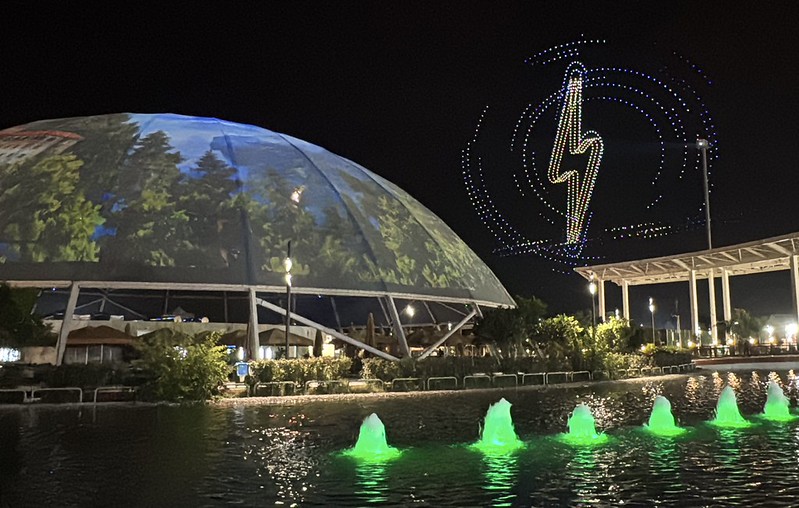
ANTALYA, TURKIYE – NOVEMBER 11: A view of a drone show in the evening on the first day of the COP31 Leaders’ Summit at the 31st Conference of the Parties (COP31) to the UN Framework Convention on Climate Change at the Antalya COP31 venue in Antalya, Turkiye, on November 11, 2026. ( Ayşe Eda Ünlü Özen – Anadolu Agency )
Address by the National Leader of the Turkmen People, Gurbanguly Berdimuhamedov, at the Plenary Session of the COP31 Leaders’ Summit
Respected Chairman, Distinguished participants of the session,
First of all, I would like to express my gratitude to His Excellency Mr. Recep Tayyip Erdoğan, President of the Republic of Türkiye, for the invitation to participate in the 31st Conference of the Parties to the United Nations Framework Convention on Climate Change (COP31), as well as for the warm hospitality and the high level of organization of this international event.
We view this forum as an important milestone in strengthening mutual trust on climate change issues and transforming the global climate dialogue into a driving force for world development.
In this regard, I would like to note that Turkmenistan, in accordance with its National Climate Strategy, remains firmly committed to fulfilling its international obligations under the UN Framework Convention on Climate Change and the Paris Agreement.
These efforts are aimed at reducing greenhouse gas emissions and improving energy efficiency, and are backed by concrete measures to promote the widespread adoption of modern, environmentally friendly technologies.
A key aspect of this work is the implementation of the Global Methane Pledge. To this end, a comprehensive set of measures is underway to modernize the national power supply system, reduce natural gas losses, and improve emissions monitoring.
Turkmenistan places great emphasis on enhancing reporting and data transparency regarding the state of the environment. Our country has prepared its Fourth National Communication on Climate Change and has completed work on its updated Third Nationally Determined Contribution (NDC 3.0).
We regard national efforts to implement the climate agenda as a vital component of regional cooperation. The development of Central Asian countries across economic, social, environmental, conservation, water-energy, and other spheres is deeply interconnected. We believe that under these conditions, a comprehensive approach will allow the countries of the region to take mutual interests into account in order to effectively address existing challenges.
One of the major achievements in this direction has been the establishment of the Regional Center for Climate Change Technologies in Central Asia.
As is well known, Turkmenistan put forward the initiative to establish this Center, which has received support from the states of the region and international partners. We are grateful to all stakeholders for their effective and responsible approach to Turkmenistan’s initiative, as well as for their assistance and participation in its implementation.
From the rostrum of this forum, I would like to note that the Regional Center for Climate Change Technologies in Central Asia will commence its operations in early 2027. This work will be carried out in close cooperation with the United Nations and other international bodies in accordance with agreed organizational and legal mechanisms and international standards.
Desertification remains a critical issue for Central Asia. In this context, Turkmenistan underscores the importance of comprehensive, joint action with the participation and support of specialized United Nations agencies.
We believe that creating the necessary cooperation mechanisms directly within Central Asia will provide an effective means of carrying out this work. This is also envisaged by Turkmenistan’s initiative to establish a Regional Center for Combating Desertification for Central Asian Countries.
To ensure the practical implementation of this initiative, Turkmenistan will continue its engagement with the Secretariat of the United Nations Convention to Combat Desertification (UNCCD) and interested international partners.
Distinguished participants of the session,
The hosting of the Third United Nations Conference on Landlocked Developing Countries in August 2025 at the Awaza National Tourist Zone became a significant contribution by Turkmenistan to the international sustainable development agenda.
During that forum, the Awaza Programme of Action for 2024–2034, previously endorsed by the United Nations, was officially launched. The document places particular emphasis on strengthening the resilience of states to the adverse impacts of climate change and developing effective adaptation methods. At the same time, it underscores the importance of introducing modern technologies and expanding access to international financial resources.
In its capacity as Chair of the Group of Landlocked Developing Countries, Turkmenistan considers it essential to ensure the effective implementation of the climate component of the Awaza Programme of Action.
To this end, the current Conference includes a thematic session titled “From Awaza to Antalya: Implementing the Awaza Programme of Action for Landlocked Developing Countries and Advancing Climate Action.”
Guided by the importance of consolidating international efforts to address climate-related issues and giving fresh impetus to global cooperation in this field, Turkmenistan puts forward the following initiatives:
First, to consider declaring 2028–2037 the United Nations Decade of Climate Resilience and Adaptation.
This initiative will enable the international community to focus on concrete tasks aimed at strengthening the climate resilience of states and ensuring the targeted allocation of resources to countries and regions.
Second, to establish a new inclusive format of engagement — the Ashgabat Climate Dialogue — as an open international platform for strengthening cooperation on the climate agenda.
Within the framework of the Ashgabat Climate Dialogue, we propose holding the inaugural international meeting with the participation of interested international partners in Ashgabat in 2027.
Third, Turkmenistan proposes, in collaboration with the United Nations Environment Programme (UNEP), the World Meteorological Organization (WMO), the United Nations Development Programme (UNDP), the World Economic Forum, and other interested international partners, to prepare a Digital Atlas of Climate Change and Its Adverse Impacts.
The primary objective of this initiative is to develop a comprehensive information and analytical methodology for continuous climate change monitoring, assessing its negative consequences, and identifying the most effective adaptation measures.
Fourth, Turkmenistan proposes establishing a new format of multilateral cooperation — a Global Partnership for Climate Technology Transfer — aimed at expanding developing countries’ access to modern, environmentally friendly technologies, innovative solutions, and climate finance.
Fifth, in order to further strengthen the international legal framework for environmental protection, Turkmenistan proposes considering the development of an International Environmental Code under the auspices of the United Nations.
We believe that such an instrument would help streamline existing international rules, norms, and standards across areas including environmental protection, combating climate change, biodiversity conservation, and sustainable use [of natural resources].
Distinguished participants of the session,
I would like to emphasize that Turkmenistan will continue to steadfastly honor its international commitments under the Paris Agreement and the accords reached at global climate forums.
We stand ready for concrete and effective cooperation with all interested states and international organizations.
I wish you all great success! ///nCa, 12 November 2026 (photo credit – TDH, Anadolu, The Gulf Observer)