


The 31st session of the Conference of the Parties to the United Nations Framework Convention on Climate Change (COP31) will take place in Antalya, Türkiye, from 9 to 20 November 2026. Uzbekistan will take an active part in this international climate forum, presenting national initiatives, forward-looking projects and practical experience in addressing climate change, protecting the environment and transitioning to a green economy.
One of the main platforms for the country’s participation will be the Uzbekistan National Pavilion, which will operate from 8 to 20 November. It will host an extensive programme of thematic events involving representatives of government agencies, international organisations, financial institutions, the research community, the private sector and young people. The programme will focus on promoting national climate priorities, expanding international partnerships and mobilising investment for environmental and climate-related projects.
In recent years, under the leadership of the President of the Republic of Uzbekistan, the country has undertaken large-scale reforms aimed at environmental protection, climate action, the development of a green economy and the sustainable use of natural resources. Particular attention is being paid to the introduction of modern technologies, the advancement of environmental science and the strengthening of the country’s research and educational capacity.
The National Centre for Climate Change and Green University operate under the National Committee on Ecology and Climate Change, providing scientific, analytical and expert support for environmental and climate policy. The Centre contributes to the development of national climate policy documents, the preparation of projects on adaptation and greenhouse gas emissions reduction, and the mobilisation of international climate finance. Green University advances research in ecology, climate change and the restoration of natural ecosystems. In 2026, the University opened an innovative laboratory for forest and ornamental plants, as well as an In Vitro laboratory for producing high-quality planting material.
At COP31, the National Committee on Ecology and Climate Change and its affiliated organisations will present initiatives in climate finance, environmental monitoring and the restoration of natural ecosystems. Uzbekistan’s participation will provide an opportunity to demonstrate to international partners the results of the ongoing reforms and the country’s practical steps towards a sustainable and environmentally sound future.
From climate commitments to practical results
One of the key areas of Uzbekistan’s participation will be the implementation of its updated Nationally Determined Contribution (NDC 3.0). Under the target set, the country aims to reduce greenhouse gas emissions per unit of GDP by 50 per cent by 2035, compared with 2010 levels.
At COP31, Uzbekistan plans to present its national approaches to achieving this target, including the expansion of renewable energy, improvements in energy efficiency, the introduction of modern technologies and stronger climate resilience across various sectors of the economy.
Several events at the National Pavilion will focus on this agenda, including a session entitled “Implementing Uzbekistan’s Updated Nationally Determined Contribution (NDC 3.0): From Climate Commitments to Practical Action”, as well as discussions on industrial decarbonisation, climate finance and the development of carbon markets.
Another important area will be Uzbekistan’s participation in the international Climate Implementation Bridge (BRIDGE) initiative. Uzbekistan is one of five pilot countries in this initiative, which is being implemented under the COP31 Presidency with the participation of the United Nations Development Programme (UNDP). The initiative aims to help translate national climate plans into concrete investment projects, facilitate access to international finance and provide expert support.
Climate adaptation and water security: shared regional priorities
Climate change adaptation, the sustainable use of water resources and strengthening the resilience of the most vulnerable areas will feature prominently in Uzbekistan’s agenda.
The National Pavilion will host thematic discussions on water and climate resilience in Central Asia, agricultural adaptation, land restoration and strengthening the resilience of the Aral Sea region.
Particular attention will also be given to climate risks in mountain regions, food security, and the impact of changing water and climate conditions on the country’s economy.
Promoting cooperation on climate-induced human mobility will be another important regional initiative. On 10 November, the Uzbekistan National Pavilion will host a high-level event entitled “Facilitating Human Mobility in the Context of Climate Change: Towards the Silk Road Declaration on Climate Mobility”.
The event is expected to see the signing of the Silk Road Declaration on Human Mobility in the Context of Climate Change by the countries of Central Asia and the South Caucasus.
The document is intended to provide a regional framework for strengthening cooperation on climate-related migration, protecting vulnerable communities and developing coordinated approaches to addressing the impacts of climate change.
Uzbekistan will also contribute to advancing joint regional projects. In particular, the launch of a trilateral AFOLU project, funded by the Green Climate Fund and involving Uzbekistan, Kyrgyzstan and Tajikistan, is scheduled for 9 November.
Ecosystem restoration, afforestation and biodiversity conservation
Another priority will be to present Uzbekistan’s initiatives in nature conservation and the restoration of natural ecosystems.
The international platform will showcase approaches to implementing the nationwide Yashil Makon (Green Space) project, establishing forest plantations on the dried bed of the Aral Sea, combating desertification, restoring degraded land and conserving biodiversity.
The pavilion programme will include discussions on scaling up nature-based solutions, developing forestry and landscape projects, and using carbon markets to mobilise additional resources for environmental initiatives.
The initiative to proclaim the 2027–2036 period the United Nations Decade of Action for Afforestation and Reforestation is of particular significance. On 17 November, Uzbekistan and the Republic of the Congo will present this global initiative and hold a dialogue on international partnerships in this area.
Other events will address synergies among international environmental conventions in the Aral Sea region, the sustainable management of land and water resources, and the conservation of natural heritage.
Green economy, climate finance and innovation
A substantial part of the programme will focus on mobilising climate investment, developing the circular economy and introducing innovative technologies.
Participants will discuss, among other topics, the role of financial institutions and banks in mobilising climate finance, investment opportunities in sustainable agriculture, and the development of a Central Asian carbon credit standard for drylands.
Separate sessions will address sound waste management, the development of the circular economy, industrial decarbonisation and more efficient use of natural resources.
The science and technology agenda will include discussions on greenhouse gas emissions monitoring, assessing solar energy potential, digital meteorology and the application of artificial intelligence to improve forecasting and early warning systems.
The development of climate-resilient cities will also be an important area of focus. Participants will consider integrated urban planning, the expansion of public green spaces and the incorporation of nature-based solutions into urban infrastructure.
Youth and environmental education: investing in the future
Promoting environmental education initiatives and engaging young people in the climate agenda will be an important part of Uzbekistan’s participation.
The National Pavilion will host events on developing a network of eco-schools, nurturing a new generation of climate leaders and supporting youth-led initiatives.
Particular attention will be paid to practical mechanisms for youth participation in implementing climate solutions, fostering environmental awareness and expanding educational opportunities.
Overall, Uzbekistan’s programme at COP31 covers a broad range of interconnected priorities, from emissions reduction and climate change adaptation to ecosystem restoration, the development of a green economy and stronger regional cooperation.
The country’s participation in the conference will provide an important opportunity to share national experience with the international community, advance joint initiatives, expand partnerships and mobilise additional resources for climate projects.
The overarching objective is to move from stated climate goals to concrete action, investment and results that contribute to the environmental sustainability of Uzbekistan and the wider Central Asian region.
Uzbekistan’s Participation in COP31: Strengthening Climate Diplomacy
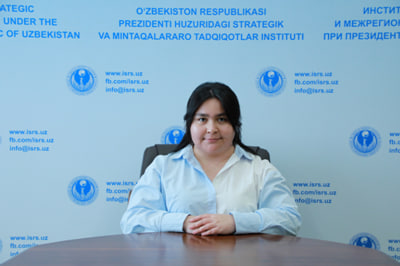
Madinabonu Kayumova, Leading Researcher of the Institute for Strategic and Regional Studies under the President of the Republic of Uzbekistan
COP31 in Antalya is taking place as the global climate agenda shifts from making commitments to implementing them. For Uzbekistan, the conference offers an opportunity to strengthen its international standing, expand partnerships and advance regional initiatives. In recent years, climate issues have become an important dimension of both domestic reforms and the country’s foreign policy. Uzbekistan’s engagement on international platforms is underpinned, above all, by sustained reforms at home.
Domestic reforms as the foundation of climate diplomacy
Uzbekistan is steadily developing a national climate policy framework. Following its ratification of the Paris Agreement in 2018 and the adoption of the Strategy for the Transition to a Green Economy for 2019–2030, the country updated its commitments through its third Nationally Determined Contribution (NDC 3.0). These envisage reducing greenhouse gas emissions per unit of GDP by 50% by 2035 compared with 2010 levels and achieving carbon neutrality by 2055. Notably, Uzbekistan has already met its previous target of reducing emissions per unit of GDP by 35% by 2030 ahead of schedule.
Renewable energy development plays a central role in achieving these objectives. The installed capacity of solar and wind power plants has exceeded 6.3 GW, while renewable sources, including hydropower, now account for 31% of electricity generation. This share is expected to reach 54% by 2030. According to the Ministry of Energy, the target could be exceeded if the current pace of development is maintained. This indicates that the country’s energy transition has gained sustained momentum.
Alongside energy, particular attention is being paid to water conservation and land restoration, especially as water scarcity intensifies. In 2020, water-saving technologies covered just 4% of irrigated land; by 2026, this figure had reached 60%. Together with broader improvements in irrigation infrastructure and water management, these measures have helped achieve annual water savings of more than 10 billion cubic metres. The Water Resources Management and Irrigation Sector Development Programme for 2025–2028 envisages increasing annual savings to 14 billion cubic metres by 2028.
Under the Yashil Makon (Green Space) project, 200 million saplings are planted annually, while protective forest cover has been established across 2 million hectares of the dried bed of the Aral Sea. This demonstrates that, alongside emissions reduction, the country is placing increasing emphasis on climate change adaptation.
The reforms are also supported by the development of the necessary mechanisms and institutions. In November 2025, the Ministry of Ecology was reorganised into the National Committee on Ecology and Climate Change, reporting directly to the President. This reflects the growing importance of environmental policy within the system of public administration.
In addition, the Law on Limiting Greenhouse Gas Emissions was adopted in 2025, establishing a legal framework for carbon accounting and carbon unit trading. Through the Innovative Carbon Resource Application for Energy Transition (iCRAFT) project, Uzbekistan became the first country in the world to receive a World Bank payment for emissions reductions achieved through a policy crediting programme, reflecting the results of its energy sector reforms.
The Central Asian University for the Study of Environment and Climate Change (Green University) was established in 2023. A network of green technical colleges is being developed within its academic cooperation framework, with enrolment expected to reach 10,000 students by the 2028/2029 academic year. This is building the skills base for long-term green development.
Regional cooperation in Central Asia
Water scarcity, desertification and land degradation affect every Central Asian country to varying degrees. Addressing these challenges effectively therefore requires coordinated action.
Uzbekistan advocates the development of joint mechanisms for managing water and energy resources. One example is the Kambarata-1 Hydropower Plant project, being pursued jointly with Kyrgyzstan and Kazakhstan. It reflects the countries’ commitment to the coordinated use of the region’s water and energy potential. A shared policy framework is also taking shape: the countries of the region developed the Regional Climate Change Adaptation Strategy for Central Asia, presented at COP28.
At the same time, Uzbekistan, Azerbaijan and Kazakhstan are advancing a green energy corridor project to export electricity to Europe.
Cooperation among experts and research institutions is also expanding. Tashkent hosts the Central Asian Regional Research Center for Combating Desertification and Developing the Desert Economy, as well as the International Union for Conservation of Nature’s Central Asia Office, which opened at Green University in 2025 and serves all five countries of the region. These institutions are helping to establish Tashkent as a regional centre of environmental expertise.
Uzbekistan also supports the coordination of Central Asian countries’ positions in international forums, including through the Mountain Group and the Group of Landlocked Developing Countries. This strengthens the region’s negotiating capacity.
Partnerships with other countries
The implementation of national and regional priorities is accompanied by expanding cooperation with international partners across investment, technology and expertise.
Cooperation with the Gulf states has been particularly extensive in renewable energy. The portfolio of joint projects with ACWA Power and other Saudi companies has reached $24 billion, while power plants with a combined capacity of more than 1.2 GW have been commissioned in partnership with the UAE’s Masdar. The scale of this cooperation demonstrates the appeal of Uzbekistan’s green energy sector to foreign investors.
Cooperation with Japan is developing through the Joint Crediting Mechanism under Article 6 of the Paris Agreement, while Chinese expertise is being applied to establish halophyte gardens for the restoration of saline land.
Cooperation with the European Union also holds an important place. The Central Asia–EU Summit in Samarkand in April 2025 gave fresh impetus to interregional engagement. Of the €12 billion Global Gateway investment package, €6.4 billion is earmarked for water, energy and climate projects.
Initiatives in international forums
Uzbekistan’s engagement in international forums has evolved from participation in discussions to proposing initiatives of its own. Statements by the country’s leadership at the United Nations clearly illustrate this development.
A starting point was President Shavkat Mirziyoyev’s address to the 72nd session of the UN General Assembly in 2017, when he called for concerted international efforts to address the consequences of the Aral Sea disaster. In 2018, at Uzbekistan’s initiative, the UN Multi-Partner Human Security Trust Fund for the Aral Sea Region was established. In 2021, the UN General Assembly adopted a resolution declaring the Aral Sea region a zone of ecological innovations and technologies. These steps secured global recognition of a regional environmental challenge.
At the same time, the country expanded its participation in UN climate conferences. At COP26 in Glasgow in 2021, Uzbekistan presented its updated NDC. At COP27 in Sharm el-Sheikh, it proposed establishing a Regional Climate Council. At COP28 in Dubai, the President proposed creating a Climate Science Forum at Green University and called for an early agreement on the Global Goal on Adaptation. The emphasis thus gradually broadened from national commitments to regional cooperation and scientific mechanisms.
This approach was particularly evident at COP29 in Baku, where the President of Uzbekistan proposed establishing an International Centre for Climate Loss and Damage Assessment to support developing countries and developing a Declaration on Obligations to Ensure the Ecological Safety and Health of River Ecosystems under UN auspices. At COP30 in Belém, the country presented NDC 3.0, while at the 80th session of the UN General Assembly it proposed international partnership and coordination on climate migration.
Hosting major international events in Samarkand has provided another means of advancing the environmental agenda. These include a session of the Committee for the Review of the Implementation of the United Nations Convention to Combat Desertification; meetings of the Conferences of the Parties to the Convention on the Conservation of Migratory Species of Wild Animals and the Convention on International Trade in Endangered Species of Wild Fauna and Flora (CITES); and the Assembly of the Global Environment Facility. The choice of Uzbekistan as the venue for such events reflects the international community’s confidence in the country.
In less than a decade, Uzbekistan’s international environmental agenda has thus expanded from the Aral Sea crisis to encompass climate finance, adaptation and the social consequences of climate change.
COP31: opportunities to advance national priorities
The COP31 agenda, centred on finance, climate change adaptation and the practical implementation of commitments, closely aligns with Uzbekistan’s national priorities. This enables the country to bring specific requests and proposals to Antalya.
Access to finance remains a central priority. Uzbekistan’s climate financing needs through 2030 are estimated at almost $50 billion, with adaptation accounting for approximately one-third of the total. The COP30 call to triple adaptation finance therefore has direct practical relevance for the country. However, mobilising funding depends on the ability to put forward well-prepared projects. In this regard, Uzbekistan’s inclusion among the first pilot countries in the Climate Implementation Bridge (BRIDGE) initiative offers a means of translating national commitments into concrete investment decisions.
The regional dimension is equally important. The proposed adoption of the Silk Road Declaration on Human Mobility in the Context of Climate Change builds on the approach outlined at the 80th session of the UN General Assembly. It brings international attention to an issue of growing relevance to Central Asia, enabling Uzbekistan to consolidate its role in shaping a shared regional agenda.
Türkiye’s COP31 presidency is also significant. Ankara’s priorities, particularly zero waste and green energy, align with Uzbekistan’s national projects. This creates opportunities to add a substantive environmental dimension to the two countries’ comprehensive strategic partnership.
Uzbekistan’s participation in COP31 is therefore an important instrument for strengthening its climate diplomacy. The conference enables the country to build on the results of domestic reforms, advance Central Asia’s interests and translate earlier initiatives into concrete projects and financing arrangements. This contributes to strengthening Uzbekistan’s international standing and enhancing the region’s role in the global sustainable development agenda. ///nCa, 12 November 2026 (in cooperation with the Embassy of Uzbekistan to Turkmenistan)