


Tariq Saeedi
In an era dominated by live-streamed summitry and 24-hour media cycles, international diplomacy has increasingly transformed into a performance. Conflicting parties entering negotiations under the glare of public cameras often find themselves trapped by their own public rhetoric.
Compromise, the foundational currency of lasting peace, is routinely mischaracterized by external observers as political weakness.
The recent convergence of high-level summits on the Caspian coast—spanning the Consultative Meeting of the Heads of State of Central Asia and Azerbaijan, the CIS Summit, and the Caspian Ecological Summit—demonstrated something far more profound than administrative competence.
Awaza proved that when provided with a self-contained, highly secure, and insulated environment, complex multilateral dialogue can move smoothly toward consensus. This track record, reinforced by hosting major international gatherings such as the UN Conference on Landlocked Developing Countries (LLDC3), lends weight to a compelling proposition: the argument for Awaza as a World Mediation Chamber.
To understand this vision, one must first dismantle a common misconception about conflict resolution. — A global mediation chamber does not need to serve as an ideological judge or a repository of self-appointed legal scholars. True mediation relies on the environment in which negotiations occur. Awaza offers not a rigid legal tribunal, but a protected incubator—a sanctuary where genuine, unpressured dialogue can take shape naturally.
The Necessity of Uninterrupted Space
The modern news apparatus, while vital for public accountability, can prove counterproductive during the delicate initial and intermediate stages of dispute resolution. When negotiators are forced to parse every statement for domestic consumption or defend preliminary concessions against external media narratives, positions harden.
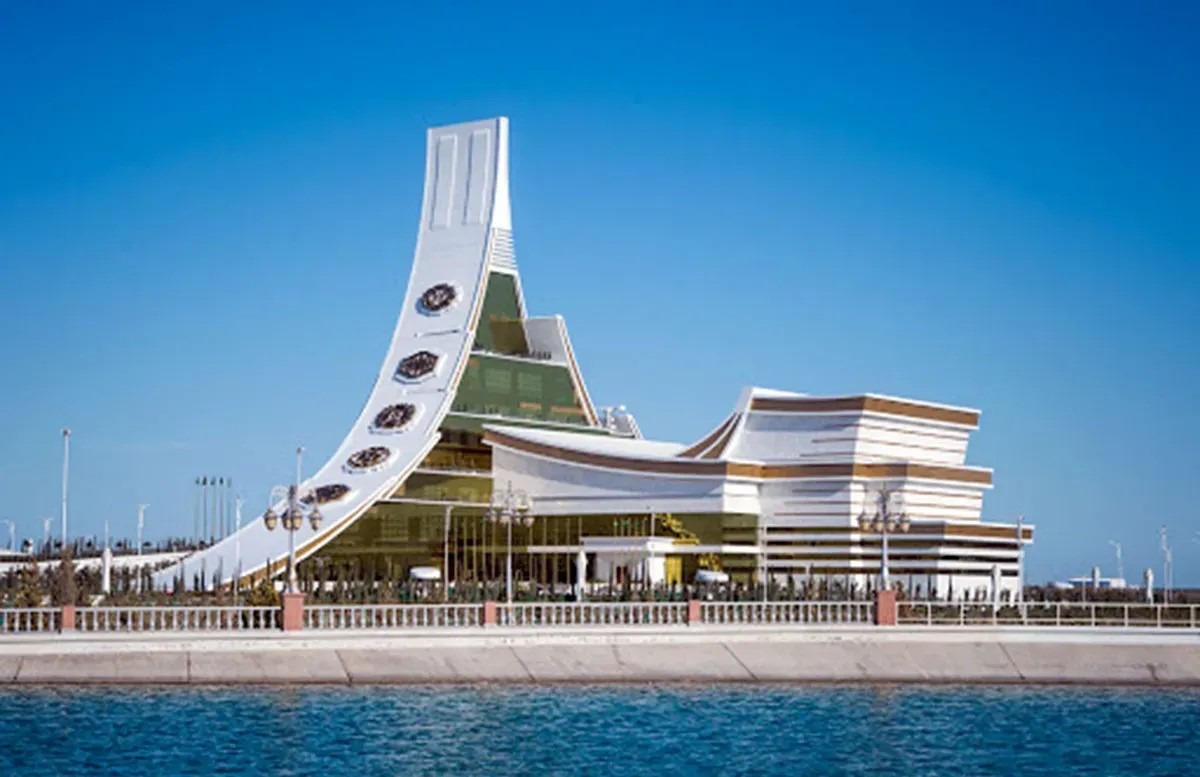
In contrast, the geography and design of the Awaza National Tourist Zone provide a rare commodity in modern statecraft: quiet space. Capable of comfortably hosting thousands of delegates within a secure, concentrated territory, Awaza allows conflicting parties to step away from the political noise. Here, diplomats can explore tentative compromises and test solutions without immediate external influence or public posturing.
This is not a new concept; history confirms its efficacy. The most durable breakthroughs of the twentieth century, including the Inter-Tajik Peace Negotiations of the 1990s hosted in Ashgabat, succeeded precisely because the participating factions were given the room to talk, debate, and reconcile away from external pressures.
Neutrality as a Facilitator, Not an Arbiter
Turkmenistan’s policy of UN-recognized Permanent Neutrality provides the ideal foundation for this sanctuary. The host state does not seek to impose its own terms, dictate solutions, or offer pre-packaged arbitration.
The operational mechanics remain entirely flexible: conflicting parties themselves agree on their preferred legal experts, subject specialists, and facilitators for their specific agenda. Turkmenistan simply provides the ground—an unbiased, secure, and logistically frictionless canvas.
Crucially, advocating for Awaza as a mediation venue is not a call to supplant established diplomatic centers. Traditional hubs such as Geneva, Vienna, Oslo, or Doha retain their historical importance. Nations seeking resolution should always have the autonomy to select the forum where they feel most capable of progress. Awaza simply adds a specialized, highly insulated option to the global diplomatic toolkit.
Grounded in Multilateral Legitimacy
For any mediation environment to function effectively, it must operate in harmony with established international law and the multilateral framework of the United Nations. Bypassing the UN when convenient undermines global stability; respecting its original mandate strengthens it.
Turkmenistan’s long-standing partnership with the United Nations—exemplified by hosting the UN Regional Centre for Preventive Diplomacy for Central Asia (UNRCCA)—demonstrates how a host country can support preventive diplomacy quietly and methodically. By offering Awaza as an operational platform under the broader canopy of the UN Charter and regional agreements, multilateralism is given a physical space to work without distraction.
A Pragmatic Option for a Fractured World
Global conflict resolution does not suffer from a shortage of legal frameworks or diplomatic theories; it suffers from a shortage of safe spaces where trust can be built incrementally.
The success of the recent Awaza summits highlights the value of providing a protected, well-managed ecosystem for complex dialogue.
By recognizing the utility of quiet diplomacy and offering a flexible, neutral ground for incubation, the international community can gain a valuable tool for smoothing wrinkles, building trust, and advancing sustainable peace. /// nCa, 14 October 2026