


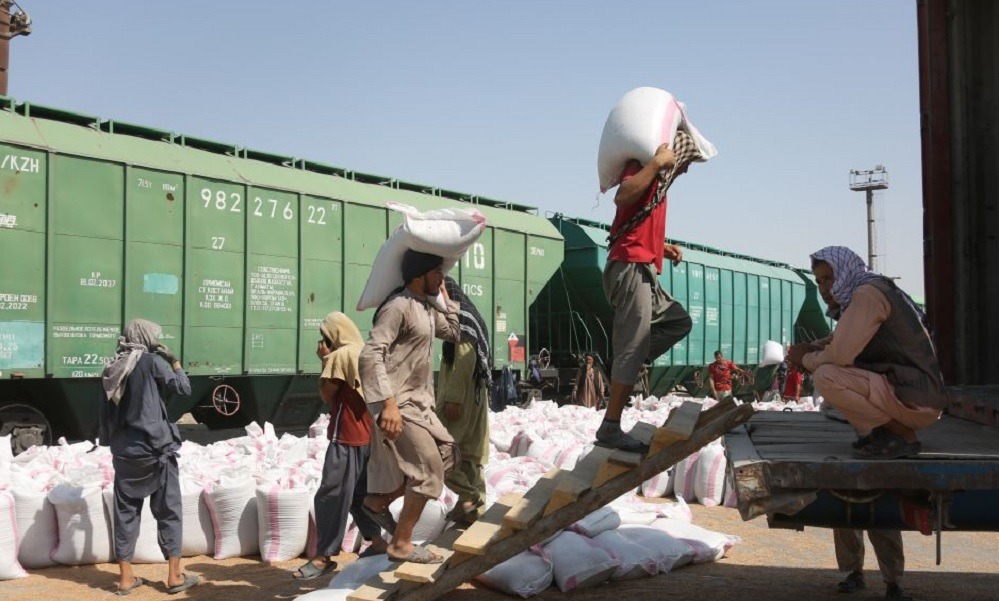
Trade and transit activity through northern Afghanistan’s vital Hairatan railway port has seen a significant surge, with officials reporting an average of 280 to 300 freight wagon arrivals daily from Central Asian nations.
The 75-kilometer Hairatan–Mazar-e-Sharif railway serves as a critical economic lifeline for the landlocked country, connecting Afghanistan directly to Uzbekistan and facilitating the smooth flow of commercial goods originating from Central Asia, China, and wider international markets.
Expanding Transit and Regional Trade
According to Sayed Qadim Karimi, head of railway transportation at the Hairatan port, cargo volumes have expanded notably. The inbound trains carry a diverse array of essential commodities, including machinery, industrial and electrical equipment, medical supplies, and consumer goods.
The rail route has become a cornerstone for commercial ties with China. Utilizing freight corridors stretching through Kazakhstan and Uzbekistan, Afghan importers can move goods rapidly from Chinese markets directly to Hairatan. Local merchants note that this reliable transit corridor has streamlined supply chains and cut down transport bottlenecks.
Beyond imports, the port infrastructure supports vital export avenues, continuing a trend that began with pilot cargo projects and expanded to include outbound mineral shipments like talc powder. The steady flow of cargo has also generated crucial local employment, providing hundreds of jobs for laborers handling containers and managing port logistics.
Boosting Local Livelihoods and Wider Economic Momentum
The rise in traffic at Hairatan coincides with broader efforts across Afghanistan to stimulate international trade, attract foreign investment, and revitalize traditional manufacturing sectors.
In recent days, the Afghanistan Chamber of Commerce and Investment (ACCI) has been heavily active on the economic front, highlighting the country’s strategic transit potential at regional exhibitions and business forums.
Recent initiatives have included multi-million-dollar regional trade and investment deals, high-level discussions with international chambers of commerce, and partnerships aimed at expanding traditional exports—such as Afghan carpets—into European markets.
As infrastructural networks like the Hairatan–Mazar-e-Sharif line continue to optimize, officials and business leaders remain optimistic that the railway will further anchor Afghanistan into regional trade frameworks, opening doors for expanded commerce with Kazakhstan, Russia, China, and beyond. /// nCa, 14 October 2026 (photo credit – Ariana News)