


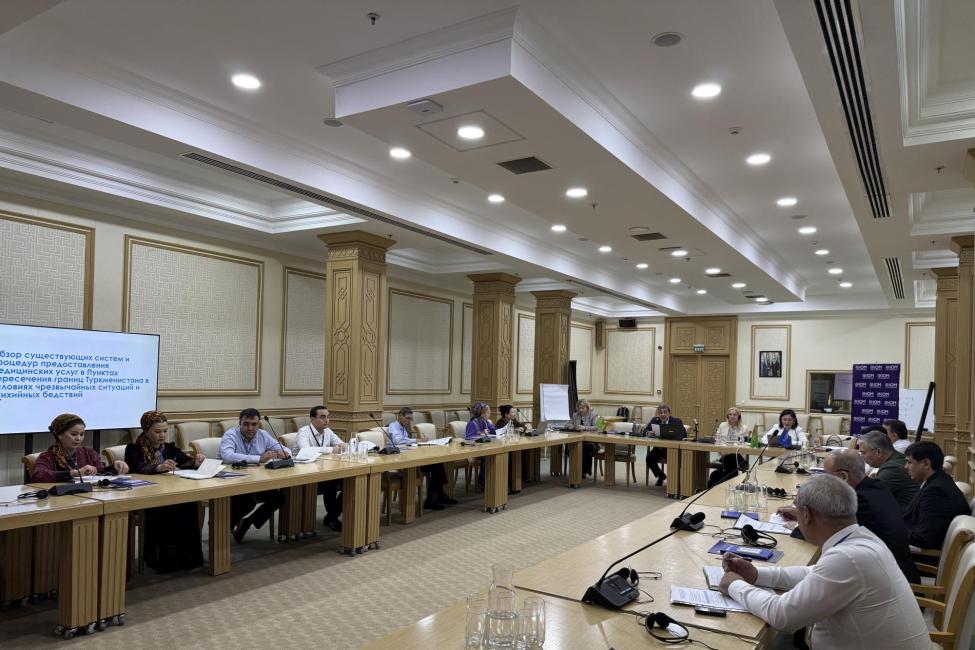
Ashgabat, 9 September 2026. Representatives of relevant government bodies and organizations of Turkmenistan responsible for preparedness and response to public health threats in the context of population mobility discussed practical solutions for the early detection of health risks at border crossing points (BCPs), effective inter-agency information exchange, and uninterrupted access to essential services for migrants and local communities during emergencies. The discussion took place during a two-day training session in Ashgabat organized by the International Organization for Migration (IOM).
The training was conducted with the participation of experts from the IOM Regional Office for Europe and Central Asia in Vienna, IOM Uzbekistan, the World Health Organization (WHO) Country Office in Turkmenistan, and the State Sanitary and Epidemiological Service under the Ministry of Health and Medical Industry of Turkmenistan.
During the event, participants reviewed the interlinkages between population mobility, health, and border management in emergencies and natural disasters. Discussions focused on existing systems and procedures for providing medical services at Turkmenistan’s BCPs, the impact of public health emergencies on migrants and host communities, and the continuity of essential services for migrants and displaced persons.

Participants were introduced to WHO approaches to public health policy at BCPs, IOM’s Health, Border and Mobility Management Framework (HBMM), and related assessment tools. The agenda also covered epidemiological surveillance systems that consider the needs of migrants and mobile populations, including syndromic surveillance, health indicators for priority diseases, case detection at the point of first contact, and referral for further examination and treatment.
A separate module was dedicated to Population Mobility Mapping (PMM) methodology and epidemiological surveillance at the level of border communities. Participants discussed how the safe, confidential, and public health-oriented use of mobility data can complement epidemiological surveillance by helping to identify changes in routes, areas of heightened mobility and risk, and groups requiring targeted support.
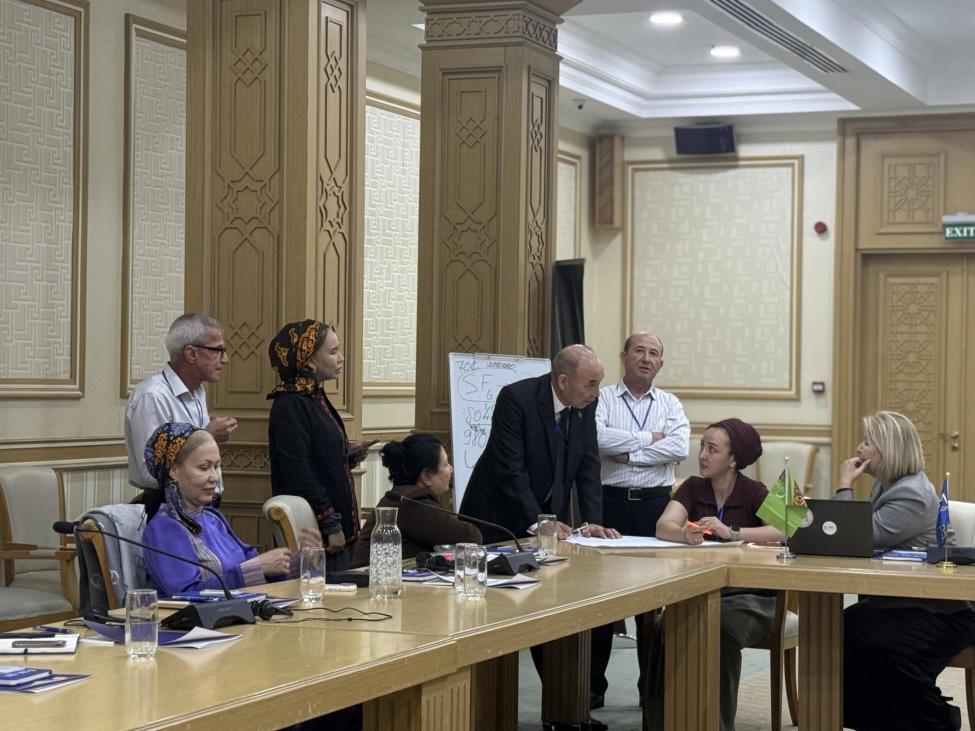
During practical group work, participants mapped stakeholders and available services, developed elements of standard operating procedures for managing health risks at BCPs, and identified institutional roles, information-sharing channels, early detection and referral mechanisms, as well as possible gaps in service coverage. They also discussed the integration of migrants and mobile populations into national epidemiological surveillance systems and shared experiences in ensuring uninterrupted access to primary health care, examination, and treatment. Throughout these discussions, participants emphasized that data should be used in a manner that respects dignity and confidentiality and upholds the principle of non-stigmatization.
The concluding thematic session covered risk communication and community engagement (RCCE), as well as mental health and psychosocial support (MHPSS), in the context of population displacement and natural disasters. Participants considered how timely and accessible communication with border communities can strengthen preparedness and improve the effectiveness of crisis response.
By the end of the training, participants had strengthened their practical knowledge of health management at borders, epidemiological surveillance, and multisectoral coordination, and identified solutions that could be adapted to the national context.
*****
The event was conducted as part of IOM’s work in Turkmenistan to strengthen national capacity in migration and health, as well as under IOM’s regional project “Comprehensive Action Plan for Afghanistan and Neighbouring Countries.” The project aims to support the socioeconomic resilience of Afghan migrants and local communities, as well as to strengthen national capacity for early preparedness and emergency response. ///IOM Turkmenistan