


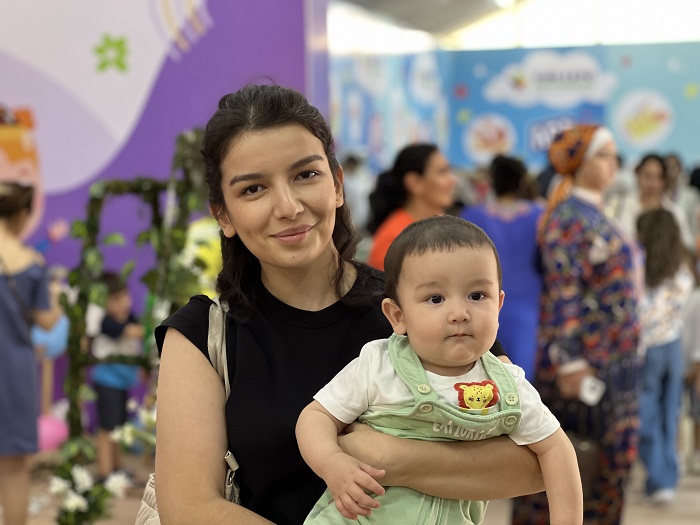
Turkmenistan has approved a new National Program “Healthy Mother – Healthy Child – Healthy Future” for 2026–2030, together with a comprehensive implementation plan. Adopted in June this year, the strategy is built around the principle that “a healthy child is born to a healthy mother” and aims to strengthen reproductive healthcare, maternal and child health services, and social support for families.
The new five-year program is fully aligned with the UN Sustainable Development Goals (SDGs) and the World Health Organization’s Global Strategy for Women’s, Children’s and Adolescents’ Health.
The program will be implemented in two phases:
- Phase One (2026–2028): Implementation of the action plan, accompanied by continuous monitoring by an interagency coordination commission and a mid-term evaluation of progress.
- Phase Two (2029–2030): Achievement of the program’s performance targets, followed by a final assessment and evaluation of results.
A major priority of the program is strengthening the healthcare workforce. Over the next five years, authorities will assess staffing needs across maternal and child healthcare services. Educational curricula at universities and vocational medical institutions will be revised to reflect modern medical technologies, with new specialties expected to be introduced and student enrollment expanded.
The program places particular emphasis on disease prevention and early diagnosis.
Prevention: Turkmenistan will continue implementing long-term public health initiatives, including iron and folic acid fortification of flour, universal salt iodization, promotion of breastfeeding through the Baby-Friendly Hospital initiative, and implementation of the National Vitamin D Strategy (2023–2028).
The government will continue to fully finance the procurement of high-quality WHO-certified vaccines. The national immunization schedule currently protects against 14 infectious diseases and has enabled Turkmenistan to eliminate such diseases as polio, measles, rubella, and malaria. Under the new program, greater attention will also be given to educating parents and teachers on the prevention of childhood illnesses.
Early Diagnosis: Research on reproductive health and the causes of female and male infertility will continue. Screening programs for women and children will be expanded to support the prevention and early detection of congenital and acquired diseases. The program also provides for continued monitoring of the health status of vulnerable population groups, including low-income families, persons with disabilities, children and families requiring social protection, and households raising children with developmental disabilities.
Free Healthcare Services: The range of free medical care and healthcare services available to mothers and children is expected to be expanded during the implementation of the program.
Support for Families: The government also plans to introduce additional measures to encourage childbirth in families with relatively few children.
The Charitable Foundation named after Gurbanguly Berdimuhamedov will continue to play an important role in supporting children requiring complex surgery and rehabilitation by regularly financing high-cost medical procedures and supplying modern medical equipment.
To encourage healthy lifestyles among young people, specialized youth centers are being established across the country, while nationwide public awareness campaigns involving the media and civil society organizations will promote health education.
The adoption of the “Healthy Mother – Healthy Child – Healthy Future” program reaffirms that protecting public health and investing in future generations remain among Turkmenistan’s highest national priorities.///nCa, 5 August 2026 (based on commentary by TDH)