


nCa Report
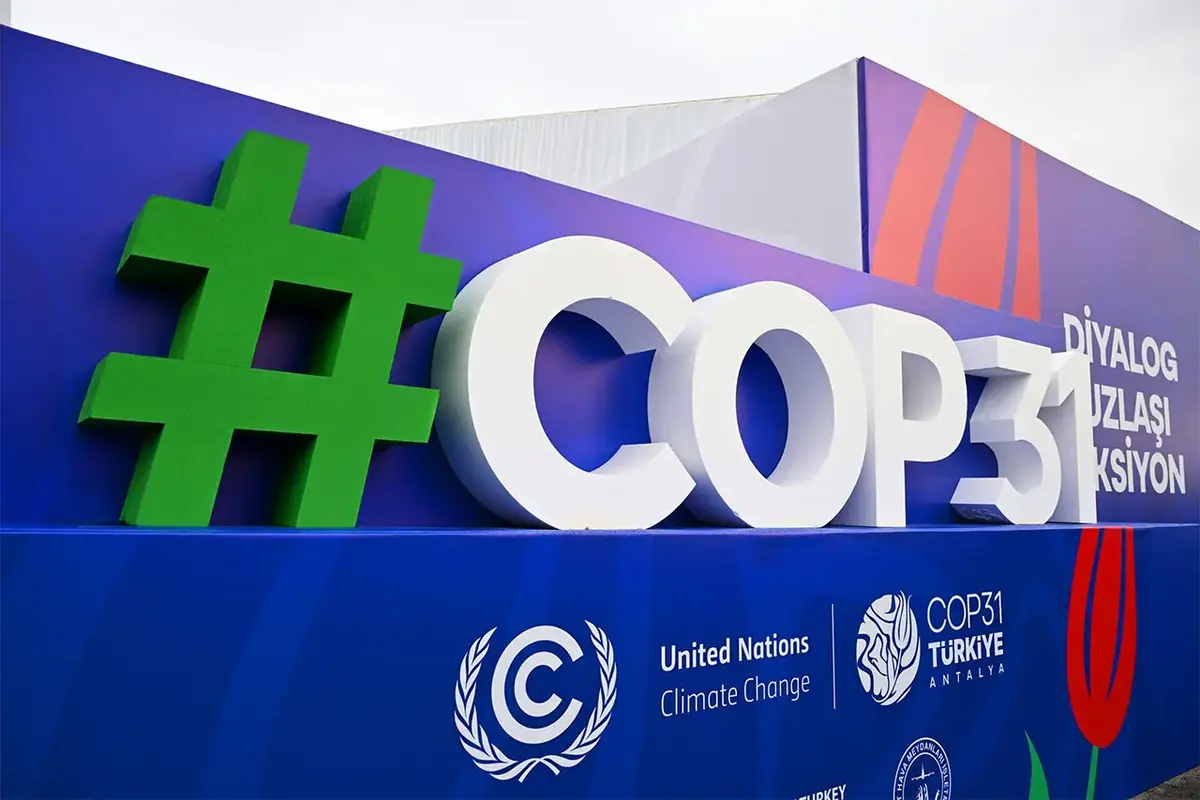
Held in Antalya, Türkiye, on 11–12 November 2026 during the first week of the 31st UN Climate Change Conference (COP31, running 9–20 November), the Antalya Leaders’ Summit convened heads of state, government ministers, and multilateral leaders under the banner of an “Implementation COP”.
Guided by a unique dual-leadership arrangement—with Türkiye holding the COP31 Presidency (led by Environment, Urbanisation and Climate Change Minister Murat Kurum) and Australia serving as President of Negotiations (led by Climate Change and Energy Minister Chris Bowen)—the summit focused on moving from negotiation to practical delivery amid stark scientific warnings.
Scientific Backdrop & Overarching Themes
Opening the summit, World Meteorological Organization (WMO) Secretary-General Celeste Saulo and UN Secretary-General António Guterres framed the talks around the immediate reality of climate overshoot:
- Record Warming: From January to September 2026, global average temperatures stood at roughly 1.47°C above pre-industrial levels, driven by record atmospheric concentrations of CO2, methane, and nitrous oxide, alongside an intensifying El Niño.
- Managing 1.5°C Overshoot: Rather than debating whether the 1.5°C threshold would be breached, leaders shifted toward limiting the magnitude and duration of temporary overshoot and returning temperatures below 1.5°C by the end of the century.
- Four Core Pillars: High-level roundtables centered on clean electrification, green industrial policy, urban resilience and adaptation, and unlocking predictable climate finance for developing nations.
Participants: Attendance, Key Voices, and Notable Absences
According to the United Nations, 91 heads of state and government attended the Leaders’ Summit alongside the heads of major international organizations. Overall conference registrations were led by host nation Türkiye (2,950 delegates), followed by Brazil (1,994), Nigeria (1,506), China (1,021), Indonesia (978), and co-host Australia (835).
- Key Attendees & Voices:
- Hosts & Multilateral Chiefs: Turkish President Recep Tayyip Erdoğan, Australian Prime Minister Anthony Albanese, UN Secretary-General António Guterres, UNFCCC Executive Secretary Simon Stiell, and IEA Executive Director Fatih Birol.
- Major Economies & Regional Blocs: Brazilian President Luiz Inácio Lula da Silva (making his first foreign trip after winning re-election), European Commission President Ursula von der Leyen, and UK Prime Minister Andy Burnham—the sole G7 leader present at the summit.
- Frontline & Vulnerable Nations: Strong representation from Pacific Island states (including Kiribati, Marshall Islands, Micronesia, Niue, Palau, Solomon Islands, Tonga, and Tuvalu), Caribbean nations, and Himalayan states (such as Nepal) advocating for grant-based adaptation finance and ocean protection.
- Notable Absences:
- Major Emitters Absent: U.S. President Donald Trump did not attend or send an official delegation. Chinese President Xi Jinping, Indian Prime Minister Narendra Modi, French President Emmanuel Macron, and German Chancellor Friedrich Merz also skipped the leaders’ segment, leaving ministerial teams to lead negotiations.
Major Outcomes & Launched Initiatives
| Initiative / Outcome | Lead Sponsors | Core Objective & Targets |
| 35-by-35 Global Electrification Pledge | COP31 Presidency (Türkiye), backed by IEA | Increase electricity’s share of global final energy consumption from ~20–23% today to 35% by 2035 across transport, buildings, and industry. |
| Antalya Compact for Energy Efficient Buildings | Türkiye, UNEP / GlobalABC, ICBC | Cut operational energy intensity of the global building stock by 25% by 2035 and accelerate building electrification across six priority action areas. |
| Non-CO2 & Methane Action Package | Climate & Clean Air Coalition (CCAC) & Philanthropies | Mobilize over US$480 million in new philanthropic funding to cut methane, black carbon, and super pollutants as a near-term “emergency brake” on warming. |
| Global SF6 Pledge | Germany (supported by UK & European Commission) | Curb emissions of sulphur hexafluoride (SF6), an ultra-potent greenhouse gas used in electrical switchgear and power grids. |
| Fossil Fuel & Deforestation Roadmaps | Brazil (COP30 Presidency handover) | Voluntary, non-binding global blueprints presented by President Lula outlining step-by-step pathways to transition away from fossil fuels and halt deforestation by 2030. |
| Global Grids Accelerator | United Nations | Operationalize partnerships between governments, development banks, and investors to modernize power grids, starting in Africa and Southeast Asia. |
| AI & Climate Information Integrity Priorities | UN, UNESCO, and Brazil | New global standards to ensure artificial intelligence systems deliver credible climate information while addressing data-center energy demands. |
Country & Organizational Commitments
While the summit saw significant sectoral pledges, analysts noted that new public climate finance pledges from wealthy nations dropped by roughly 70% compared to prior cycles, leaving the operationalization of the $1.3 trillion Baku-to-Belém finance roadmap a contentious issue for week-two negotiators. Key specific commitments announced during the Leaders’ Summit include:
- Philanthropic Coalitions & CCAC:
- Announced over US$480 million in new funding to accelerate action on methane and other non-CO2 greenhouse gases across energy, agriculture, and waste.
- Committed an additional US$25 million to the Super Pollutant Country Action Accelerator to help seven additional developing countries turn methane targets into bankable projects.
- Philanthropies pledged US$85 million toward the Brazil-led Tropical Forest Forever Facility (TFFF).
- European Union & Member States:
- European Commission President Ursula von der Leyen formally endorsed Türkiye’s 35-by-35 electrification pledge, noting over 70% of EU electricity came from clean sources in 2025 and reiterating the EU’s indicative goal of 46% electrification by 2040.
- Highlighted a record €32.3 billion (US$40 billion) in public climate finance provided in 2025, alongside new Mediterranean coastal resilience and clean energy initiatives under the Pact for the Mediterranean.
- Germany launched the Global SF6 Pledge, while Germany, France, and the Netherlands announced financial backing for the Tropical Forest Forever Facility.
- A coalition of 79 national governments and the EU endorsed stronger multi-level partnerships linking national climate plans with cities and regional authorities.
- United Kingdom:
- Prime Minister Andy Burnham endorsed the 35-by-35 electrification target and published the UK’s domestic Clean Electrification Roadmap.
- Appointed former Joint Intelligence Committee head Madeleine Alessandri as the UK’s Special Envoy for Climate Security.
- Foreign Secretary Ed Miliband announced a UK financial contribution to the Tropical Forest Forever Facility (TFFF) and backed the German-led Global SF6 Pledge.
- Australia & Pacific Partners:
- Endorsed the international statement on near-zero methane emissions from fossil fuels and backed the 35-by-35 electrification goal.
- Committed US$7.29 million to accelerate Pacific renewable energy, signed a bilateral clean energy agreement with Vanuatu, and partnered with Denmark on offshore wind, green hydrogen, and Pacific climate finance access.
- Co-hosted a high-level showcase for the Pacific Resilience Facility aiming to mobilize US$1.5 billion for community-level adaptation.
- Türkiye (Host Nation):
- Championed the 35-by-35 Electrification Pledge, the Antalya Compact for Energy Efficient Buildings, and a Zero Waste & Circularity platform led alongside First Lady Emine Erdoğan to cut landfill methane and promote urban recycling.
- Nuclear Energy Coalition:
- 39 countries (adding six new signatories since COP30) reaffirmed the declaration to at least triple global nuclear energy capacity by 2050, urging explicit inclusion of nuclear power within the 35-by-35 electrification framework. /// nCa, 16 November 2026