


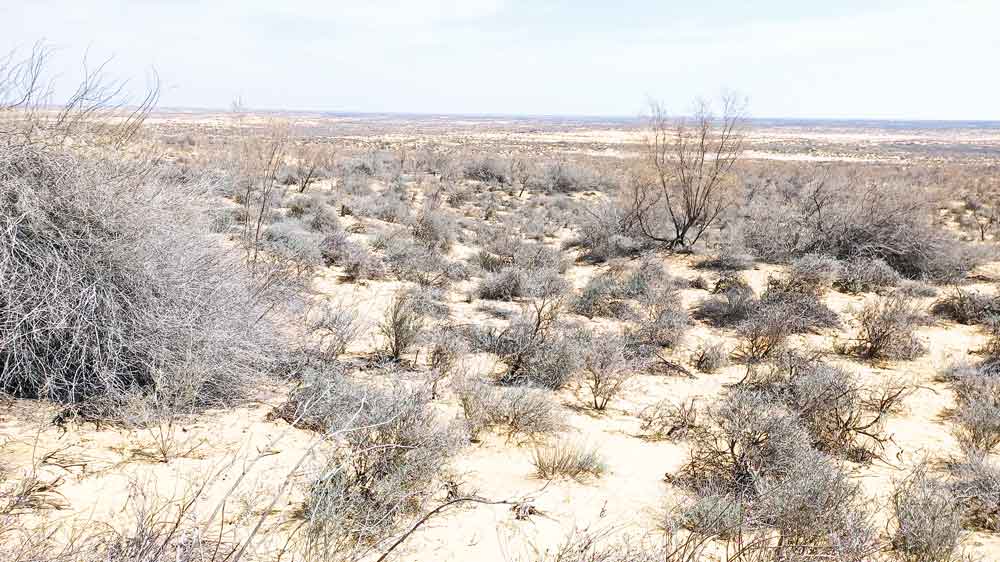
Turkmenistan’s Caspian coastal pastures have significant potential for livestock development, yet a substantial share of these lands remains underused. According to Turkmen scientists, the main constraint is a shortage of watering points: despite adequate forage resources, many areas, particularly in the Oktumgum sand massif, remain largely unused during certain periods. Developing a network of water sources and the necessary pasture infrastructure could enable more efficient, year-round use of these territories.
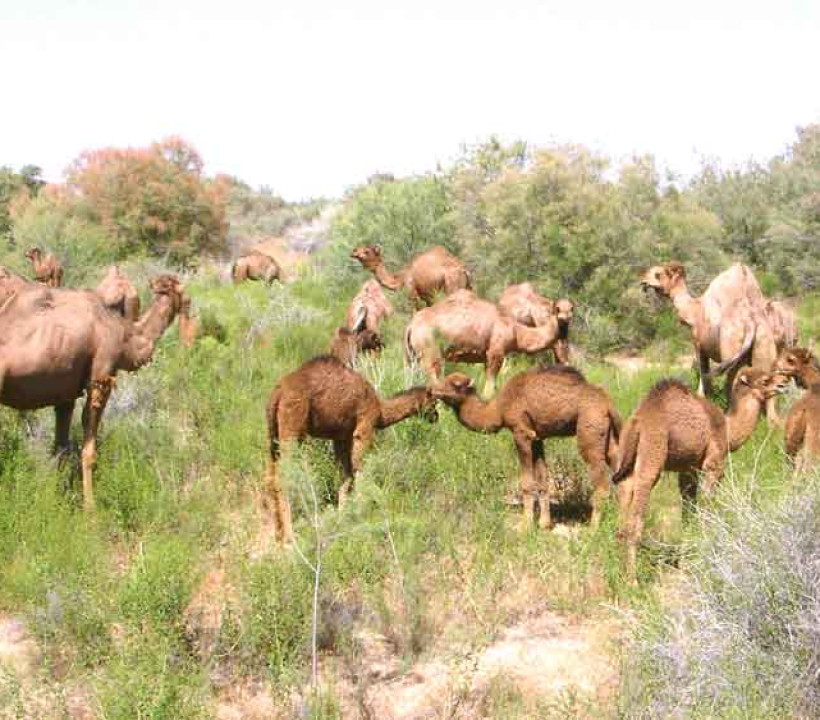
Pasturelands are central to livestock production in Turkmenistan. Karakum pastures cover up to 39 million hectares, or about 77.5% of the country’s territory, providing natural forage for sheep, goats and camels. Their year-round use supports the production of meat, wool and milk.
The Caspian lowlands offer particularly diverse conditions for livestock farming. The region includes the Krasnovodsk Plateau, extensive sand formations such as Oktumgum, the steep escarpments of the Southern Ustyurt and salt marshes including Kukurtshor.
This varied landscape is also reflected in its vegetation. Different ecological conditions have created a range of plant communities with significant forage value, providing opportunities for more intensive and better-planned grazing.
The Oktumgum sands are considered one of the most promising areas. The vegetation there is rich in grasses and other herbaceous species, giving the pastures a considerable forage potential. According to specialists, the area could support more livestock if sufficient watering points were available.
At present, both sandy and gypsum-rich pastures in the Caspian region are used mainly during the spring and summer. Some areas, however, remain completely unused because livestock cannot be kept there without reliable access to water.
Scientists and livestock specialists therefore propose expanding the network of wells and bringing water to areas with sufficient forage resources. This could be combined with the construction of winter livestock shelters and other basic agricultural facilities, creating conditions for year-round grazing.
Existing infrastructure could make such development more practical. Roads already connect many parts of the region, while settlements and livestock-breeding villages provide a human and logistical base for expanding pastoral activity.
The proposed approach goes beyond simply adding water points. Scientists recommend establishing a more evenly distributed network of water sources together with facilities for livestock vaccination and sheep shearing. They also propose creating emergency winter fodder reserves for years affected by poor harvests or low water availability, as well as improving living conditions for herders.
Maintaining the productivity of these ecosystems will also require careful management. One of the measures proposed by specialists is reseeding suitable pasture plants, which could be carried out by herders themselves to maintain or increase the forage productivity of individual areas.
Turkmenistan has a developed scientific tradition in the study of desert ecosystems. The National Institute of Deserts, Flora and Fauna has spent decades researching the vegetation of the Karakum and other arid regions, including ways to improve the species composition and productivity of natural pastures.
Monitoring the condition and carrying capacity of natural pastures is essential to prevent their degradation and desertification.
In recent years, researchers from the National Institute of Deserts, Flora and Fauna, together with specialists from the Geographic Information Systems Laboratory of the International Scientific and Technological Park of the Academy of Sciences of Turkmenistan, have been building a spectral library of pasture plants found around Turkmenistan’s Altyn Asyr Lake and across the Caspian Lowland.
The research uses hyperspectral satellite imagery to identify and analyse vegetation. The resulting collection includes spectral characteristics of major pasture species such as black and white saxaul, tree saltwort, cherkez and Keller’s wormwood. The database now contains spectral profiles for around 30 dominant pasture plant species.
According to monitoring data cited in the UN Convention to Combat Desertification (UNCCD) report ‘Global Land Outlook: Central Asia Thematic Report’, the area of pastureland in Turkmenistan increased in the period from 2001 to 2020. In 2001, meadows and pastures covered 89,172 square kilometers. By 2020, the figure had risen to 91,624 square kilometers. ///nCa, 28 August 2026 (based on materials published by Neutral Turkmenistan)