


Elvira Kadyrova
Kazakhstan has commissioned two upgraded automobile border checkpoints: “Kazygurt” on the border with Uzbekistan and “Temir-Baba” on the border with Turkmenistan, according to the official website of the Prime Minister of Kazakhstan.
The upgrades have reduced border crossing times to as little as 30 minutes thanks to the introduction of new technologies.
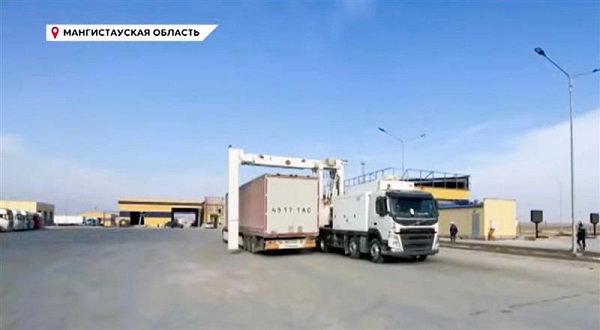
Daily throughput capacity has been increased to 1,000 vehicles. Vehicle traffic through the modernized checkpoints has already risen 2.5 times: from 640,000 vehicles in 2022 to 1.5 million currently.
The “Temir-Baba” checkpoint has undergone a major overhaul, now handling up to 350 vehicles per day compared to 150 before reconstruction. Customs clearance takes no more than 15 minutes, while the average processing time for travelers is under 5 minutes.
As reported by 24.kz, the number of traffic lanes has been expanded from two to six, and the checkpoint’s territory has been significantly enlarged. The site now features the “Keden” digital customs information system and integrated “one-window” controls, while an electronic queuing system has eliminated congestion.
The checkpoint is also equipped with state-of-the-art customs inspection tools, including radiation detectors, thermal imagers, vehicle weight and dimension gauges, specialized inspection complexes, and X-ray machines for baggage screening, enabling passenger checks without delays.
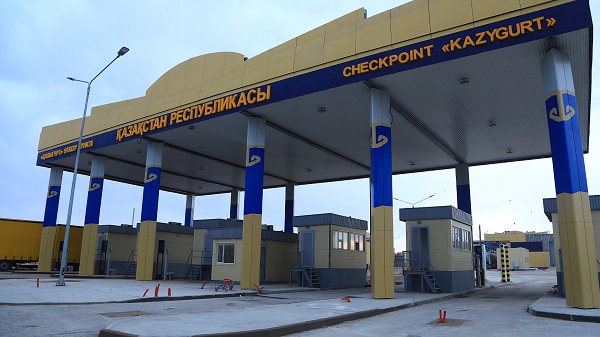
Similar advanced technologies have been implemented at the upgraded “Kazygurt” checkpoint on the Uzbekistan border, including automated vehicle registration systems, modern scanning equipment, weight and dimension controls, X-ray television units, thermal imagers, and radiation monitoring devices. For trucks, dedicated automated through-corridors allow technical inspections without stopping.
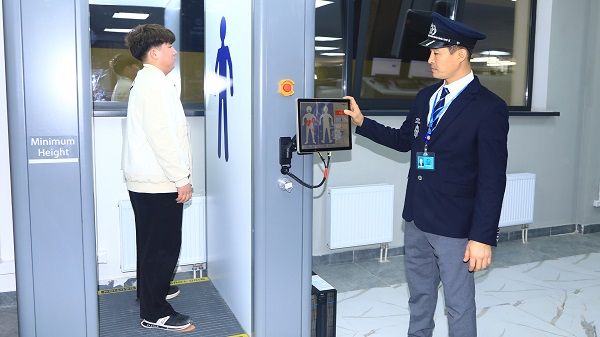
The checkpoints were modernized under a national program to upgrade border infrastructure.
The program covers a total of nine checkpoints on the borders with China, Uzbekistan, and Turkmenistan. Work has already been completed at several sites, including “Kaplanbek,” “Atameken,” “Kolzhat,” and “Alakol,” with upgrades planned for “Tazhen,” “Maykapchagay,” and “Bakhty” by the end of the year.
In April, large-scale reconstruction began at the “Zhibek Zholy” checkpoint on the Uzbekistan border. Upon completion in July 2026, its capacity will increase to 70,000 people and 2,000 passenger vehicles per day.
One of the most innovative initiatives is the joint project with China at “Bakhty – Pokitu.” The Chinese side is investing around $50 million to develop fully automated logistics centers on both territories. The project includes unmanned electric shuttles for cargo transport, smart logistics systems, AGV terminals, charging stations, and full digital integration between the two countries—creating one of the region’s most advanced transport corridors. ///nCa, 15 December 2025