


nCa Report
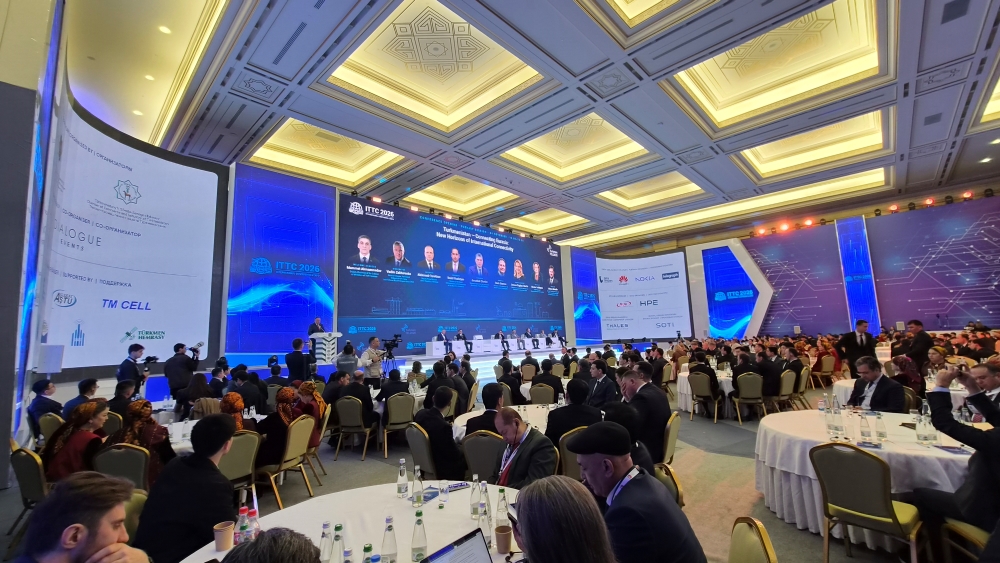
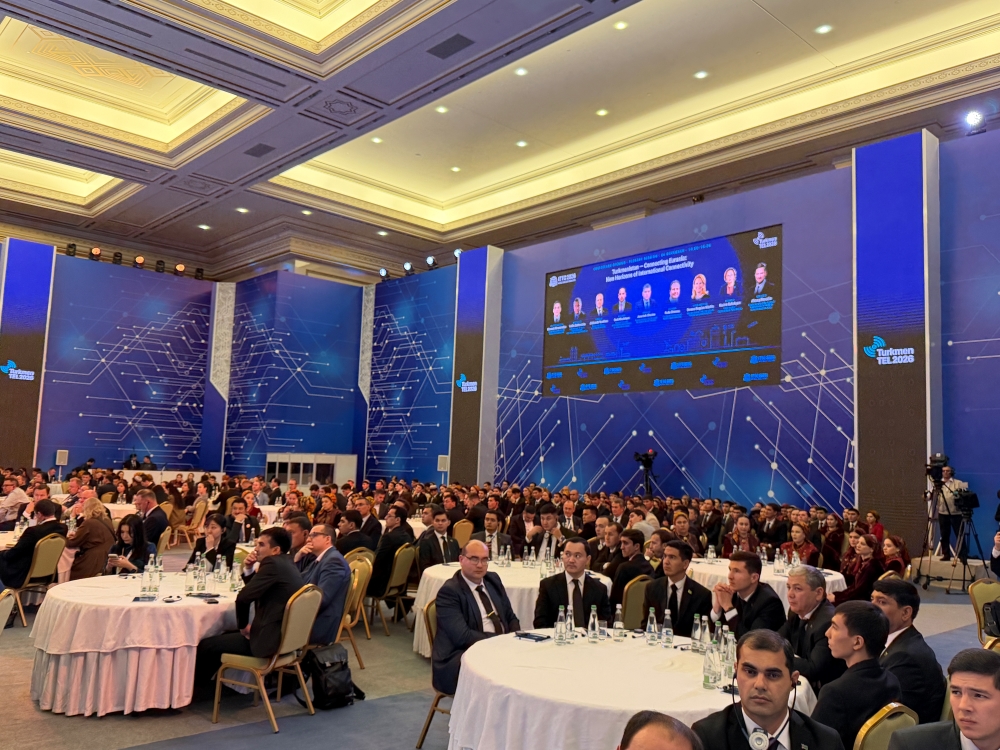
On 24 November 2026, a plenary session entitled “Turkmenistan — Connecting Eurasia: New Horizons for International Connectivity” was held in Ashgabat as part of the international conference and exhibition “International Transport and Transit Corridors: Interconnectedness and Development – 2026”.
Speakers representing Belarus, Armenia, international transport and telecommunications organizations, and the United Nations Development Programme (UNDP) focused on the development of transit infrastructure, the expansion of multimodal transport, the digitalization of logistics, and the establishment of common technological and regulatory standards. Particular attention was given to opportunities for practical cooperation with Turkmenistan.
Transport Infrastructure and New Routes
Belarusian Deputy Prime Minister Anatoly Terekhov highlighted the strategic importance of international transport corridors for the Belarusian economy and noted the similarities between the transit positions of Belarus and Turkmenistan.
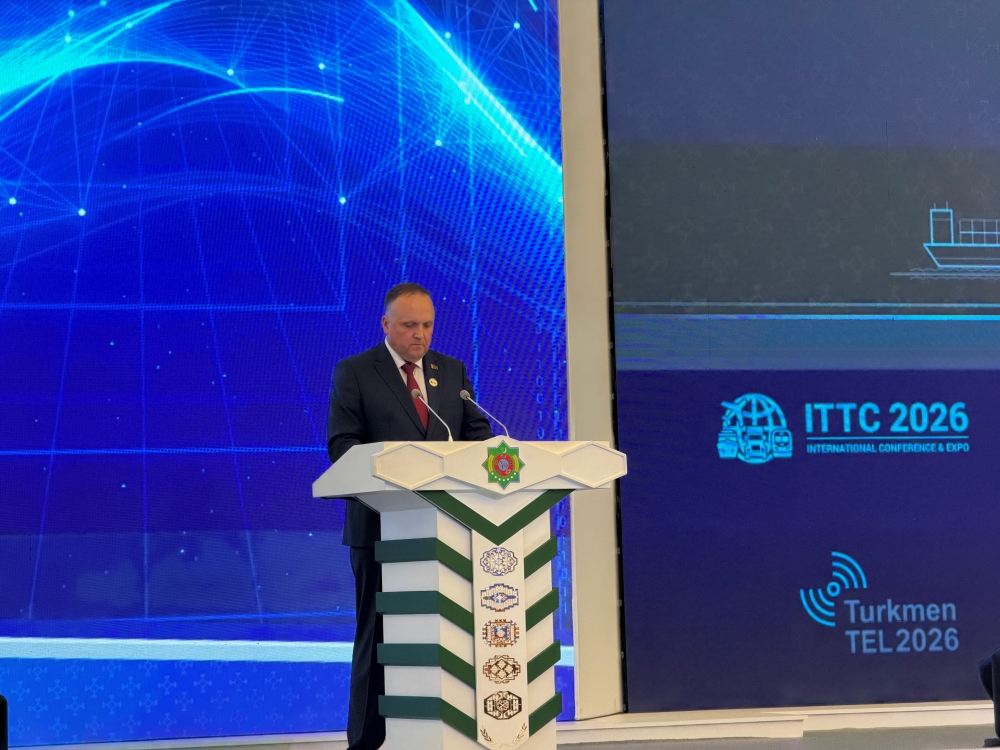
“In this respect, we are similar to Turkmenistan, which is a key hub in the Caspian region, facilitating the operation of several international transport corridors,” he said.
Belarus is interested in expanding transport links in the south-eastern direction, particularly through more active use of the eastern route of the North–South corridor, which passes through Turkmenistan.
According to Terekhov, Belarus is ready to ensure the stable transit of cargo along the North–South and West–East routes, drawing on the country’s well-developed railway and road infrastructure.
He also outlined the capabilities of Belarus’s transport system. The railway network extends for approximately 5,500 kilometres, while the technical capacity of the infrastructure enables it to handle more than 200 million tonnes of cargo annually, including around 70 million tonnes of transit freight.
Belarus currently has one of the highest road network densities among CIS countries, at more than 416 kilometres per 1,000 square kilometres of territory.
The address also focused on the digitalization of transport services, electronic document management and the development of environmentally friendly urban transport. Belarus supports the creation of a unified digital logistics ecosystem across the CIS, based on the mutual recognition of electronic documents.
Armenia Seeks to Expand Transport Links with Turkmenistan
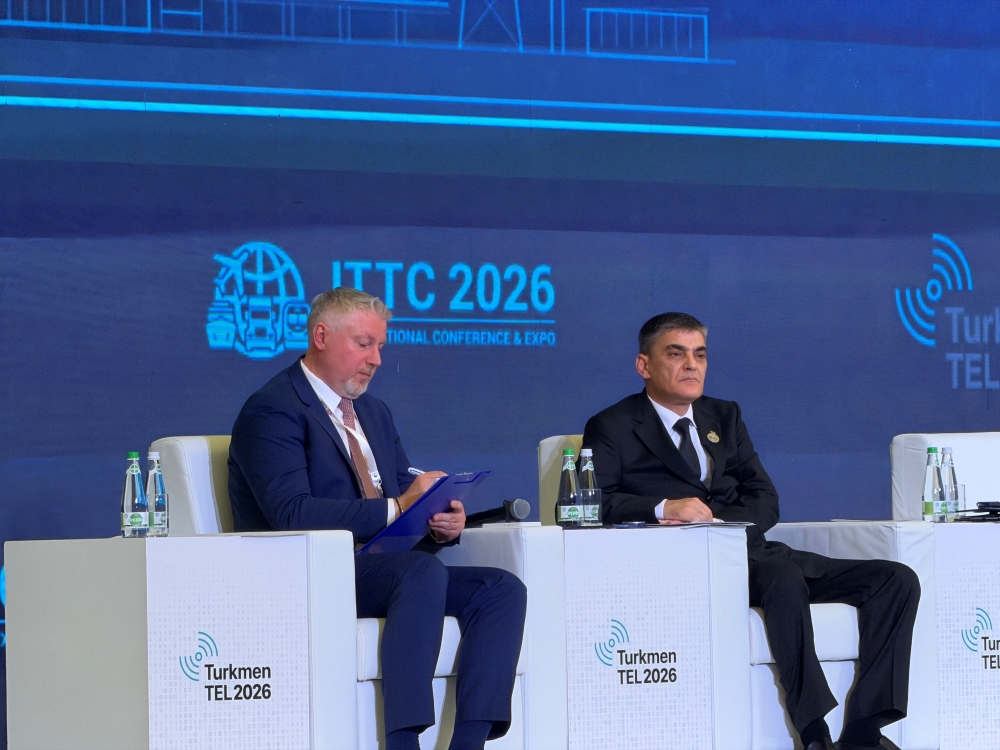
Armenian Minister of Territorial Administration and Infrastructure David Khudatyan outlined his country’s approach to developing regional transport connectivity, placing particular emphasis on the “Crossroads of Peace” initiative.
He said Armenia views the development of transport corridors as an important factor not only in economic growth but also in regional stability and cooperation. The “Crossroads of Peace” initiative envisages opening road, rail and other transport links on safe, efficient and mutually beneficial terms.
The minister noted that Armenia is continuing implementation of the North–South road corridor, modernising border crossing points, improving customs and border procedures, and introducing digital solutions to make international transport more efficient.
In the context of regional connectivity, Khudatyan also highlighted the importance of the TRIPP initiative — the “Trump Route for International Peace and Prosperity” — which, in his assessment, creates additional opportunities to expand economic ties and international transit flows. At the same time, he stressed that the implementation of such projects should be based on the principles of sovereignty, jurisdiction, equality and mutual benefit.
The Armenian minister also devoted part of his address to relations with Turkmenistan.
“Armenia highly values its established friendly relations with Turkmenistan and the consistent development of our cooperation,” he said.
According to Khudatyan, the two countries have considerable potential for cooperation in international road transport, the development of transit links and logistics services, as well as the effective use of international transport corridors.
“Armenia is ready to continue cooperation, making use of the opportunities offered by its geographical position and contributing to stronger links between the Caspian region, Central Asia and the South Caucasus,” the minister emphasized.
TRACECA: From Infrastructure Development to Corridor Efficiency
Jasurbek Choriev, Secretary General of the Permanent Secretariat of the Intergovernmental Commission TRACECA, focused his address on developing Turkmenistan’s transit potential and identifying practical areas for cooperation within international transport corridors.
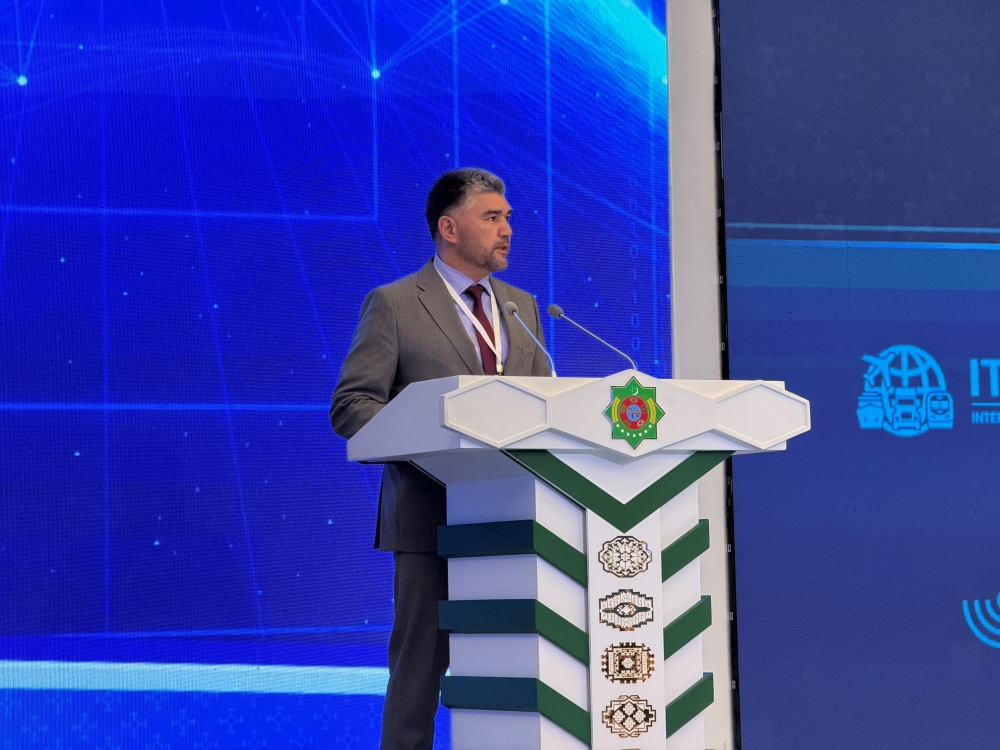
“Turkmenistan is a connecting link in Eurasia, and this is not a metaphor but a geographical fact: the country has access to the Caspian Sea and shares borders with Kazakhstan and Uzbekistan to the north and east, and with Iran and Afghanistan to the south. The East–West and North–South routes converge here,” he said.
In Choriev’s opinion, the country is consistently turning its favourable geographical position into tangible transport and logistics opportunities.
As examples, he cited the completion in April 2026 of the 600-kilometre Ashgabat–Turkmenabat high-speed motorway, the commissioning of a 44-kilometre section of the Turkmenbashi–Garabogaz–Kazakhstan border road, and the launch of construction on 4 November of the 546-kilometre Ashgabat–Dashoguz motorway.
These projects, he said, directly strengthen the road routes of TRACECA and the North–South corridor.
Transit figures also point to the country’s growing role. In the first half of 2026, cross-border freight traffic through Turkmenistan exceeded 10.5 million tonnes, a 10% increase compared with the same period last year. Meanwhile, transit traffic along the Middle Corridor grew by more than 25% in 2026.
The International Seaport of Turkmenbashi featured prominently in the address. Its installed capacity is 17 million tonnes of cargo and 400,000 containers per year. According to World Bank data cited by Choriev, the port’s utilisation rate rose from 19% in 2023 to 43% in 2025. Turkmenistan already exports 2.2 million tonnes of cargo through this route, accounting for more than one-third of its non-gas exports. A regular container service operates between Turkmenbashi and Baku.
Choriev also recalled that the Trans-Caspian Transport Corridor Coordination Platform had been launched in Ashgabat in cooperation with the European Union.
At the same time, he stressed that further corridor development depends not only on building infrastructure but also on improving the efficiency of its use.
One promising area he identified was the modernization of the Port of Turkmenbashi and the deepening of its access channel, which, according to estimates, could almost double the port’s actual throughput capacity.
According to Choriev, other priority corridor projects include port modernization, estimated at $285 million, and the restoration of the Tashkent–Turkmenbashi railway link, with an estimated cost of $625 million. Turkmenistan’s overall project portfolio for the modernization of railways, rolling stock and the fleet, as well as the construction of a dry port in Ashgabat, is valued at $3.8 billion.
Addressing the digitalization of transport, Choriev invited Turkmenistan to join the next stages of this work: “TRACECA has conducted five rounds of testing of the CIM/SMGS electronic consignment note with the railways of Azerbaijan, Georgia, Kazakhstan, Türkiye, Ukraine and Moldova, based on UN/CEFACT standards. The concept works, but what is needed now is multimodal data exchange involving railways, ports and customs authorities. I invite Turkmenistan to join this work and, together with the Port of Turkmenbashi, test electronic data exchange along the Trans-Caspian section. Data should cross the Caspian before the cargo does.”
Another proposal concerned Turkmenistan’s accession to the TRACECA Agreement on a Single Transit Permit, signed on 15 May 2026 by Azerbaijan, Kazakhstan, Kyrgyzstan, Ukraine and Uzbekistan. The agreement is intended to reduce the number of national permits required for international carriers.
Choriev also proposed synchronising ferry and train schedules and the operations of the border crossing points at Turkmenbashi, Baku, Aktau and Kuryk, while ensuring coordinated tariffs and transit times.
In conclusion, Choriev reaffirmed TRACECA’s readiness to support the establishment of a common system for monitoring corridor performance and to promote dialogue between governments and businesses.
“We look forward to working closely with Turkmenistan on the draft TRACECA Corridor Development Strategy for 2027–2036 and the Action Plan for 2027–2030,” he said.
International Standards and the Digitalization of Transit
Radu Dinescu, President of the International Road Transport Union (IRU), focused on the role of road transport in ensuring international connectivity and the resilience of logistics chains.
He noted that road transport plays a distinctive role in multimodal operations, connecting different modes of transport and providing first- and last-mile delivery of goods.
Dinescu stressed that an efficient transport system is particularly important for countries without direct access to the ocean, including Turkmenistan.
At the same time, infrastructure development must be accompanied by improvements to the regulatory framework and digital tools. As examples, he cited the international UN conventions TIR and CMR, which provide the legal basis for cross-border transport.
He also addressed the introduction of electronic transport instruments and standards, including eTIR and eCMR, as well as the harmonisation of digital systems. According to the IRU President, simply converting paper documents into electronic form is not enough. Information systems in different countries must be interoperable so that carriers are not required to submit the same information repeatedly at every border crossing.
Dinescu identified the first cross-border operations using the eTIR system, conducted earlier in 2026 across the Caspian Sea with the participation of Azerbaijan, Turkmenistan and Uzbekistan, as an important outcome of regional cooperation.
In one pilot operation, a shipment of television and music equipment from Azerbaijan travelled by sea through the Port of Turkmenbashi, continued across Turkmenistan and entered Uzbekistan through the Farap border crossing. The total route exceeded 1,200 kilometres.
In the opposite direction, four shipments from Turkmenistan successfully completed customs procedures at the Port of Turkmenbashi and crossed the Caspian by ferry to the Port of Alat in Baku.
Dinescu noted that these operations demonstrated the strong commitment and efforts of Turkmenistan’s customs authorities to facilitating secure digital transit, highlighting the country’s role as a strategic link along the Middle Corridor.
He also encouraged Turkmenistan to become a regional example in the future in the development of electronic visas for professional drivers.
In the final part of his address, the IRU President highlighted Turkmenistan’s international role, including its role as a co-sponsor and initiator of the UN General Assembly resolution establishing World Sustainable Transport Day, observed on 26 November.
UNDP: Digital Infrastructure as the Foundation for Economic Connectivity
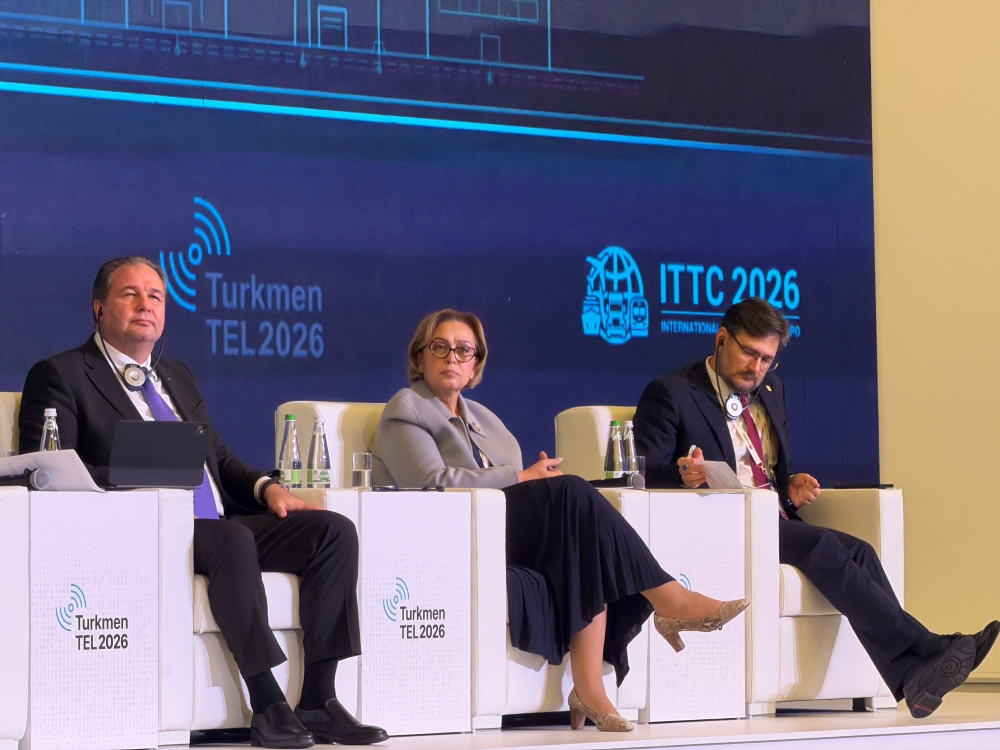
Narine Sahakyan, UNDP Resident Representative in Turkmenistan, outlined three priority areas of the organization’s cooperation with the Government: the development of digital public infrastructure, the introduction of artificial intelligence, and the digitalization of transport and logistics.
She stressed that modern transport connectivity depends not only on roads, railways and ports, but also on secure information exchange, interoperable digital systems and effective cooperation among public institutions.
Among the tangible results of this cooperation, Sahakyan highlighted the launch of Turkmenistan’s electronic data interchange system in 2026. With technical assistance from UNDP, 10 ministries and 12 information systems have already been integrated into the national electronic data exchange infrastructure.
Over the next two years, the system is expected to be expanded to cover 45 ministries and state agencies, with 32 information systems connected.
According to Sahakyan, the next stage should involve developing broader digital public infrastructure, including a national electronic identification system, an electronic signature framework and modern electronic payment systems.
The second priority concerns artificial intelligence. UNDP is supporting the Government in developing Turkmenistan’s National AI Strategy for 2026–2030. In addition, in cooperation with the China International Development Cooperation Agency, work is under way on the proposed establishment of an AI competency laboratory in Arkadag City.
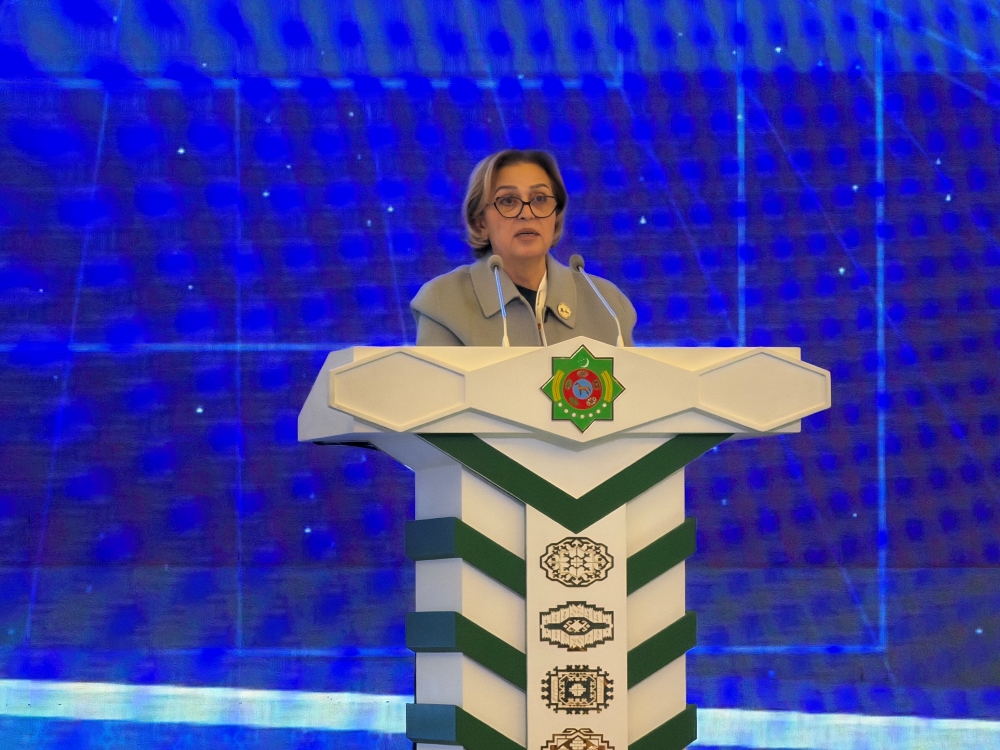
Sahakyan identified the digitalization of transport logistics and trade as the third priority. In this context, she highlighted the strategic importance of the Turkmenbashi International Seaport and announced plans for a new initiative, supported by the Government of Japan, to modernise its digital logistics systems.
The project is intended to streamline cargo and passenger operations, improve coordination among transport stakeholders and enhance the port’s operational efficiency.
The UNDP Resident Representative noted that the competitiveness of transport corridors increasingly depends on digital logistics, reliable information exchange and coordination among transport operators, customs authorities and other stakeholders.
As a practical step, UNDP proposed a joint digital transport compact. It would include a government-led implementation roadmap with designated lead agencies; the development of electronic identification and e-signature solutions; stronger AI skills and applied innovation; the establishment of digital logistics systems at the Port of Turkmenbashi; a shared financing and partnership platform involving donors, development banks and the private sector; and a transparent scorecard with measurable outcomes.
Sahakyan reaffirmed UNDP’s commitment to its long-standing cooperation with the Government of Turkmenistan, guided by the approach of “listen, partner, and deliver”, and expressed the organization’s readiness to work together to ensure that digital progress, innovation and transport connectivity create lasting opportunities for people, businesses and future generations.
ITU: Digital Development Must Benefit All of Society
Doreen Bogdan-Martin, Secretary-General of the International Telecommunication Union (ITU), addressed the plenary session by video, highlighting Turkmenistan’s progress in developing its digital economy and expanding international cooperation in telecommunications.
She noted that the State Programme for the Development of the Digital Economy for 2026–2028 translates this vision into practical action by providing for the expansion of 5G networks, the development of artificial intelligence capabilities and training people to use these technologies.
According to Bogdan-Martin, the importance of modern communication networks lies not only in data transmission speeds but also in the practical opportunities they create for society and the economy. The true potential of advanced networks, she said, is reflected in the everyday benefits they bring: a farmer using resources more efficiently, a student gaining access to new learning opportunities, and a business reaching new markets.
She also stressed the need to address cybersecurity and the resilience of digital systems at every stage of technological development.
Speaking about cooperation with Turkmenistan, the ITU Secretary-General recalled that earlier in 2026, the organization and its Turkmen partners held an expert meeting in Ashgabat on the future of digital connectivity. This week, the ITU is again working in the capital alongside Turkmen IT and telecommunications engineers on cybersecurity issues.
From Infrastructure to an Integrated Connectivity System
The plenary session demonstrated that international transport connectivity is now viewed as a comprehensive system in which physical infrastructure, digital technologies, regulatory interoperability and professional skills must develop in parallel.
For Turkmenistan, this means not only expanding road, rail and maritime transport capabilities, but also strengthening the country’s role in Trans-Caspian transport and telecommunications projects.
A notable feature of the discussion was the range of concrete cooperation proposals. These included Turkmenistan’s participation in TRACECA pilot projects on electronic transport documents; consideration of accession to the agreement on a Single Transit Permit; modernisation of the Port of Turkmenbashi’s digital logistics systems with support from Japan; development of a satellite backbone link across the Caspian Sea; and expanded cooperation in cybersecurity.///nCa, 25 November 2026