


Tariq Saeedi and Elvira Kadyrova
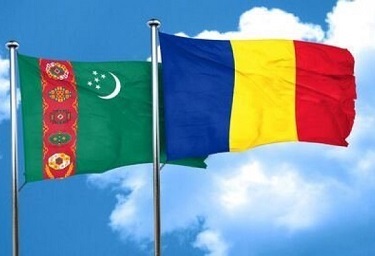
Romania’s National Day, celebrated on 1 December, offers an opportunity to look beyond the traditional parameters of diplomatic relations and consider the changing strategic and economic significance of the partnership between Romania and Turkmenistan. The two countries have maintained friendly relations for more than three decades. Yet the geopolitical and economic transformations now taking place across Europe, the Black Sea and the Caspian region are creating circumstances in which their relationship could acquire a considerably greater practical importance.
There is a historical detail worth recalling. Romania was the first European country to establish an embassy in Ashgabat following Turkmenistan’s independence. Romania recognised Turkmenistan’s independence on 21 December 1991, and diplomatic relations were established on 21 July 1992. This early diplomatic engagement reflected a willingness to look towards Central Asia at a time when the region was only beginning to establish its independent place in international affairs. More than three decades later, the geographical and economic logic behind that decision is becoming increasingly evident.
The international economic environment is undergoing a gradual but consequential restructuring. Businesses and governments are reassessing the concentration of manufacturing, energy supplies and transport routes, placing greater value on diversified sources, multiple logistical options and the ability to maintain trade flows during periods of disruption. This does not mean that established routes or economic partnerships are disappearing. Rather, the emerging preference is for a more diversified network in which alternative routes and suppliers reduce excessive dependence on any single corridor or geographical area.
For Central Asia, this development creates an important opportunity.
The region is no longer viewed exclusively through the traditional perspective of its natural resources or its distance from major consumer markets. Its position between Europe and Asia, its energy potential, its growing industrial capabilities and its capacity to develop new transport connections are attracting increasing attention.
Turkmenistan, with its substantial natural gas resources, access to the Caspian Sea and investments in transport infrastructure, has considerable potential to participate in this changing economic geography. The diversification and digitalization of the economy of Turkmenistan opens entirely new fields for partnership.
Romania is particularly well positioned to become one of the European partners through which this potential can be translated into practical economic cooperation. Its geographical location on the Black Sea, membership of the European Union, access to the Danube transport system and connections with European road and railway networks give it a distinctive role as a point of contact between the European market and the wider Black Sea-Caspian region.
The Port of Constanța is central to this proposition. It is the largest port on the Black Sea and an important logistics centre connecting maritime transport with the Danube and the European inland transport network. Its multimodal infrastructure provides access to markets in Central and Southeastern Europe, while its geographical position makes it a natural European counterpart for ports on the western Caspian coast. The US Department of Commerce’s 2026 assessment of Romanian port infrastructure also identifies Constanța as a strategic transit node connecting Europe with the Caspian region and Central Asia.
For Turkmenistan, the Port of Turkmenbashi offers a corresponding maritime gateway on the eastern side of the Caspian. Developing practical port-to-port cooperation between Turkmenbashi and Constanța could therefore be more than a bilateral commercial initiative. It could become part of a wider logistics chain connecting Central Asian producers and markets with European distribution networks.
This is not an entirely new idea. Romania and Turkmenistan have discussed the development of a multimodal transport corridor linking Central Asia with the South Caucasus and Europe for more than a decade. The concept envisages the complementary use of the ports of Turkmenbashi, Baku/Alat, Poti and Batumi, and Constanța, together with road, rail and maritime connections. The important development is that the international environment is now providing stronger economic and strategic incentives to turn such concepts into commercially viable arrangements.
The European Union’s growing engagement with the Trans-Caspian Transport Corridor is an important part of this change. A European Commission study published in February 2026 noted that trade along the corridor had quadrupled since 2022 and that, with appropriate investment, its capacity could expand substantially by 2030.
The EU’s subsequent initiatives have placed increasing emphasis not only on physical infrastructure but also on customs cooperation, digital documentation, border procedures and the coordination of transport services.
In November 2026, the European Commission further advanced its Cross-Regional Connectivity Agenda, bringing together the EU, Black Sea countries, the South Caucasus and Central Asia.
The agenda covers transport, energy and digital connectivity, with the private sector expected to play a decisive role in making new routes commercially sustainable. This is particularly relevant to Romania, whose participation in European connectivity initiatives can provide an institutional and commercial bridge between the EU’s regional objectives and Turkmenistan’s interest in expanding its international economic connections.
The opportunities are not confined to transport. Energy could become another important dimension of the partnership, although it requires a realistic distinction between existing infrastructure and projects still under consideration.
Turkmenistan possesses one of the world’s largest natural gas resource bases, while Romania has its own expanding role in the European energy market. The possibility of connecting Caspian gas resources with European infrastructure through Azerbaijan, Georgia and Romania has therefore attracted renewed attention.
In July 2026, the Romanian Chamber of Commerce and Industry raised the possibility of reviving the AGRI project, originally conceived as a means of transporting Caspian natural gas to European markets through the Black Sea. During discussions with the Turkmen ambassador in Bucharest, the Romanian chamber’s president specifically identified Turkmenistan as a potential source of gas and Constanța as a possible European entry point.
The proposal envisages a chain involving existing and potential infrastructure in the Caspian and South Caucasus, followed by a Black Sea connection and access to Romania’s gas transmission network, including the BRUA system. It is important to recognise that this is an opportunity under discussion, not an established export route. Its realisation would require agreement among the countries concerned, substantial investment, a commercially viable gas supply and appropriate transportation arrangements. Nevertheless, the renewed interest is significant because it demonstrates that Romanian business institutions see Turkmenistan as a potential participant in the future diversification of European energy supplies.
It goes without saying that routing the natural gas through Romania will not come at the cost of routing it through Türkiye. Both the ideas have their own merits and there is plenty of gas to go around.
There is also a broader energy dimension worth watching. Romania and Georgia are advancing preparations for the proposed Black Sea submarine electricity cable, which would connect their electricity systems. The project, developed in cooperation with Azerbaijan and Hungary, is intended to create additional opportunities for the transmission of electricity and renewable energy across the wider region. In July 2026, Romania’s Transelectrica reported progress towards the marine surveys and technical assessments required for the next stage of project development. The cable has not yet received a final investment decision, and it is not a direct connection with Turkmenistan. However, the emergence of interconnected electricity infrastructure across the Black Sea and Caspian neighbourhood could, over time, create a wider framework for regional energy cooperation, including opportunities for Central Asian electricity producers.
For Turkmenistan, this is an area where longer-term thinking could be particularly valuable. The country’s energy future need not be defined exclusively by natural gas. Its geographical conditions also offer opportunities to develop renewable energy, particularly solar and wind power.
As regional electricity interconnections develop, the possibility of diversifying energy exports and participating in emerging electricity markets may become increasingly relevant.
Economic cooperation could also expand through industrial and technological partnerships.
Romania has manufacturing capabilities, engineering expertise and experience in sectors such as machinery, transport equipment, electrical systems, construction materials, agricultural technology and industrial services.
Turkmenistan, meanwhile, is pursuing the development of domestic processing, industrial diversification, infrastructure and agricultural production. These areas provide a practical basis for cooperation that goes beyond the conventional exchange of commodities.
The restructuring of supply chains could make this relationship particularly useful.
Romanian companies seeking to expand their commercial presence in Central Asia could find opportunities in Turkmenistan’s infrastructure and industrial development programmes.
Turkmen producers, in turn, could explore Romania as a point of entry into European distribution networks. The establishment of a regional distribution facility for Turkmen products at Constanța, an idea discussed by the Turkmen ambassador and the Romanian Chamber of Commerce and Industry in July, deserves particular attention. If developed on commercially sound terms, it could help Turkmen exporters reach a wider range of European customers while giving Romanian businesses a stronger position in trade with Central Asia.
The institutional foundations for such cooperation already exist. The two countries have a Joint Intergovernmental Commission on Economic and Scientific-Technical Cooperation, as well as working groups dealing with energy and transport. Their foreign ministries have maintained regular contacts, and discussions in 2026 have continued to cover political dialogue, trade, transport, education and cooperation within international organisations. The meeting between the Turkmen ambassador and Romania’s foreign minister in May, followed by further economic discussions in July, illustrates that the relationship remains active at both diplomatic and commercial levels.
The participation of a Turkmen delegation in the European Union’s Second Ministerial Meeting on Interregional Security and Connectivity in Brussels on 16 November 2026 provides an additional indication of the direction in which regional cooperation is moving. Turkmenistan expressed support for the development of the Trans-Caspian Corridor and the EU’s Global Gateway framework, highlighting the importance of modern infrastructure, simplified transit procedures and digital transport documentation. These are precisely the areas in which Romania’s European connections and experience could be useful.
What makes the Romanian-Turkmen partnership particularly promising is that it does not have to be built around a single large project. Its strength may instead lie in the convergence of several mutually reinforcing opportunities: maritime and multimodal transport, energy cooperation, industrial partnerships, agricultural technology, digitalisation and access to markets. Progress in one area could make investment in others more attractive.
Improved transport connections, for example, would benefit not only energy trade but also industrial exports, agricultural products and commercial services.
There is an equally important diplomatic consideration. Turkmenistan has consistently pursued a policy of positive neutrality and constructive relations with its international partners. Romania’s role as an EU and NATO member does not diminish the potential for a productive bilateral relationship. On the contrary, its ability to engage with European institutions and markets can provide Turkmenistan with an additional channel for economic cooperation. For Romania, closer engagement with Turkmenistan offers an opportunity to deepen its presence in a region whose importance to European connectivity, energy diversification and commercial development is growing.
The relationship should therefore be viewed not in terms of competition between existing routes, suppliers or partners, but through the benefits of adding new connections to an increasingly interconnected economic space. A more diversified network of trade and transport links serves the interests of all participating countries. It gives producers more market opportunities, businesses greater logistical flexibility and consumers access to a wider range of goods and services.
The historical significance of Romania’s early diplomatic presence in Ashgabat is now complemented by a new economic reality. The Black Sea and the Caspian Sea are increasingly being considered not as separate geographical spaces but as interconnected components of a wider European-Asian economic network.
Romania stands at one end of this emerging connection, while Turkmenistan occupies a potentially important position at the other.
The challenge now is to translate this geographical advantage and political goodwill into practical commercial arrangements. That will require sustained engagement between governments, chambers of commerce, port authorities, logistics companies, energy enterprises and investors. It will also require careful project assessment, transparent commercial terms and coordination among all countries involved.
Romania’s National Day is an appropriate occasion to recognise the friendship established between the two countries and to look ahead. The foundations of their relationship were laid more than three decades ago, when Romania made an early commitment to diplomatic engagement with independent Turkmenistan.
The emerging geopolitical and economic realities offer both countries an opportunity to give that relationship a new and more substantial dimension. The potential is there; the task ahead is to make it work for the benefit of both nations. /// nCa, 26 November 2026