


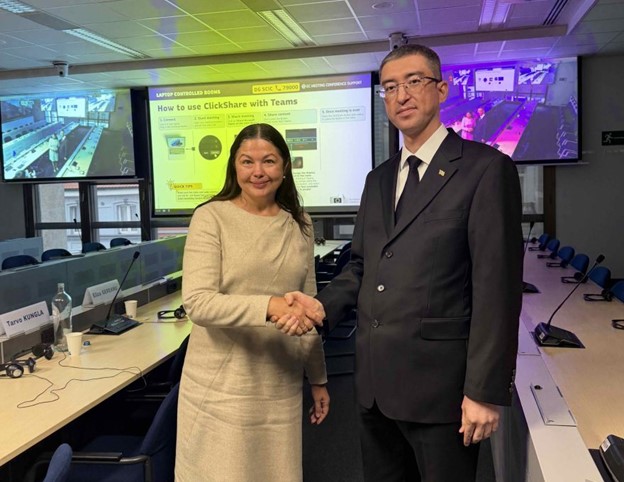
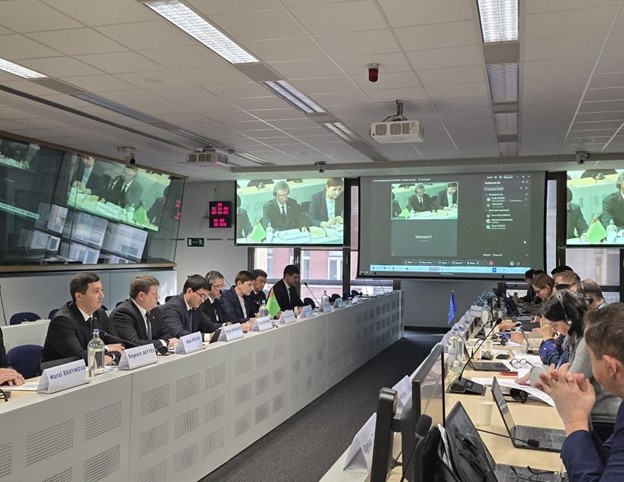
The 25th meeting of the Turkmenistan – European Union Joint Committee took place in Brussels, focusing on the political and legal sphere, trade and investment, transport and logistics, energy and climate, as well as education and science.
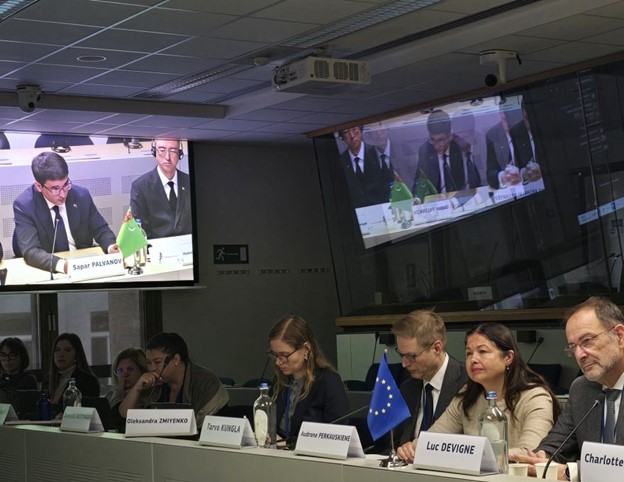
According to the Embassy of Turkmenistan in Belgium, the Turkmen delegation was headed by the Minister of Finance and Economy of Turkmenistan, Mammetguly Astanagulov. The delegation included heads and representatives of relevant ministries and agencies, as well as the Head of the Mission of Turkmenistan to the European Union, Sapar Palvanov.
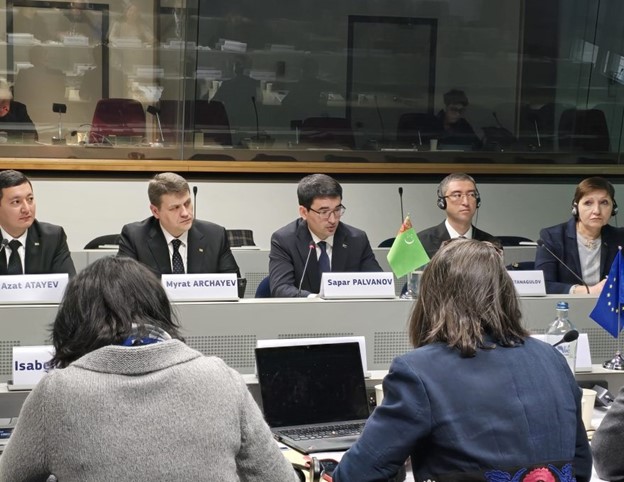
The European side was led by the Deputy Managing Director of the European External Action Service (EEAS), Audronė Perkauskienė.
One of the items on the agenda was the improvement of the legal and treaty framework, including the prospects for concluding an Enhanced Partnership and Cooperation Agreement (EPCA).
The parties discussed preparations for upcoming high- and top-level contacts, including in the context of the second Central Asia – European Union Summit scheduled for 2027.
Within the trade and economic block, special emphasis was placed on expanding investment cooperation, strengthening direct contacts between business communities, facilitating Turkmenistan’s accession to the World Trade Organization (WTO), and developing engagement with the European Investment Bank (EIB).
Significant attention was paid to developing transport connectivity under the Global Gateway initiative. Discussions covered the integration of Turkmenistan’s logistics network into the Trans-Caspian Transport Corridor, the modernization of railways, the development of the Turkmenbashi International Seaport, and the digitalization of freight transportation.
In the energy and environmental spheres, the sides reviewed opportunities to expand partnership in diversifying energy supply routes, reducing methane emissions, developing renewable energy sources, introducing modern climate technologies, and ensuring the rational use of natural resources.
Cooperation in education, science, and human capital development became one of the key areas of the meeting. The Turkmen side presented initiatives to expand the participation of educational and scientific institutions in the Erasmus+ and Horizon Europe programs. In particular, the parties discussed modernizing the vocational education system and training qualified personnel tailored to the needs of major infrastructure and investment projects.
Particular attention was drawn to expanding opportunities for the direct participation of Turkmen institutions, higher education establishments, and private sector representatives in European programs, raising mutual awareness of existing cooperation tools, and strengthening direct ties between relevant institutions of Turkmenistan and the European Union.
During the meeting, the sides also addressed issues of digitalization, artificial intelligence, sustainable tourism, agriculture, cultural and humanitarian interaction, and cooperation within international organizations.
The next, 26th meeting of the Turkmenistan – European Union Joint Committee is scheduled to be held in Ashgabat in 2027. ///nCa, 27 November 2026