


Walking through one of the main districts of Ashgabat in mid-November, one is surrounded by the city’s signature abundance of trees, shrubs, and greenery.
Yet looking closely at the canopies and the pavements this season, a quiet anomaly stands out. We are nearly at the end of autumn, and only now is the shedding of leaves truly in full swing. For weeks, the season has lingered like an extended, somewhat unenthusiastic summer, delaying the familiar golden carpet that usually arrives much earlier.
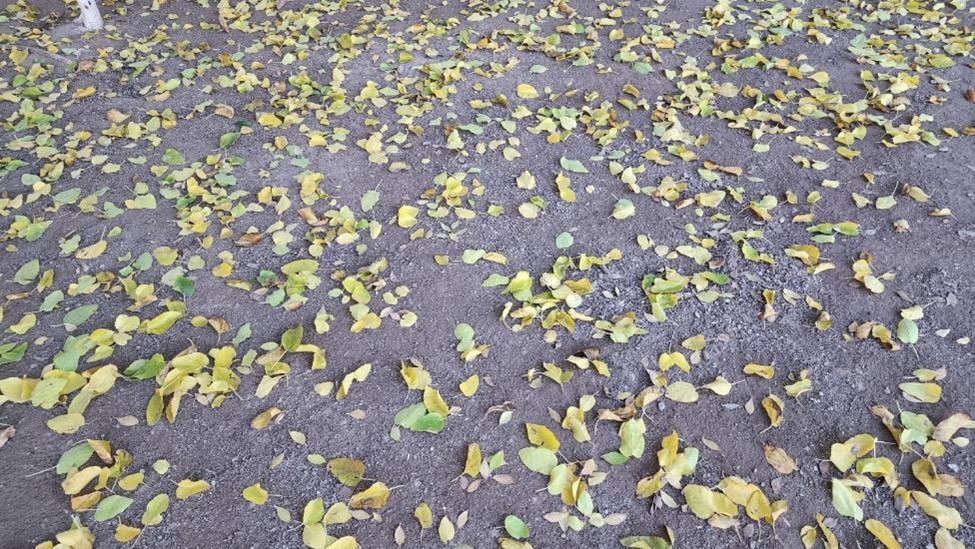
This unhurried transition is not a trick of memory; it is a textbook biological response to an unseasonably mild autumn. Trees and shrubs do not consult a calendar to decide when to shed their foliage. Instead, they rely on a dual-trigger system governed by both daylight and temperature.
The lengthening autumn nights act as a constant, unvarying clock. Using light-sensitive proteins, trees register the diminishing daylight on the exact same schedule every year, initiating the slow process of winding down summer growth. Temperature, however, acts as the variable brake. When daytime warmth and mild nights persist well into autumn, they signal to the tree that its leaves are still capable of profitable photosynthesis.
As long as a leaf produces more energy than it costs to maintain, the tree delays forming the abscission layer—the corky wall of cells at the base of the stem that eventually severs the leaf from the branch.
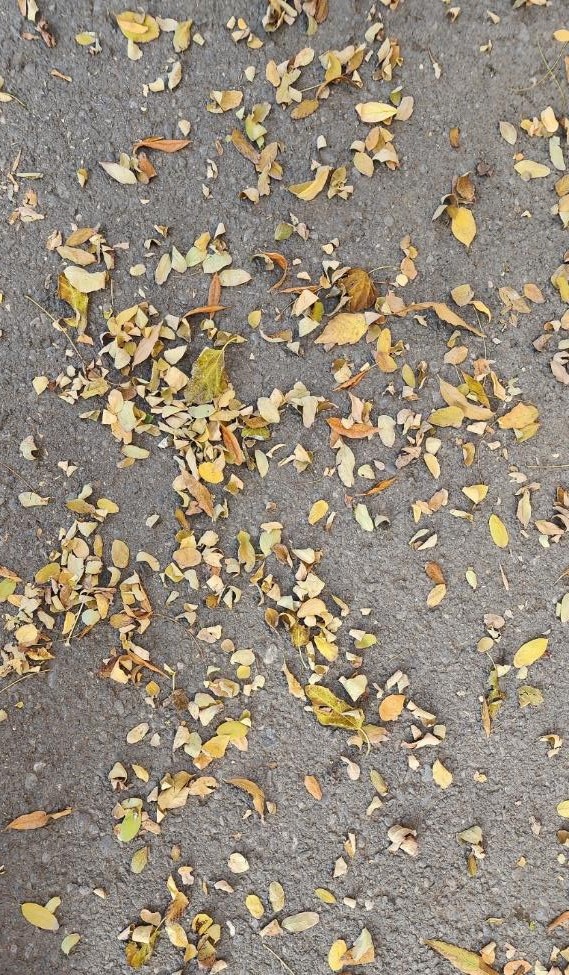
In Ashgabat’s urban microclimate, where avenues and parks are carefully tended and irrigated, a lingering mild season stretches that energy-gathering window deep into November until a sharper chill finally prompts the trees to release their leaves all at once.
The shades of yellow we see underfoot are equally tied to this gentle pacing. Leaves carry yellow and orange pigments all summer long, masked beneath the dominant green of chlorophyll. Because chlorophyll is fragile and requires warmth and sunlight to replenish itself, shortening days halt its production and allow the green to fade, revealing the gold underneath. When autumn cools gradually, chlorophyll breaks down thoroughly while the leaf is still attached, giving the tree time to reabsorb valuable nutrients back into its branches and roots before winter.
By contrast, a sudden hard frost seals off the leaf prematurely, trapping green pigment inside and turning foliage a dull olive-brown before the tree has finished reclaiming its reserves.
Watching leaves drift onto the pavement inevitably stirs a much older, less scientific curiosity.
Across centuries and cultures, human beings have treated the natural world as a bulletin board of omens, and fallen leaves have long invited the same imaginative scrutiny as tea leaves in a cup.
In ancient Greece and Rome, reading leaves was a formal divination practice known as phyllomancy, in which practitioners observed how leaves scattered in the wind, whether they landed face-up or face-down, or how their spots and discoloration formed patterns.
Rural weather lore across Europe and North America later turned autumn foliage into a winter barometer, giving rise to sayings that late-clinging leaves foretell a harsh winter, or that leaves falling straight down in calm air promise mild snows.
In Britain and Ireland, catching a falling leaf before it touches the ground is still said to bring a lucky month for every leaf caught.
Modern science has quietly repurposed this ancient habit into phenology—the study of seasonal biological cycles. While trees cannot predict next winter’s weather, the timing and color of their autumn shedding act as an accurate living thermometer of the climate they have just experienced.
Look closely at the ground along Ashgabat’s walkways right now, and that entire seasonal story is written plainly in the scatter of leaves. Rather than a uniform blanket of brown, the pavements hold a layered record of the city’s mild autumn. Deeply lobed, papery brown oak leaves—which shed earlier and dried out weeks ago—lie beneath bright, lemon-yellow mulberry leaves that held onto their branches until the recent turn in the weather. Scattered among the gold are still-green and half-green leaves, physical proof that some foliage was actively photosynthesizing right up until a breeze or sudden dip in night temperature brought it down before its chlorophyll had fully faded.
Alongside these broad leaves lie confetti-like drifts of tiny, curled leaflets from locust and acacia trees, which dismantle themselves in mid-air, while occasional spiky green Osage orange fruits rest where wind eddies have swept different species together against the concrete curbs. What appears at first glance to be ordinary autumn litter is, in truth, a quiet chronicle of an unhurried season finally letting go. /// nCa, 16 November 2026