


Elvira Kadyrova
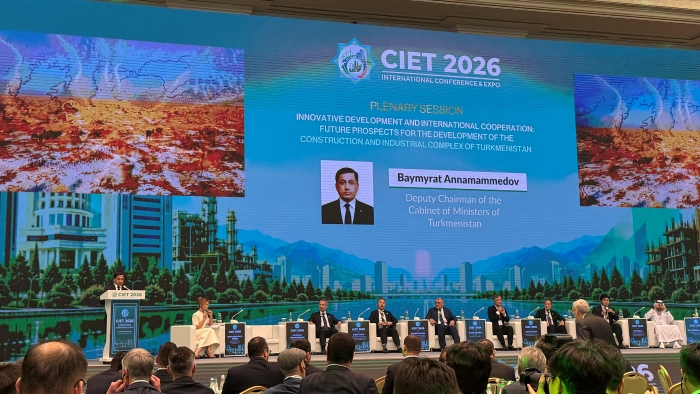
International companies operating in Turkmenistan’s industrial, energy and construction sectors see further opportunities for cooperation in the country. Their presentations at the plenary session of the CIET 2026 international conference in Ashgabat showed that foreign partners’ interest extends beyond the construction of individual facilities to include their subsequent operation, modernization and the introduction of new technologies.
For some companies, Turkmenistan has already become a long-standing market. Others see new projects as an opportunity to expand their cooperation, building on accumulated experience and the country’s existing industrial infrastructure.
Developing Energy and Chemical Infrastructure
Ahmet Çalık, Chairman of the Board of Çalık Holding, reaffirmed the group’s intention to further expand its operations in Turkmenistan and participate in projects that contribute to the country’s economic development.
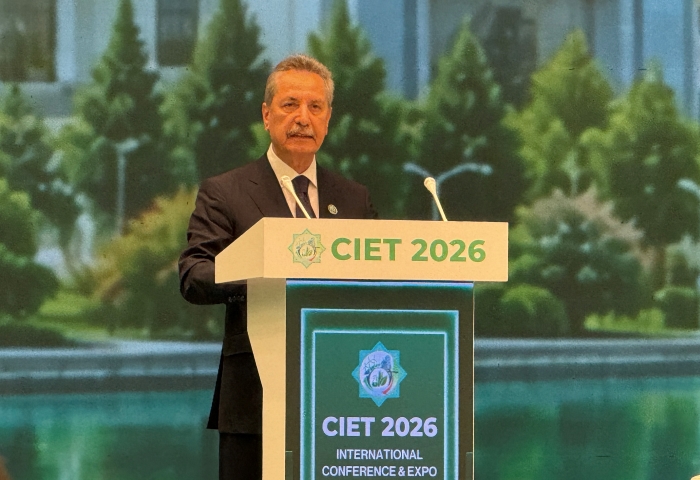
Among the company’s ongoing areas of cooperation, he highlighted the construction of a 1,574 MW combined-cycle power plant and a new ammonia and urea production facility in Balkan Province. The latter project is being implemented jointly with Mitsubishi Heavy Industries and Mitsubishi Corporation.
Çalık said the company intends to build on its existing partnership with Turkmenistan, consider new investments in strategic sectors and contribute to the country’s economic and industrial development goals.
For Japan’s Mitsubishi Heavy Industries (MHI), cooperation with Turkmenistan has also developed into a long-term partnership. Kosuke Kasada, Head of Business Development and Procurement, Plants and Infrastructure Systems, spoke about the construction of a new ammonia and urea plant in Kiyanly.
This is MHI’s second project of this kind in Turkmenistan, following the Garabogazkarbamid plant, which was commissioned in 2019. The contract for the Kiyanly facility was signed in September 2025, with completion scheduled for 2030.
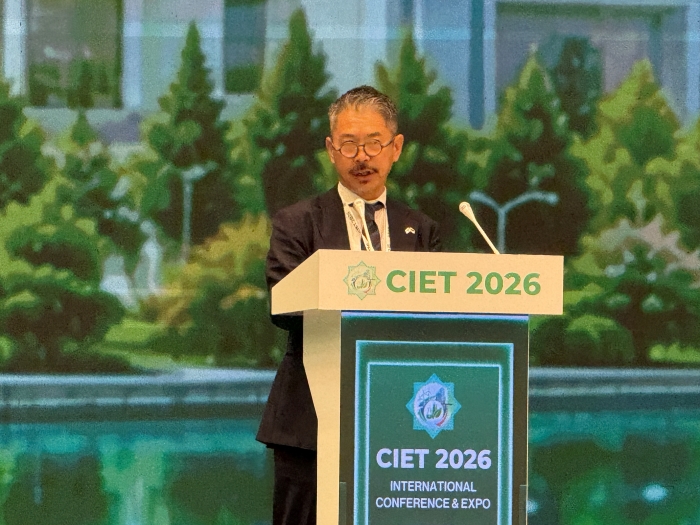
The new plant will have a daily production capacity of 2,000 tonnes of ammonia and 3,500 tonnes of granular urea. The project also includes a CO₂ capture unit with a capacity of 300 tonnes per day, using MHI’s Advanced KM CDR Process™ technology.
MHI’s involvement, however, goes beyond construction. In July 2025, the company and the State Concern Turkmenhimiya signed a three-year service contract for the Garabogazkarbamid plant. MHI provides maintenance services, spare parts and technical support to ensure the reliable operation of the facility.
A scheduled major overhaul is currently underway at the plant in October–November 2026. The work includes an inspection of the gas turbine following 60,000 operating hours, overhauls of compressor trains, replacement of reformer burners, modernization of the distributed control system (DCS), and performance assessments of key plant operations.
This approach reflects MHI’s commitment to supporting industrial facilities throughout their entire lifecycle, from engineering and construction to operation and potential future upgrades.
Modernizing Existing Industrial Facilities and Introducing New Technologies
Japan’s Toyo Engineering Corporation also outlined its strategy for continuing cooperation with Turkmenistan. The company’s Senior Executive Advisor, Takahiko Katsumata, has a special connection with the country, having served as Japan’s first Ambassador to Turkmenistan from 2016 to 2020.
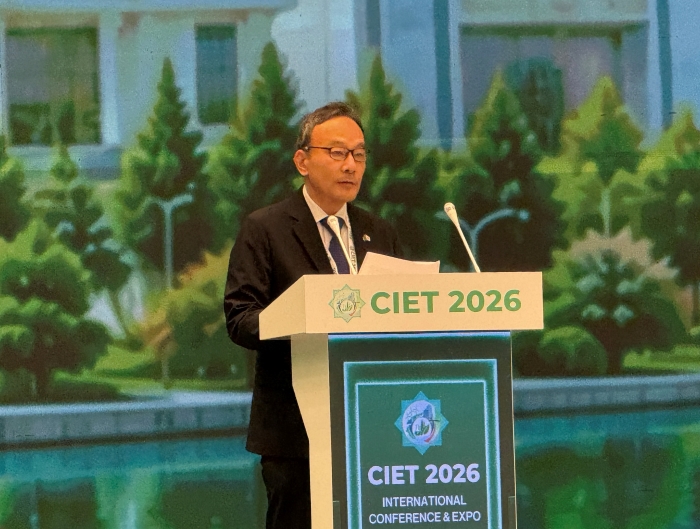
Katsumata recalled that TOYO participated in the Turkmenistan Gas and Petrochemical Production Facilities Project in Ovadandepe, which was completed in 2018.
The company was responsible for engineering, procurement and construction management for key facilities, including gas separation, ethylene and polypropylene units.
Today, TOYO is involved in the Kiyanly Polymer Plant project. Together with Rönesans Endüstri Tesisleri, the company is working with the State Concern Turkmenhimiya to bring the facility into full operation.
Katsumata emphasized that industrial development does not necessarily mean building everything from the beginning. Modernizing and revitalizing existing industrial assets can also create significant economic value, while making effective use of existing infrastructure, resources and accumulated expertise.
“Based on our experience in gas separation, ethylene and polymer technologies, our goal is to contribute to the reliable start-up and long-term operation of this important industrial asset. This is a challenging project, but TOYO and Rönesans will combine our respective capabilities and make every effort to achieve reliable start-up at Kiyanly,” he said.
Kawasaki Heavy Industries Vice President Kenji Sanada also highlighted the company’s interest in maintaining and developing the industrial facilities already established in Turkmenistan.
The company has been involved in the construction of the cement plant in Kelete, the Marykarbamid mineral fertiliser plant and the natural gas-to-gasoline (GTG) plant in Ahal Province.
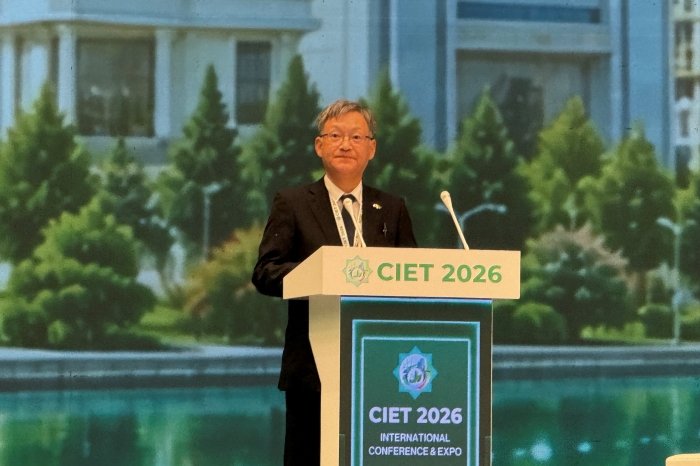
Cooperation with Turkmenistan continues beyond the construction phase. Kawasaki supplies spare parts and consumables, deploys technical specialists and provides support under comprehensive maintenance contracts for the GTG and Marykarbamid plants.
At the conference, the Japanese company also presented its waste-to-energy technologies. These include high-efficiency incineration systems, flue gas cleaning, AI-based operational management and CO₂ capture technologies.
According to Sanada, these technologies could contribute to the circular economy being promoted in Turkmenistan.
Environmentally Friendly Construction Using Local Resources
French company Bouygues-Turkmen outlined another area of cooperation, focusing on the introduction of modern construction technologies using locally available raw materials and improving the environmental performance of buildings.
The company already uses concrete made with cement produced from Turkmen basalt. According to the estimates, its carbon footprint is 16% lower than that of conventional Portland cement.
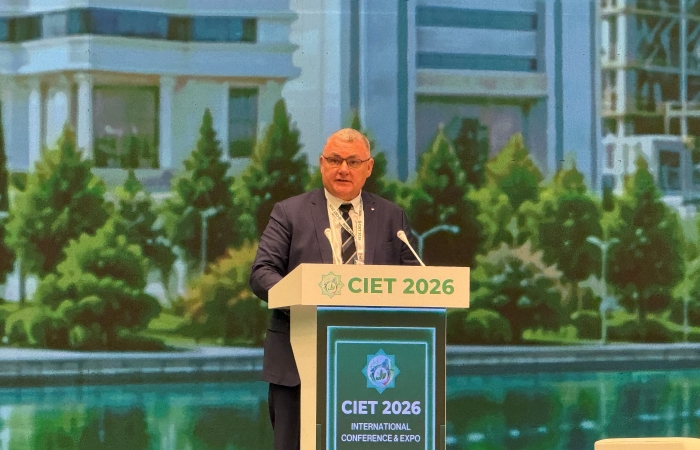
Another promising material highlighted by Bouygues-Turkmen CEO Alexis Rechov, is opoka, a mineral resource also found in Turkmenistan. Initial tests have shown that its use could reduce the carbon footprint by approximately 35% compared with conventional Portland cement. However, further testing and compliance assessments against technical standards are required before the technology can be adopted on an industrial scale.
Bouygues-Turkmen also proposed developing a national standard for digital construction models under the guidance of the relevant government authorities. Such a standard could gradually become a common framework for all construction projects, defining requirements at every stage, from design to operation.
Another proposal is to develop a Turkmen national certification for assessing the environmental value of buildings. Adapted to the country’s climate and priorities, it would cover carbon, energy, water, and durability.
New Areas for Cooperation
Masdar City of the United Arab Emirates also outlined opportunities to expand cooperation. Dr Hamad Al Kaabi, Senior Manager, Accounts & Strategic Contracts, identified climate-responsive urban planning, energy-efficient construction, solar energy, smart mobility and resource efficiency as potential areas for collaboration.
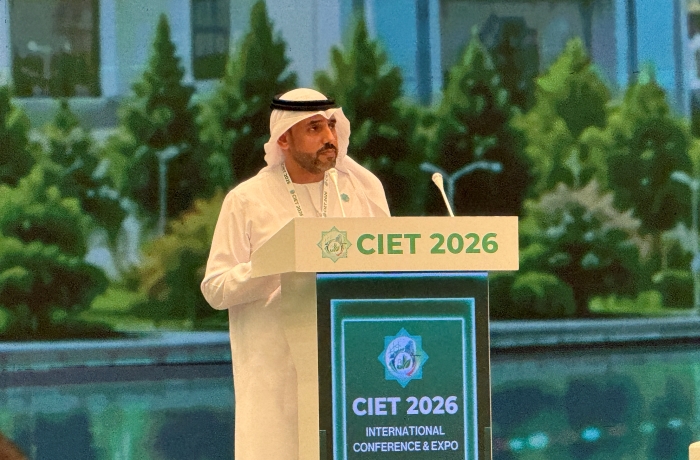
In Al Kaabi’s view, a practical next step would be to bring together interested public- and private-sector stakeholders, identify one or two areas of common interest, and explore a focused pilot project or knowledge-exchange initiative with clear objectives and measurable outcomes.
Long-Term Commitment to Turkmenistan
Presentations by international companies at CIET 2026 highlighted several interconnected areas of their activities in Turkmenistan: the construction of new industrial facilities, support for existing production plants, industrial modernization, the introduction of energy-efficient and environmentally friendly technologies, and the development of new joint initiatives.
A common theme throughout the presentations was the companies’ commitment to maintaining long-term cooperation with Turkmenistan. This indicates that international partners view the development of the country’s industrial and infrastructure base not merely as an opportunity to secure individual contracts, but also as a basis for further expanding their presence in the country. ///nCa, 3 November 2026