


Liliya Zhirnova
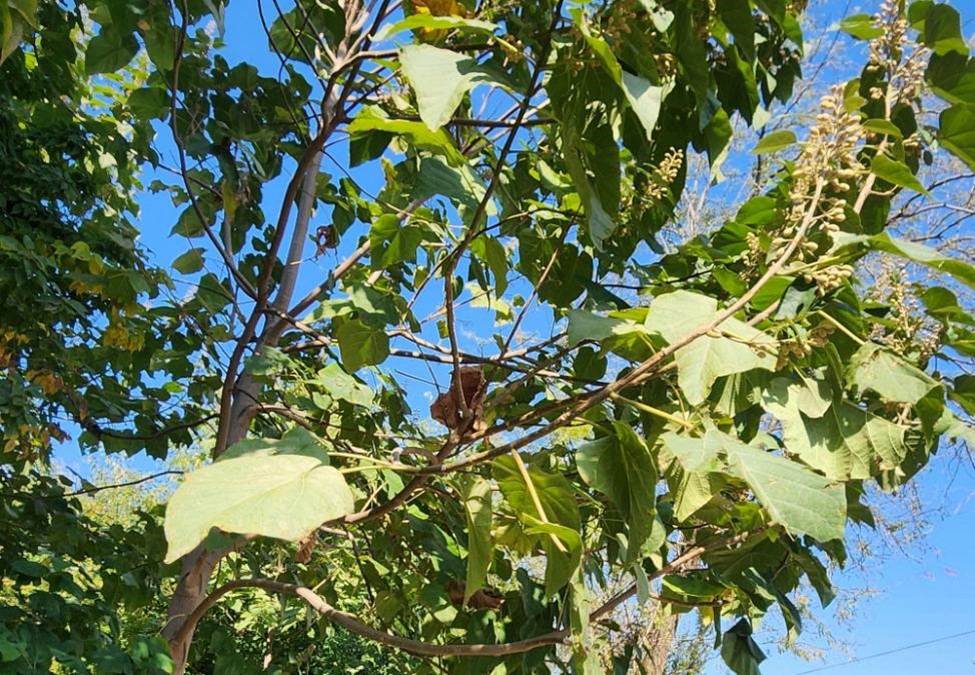
Across the green avenues and urban parks of Ashgabat, sharp-eyed observers in late autumn often notice an intriguing sight: amidst broad, heart-shaped leaves, tall clusters of tan, velvety buds stand erect against the clear sky.
These are the dormant flower buds of the Empress Tree (Paulownia tomentosa or its fast-growing hybrids), preparing to unleash a spectacular display of pale-violet blossoms come spring.
While admired for its ornamental beauty, the Empress Tree—also known as the Princess Tree or Foxglove Tree—is far more than a decorative landmark. It is one of the most versatile, ecologically potent, and economically useful hardwood trees in the botanical world.
Botanical Portrait: Spring Blooms and Autumn Buds
Belonging to the family Paulowniaceae, the Paulownia is easily distinguished by its massive, cordate (heart-shaped) leaves, which can span up to 30 to 50 centimeters in width on younger shoots.
One of its most unique traits is its reproductive calendar:
- Late Summer to Autumn: The tree forms upright panicles covered in fuzzy, protective brown buds.
- Winter: These buds overwinter in plain view on the bare branches, defying winter frosts.
- Spring: Before or just as the new foliage opens, the buds explode into large, bell-shaped, fragrant lavender blossoms that resemble foxgloves.
Following bloom, the tree forms woody, egg-shaped seed capsules. While these fruits are inedible to humans, they contain thousands of tiny winged seeds designed for wind dispersal.
Environmental Powerhouse: Urban Microclimate & Carbon Sequestration
In arid, sun-drenched continental environments, Paulownia serves as an indispensable green asset for urban forestry:
- Unrivaled Growth Speed: Paulownia holds a reputation as one of the fastest-growing hardwood trees on Earth, capable of growing several meters in a single season under optimal conditions.
- Rapid Carbon & Dust Capture: Because of its immense leaf surface area and high photosynthetic capacity, a mature Paulownia tree converts carbon dioxide into oxygen at a rate significantly higher than standard broadleaf hardwoods. Its textured, hirsute (hairy) leaves also act as natural filters, trapping atmospheric particulate matter and dust.
- Dense Microclimate Cooling: The expansive umbrella-like canopy creates deep shade, dramatically lowering ambient ground temperatures and combating urban heat island effects.
- Soil Preservation & Infrastructure Safety: Unlike many fast-growing trees whose aggressive lateral roots lift pavements and crack underground pipes, Paulownia develops a deep, vertical taproot system. This anchors the soil against erosion while leaving urban hardscaping intact.
The “Aluminum of Woods”: Timber & Material Excellence
Beyond its living ecological contributions, Paulownia timber—historically revered in East Asia and increasingly cultivated worldwide—is prized across modern sustainable industries:
- Lightweight yet Strong: Earning the nickname “the aluminum of timber,” Paulownia wood is exceptionally light (roughly one-third the weight of oak) while maintaining a remarkably high strength-to-weight ratio. It does not warp, crack, or split easily when dried.
- Natural Fire & Moisture Resistance: The timber has an unusually high ignition point (around 420°C, compared to ~220°C for standard softwoods), offering natural flame resistance. It also exhibits low moisture absorption, making it highly durable.
- Industrial Applications: It is extensively utilized in eco-friendly furniture, high-grade musical instrument soundboards (such as the Japanese koto and Chinese guzheng), lightweight marine construction, surfboard cores, and thermal insulation panels.
Phytochemical & Traditional Heritage
While the woody fruit pods are not food, Paulownia has long featured in traditional phytotherapy:
- Bioactive Compounds: Leaves, bark, and flower extracts are rich in flavonoids (such as apigenin and luteolin), ursolic acid, and phenolics.
- Pharmacological Research: Modern studies have investigated these compounds for their antioxidant, anti-inflammatory, and antimicrobial activities, particularly in traditional preparations aimed at soothing respiratory ailments or skin irritation.
A Modern Green Sentinel
As cities worldwide seek climate-resilient landscaping solutions capable of providing rapid canopy cover, sequestering carbon, and enduring high summer heat, the Empress Tree stands out as a triumph of natural engineering. Its presence in Ashgabat offers a daily reminder of how botanical functional strength and seasonal aesthetic elegance can meet in the heart of the city. /// nCa, 3 November 2026