


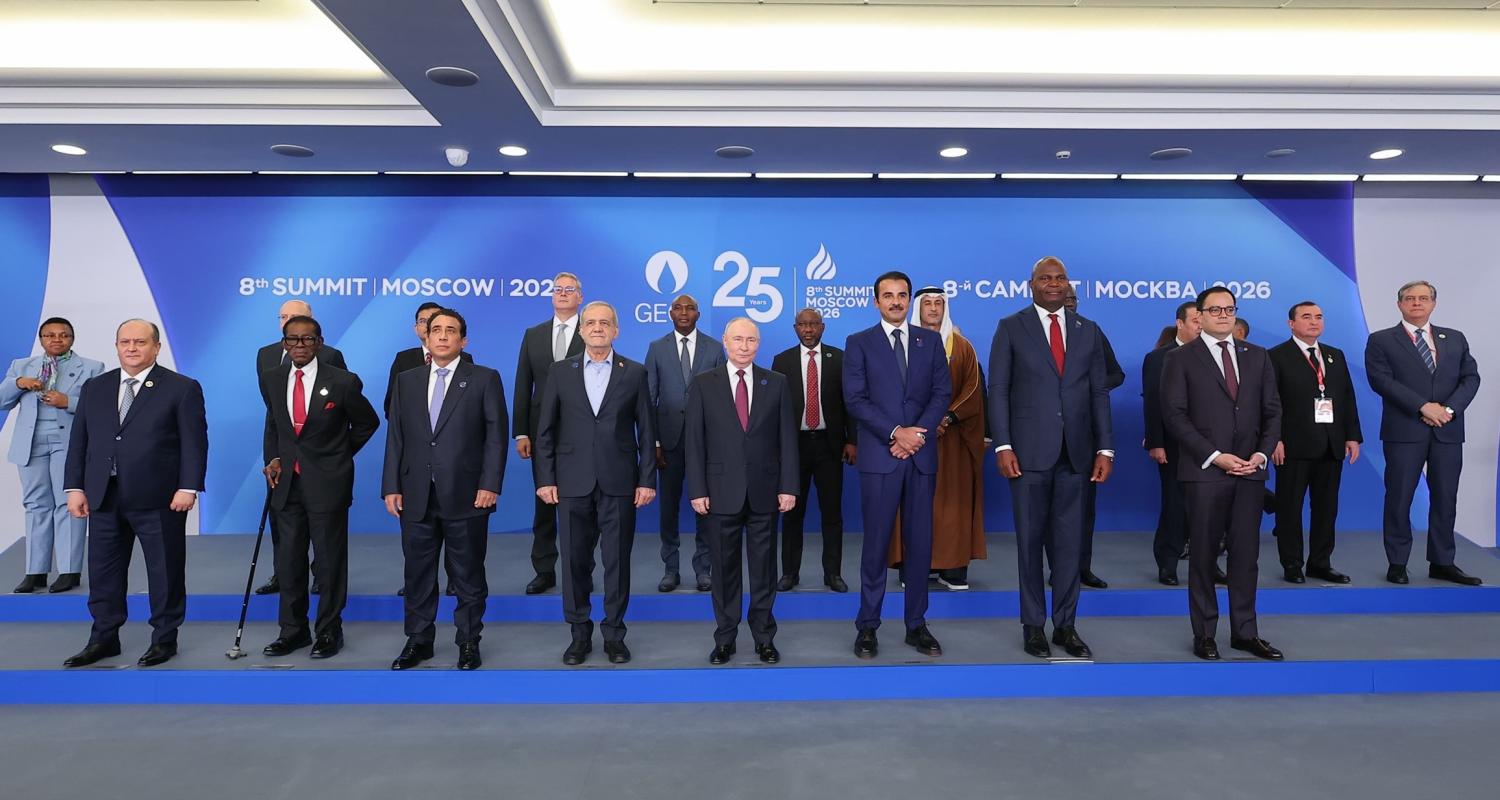
Turkmenistan took part as a guest in the eighth summit of the Gas Exporting Countries Forum (GECF), held on October 27 at the World Trade Center in Moscow, where leaders and senior representatives of major gas-producing countries discussed global energy security, the reliability of supplies, market stability and the future role of natural gas in the world economy.
The Turkmen delegation was led by State Minister and Chairman of the State Concern Türkmengaz Maksat Babayev, according to the Ministry of Foreign Affairs of Turkmenistan. The summit was hosted by Russian President Vladimir Putin and coincided with the 25th anniversary of the Forum’s establishment. Its concluding document, the Moscow Declaration, reaffirmed the sovereign rights of member countries over their natural gas resources and called for stronger cooperation to meet growing global demand.
The meeting brought together representatives of countries that occupy significant positions in the international gas industry. Among the leaders attending were Iranian President Masoud Pezeshkian, Emir of Qatar Sheikh Tamim bin Hamad Al Thani, President of Equatorial Guinea Teodoro Obiang Nguema Mbasogo, Chairman of Libya’s Presidential Council Mohamed al-Menfi and Mozambican President Daniel Chapo. Algeria was represented by Prime Minister Sifi Ghrieb, while other participating countries sent ministers and senior officials. Venezuela’s acting President Delcy Rodríguez was scheduled to participate by video link, according to information released ahead of the summit.
The gathering also included representatives of countries holding observer status in the GECF, as well as Turkmenistan and South Africa, which were invited as guests. GECF Secretary-General Philip Mshelbila addressed the summit alongside national delegations.
The Forum, whose permanent secretariat is based in Doha, brings together 12 member countries: Algeria, Bolivia, Egypt, Equatorial Guinea, Iran, Libya, Nigeria, Qatar, Russia, Trinidad and Tobago, the United Arab Emirates and Venezuela. Its members include major exporters of pipeline gas and liquefied natural gas (LNG). Together with observer countries, they account for a substantial share of the world’s proven natural gas reserves and international gas exports. This gives the organisation a significant platform for discussing producer-country priorities, investment and the long-term development of gas markets.
Established in 2001, the GECF has held previous heads-of-state summits in Qatar in 2011 and 2022, Russia in 2013, Iran in 2015, Bolivia in 2017, Equatorial Guinea in 2019 and Algeria in 2024. The Moscow meeting was the eighth such summit.
Energy security, market stability and investment
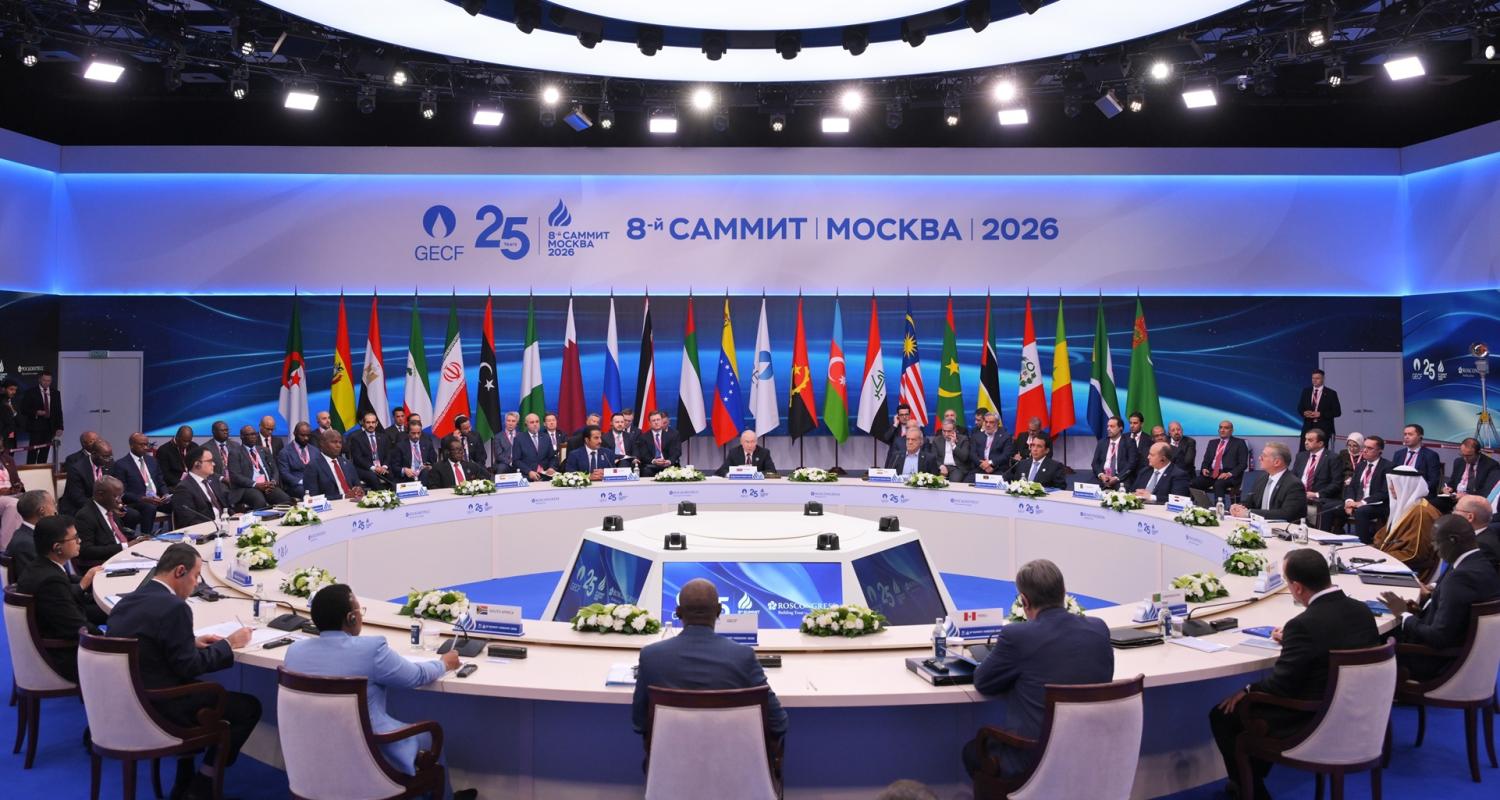
The summit’s agenda reflected the pressures confronting the international gas industry: rising and changing patterns of demand, geopolitical tensions, uncertainty over supplies, price volatility and the need for long-term investment in production and transport infrastructure.
In his opening address, President Putin highlighted natural gas’s contribution to economic growth and energy security, while addressing geopolitical challenges facing the industry. The Russian side had also identified diversification of trade routes, modern technology, environmental considerations and more predictable market conditions as priorities for the summit.
The Moscow Declaration, prepared through consultations among member countries and adopted at the summit, gives these priorities a common political framework. It identifies natural gas as an important source of energy for electricity generation, industry, transport and residential consumption, while emphasising its role as a feedstock for petrochemicals and fertilisers.
The document also draws attention to newer sources of demand. Expanding digital infrastructure, including data centres and artificial intelligence applications, is identified as one of the factors contributing to future energy requirements. Natural gas is presented as a resource that can provide dependable electricity generation and complement renewable energy sources within a diversified energy system.
Another significant theme is the connection between gas, industrial development, food production and water security. Natural gas is an essential feedstock for ammonia and nitrogen-based fertilisers, while energy supplies also support desalination and modern agricultural systems. The declaration therefore links the development of the gas industry with broader questions of economic development and access to essential resources.
The document expresses concern over the effects of geopolitical developments, particularly in the Middle East, on the stability and resilience of international gas markets. It points to supply disruptions, uncertainty over supply and demand, increased investment risks and substantial price fluctuations. It also objects to the extraterritorial application of national and regional legal frameworks and unilateral coercive measures not authorised by the United Nations, while warning that tariff-based measures can hinder market efficiency, energy supplies and investment flows.
The complete text of the Moscow Declaration is available here:
https://www.gecf.org/Events-Conferences/Events-HH/ArticleID/1790/Moscow-Declaration-8th-GECF-Summit
On the practical side, the declaration encourages diversification of gas-trade routes across land-based and maritime corridors, development of cross-border infrastructure and regional gas hubs, and stronger cooperation in technology and equipment. It supports long-term contracts and diversified pricing mechanisms as ways to improve price predictability, distribute risks more fairly and sustain investment in infrastructure, including underground storage and LNG facilities.
The document also advocates technological neutrality, leaving countries room to determine their own energy and industrial development pathways in accordance with national priorities. It encourages the wider application of modern technologies, including artificial intelligence, to improve operational efficiency, reduce production costs and limit environmental impacts.
These commitments are political and policy directions rather than a detailed programme of specific projects, financing commitments or implementation deadlines. Their practical significance will depend on subsequent cooperation among participating countries and the development of concrete commercial and infrastructure initiatives.
Turkmenistan’s interests in the wider gas market
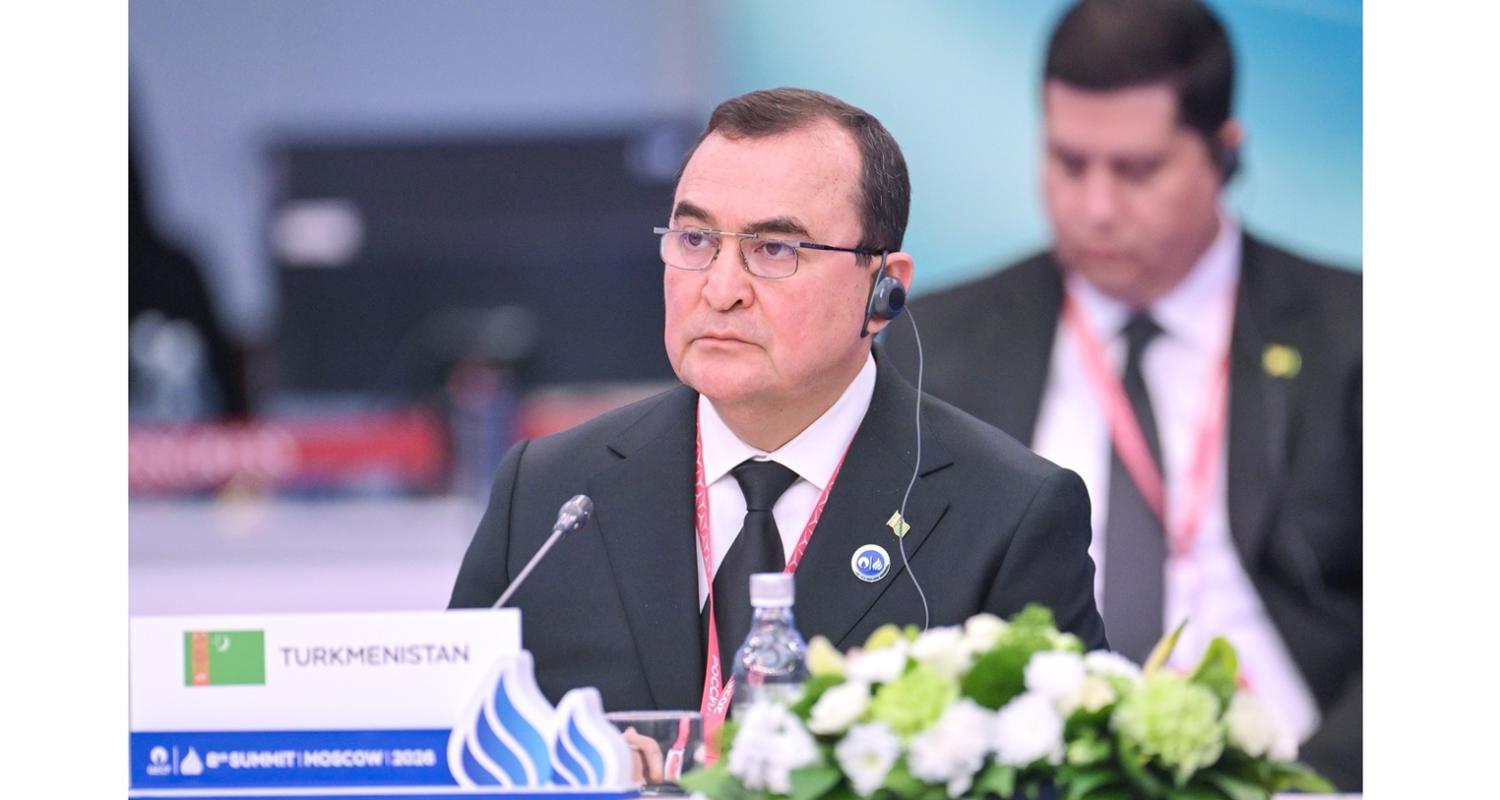
For Turkmenistan, participation in the Moscow summit provided an opportunity to engage with major gas-producing countries on issues directly relevant to its own energy strategy.
The country possesses one of the world’s largest natural gas resource bases and has long identified the expansion of production, development of processing industries and diversification of export destinations as central elements of its economic policy. Its participation as a guest placed the Turkmen delegation within a broader discussion of the conditions affecting international gas trade.
According to the Turkmen MFA, the country’s energy policy combines responsible resource development with modern infrastructure, gas processing, petrochemical production and technological innovation. The ministry also highlighted the expansion of production capacities, the strengthening of export potential and the pursuit of broader international cooperation through the diversification of energy supplies.
These priorities correspond with several themes in the Moscow Declaration, particularly the emphasis on reliable supplies, diversified transport routes, cross-border infrastructure and value-added industrial production. The declaration’s support for technology transfer and the localisation of equipment production is also relevant to countries seeking to expand their domestic industrial capabilities alongside natural gas extraction.
The summit took place at a time when natural gas remains central to international debates about how to reconcile energy security, economic growth and emissions reduction. The declaration argues for a balanced approach that recognises the role of gas while encouraging technological improvements and measures to reduce methane emissions and the environmental impact of production.
For Turkmenistan, these questions intersect with the development of gas processing and petrochemicals, the modernisation of production facilities and the search for greater value from its resource base. The emphasis on technology and investment is particularly relevant as gas-producing countries seek to improve efficiency and meet changing expectations concerning environmental performance.
The Moscow summit concluded with a shared statement of principles rather than a binding agreement governing international gas prices or exports. Its significance lies in the positions articulated by participating producers: that natural gas will continue to play an important role in meeting global energy demand, that secure and predictable markets require long-term investment, and that international cooperation should accommodate different national energy strategies.
For Turkmenistan, the meeting offered a platform to follow these discussions and maintain engagement with major players in the gas industry. The extent to which the declaration’s broad objectives translate into new commercial opportunities, infrastructure links and technological cooperation will depend on the decisions and agreements that follow. /// nCa, 29 October 2026